SEOUL MEDICAL FACIALS: HYDRAFACIAL, AQUAPEEL & WHAT'S WORTH IT
Korean clinics have turned the basic facial into a medical-grade upgrade. Here's what each treatment actually does and what you'll pay.
By Editorial
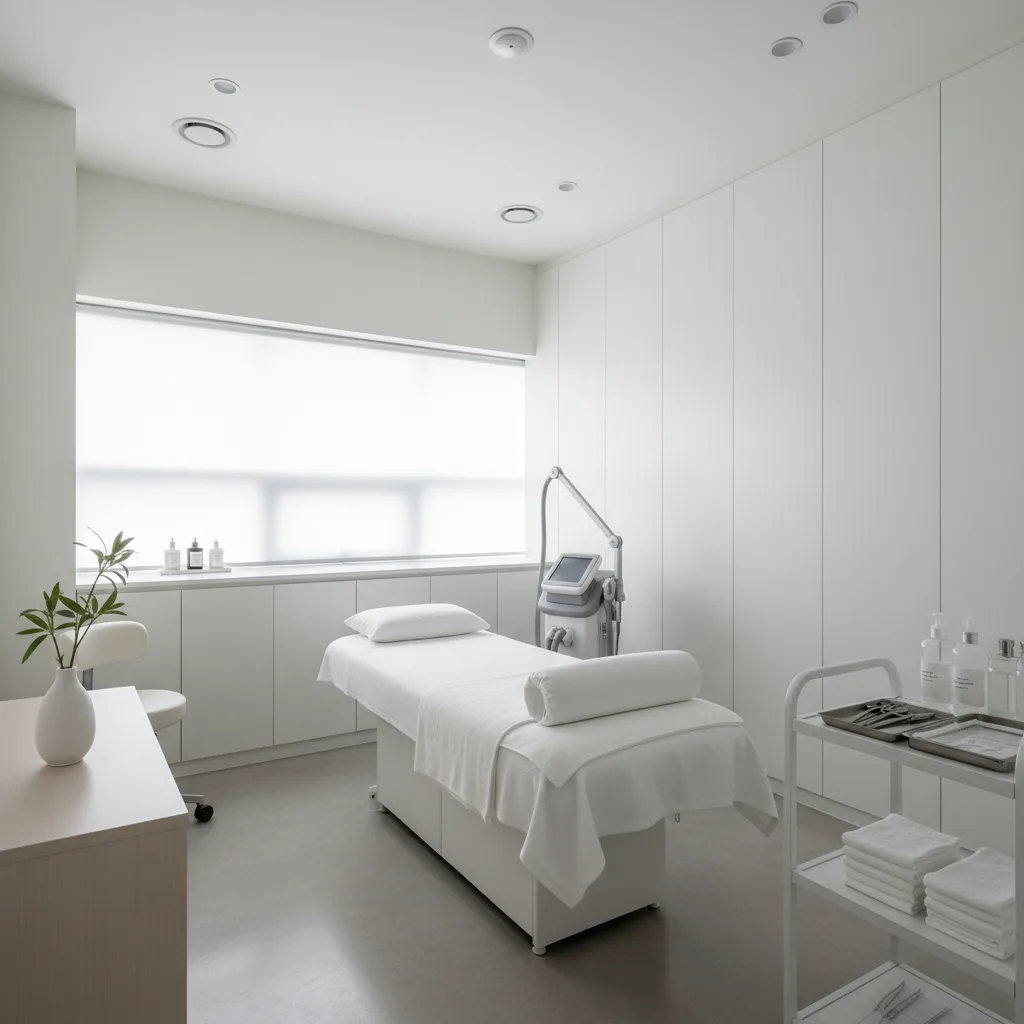
Seoul's dermatology clinics treat facials as a medical procedure, not a spa day. The same consultation-first approach that governs injectables applies here: a doctor or specialist assesses your skin type, photographs your baseline texture, and recommends a protocol rather than letting you pick off a menu. For first-time visitors, that intake process alone is worth the trip.
WHAT COUNTS AS A MEDICAL FACIAL IN A KOREAN CLINIC?
In Seoul, the term covers any machine-assisted or chemical-exfoliation treatment performed by licensed skincare specialists, typically in a dermatology or aesthetic clinic. The key difference from a spa facial is controlled technology: standardized suction pressure, calibrated tip sizes, and certified serums tracked per session. Common categories include hydrodermabrasion devices (HydraFacial, Aquapeel), oxygen infusion treatments, and clinic-formulated peel serums applied at measured concentrations.
Most Gangnam and Apgujeong clinics bundle these treatments under "management" or "care" tiers, designed as repeatable sessions that layer with injectable protocols. A standalone session runs around ₩80,000-150,000 / about $58-110. Packaged as a three-to-five session skin care course, the price typically lands at ₩300,000-500,000 / about $220-360, often with a complimentary consultation included.
HYDRAFACIAL IN SEOUL: WHAT ACTUALLY HAPPENS?
HydraFacial is the brand-name device most international visitors recognize: a four-step vacuum-tip treatment that exfoliates, extracts, and infuses a proprietary serum blend in about 30 minutes. Korean clinics run the standard protocol but frequently customise the booster serums, adding growth-factor ampules or brightening actives not available in the device's global formulation kit. That customisation is part of what makes the Seoul version different from what you'd get at a franchise clinic in Singapore or London.
A single session runs around ₩180,000-250,000 / about $130-180 at a Gangnam clinic. Apgujeong locations charge a premium of roughly 20-30% more for the consultation quality, bilingual staff, and often a higher-grade booster serum. Some Sinnonhyeon clinics, clustered around exit 1 of Sinnonhyeon station on Gangnam-daero and known for volume-based pricing, offer the same device at ₩100,000-130,000 / about $73-95, usually without the customised add-ons.
Results after one session are visible but not dramatic: improved skin texture, reduced pore congestion, and a brighter tone that typically holds for 10-14 days. Most dermatologists recommend four sessions spaced three to four weeks apart for anyone targeting stubborn texture, enlarged pores, or dullness. If pigmentation is your primary concern rather than texture, laser treatments will do more work per session than hydrodermabrasion alone.
AQUAPEEL AND KOREAN ALTERNATIVES: WHAT'S THE DIFFERENCE?
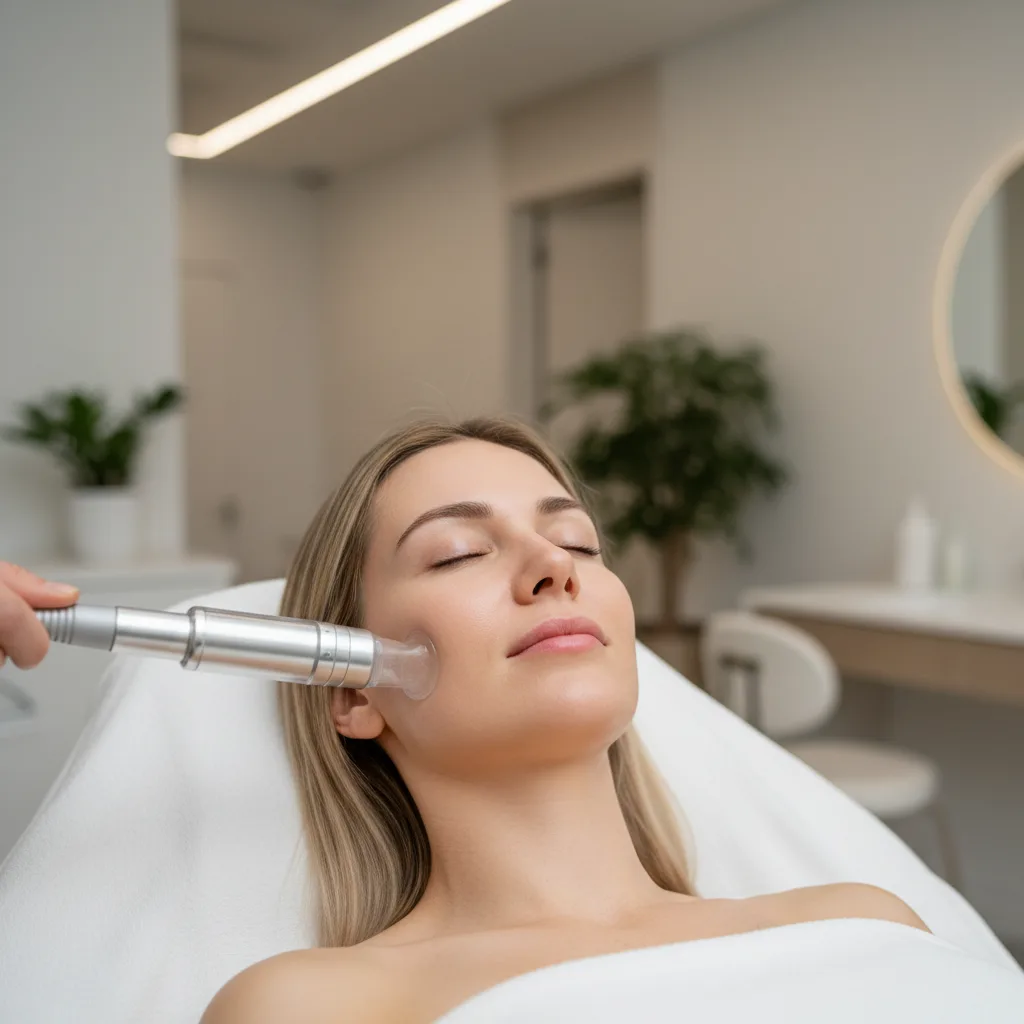
Aquapeel is the domestic Korean equivalent to HydraFacial, and in many Seoul clinics it has largely replaced the imported brand because the device costs less to operate and the consumables are locally sourced. The mechanism is identical: exfoliating tip plus vacuum suction plus simultaneous serum infusion. Korean brands including Aquapeel, Hydra Diamond, and Aqua Gold Fine Touch each use different tip geometries and solution formulations, so the experience varies slightly by clinic even when using a "comparable" device.
For skin-type matching, Aquapeel is often recommended over HydraFacial for sensitive or reactive skin because the Korean formulations tend toward lower-pH, lower-fragrance serum kits. Clinics in Myeongdong, which draws high foot traffic near Exit 5 of Myeongdong station and caters heavily to visitors from Japan, Thailand, and Southeast Asia, often run Aquapeel as a same-day walk-in option at ₩60,000-100,000 / about $44-73. The Myeongdong pricing reflects tourist-area competition, not a quality difference in the procedure itself.
WHAT DOES A MEDICAL FACIAL COST IN SEOUL?
Pricing varies most by district and clinic tier, not by the underlying device. A Cheongdam or Apgujeong clinic with bilingual staff and a consultation-led intake will charge two to three times what a walk-in Sinnonhyeon clinic charges for the same machine. Both are legitimate; the price difference buys consultation quality, English support, and often a more thorough post-treatment protocol. Before booking, check whether the quoted price includes VAT: Gangnam clinics targeting international patients sometimes display ex-VAT rates, which adds 10% at checkout. The VAT and foreigner pricing guide has a breakdown of how to spot this on price menus.
- 01HydraFacial (standard 30 min): ₩150,000-250,000 / $110-180
- 02HydraFacial with growth factor booster: ₩250,000-380,000 / $180-275
- 03Aquapeel (standard): ₩60,000-120,000 / $44-88
- 04Aquapeel clinic package (4 sessions): ₩240,000-400,000 / $175-290
- 05Oxygen facial or LED combination add-on: ₩100,000-180,000 / $73-130
WHICH SKIN CONCERNS RESPOND BEST?
Medical facials are most consistently effective for three concerns: texture refinement, pore congestion, and dullness caused by environmental or dietary factors. Clinics see strong results in visitors arriving from polluted urban environments where buildup in the follicular canal resists topical-only treatment. For acne-prone skin, the extraction component of hydrodermabrasion can clear congestion that routine skincare misses, without the irritation of manual extraction.
What they don't fix: significant pigmentation (which responds better to pico laser or toning protocols or targeted Rejuran treatment), laxity (which needs HIFU or RF microneedling), or deep rolling scars. A good clinic in Gangnam will tell you this during consultation rather than recommend the facial as a universal fix.
WHAT TO EXPECT BEFORE AND AFTER YOUR SESSION
Arrive without makeup and ask about same-day SPF: most Seoul clinics provide sunscreen as part of the post-treatment finish, but not all include it in the base service price. Avoid retinol, AHA/BHA exfoliants, and active-ingredient serums for 48 hours before the appointment. Korean pre-treatment prep sheets specify this because combining chemical and mechanical exfoliation in close succession can over-strip the skin barrier, extending the recovery window unnecessarily.
Expect mild flushing for two to four hours post-treatment. Pore congestion improvement is visible within 24 hours. Avoid scheduling a facial within three days of flying home: in-flight cabin air combined with freshly exfoliated skin is a reliable path to dehydration and sensitivity flare. If you're combining a facial with injectables on the same Seoul trip, most clinics recommend doing the facial first and scheduling injectables 48 hours later so the skin barrier is stable before needles.
Treatment guides · 6 min · May 28, 2026
← all posts
REJURAN VARIANTS EXPLAINED: HEALER, I, S, HB, EYE IN SEOUL
Every Rejuran type does something different. Here is what each variant treats, what it costs in Seoul, and which one your first booking should be.
SKIN BOOSTERS IN SEOUL 2026: JUVELOOK, PROFHILO, SCULPTRA GUIDE
A first-timer's cost, brand and clinic guide to skin boosters and collagen biostimulators in Seoul for 2026.
REVISION RHINOPLASTY IN SEOUL 2026: FIXING A FAILED NOSE JOB
A practical Seoul revision rhinoplasty guide covering cost, timing, cartilage sourcing, top districts, and which surgeons actually take secondary cases.
BREAST LIFT (MASTOPEXY) IN SEOUL 2026: COST, TECHNIQUES, RECOVERY
Everything a first-time medical tourist needs to know about mastopexy in Seoul: incision types, KRW pricing, recovery windows, and how it differs from augmentation.
LATERAL CANTHOPLASTY IN SEOUL: THE CAT EYE SURGERY GUIDE (2026)
How Korean surgeons lift the outer eye corner for a subtle cat-eye look, what it costs, and who it fits.
▶▶▶ stop reading. start matching.
FIND YOURS.
We'll pull five clinics matched to your case. WhatsApp reply within 24h.