LASER TREATMENTS IN SEOUL: PICOSECOND, IPL & FRAXEL 2026 GUIDE
What picosecond toning, IPL, and Fraxel actually cost in Seoul and how to pick the right machine for your skin.
By Editorial
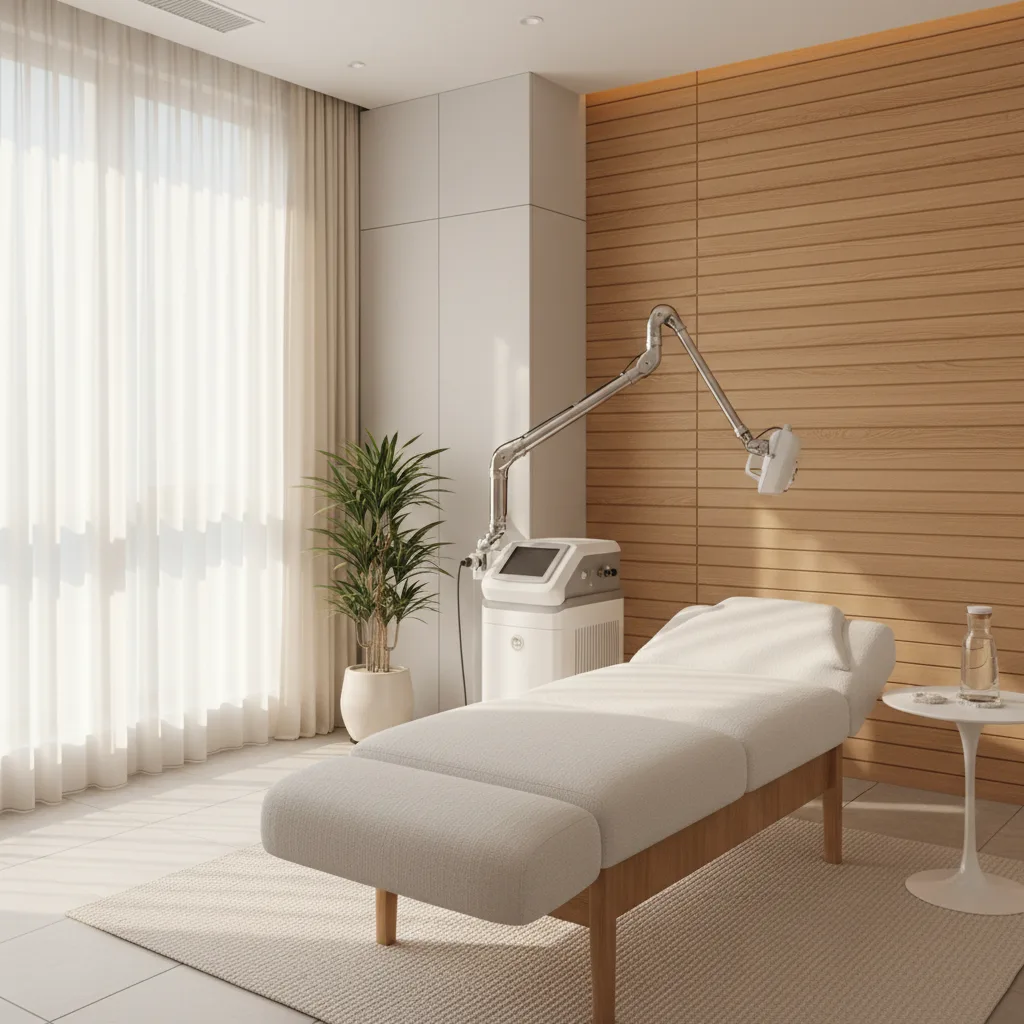
Seoul runs on lasers. Walk down a single Apgujeong block and you will pass four clinics, three of them advertising a different brightening protocol in the lobby window. The hard part for a visitor is not finding a laser, it is figuring out which one your skin actually needs and what a fair Korean price for that machine looks like in 2026.
WHAT "LASER TREATMENT" ACTUALLY MEANS IN A SEOUL CLINIC
When a Korean aesthetic clinic offers a laser, they are almost always pointing at one of three categories. Pigment-targeting lasers like PicoSure, PicoWay, Discovery Pico, and Spectra. Broadband light devices like Lumenis M22 IPL or Lutronic LimeLight. And fractional resurfacing lasers like Fraxel Dual, LaseMD Ultra, or eCO2. Each category does a different job. Mixing them up is how visitors end up paying for the wrong session and seeing nothing change for six weeks.
The simplest mental model: pico lasers shatter pigment, IPL evens out red and brown tone across a wide area, and fractional lasers drill controlled microscopic columns of damage to force collagen turnover. Most Seoul protocols stack at least two of these inside a single visit because nobody flies twelve hours to do one machine. A typical Gangnam menu will quote a combined session called "pico toning + LDM hydration + LED finish" for around ₩220,000 to ₩380,000 (about $160 to $275).
PICOSECOND LASERS: PICOSURE, PICOWAY, AND THE PICO TONING PROTOCOL
Picosecond technology is the headline act in Seoul. The pulse is so short that the laser fractures pigment particles mechanically instead of relying on heat, which means less downtime and a much lower risk of post-inflammatory hyperpigmentation on Asian skin tones. PicoSure (755nm Alex) and PicoWay (532/1064nm) are the two name brands, but Korean-made Discovery Pico from Quanta and Spectra XT from Lutronic are everywhere in mid-tier Apgujeong clinics and often deliver a near-identical clinical result for half the price.
The protocol most visitors book is called pico toning. A clinician runs the 1064nm handpiece at low fluence across the whole face in two to four passes, finishing the cheeks and forehead where melasma tends to sit. Expect twelve to fifteen minutes on the bed, mild warmth, no anaesthetic. A single pico toning session in Sinnonhyeon or Seocho runs ₩90,000 to ₩180,000 (about $65 to $130). The same session in a flagship Cheongdam clinic with a real PicoSure machine and a board-certified dermatologist supervising runs ₩280,000 to ₩450,000 ($200 to $325).
If you have melasma, dark spots from sun damage, or that uneven greyish dullness that nothing topical seems to fix, this is the workhorse to ask for. Be honest with the doctor about your last UV exposure. Pico on freshly tanned skin is the fastest way to wake up a melasma rebound, and most Seoul clinics will defer your session two weeks if you flew in from somewhere sunny. If sagging is your real concern instead of pigment, lasers are the wrong starting point and you want to read the non-surgical jawline guide before booking anything.
IPL: THE BRIGHTENING WORKHORSE MOST CLINICS QUIETLY USE
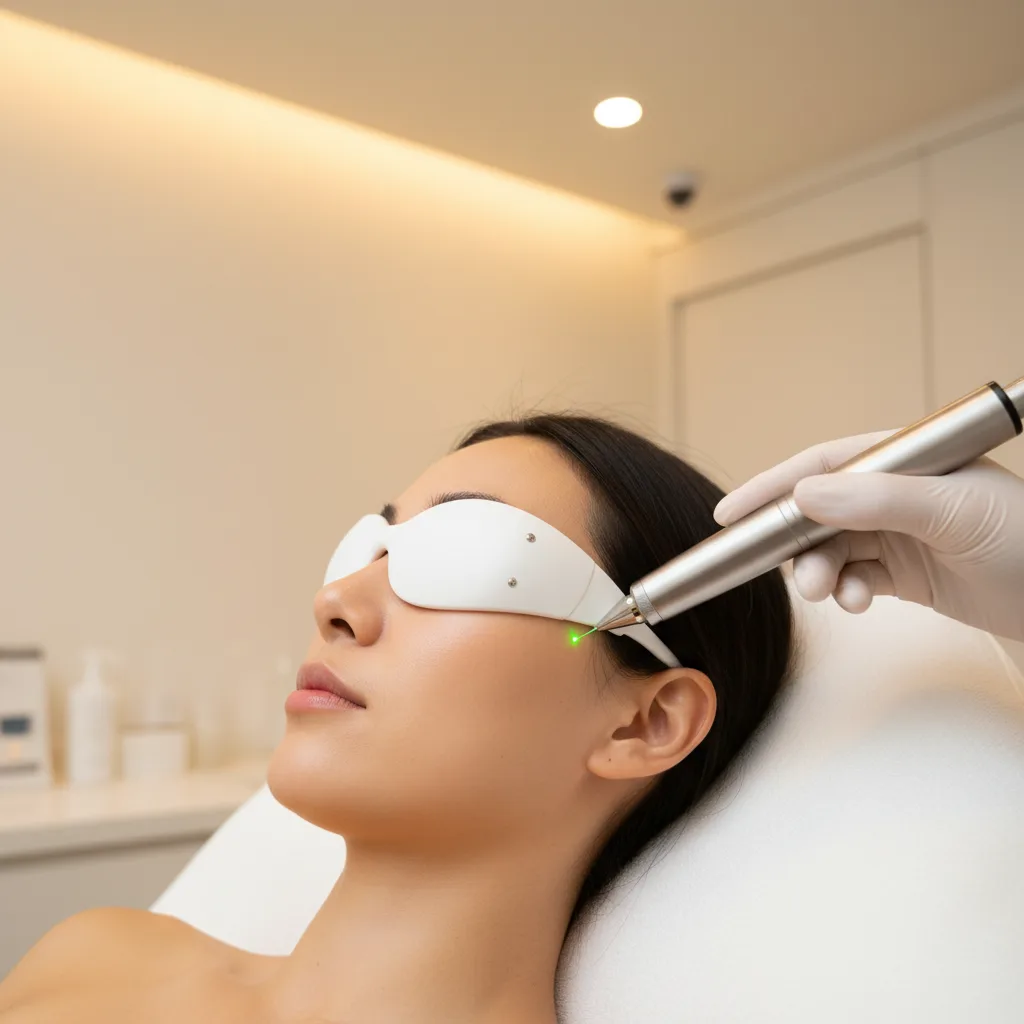
Intense pulsed light is not technically a laser, but every Seoul aesthetic clinic groups it under the laser menu and so does this guide. IPL fires a broad band of wavelengths between roughly 500nm and 1200nm, with filters that target either red vessels, brown pigment, or both at once. The result is a flatter, brighter, more uniform complexion after three to five sessions spaced two to four weeks apart. The brand you will see most often is Lumenis M22 with a Vasculight or BrightSkin filter. Lutronic LimeLight is the popular Korean equivalent.
A standard full-face IPL in Seoul costs ₩120,000 to ₩220,000 ($85 to $160) per session, and most clinics will quote a discounted package of three for around ₩300,000 to ₩500,000. Expect a rubber-band snap sensation, light coffee-grounds crusting on dark spots for three to five days, and a noticeable brightness lift by the second session. IPL pairs naturally with a Rejuran session two weeks later if you want to push collagen and tone in the same trip without overlapping the inflammatory windows.
FRAXEL AND FRACTIONAL LASERS: WHEN YOU ACTUALLY NEED DOWNTIME
If your concern is acne scars, deep pores, or genuine texture rather than pigment, you cross into fractional territory. Fractional lasers split the beam into thousands of micro-columns, leaving healthy tissue in between so the skin heals faster but the collagen response is significant. The two flavours are non-ablative (Fraxel Dual 1550/1927, LaseMD Ultra) and ablative (eCO2, UltraPulse). Non-ablative gives you three to five days of pinkness and sandpaper roughness. Ablative gives you a full week of crusting and pinhole scabs and a six-week tail of healing.
Seoul prices for a single non-ablative Fraxel session sit at ₩330,000 to ₩550,000 ($240 to $400). Ablative eCO2 full-face runs ₩550,000 to ₩900,000. For acne scars specifically, most Seoul dermatologists will steer you toward RF microneedling instead of ablative laser because the result on Asian skin tones is closer in efficacy with a much lower hyperpigmentation risk. The reasoning is unpacked in the RF microneedling guide, and any clinic that pushes you straight to deep eCO2 without discussing RF first is a clinic worth asking a second opinion.
Downtime is the practical constraint. If you have four days in Seoul and a wedding to attend on day five, fractional resurfacing is not your session. Pico toning or a mild IPL fits the same trip with zero visible downtime. Plan your treatment in reverse from your flight out and what is on your calendar when you land back home.
- 01Pico toning, single session: ₩90,000 to ₩450,000 ($65 to $325)
- 02PicoSure full-face brightening package of 3: ₩750,000 to ₩1,200,000 ($540 to $870)
- 03IPL full-face, single session: ₩120,000 to ₩220,000 ($85 to $160)
- 04IPL package of 3: ₩300,000 to ₩500,000 ($215 to $360)
- 05Fraxel Dual non-ablative: ₩330,000 to ₩550,000 ($240 to $400)
- 06eCO2 ablative full-face: ₩550,000 to ₩900,000 ($400 to $650)
- 07Spectra Hollywood Peel (carbon laser facial): ₩80,000 to ₩150,000 ($60 to $110)
HOW LONG DOES A COURSE OF PICO TONING TAKE TO SEE REAL RESULTS?
Pico toning is a cumulative protocol. One session brightens for about ten days then fades. Real melasma and post-inflammatory pigmentation results show up after four to six sessions spaced two to three weeks apart. Most visiting patients book a starter package of three sessions inside a single eight to ten day Seoul trip, then continue at a clinic back home or fly back at the six-month mark for a maintenance round. If a clinic promises a single-session melasma cure, walk out.
WHICH LASER SHOULD YOU BOOK FIRST IF YOU ONLY HAVE ONE SEOUL TRIP?
For most first-time visitors with general dullness and a few dark spots, the right starter stack is one pico toning session followed by an IPL three days later. Total spend around ₩400,000 to ₩600,000, total downtime zero, brightening visible by the time you fly home. If your concern is specifically deep texture or acne scars, skip lasers entirely on this trip and book an RF microneedling consult instead. If you are not sure which camp you fall into, the first-time booking guide covers how to message a clinic in advance with a clear question photo and avoid arriving at the wrong machine.
Treatment guides · 8 min · May 16, 2026
← all posts
REJURAN VARIANTS EXPLAINED: HEALER, I, S, HB, EYE IN SEOUL
Every Rejuran type does something different. Here is what each variant treats, what it costs in Seoul, and which one your first booking should be.
SKIN BOOSTERS IN SEOUL 2026: JUVELOOK, PROFHILO, SCULPTRA GUIDE
A first-timer's cost, brand and clinic guide to skin boosters and collagen biostimulators in Seoul for 2026.
REVISION RHINOPLASTY IN SEOUL 2026: FIXING A FAILED NOSE JOB
A practical Seoul revision rhinoplasty guide covering cost, timing, cartilage sourcing, top districts, and which surgeons actually take secondary cases.
BREAST LIFT (MASTOPEXY) IN SEOUL 2026: COST, TECHNIQUES, RECOVERY
Everything a first-time medical tourist needs to know about mastopexy in Seoul: incision types, KRW pricing, recovery windows, and how it differs from augmentation.
LATERAL CANTHOPLASTY IN SEOUL: THE CAT EYE SURGERY GUIDE (2026)
How Korean surgeons lift the outer eye corner for a subtle cat-eye look, what it costs, and who it fits.
▶▶▶ stop reading. start matching.
FIND YOURS.
We'll pull five clinics matched to your case. WhatsApp reply within 24h.