HAIR TRANSPLANT IN SEOUL: FUE VS DHI KOREA GUIDE 2026
What FUE and DHI actually cost in Seoul, which method suits your hair loss stage, and how Korean clinics compare to Western pricing.
By Editorial
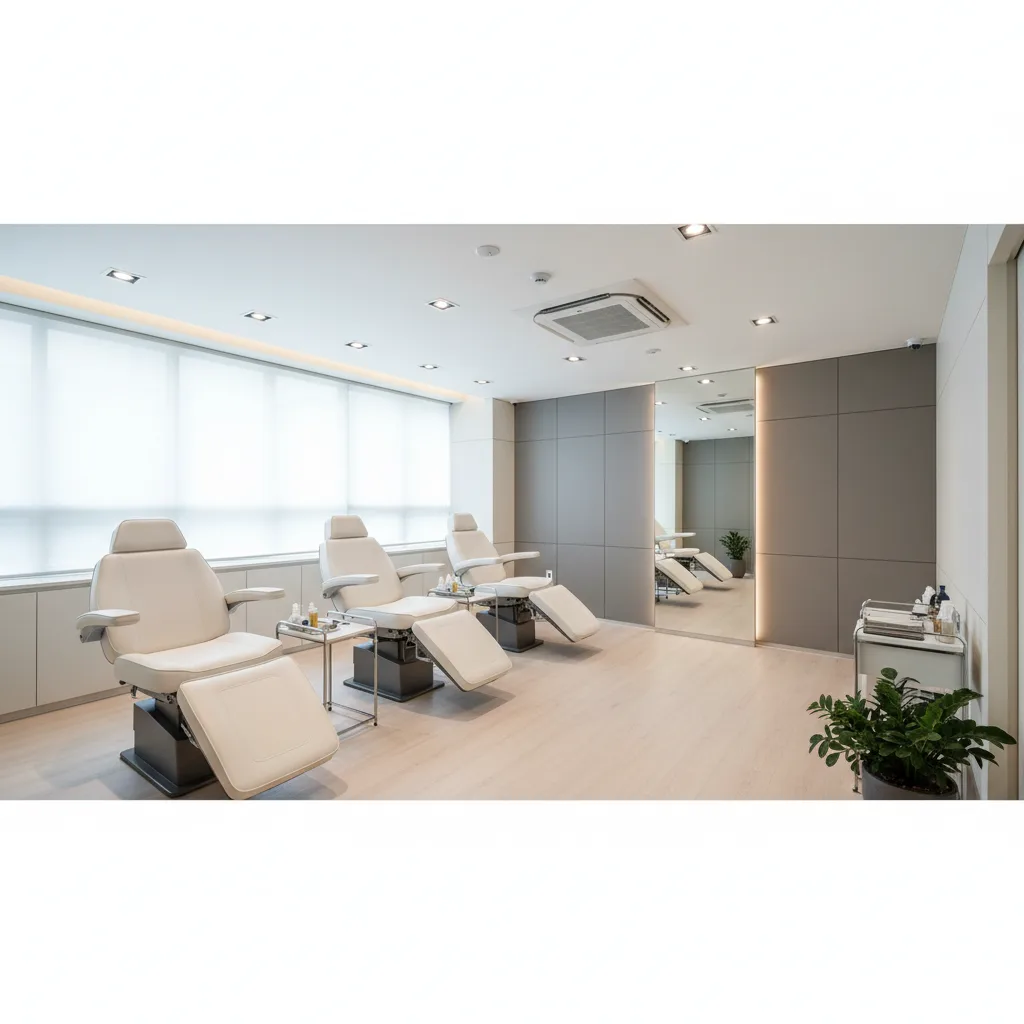
Seoul has become one of the most serious destinations for hair transplant surgery, and not just for domestic patients. Gangnam alone has more than 40 clinics with dedicated hair restoration departments, and prices run 40-60% below what you would pay in the UK, US, or Australia for comparable graft counts and equivalent equipment. The two main methods on offer, FUE and DHI, suit different stages of hair loss and different recovery timelines, so picking correctly before you book matters as much as picking the clinic itself.
FUE VS DHI: WHAT KOREAN CLINICS ACTUALLY DO
FUE (Follicular Unit Extraction) extracts individual follicular units from the donor zone one at a time using a micro-punch tool, typically 0.8-0.9mm in diameter. The surgeon or technician creates recipient sites separately and then implants grafts into those channels. Most Gangnam clinics now use motorized FUE extraction with sapphire blades for the recipient sites, which reduces tissue trauma compared to steel. Healing is faster than strip surgery and leaves no linear scar, only tiny dots that fade to near-invisible within 3-6 months. Total procedure time for a 2,000-graft session runs 6-8 hours at most clinics.
DHI (Direct Hair Implantation) uses a Choi implanter pen, which loads the extracted graft and punches the implant channel in a single motion. There are no pre-made recipient sites: the follicle goes directly into the scalp without a separate holding step. The theoretical advantage is shorter time outside the body per graft, which some clinics argue improves survival rates. In practice, the survival difference between well-executed FUE and DHI is small, typically 1-5% under controlled conditions. DHI is slower per graft, so clinics charge a premium, and a 2,000-graft DHI session runs 8-10 hours.
For most medical tourists, FUE is the better starting point if volume at a reasonable cost is the goal. DHI makes more sense if you need to increase density in an area that already has existing hair, because the Choi pen allows precise angle control without needing to shave the recipient zone. If you are planning a thread lift or other combination procedure during the same Seoul trip, schedule hair surgery first and allow at least 10-14 days before any facial injectable treatments.
HOW MUCH DOES A HAIR TRANSPLANT COST IN SEOUL?
Pricing in Seoul is quoted per graft, not per session. Standard FUE at a reputable Gangnam clinic runs ₩2,000-₩3,500 per graft, which puts a 2,000-graft session at ₩4,000,000-₩7,000,000 (roughly $2,900-$5,100 USD). Budget-tier clinics near Sinnonhyeon or Hongdae sometimes advertise ₩1,200-₩1,500 per graft, but these rooms typically have minimal surgeon involvement, with technicians handling most of the extraction and implantation. DHI carries a 20-40% premium on top of FUE rates at the same clinic tier: expect ₩2,800-₩4,500 per graft. Some clinics quote all-inclusive packages covering anesthesia, post-op medication, and two follow-up wash visits, while others itemize those separately at ₩200,000-₩500,000 ($145-$360) extra.
For context, a 2,000-graft FUE session in the UK runs £5,000-£9,000 (about $6,300-$11,400). In the US the same graft count costs $8,000-$15,000. The Seoul saving is real, though it compresses at the premium end: a top-tier Apgujeong surgeon-led 3,000-graft session at ₩12,000,000-₩18,000,000 ($8,700-$13,000) overlaps with mid-range US pricing. The value is sharpest in the ₩3,000-₩5,000 per-graft window, which in Seoul buys you a board-certified dermatologist or plastic surgeon performing the extraction, something you would pay significantly more for in Western markets.
- 011,000-2,000 grafts FUE (mid-tier clinic): ₩2,000,000-₩7,000,000 / $1,450-$5,100
- 022,000-3,000 grafts FUE (premium surgeon-led): ₩6,000,000-₩10,500,000 / $4,350-$7,600
- 03DHI (any graft count, same tier): add ₩800-₩1,500 per graft on top of FUE base
- 04Full-day premium Apgujeong session (3,000+ grafts): ₩12,000,000-₩18,000,000 / $8,700-$13,000
- 05Consultation fee: ₩0-₩50,000 ($0-$36), usually waived on booking
WHICH DISTRICTS HAVE THE BEST HAIR TRANSPLANT CLINICS?
Apgujeong and Cheongdam concentrate the highest tier of surgeon-led hair transplant clinics in Seoul. Exit 2 of Apgujeong Rodeo station puts you on Dosan-daero, where boutique multi-specialty clinics occupy the upper floors of glass buildings alongside luxury retail. English consultations are standard, and these clinics attract a high proportion of international patients from Southeast Asia, the Middle East, and Australia. Pricing starts around ₩3,200-₩3,500 per graft for surgeon-performed FUE extraction, which puts them firmly in the premium-value window for foreign patients comparing against home-country costs.
Sinnonhyeon (Exit 5, Line 9) is the value corridor. Clinics are newer, more aggressively priced, and use the same Korean-made extraction equipment as the premium tier. The surgeon-to-technician ratio varies considerably, so ask specifically whether the doctor performs extraction, implantation, or both before booking. Many of the same clinics that draw expats for RF microneedling and skin boosters in Sinnonhyeon run competent hair departments alongside their skincare services. For a first-time 1,500-2,000 graft session where budget matters, Sinnonhyeon is a reasonable choice if you vet surgeon involvement before signing.
Gangnam station itself (Exit 10-11) has mid-tier clinics that serve a mostly domestic clientele. English support is spottier here, so bring printed photos documenting your hair loss stage and your Norwood classification written down if you have it. The guide to booking a Seoul aesthetic clinic from abroad covers how to run pre-trip consultations by video call, which is especially useful for hair clinics where the doctor needs to assess donor density before giving a graft quote.
WHAT HAPPENS AT A SEOUL HAIR TRANSPLANT CONSULTATION?
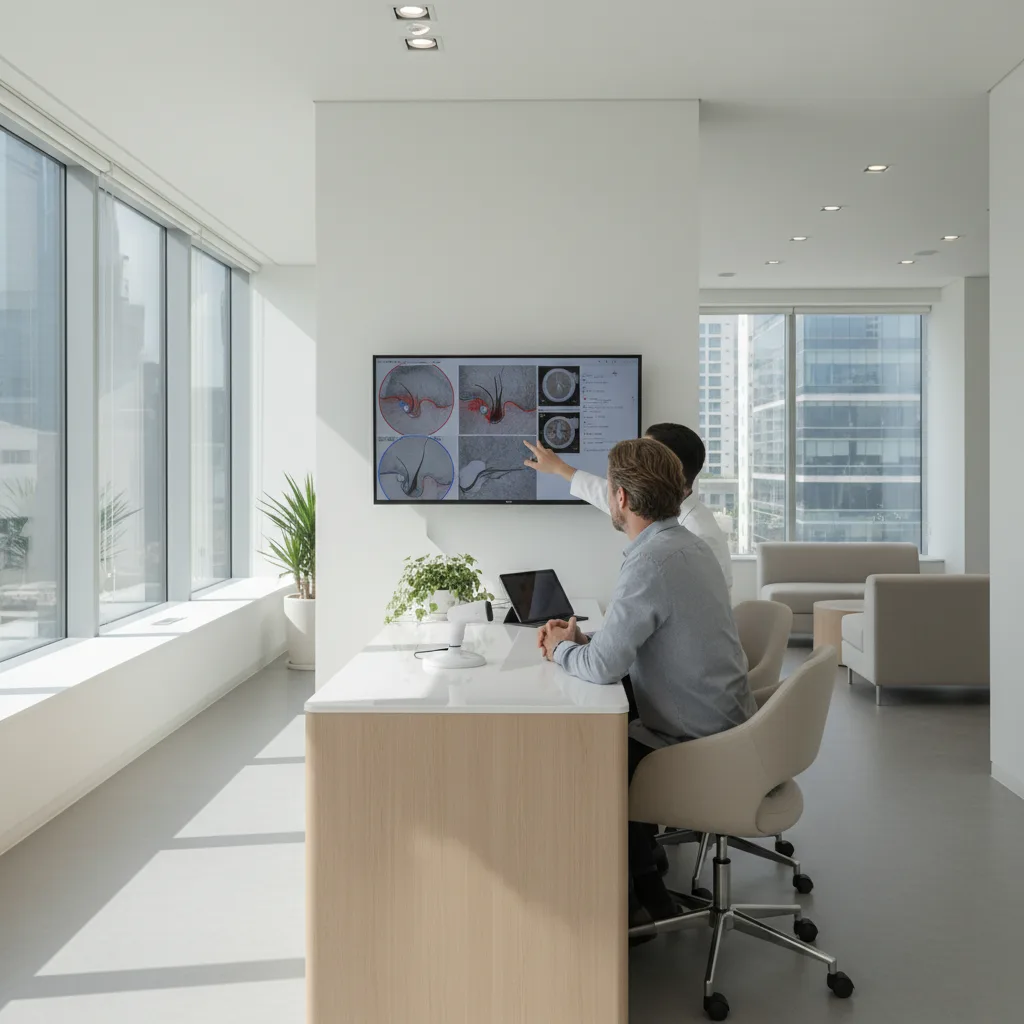
Clinics run initial consultations in 20-40 minutes. The doctor performs a scalp density analysis with a dermatoscope, calculates your available donor density per square centimeter, and gives a graft estimate on the spot. Good clinics photograph your scalp and show you a projected hairline on a screen in the same appointment. If the consultation jumps straight to a contract without scalp photography or a written graft estimate, that is a yellow flag. Reputable clinics in Apgujeong and Cheongdam expect you to compare their estimate across two or three clinics before deciding and will not pressure you to sign on the day.
Most premium clinics have English-speaking coordinators, and some Apgujeong clinics employ native English, Japanese, or Thai-speaking staff for international patients. If you are arriving from Southeast Asia or the Middle East, a medical coordinator service is worth ₩50,000-₩100,000 ($36-$72) to make sure terminology around graft counts, anesthesia type, and post-op care does not get lost in translation. Given the procedure cost, the coordination fee is a minor line item. If you are also booking botox or injectables on the same trip, most clinics can coordinate a single-visit itinerary if you schedule at least two weeks ahead.
HOW LONG IS RECOVERY AND WHEN CAN YOU FLY?
The first 24-48 hours post-op, the scalp will be swollen and crusting will begin forming around the grafts. Most clinics include a next-day wash visit where staff show you exactly how to rinse without dislodging implanted follicles. You will wear a paper headband the first night to manage forehead swelling, which typically peaks around day 3 before clearing by day 5-7. From day 10 onward, grafts are considered fully seated and displacement risk drops to near zero. Normal office work is fine from day 10-14, though direct sun exposure on the scalp should be limited for the first 6 weeks.
Most Seoul clinics recommend waiting at least 5-7 days before a long-haul flight. Cabin pressure does not directly damage seated grafts, but swelling, dehydration from recycled air, and sleeping positions in economy seats all affect early healing quality. If your return flight is within 5 days of surgery, some residual forehead swelling may still be visible at the airport. For high-count sessions of 3,000+ grafts, a minimum of 7 nights in Seoul post-surgery gives the best conditions. Plan flight booking conservatively: a flexible return ticket costs little extra and avoids the stress of rushing recovery against an immovable departure date.
- 01Day 1-3: Swelling, no strenuous activity, avoid direct water pressure on scalp
- 02Day 3-5: Clinic wash visit, crusting settles, light walking fine
- 03Day 7-10: Light exercise okay, grafts stable, early swelling resolved
- 04Day 10-14: Office work fully fine, direct sun still limited
- 05Month 2-3: Shock loss phase starts (expected, not a complication)
- 06Month 6-12: Visible regrowth begins; full density result takes 12-15 months
RED FLAGS TO WATCH BEFORE YOU COMMIT
Package pricing without a graft count in writing is the most common complaint from medical tourists who feel misled after a Seoul hair procedure. A clinic that quotes a flat package without specifying how it counts a graft is setting you up for disappointment, since single, double, and triple follicle units all count differently and affect coverage estimates by 20-30%. A written breakdown that lists extraction method, graft count, surgeon involvement percentage, anesthesia type, and which post-op visits are included is the minimum acceptable document before you sign.
Ask specifically whether the surgeon you consulted with is also the person performing the extraction and implantation on the day. In some volume clinics, the consulting doctor hands off to technicians for most of the procedure. Both setups can produce solid results, but you should know which one you are paying for before committing. A clinic that cannot answer this directly, or pivots to vague language about the 'team', is telling you something important.
Before-and-after photos on a clinic website are not sufficient evidence on their own. Ask for results specifically at 6 months and at 12 months: photos taken at 3-4 months after surgery overstate outcomes significantly, because shock loss has often resolved but regrowth density has not yet peaked. A clinic that primarily shows 4-month results is presenting marketing material. Clinics confident in their outcomes will have 12-month documentation readily available on request.
Treatment guides · 8 min · May 21, 2026
← all posts
REJURAN VARIANTS EXPLAINED: HEALER, I, S, HB, EYE IN SEOUL
Every Rejuran type does something different. Here is what each variant treats, what it costs in Seoul, and which one your first booking should be.
SKIN BOOSTERS IN SEOUL 2026: JUVELOOK, PROFHILO, SCULPTRA GUIDE
A first-timer's cost, brand and clinic guide to skin boosters and collagen biostimulators in Seoul for 2026.
REVISION RHINOPLASTY IN SEOUL 2026: FIXING A FAILED NOSE JOB
A practical Seoul revision rhinoplasty guide covering cost, timing, cartilage sourcing, top districts, and which surgeons actually take secondary cases.
BREAST LIFT (MASTOPEXY) IN SEOUL 2026: COST, TECHNIQUES, RECOVERY
Everything a first-time medical tourist needs to know about mastopexy in Seoul: incision types, KRW pricing, recovery windows, and how it differs from augmentation.
LATERAL CANTHOPLASTY IN SEOUL: THE CAT EYE SURGERY GUIDE (2026)
How Korean surgeons lift the outer eye corner for a subtle cat-eye look, what it costs, and who it fits.
▶▶▶ stop reading. start matching.
FIND YOURS.
We'll pull five clinics matched to your case. WhatsApp reply within 24h.