NECK LINES IN SEOUL: BEST TREATMENTS FOR 2026
What actually works on horizontal necklace lines, platysmal bands and crepey texture in Seoul: Botox, skin boosters, Rejuran, HIFU and RF compared.
By Editorial

Necks age first and recover slowest. Most foreign patients book Botox for the face and forget the strip of skin that gives the rest of the work away. Seoul clinics treat the neck as its own zone, and the menu in 2026 is broader than it was even a year ago, which is why a single Botox quote is almost never the right answer.
WHY DOES THE NECK AGE FASTER THAN THE FACE?
The skin on the neck has fewer sebaceous glands, less subcutaneous fat, and a thinner dermis than the face. Collagen depletion shows up earlier as horizontal necklace lines and the loose crepey texture often called tech neck. Sun exposure on the neck and chest tends to run a decade behind facial sunscreen habits, so pigmentation and texture damage compound by your mid-thirties. Hours of phone-down posture set the platysma muscle bands at the front of the neck cording, which adds a vertical layer of ageing on top of the horizontal one. In Seoul clinics the consultation always separates these problems before quoting prices: horizontal lines, vertical platysmal bands, crepey texture, and pigmentation are four different treatments. Most foreigners book one or two without realising they need a different injectable or device for each.
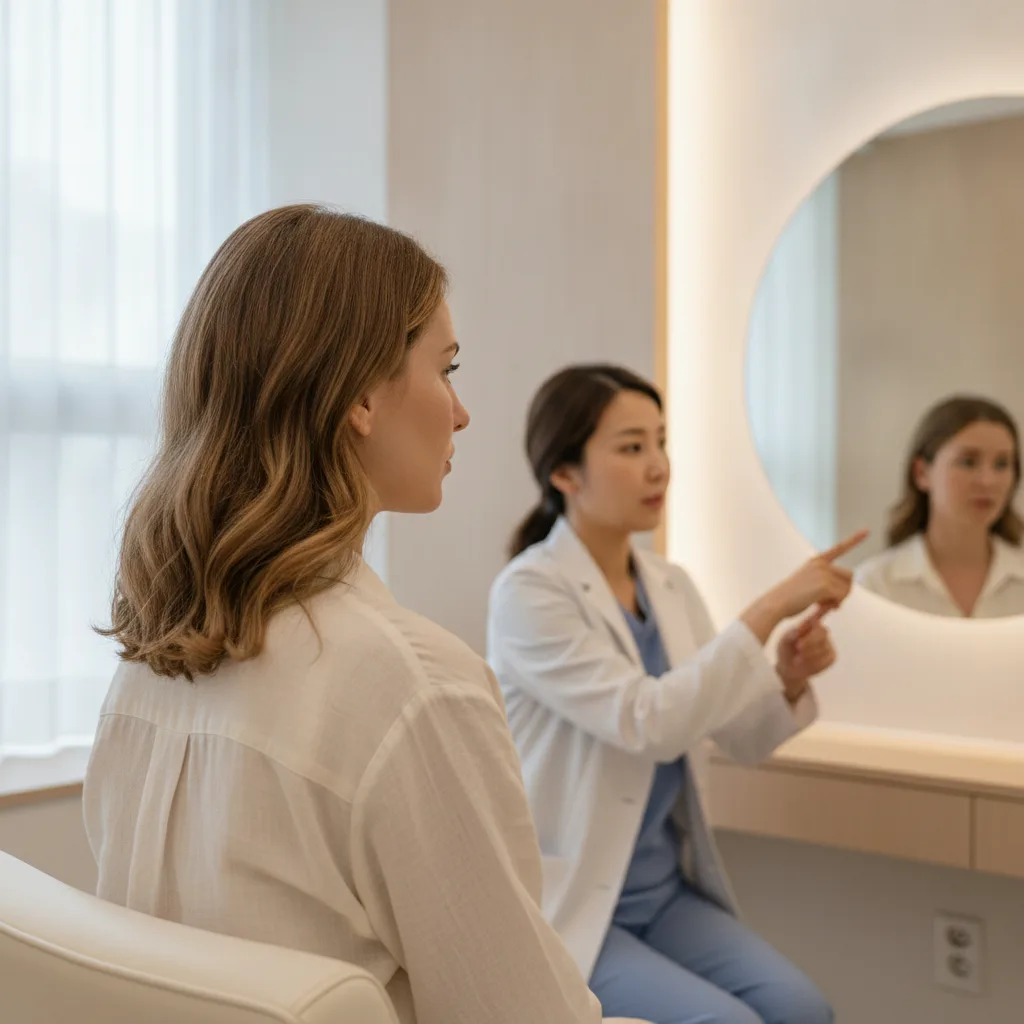
A typical first consultation in Gangnam costs nothing and runs around 20 minutes. The dermatologist will pinch the neck, ask you to clench your jaw, and shine a Wood's lamp on the décolletage to map sun damage. Expect them to recommend two or three modalities rather than one. This is not always an upsell. Necks rarely respond to a single tool because the layers ageing them are biologically different. A combined plan running across two visits spaced four weeks apart is the Seoul norm, and most foreign patients build their trip around exactly that gap.
BOTOX FOR PLATYSMAL BANDS AND THE NEFERTITI LIFT
Botox works on the vertical cords that pop out when you talk or smile, called platysmal bands. A standard Korean protocol uses 20 to 40 units of Nabota or Wondertox spread across 10 to 20 injection points along the bands and the jawline border. This is the so-called Nefertiti lift, named for the angular jaw on the Egyptian bust, and it sharpens the line between jaw and neck. Prices in Sinnonhyeon clinics run from ₩180,000 to ₩280,000 (about $130 to $200) for the full neck-and-jaw treatment with a Korean-brand toxin. The same protocol with Allergan Botox lands closer to ₩400,000 to ₩550,000 (about $290 to $400). Onset is three to seven days, peak at two weeks, and you get roughly three to four months of clean jaw definition before retouch.
Botox does not erase horizontal necklace lines. Those are crease-set creases in the dermis, not muscle pulls. Injecting toxin into them gives you nothing and wastes 10 units. If a clinic quotes Botox for horizontal lines without also mentioning skin boosters or Rejuran, push back. The right plan for those lines is biostimulator-based, covered in the next section.
SKIN BOOSTERS AND REJURAN FOR CREPEY TEXTURE
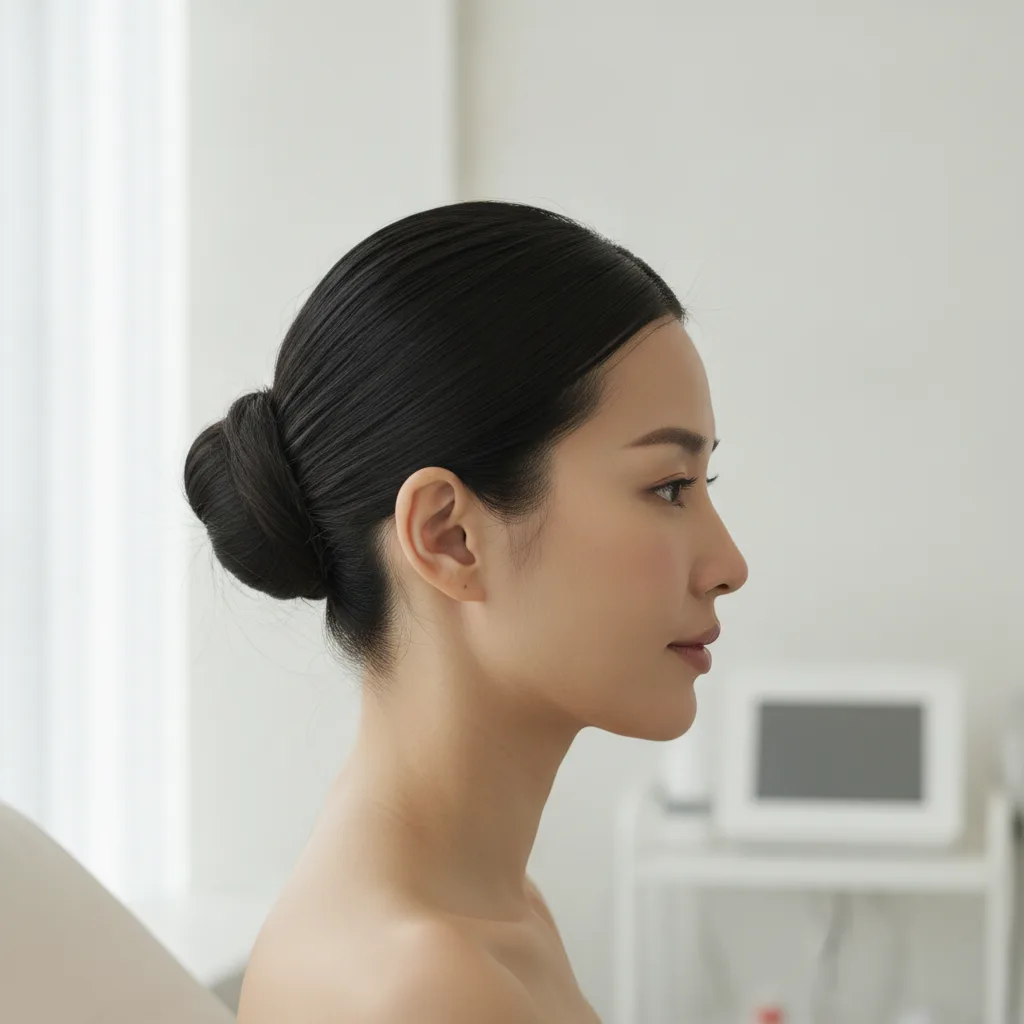
This is the workhorse pair for the neck. Skin boosters like Juvelook, Profhilo, or Skinvive deliver hyaluronic acid and PDLLA microspheres into the upper dermis through dozens of micro-injections, restoring plumpness and hydration without adding volume. Rejuran, the polynucleotide salmon DNA injection, is delivered the same way but acts as a wound-healing signal that tells the skin to remodel collagen. Korean injectors usually layer the two: one Profhilo session, then a Rejuran session three weeks later, then a repeat cycle. Per session, expect ₩280,000 to ₩450,000 (about $200 to $330) for the neck zone alone. A full three-month course on the neck and chest runs ₩1,200,000 to ₩2,000,000 ($870 to $1,450), and most patients fly home halfway through and finish the course on a return trip.
Downtime is small but real. You walk out with thirty to sixty raised injection blebs that flatten in roughly 12 hours. Some patients bruise lightly along the sides of the neck, especially if they took aspirin or fish oil in the prior week. The result is gradual rather than immediate. By session three you see fewer fine lines, smoother texture under makeup, and a quieter chest. By month six the platysmal cording softens as the supporting dermis thickens underneath, which is why Botox results also look cleaner after a booster course.
- 01Profhilo: 2 sessions, 4 weeks apart, restart cycle at 6 months
- 02Juvelook: 3 sessions, 4 weeks apart, retouch every 8 to 12 months
- 03Rejuran: 3 to 4 sessions, 3 to 4 weeks apart, maintenance every 6 months
- 04Skinvive: emerging in Seoul, 1 session every 6 months, currently premium-priced at ₩600,000+
HIFU AND RF FOR TIGHTENING THE SKIN ENVELOPE
Once the skin has lost laxity (not just lines but actual sag along the jaw-to-neck transition), injectables stop being enough. This is where Seoul clinics turn to HIFU and RF microneedling. Shurink Universe uses focused ultrasound to heat the SMAS and deep dermis, triggering a contraction-then-collagen-rebuild cycle. A typical neck-and-jaw Shurink session in Gangnam runs ₩250,000 to ₩500,000 (about $180 to $360) for 300 to 600 shots, and a single session holds for six to nine months. RF microneedling like Potenza or Sylfirm goes shallower, mechanically driving radiofrequency energy into the upper and mid dermis through gold-coated needles. It is the better choice when crepe and tone are the main issues rather than sag.
Combine carefully. A common Seoul stack is one Shurink session, then a Rejuran course over the following eight weeks, then RF microneedling at the four-month mark. Stacking everything in a single visit overheats the tissue and can produce burn-induced pigmentation, particularly on Southeast-Asian and Mediterranean skin tones. Reputable clinics in Apgujeong and Cheongdam will refuse to do it and will instead build you a two-trip plan. If a clinic agrees to do HIFU, RF, Rejuran and Botox in the same afternoon, walk out.
WHAT ABOUT LASERS AND NECK PIGMENTATION?
Pigmentation on the neck and chest is often UV damage layered with hormonal pigment, and it does not respond the same way as facial melasma. Pico toning protocols built for the face are too aggressive for chest skin. Most Seoul dermatologists in Apgujeong default to long-pulse Nd:YAG or low-fluence Q-switched lasers at conservative settings, paired with topical tranexamic acid and a strict daily SPF 50. Expect 4 to 6 sessions spaced four weeks apart at ₩150,000 to ₩280,000 each, with results plateauing around month five. The dermatologist will usually layer one of the skin booster sessions described above on the same visit to keep the texture moving while pigment fades.
If a clinic recommends Fraxel or ablative CO2 laser on a Southeast-Asian or darker neck skin, get a second opinion. The risk of post-inflammatory hyperpigmentation on that skin profile and that body region is meaningfully higher than on the face, and Seoul clinics that primarily treat Korean skin do not always adjust their default fluences for it. Sinnonhyeon and Gangnam clinics with strong foreign-patient volume tend to be more conservative on the dial. Ask flatly what energy setting they use on Fitzpatrick IV or V necks before you sign.
Concerns · 6 min · Jun 29, 2026
← all posts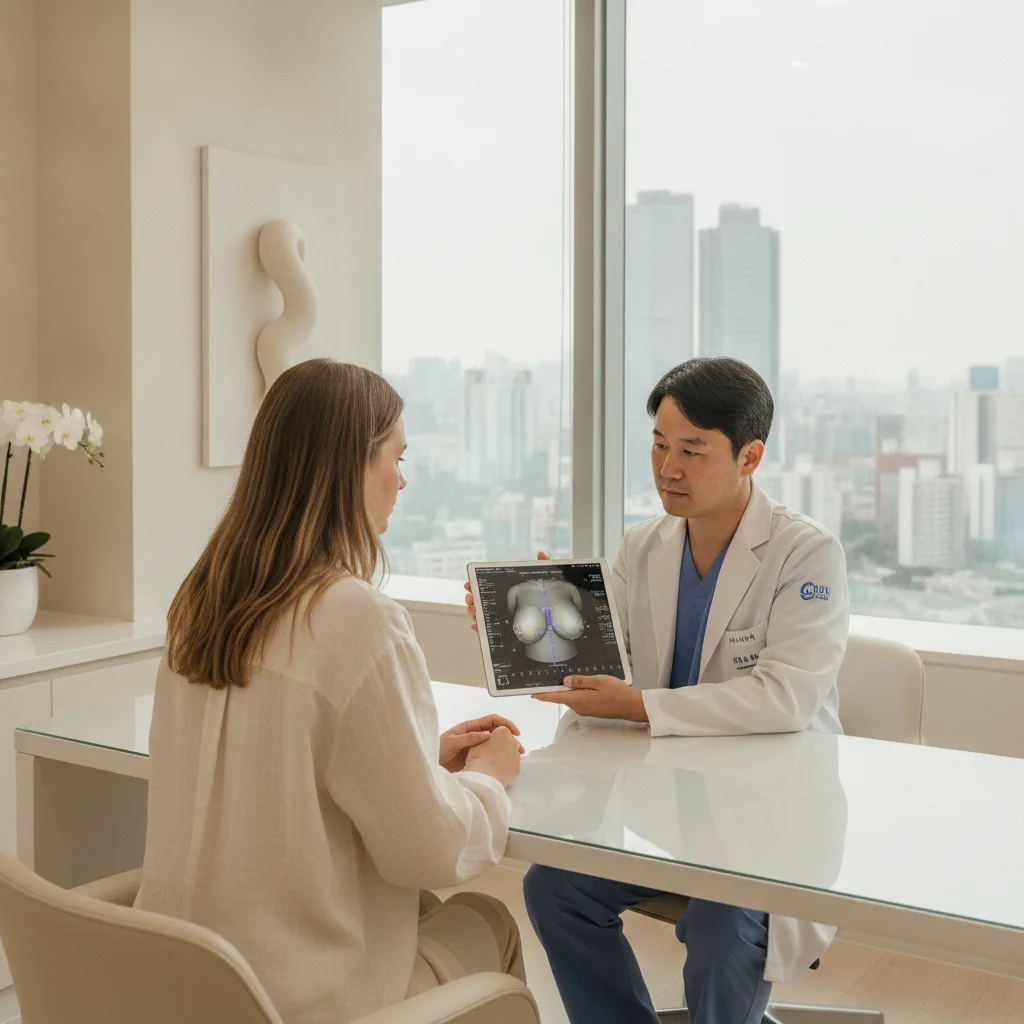
BREAST AUGMENTATION RISKS IN SEOUL 2026: A SAFETY GUIDE
Capsular contracture, rupture, hematoma, and the red flags to catch before booking a Seoul clinic.
TWO-JAW SURGERY RISKS IN SEOUL 2026: WHAT TO KNOW BEFORE BOOKING
A candid look at nerve injury, occlusion problems, airway swelling, and revision odds for international patients considering orthognathic surgery in Korea.
BUNNY LINES BOTOX IN SEOUL 2026: NOSE WRINKLE FIX GUIDE
Small dose, big difference. What bunny lines Botox costs in Seoul, which brand to pick, and how to avoid a frozen nose.
LIPOSUCTION RISKS IN SEOUL 2026: RED FLAGS TO AVOID
The real complications from Seoul lipo, the clinic red flags that predict them, and how medical tourists reduce their odds.

HAND REJUVENATION IN SEOUL 2026: AGE SPOTS, VOLUME & VEINS
Non-surgical hand rejuvenation in Seoul: pico toning for age spots, Radiesse and Profhilo for volume loss, sclerotherapy for veins, and honest 2026 pricing.
▶▶▶ stop reading. start matching.
FIND YOURS.
We'll pull five clinics matched to your case. WhatsApp reply within 24h.