FILLER DISSOLVING IN SEOUL 2026: HYALURONIDASE COST & PROCESS
A practical guide to dissolving hyaluronic acid filler in Seoul with hyaluronidase, covering costs, timing, side effects, and where medical tourists actually go for the fix.
By Editorial
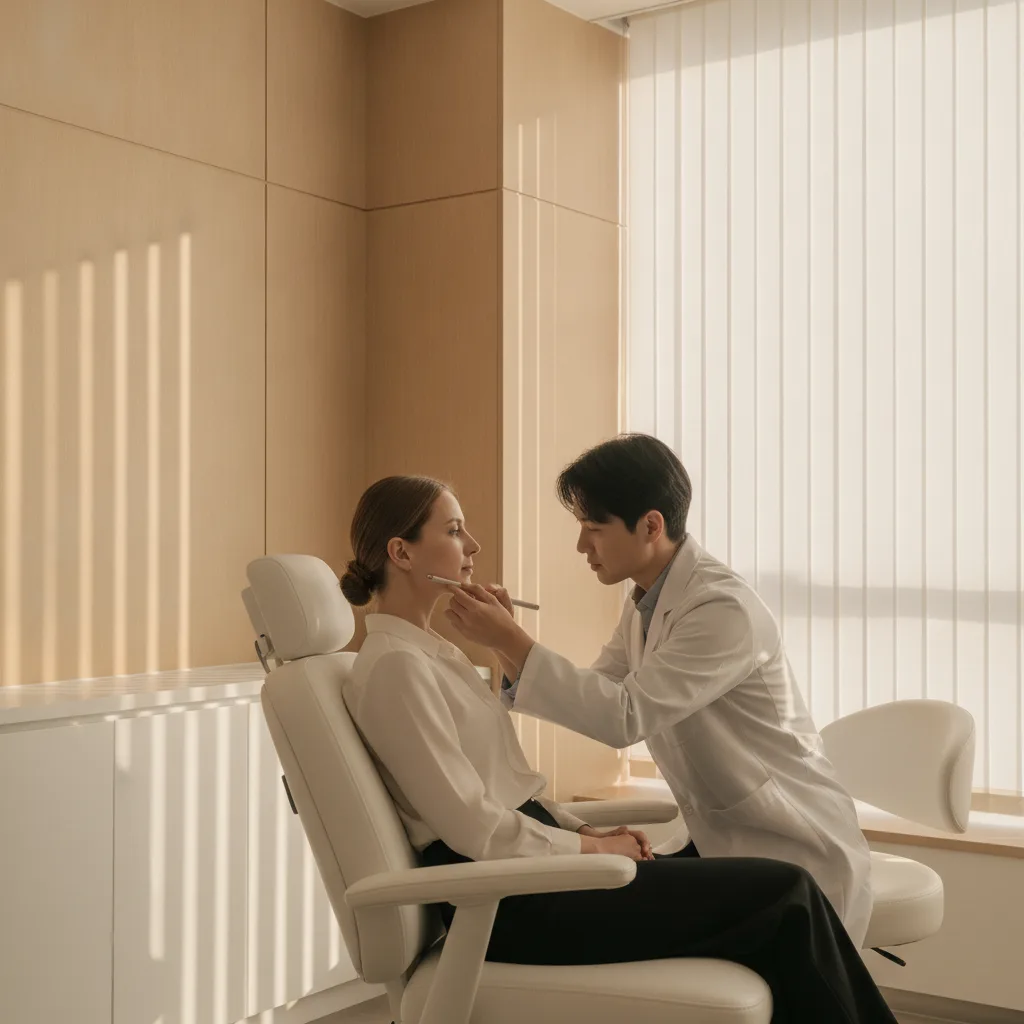
Most people book filler in Seoul. A smaller, quieter group flies in to un-do filler they got somewhere else, or a batch that migrated, or a set of cheeks that looked fine at week one and pillowy by month six. Hyaluronidase is the enzyme that takes hyaluronic acid filler back down, and Korean clinics inject it every day. This is a guide for the un-do trip.
WHAT HYALURONIDASE ACTUALLY DOES
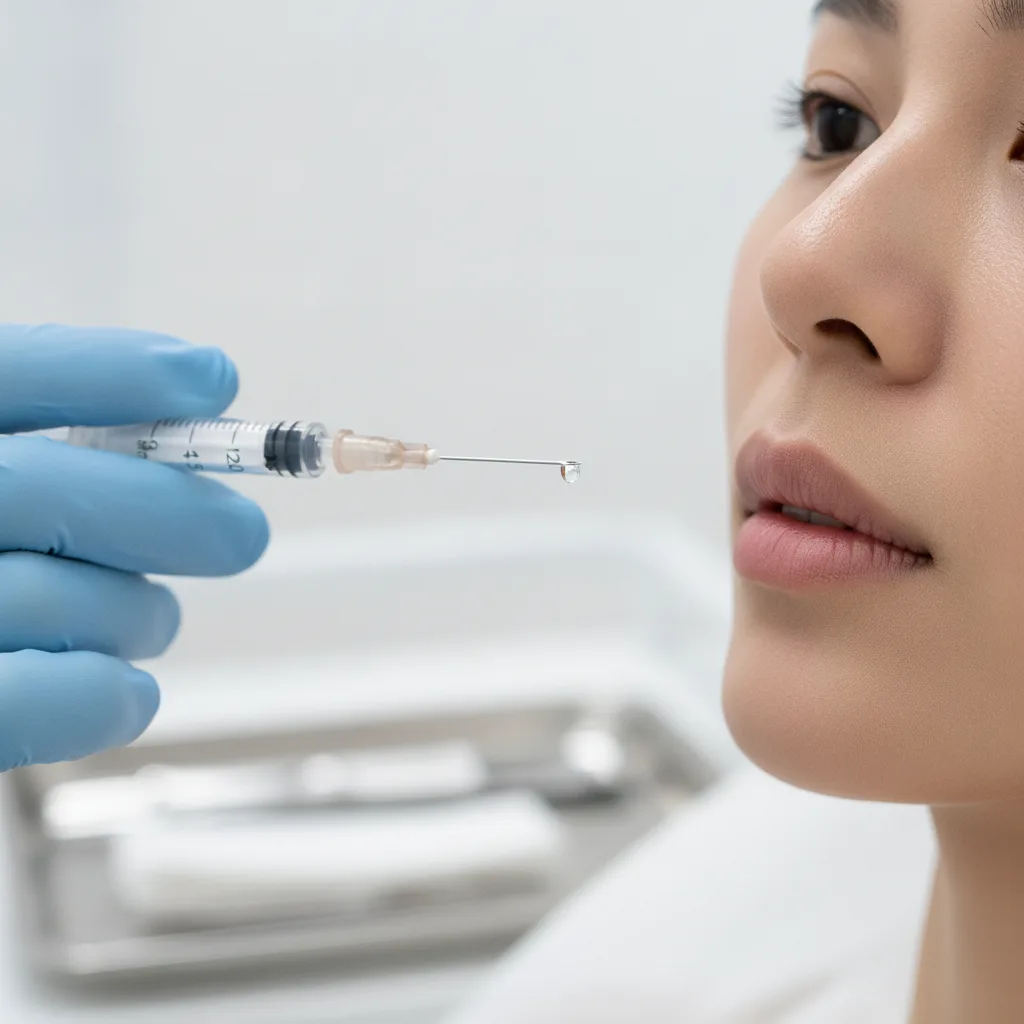
Hyaluronidase is an enzyme that cleaves the cross-links inside hyaluronic acid gel and lets the body flush the resulting fragments out through normal lymphatic drainage. It only works on HA-based fillers such as Juvederm, Restylane, Belotero, and the Korean HA lines a doctor can identify by injection history. It does not touch Sculptra, Radiesse, PMMA, silicone, or any of the semi-permanent collagen biostimulators you might see on a Seoul menu, which is one reason the intake questions matter.
In Seoul clinics the two brands you will see most often are Liporase, a Korean-made hyaluronidase that dominates the domestic aesthetic market, and Hyalase or Hylenex when a clinic serves a lot of international patients. Dose is measured in units per zone, not per syringe, and a competent injector will map the treated area with a marker and inject small aliquots into each depot rather than flooding one point. The correct dose depends on how much HA is in there, how densely cross-linked it is, and how deep it sits. For context on how HA fillers are chosen in the first place, our dermal fillers guide covers the product families a Korean clinic keeps in the fridge.
WHY MEDICAL TOURISTS COME TO SEOUL TO DISSOLVE
Three reasons show up over and over in Seoul consultation rooms. The first is migration, usually lip or tear trough filler that has drifted upward into the philtrum or across the cheek fat pad and now reads as a puffy, undefined face. The second is overfill, where a home clinic layered syringe after syringe over years without accounting for the fact that HA holds water and expands. The third is a botched result from a cheap injector back home that a patient wants stripped out before starting fresh in Korea. Ultherapy or thread lifts often get proposed in the same consult, so it helps to read our thread lifting versus Ultherapy breakdown before you go.
There is also a smaller cohort chasing the so-called filler reset, where every drop of HA gets dissolved to reveal what the face looks like natively before deciding on a new plan. Korean injectors are more willing to run this reset than many Western clinics because they tend to treat filler as a rolling maintenance tool rather than a permanent commitment, and they earn their revenue on the rebuild anyway.
HOW MUCH DOES HYALURONIDASE COST IN SEOUL?
Expect a wide range depending on how much you are dissolving and which district you sit in. A single small zone such as one lip or one tear trough at a Gangnam mid-tier clinic runs roughly ₩150,000 to ₩250,000, or about $110 to $180 USD. A full lip reset with two vials of Liporase lands closer to ₩300,000 to ₩450,000, about $220 to $330. Full-face dissolving across cheeks, chin, and nasolabial folds can push ₩700,000 to ₩1,200,000, about $520 to $890, and often gets split across two visits so the tissue can settle between rounds.
Cheongdam and Apgujeong clinics with English-language coordinators price 20 to 40 percent above Sinnonhyeon or Seocho for the same enzyme and the same volume, which is a pattern our Apgujeong premium district guide explains in detail. If you are budget-first and only need one zone dissolved, Sinnonhyeon around exit 4 of the metro station is packed with high-volume clinics that quote the lower end of the range and see enough foreigners to run the consult in workable English.
- 01Single zone (one lip or one tear trough): ₩150,000-250,000 (~$110-180)
- 02Full lips reset (2 vials): ₩300,000-450,000 (~$220-330)
- 03Cheeks only, both sides: ₩400,000-700,000 (~$300-520)
- 04Full-face dissolving, split across 2 visits: ₩700,000-1,200,000 (~$520-890)
- 05Consultation fee, refundable against treatment at most clinics: ₩30,000-100,000
WHAT HAPPENS IN THE ROOM
A first-timer consult in Seoul for dissolving looks slightly different from a filler consult. The doctor will palpate the treated zones, sometimes with an ultrasound probe at premium clinics, ask about every filler you have ever received, and try to establish which product is where. If you can bring receipts, product boxes, or a message from your previous injector, bring them. Patch testing is not standard practice for Liporase in Korea because true anaphylaxis to modern hyaluronidase is rare, but a good clinic will still ask about bee sting allergy and prior enzyme exposure.
The injection itself is quick, usually five to fifteen minutes with topical numbing cream applied for twenty minutes beforehand. You will feel a stinging burn during injection that fades within a minute per point. The area often swells hard for the first hour because the enzyme is working aggressively on the gel, then deflates over the next 24 to 72 hours as the freed HA drains. Bruising is common at the lips and tear troughs. For general aftercare rules that also apply here, our post-treatment injectables care guide is worth a skim before you fly.
HOW LONG UNTIL YOU SEE THE TRUE RESULT?
Most of the filler is gone within 24 to 48 hours, but the tissue itself needs longer to settle back into its native shape. Skin that has been stretched by long-standing filler will look slightly loose, crepey, or hollow for two to four weeks while collagen and elastin remodel. This is the phase where a lot of patients panic, decide the dissolving was a mistake, and rush to refill. The honest advice from Korean injectors is to wait at least three weeks before making any decisions about rebuilding, and ideally six weeks before adding new filler on top.
If you are dissolving to reset before a fresh treatment plan, budget two Seoul trips or one long stay of at least three weeks. Trying to dissolve and re-filler in the same visit almost always over-corrects because the tissue has not deflated fully by the time the new product goes in. The trip-planning math on stacking treatments is covered in our how to stack treatments in one Seoul trip walkthrough.
RISKS AND SIDE EFFECTS WORTH KNOWING
The most common side effect is heavy swelling for one to three days, followed by bruising that clears in five to ten. Real risks are lower but not zero: hyaluronidase can dissolve some of your body's own hyaluronic acid alongside the filler, which is the biological reason the treated zone looks temporarily flat. That native HA rebuilds within a few weeks, but for that window your face will look smaller than you remember. True allergic reactions to Liporase are rare, mostly urticaria and localised swelling, but serious systemic reactions have been reported in the medical literature, which is why competent clinics keep epinephrine on hand and observe you for 30 minutes after injection.
- 01Common: pronounced swelling for 24-72 hours, bruising at injection points, mild tenderness for 3-5 days
- 02Uncommon: temporary flattening beyond the treated zone as native HA gets cleaved too
- 03Rare: localised urticaria, itching, delayed hypersensitivity in the treated area
- 04Very rare: systemic allergic reaction, which is why in-clinic observation matters
HOW TO PICK A CLINIC FOR THIS SPECIFICALLY
Dissolving is a different skill from injecting, and not every big-name filler clinic in Gangnam does it well. Ask three questions before you book. First, how many hyaluronidase cases do they run per week, because volume matters more than years-in-practice for this specific procedure. Second, do they map with ultrasound for complex cases such as tear trough migration or lumps under the eye. Third, will they split the treatment into two sessions for full-face rather than trying to strip everything in one sitting. A clinic that says yes to all three is a better bet than the one with the most Instagram followers. If you want a broader lens on how price and quality track across Seoul, our best value Seoul skin clinics guide is a starting point.
Language matters more here than for a routine Botox top-up because you are describing product history and symptoms from another country, and the doctor is making judgment calls about dose and depth in real time. Clinics with an in-house coordinator who speaks native English, not a translator app, are worth the small premium. The way translator support actually works in Seoul clinics is broken down in our translator services guide.
Concerns · 9 min · Aug 21, 2026
← all posts
BREAST AUGMENTATION RISKS IN SEOUL 2026: A SAFETY GUIDE
Capsular contracture, rupture, hematoma, and the red flags to catch before booking a Seoul clinic.
TWO-JAW SURGERY RISKS IN SEOUL 2026: WHAT TO KNOW BEFORE BOOKING
A candid look at nerve injury, occlusion problems, airway swelling, and revision odds for international patients considering orthognathic surgery in Korea.
BUNNY LINES BOTOX IN SEOUL 2026: NOSE WRINKLE FIX GUIDE
Small dose, big difference. What bunny lines Botox costs in Seoul, which brand to pick, and how to avoid a frozen nose.
LIPOSUCTION RISKS IN SEOUL 2026: RED FLAGS TO AVOID
The real complications from Seoul lipo, the clinic red flags that predict them, and how medical tourists reduce their odds.

HAND REJUVENATION IN SEOUL 2026: AGE SPOTS, VOLUME & VEINS
Non-surgical hand rejuvenation in Seoul: pico toning for age spots, Radiesse and Profhilo for volume loss, sclerotherapy for veins, and honest 2026 pricing.
▶▶▶ stop reading. start matching.
FIND YOURS.
We'll pull five clinics matched to your case. WhatsApp reply within 24h.