HOW TO STACK TREATMENTS IN ONE SEOUL TRIP (2026 GUIDE)
A sequencing plan for medical tourists doing three to five procedures in seven days without walking around bruised.
By Editorial
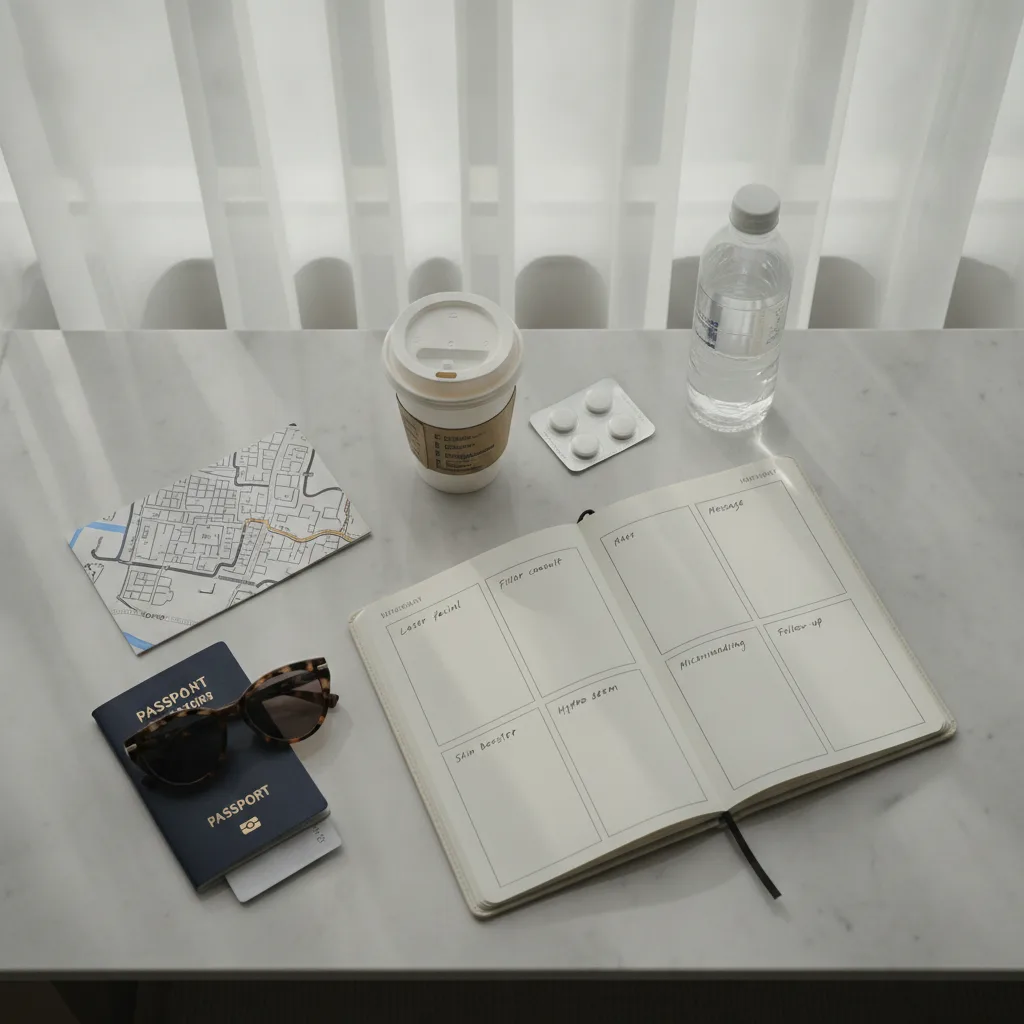
Most people flying into Seoul for aesthetics book one thing, then panic-add three more once they see the price menus. Stacking works, but only if the order matches how each treatment heals. Get it wrong and day five is a mirror you would rather avoid.
START WITH THE TREATMENTS THAT HEAL SLOWEST
The rule most first-timers miss is that healing time, not price or clinic preference, decides your calendar. Ultherapy and thread lifts leave the deepest tissue response. Bruising from threads can peak on day three and linger through day seven, so those go on day one or day two of the trip. RF microneedling belongs in the same early window: pinpoint bleeding fades within 24 hours, but redness lingers 48 to 72. If you land Sunday night, book the heaviest procedure Monday morning while your face is fresh and your jetlag is masking soreness.
Skin boosters, Rejuran, and pico laser toning cluster into a second tier that heals over two to four days but wants space from the deep-tissue treatments. Injectables that reshape (chin filler, cheek filler, tear-trough, non-surgical rhinoplasty) go later in the week because bruising there is visible and cameras are cruel. Botox for wrinkles, jaw slimming, or forehead lines is the easiest to slot in last: no downtime, effects show at day 3 through 7. A common Gangnam recipe is Ultherapy or threads on day 1, RF microneedling day 3, Rejuran or skin boosters day 5, botox day 6. Fly out day 7 with only faint pinkness on the jawline.
SEQUENCING RULES THAT KEEP BRUISING OFF YOUR FACE
The single mistake that ruins holiday photos is stacking two blood-thinning-adjacent treatments back to back. Threads, filler in vascular zones (tear-trough, temple, lips), and any deep-injection contouring all carry meaningful bruise risk. Space them at minimum 48 hours apart, ideally 72, and never do two on the same face day. If your clinic in Sinnonhyeon offers a combo package that lumps threads plus tear-trough filler on day one, ask them to split it. Any coordinator worth booking will agree without a fight.
Second rule: alcohol, ibuprofen, fish oil, and vitamin E all thin the blood. Stop them 48 hours before any needle-based treatment. Seoul is a rough city to keep this promise, given the soju and the twelve-course dinners friends will drag you to, so front-load the social nights into day 6 or 7 after the heavy work is done. Water and paracetamol only for the first four days. Coffee is fine and will save you from the jetlag crash.
Third rule: never plan a treatment on the last day. You want at least 24 hours between the final procedure and your flight, both to spot any complication before boarding and to give injectables time to settle before cabin pressure. Ultherapy and threads specifically want three clear days before long-haul flying, which is why heavy work goes at the front of the trip, not the end. If you booked a return flight Saturday, your last needle appointment closes Wednesday.
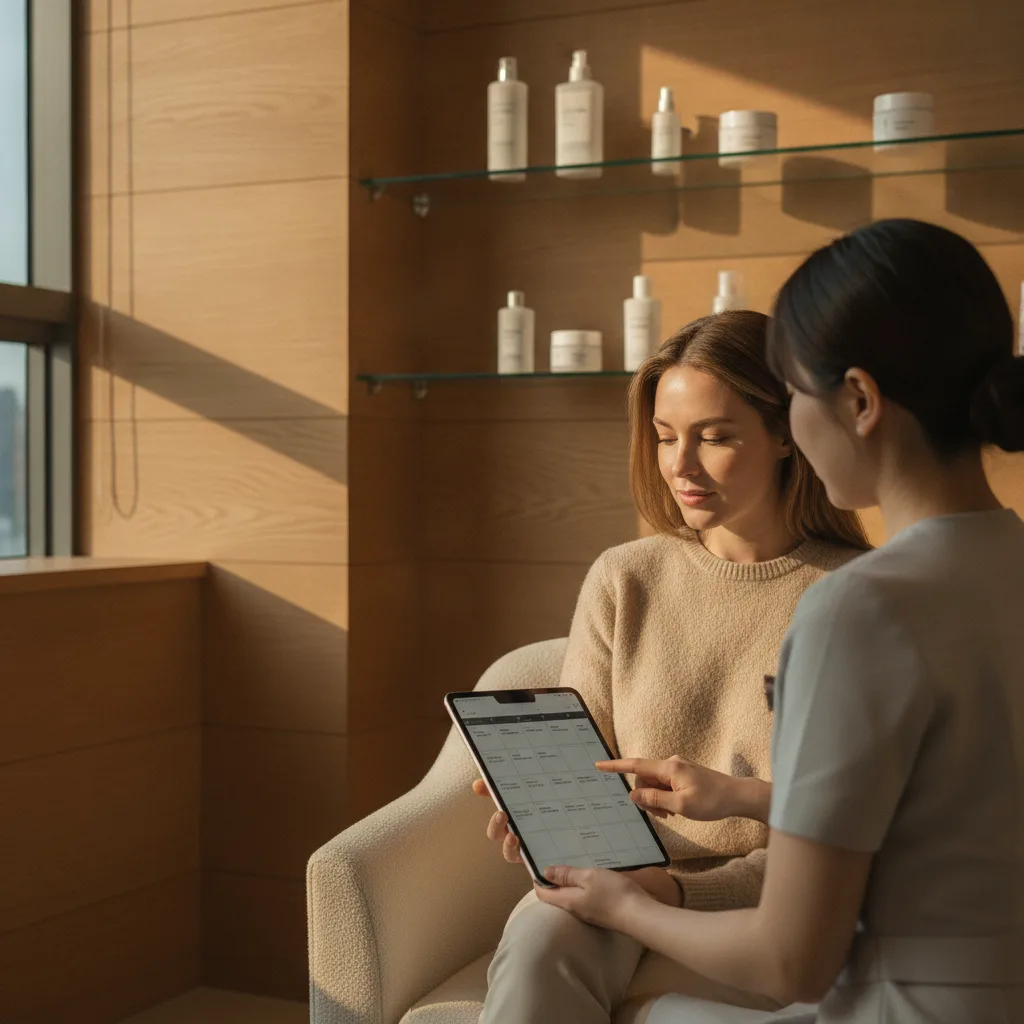
“Two clinics is the sweet spot for a stacked trip: one anchor for device work, one injectable-focused clinic where price sensitivity is higher.”
A SAMPLE SEVEN-DAY SEOUL STACKING PLAN
Here is a compressed itinerary that has worked for readers doing a mid-tier reset (roughly USD 2,500 to 4,000 in treatments) across two or three clinics. Landings and consultations are day zero. Day one is the deep-tissue procedure. Day two is a full rest, ideally a walking day in Hongdae or Seongsu. The mid-week rebuilds sit collagen work and pigment correction back to back with a spacer day. The tail end is quick, low-downtime touches so you fly home glowing rather than swollen.
- 01Day 0 (Sun): Land Seoul, hotel check-in, book two consultations for Mon AM.
- 02Day 1 (Mon): Ultherapy or thread lift at anchor clinic in Apgujeong or Sinnonhyeon.
- 03Day 2 (Tue): Rest, gentle walk, light food. Ice pack twice.
- 04Day 3 (Wed): RF microneedling. Redness expected 24-48h.
- 05Day 4 (Thu): Rest and light sightseeing, no direct sun.
- 06Day 5 (Fri): Rejuran or skin boosters, choose one, not both.
- 07Day 6 (Sat): Botox for jaw or forehead, plus optional medical facial.
- 08Day 7 (Sun): Fly out. Skip alcohol on the plane.
A more aggressive itinerary swaps day 5 for filler work, but only if you already know how your face responds to hyaluronic acid. First-timers should keep filler out of a stacked trip entirely and come back on a separate visit specifically for contouring. Same for hair transplant, which is a full trip of its own and does not stack with anything on the face. If you are combining surgery like rhinoplasty or V-line, that is a separate 10 to 14 day plan with zero other treatments on the schedule.
WHICH TREATMENTS DO NOT COMBINE IN THE SAME TRIP
Some combinations look tempting on paper and hurt in practice. Ultherapy plus Thermage in the same trip is unnecessary overlap and wastes budget. Two devices doing similar collagen work compete for the same skin response window and the second one will feel underwhelming. Pick one device per trip and give it 90 days to show results before layering. Similarly, do not stack pico laser toning with RF microneedling in the same week. Both irritate the epidermis. Both need barrier repair time. Doing them 48 hours apart tanks results on both.
Filler contouring plus threads in one trip is the other common trap. Both are structural, both bruise, and doing them in sequence stresses the mid-face lymphatic drainage. If your face is your job (broadcast, camera, live events), pick one structural change per trip. If you want the full lift-plus-volume reset, split into two trips 8 to 12 weeks apart. This is exactly the kind of upsell to push back on during consultation, and it sits inside the hidden-cost patterns most Gangnam clinics know you have read about.
BOOKING LOGISTICS THAT MAKE STACKING POSSIBLE
Two clinics is the sweet spot for a stacked trip. One anchor clinic handles the heavy device work (Ultherapy, RF microneedling, threads) where you want senior operator time. A second clinic covers the injectables (Rejuran, skin boosters, botox) where price sensitivity is higher and menu prices are more transparent. Booking both from abroad requires 10 to 14 days of lead time for the anchor clinic and 3 to 5 days for the injectable clinic. Deposits are usually 50,000 to 200,000 KRW per booking, refundable up to 48 hours out. Use the step-by-step booking playbook rather than DMing clinics on Instagram at midnight.
Translator availability decides which consultation slots you can actually take. In-house English coordinators at Apgujeong and Cheongdam clinics tend to work weekdays 10:00 to 19:00. Third-party medical translators (used by mid-tier Sinnonhyeon clinics) require 24 hours advance booking and cost 100,000 to 150,000 KRW per session. Build the trip around morning consultations, because afternoons back up with local walk-ins and coordinators get pulled into rebooking chaos. See the full translator services breakdown for what to expect per clinic tier.
How-to · 8 min · Jul 14, 2026
← all posts
CREDIT CARD FEES AT SEOUL AESTHETIC CLINICS 2026: SURCHARGES & FX
What foreign patients actually pay in card surcharges, FX markups, and daily caps at Seoul aesthetic clinics in 2026.
RECOVERY STAYS SEOUL PLASTIC SURGERY 2026: HOTELS AND PRICES
Where foreign patients actually stay after rhinoplasty, two-jaw, breast and body surgery in Seoul, with KRW night rates by district and what to book.
TRAVEL INSURANCE FOR SEOUL PLASTIC SURGERY 2026: WHAT ACTUALLY COVERS YOU
Standard travel policies exclude elective cosmetic surgery. Here is what covers complications abroad, what pays for a stuck flight home, and which Seoul clinics include their own policy.
TAX REFUND IN SEOUL FOR AESTHETIC TREATMENTS 2026: VAT RULES EXPLAINED
What foreign patients actually pay in 10% VAT at Seoul aesthetic clinics, which treatments qualify for the Medical Tourism Tax Refund, and how to claim your won back at Incheon.
MEDICAL VISA FOR SEOUL PLASTIC SURGERY 2026: RULES BY COUNTRY
Visa-free entry, K-ETA, and C-3-3 medical tourist visas explained for foreign patients flying to Seoul for plastic surgery in 2026.
▶▶▶ stop reading. start matching.
FIND YOURS.
We'll pull five clinics matched to your case. WhatsApp reply within 24h.