REJURAN VS SKIN BOOSTERS IN SEOUL: WHICH BUILDS COLLAGEN?
Two of Seoul's most-asked-about skin-quality treatments, broken down by what they actually do, what they cost, and who picks which.
By Editorial
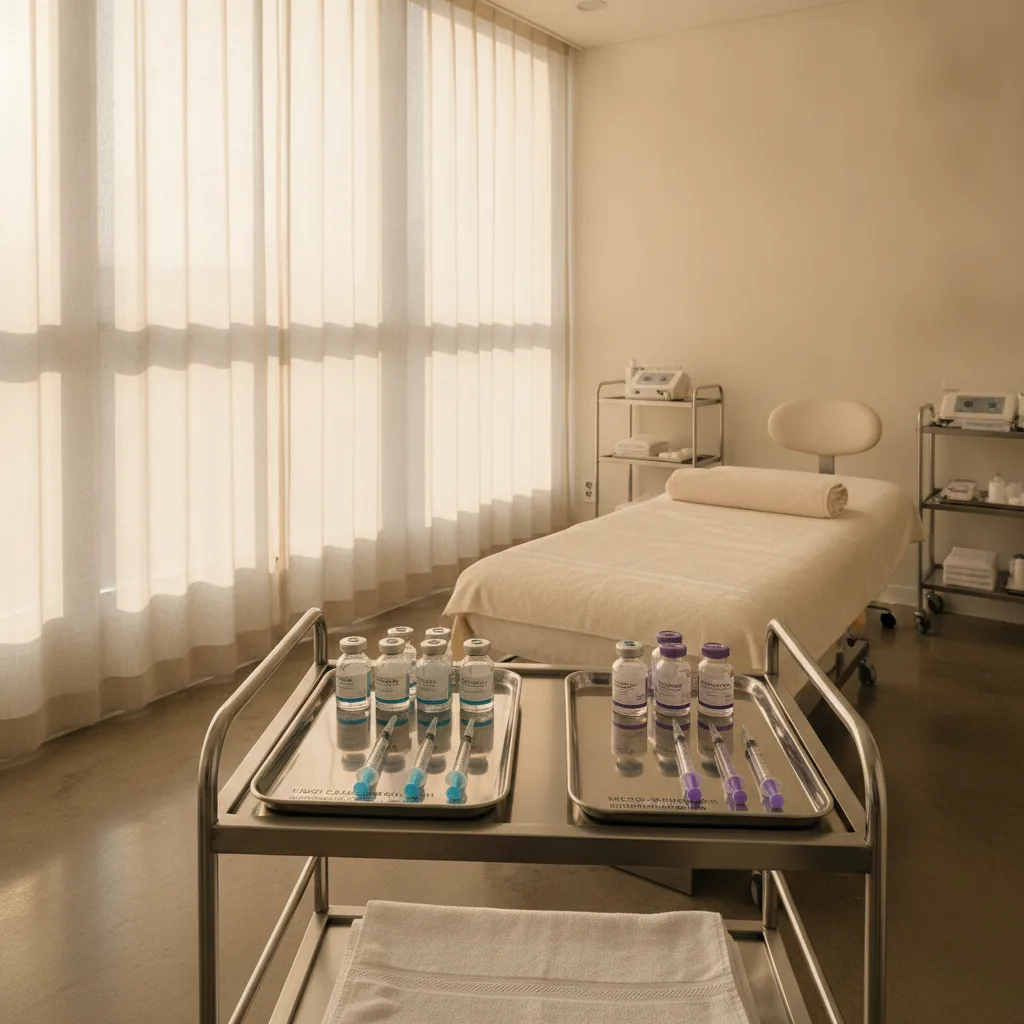
Most first-time visitors land in Seoul with two skin-quality treatments on their shortlist and a single question. Rejuran or skin boosters. They sound similar on a clinic price list, but they work on very different layers of the skin and ask for different timelines, different budgets, and different patience.
WHAT EACH TREATMENT ACTUALLY IS
Rejuran is a salmon-derived polynucleotide injection, marketed by Pharma Research under the Rejuran name and dosed across three to four sessions spaced two to four weeks apart. The active ingredient is PDRN, fragments of nucleotides that the skin reads as a signal to repair, increase blood flow, and produce new collagen and elastin. It does not add volume. It rebuilds the substrate underneath. Patients leave with small bumps at the injection sites for 24 to 72 hours, then those settle and the work happens over the next six to eight weeks.
Skin boosters is the umbrella term for collagen biostimulators and hyaluronic-acid hydrators that get injected into the dermis. In Seoul the common menu names are Juvelook, Sculptra, Profhilo, Lilied, Rejuran Healer (which sits in both camps), and a few newer entries like RE2O and LAETIGEN. Some of these are pure hydration plays using cross-linked hyaluronic acid. Others are PLLA or PCL biostimulators that trigger long-term collagen production over three to six months. Read the full guide on skin boosters in Seoul for what each brand does at the cellular level.
WHO PICKS REJURAN IN SEOUL
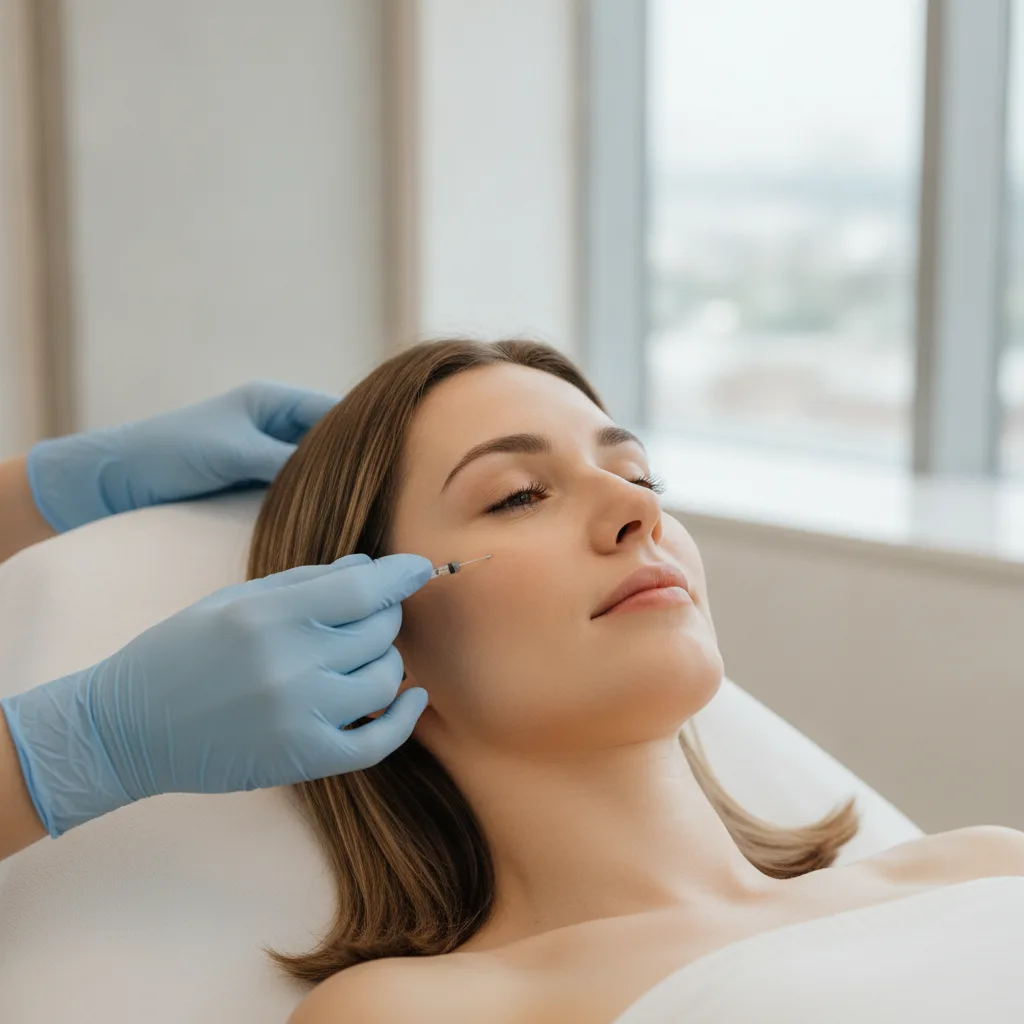
Rejuran works best on skin that looks tired before it looks aged. Visible pore texture, dull tone, fine lines around the eyes, post-inflammatory marks from acne, and the kind of crepey under-eye area that fillers actually make worse. Clinics in Sinnonhyeon and Gangnam push three sessions at minimum, and most foreigners get talked out of two-and-done because the third session is where the rebuild actually compounds. The injection pattern is dense, often forty to sixty micro-pricks per session, so expect the topical numbing cream to sit for thirty minutes before the doctor starts.
Patients with under-eye concerns tend to lean Rejuran over filler, especially when the issue is skin quality rather than volume loss. Filler under the eye is a different decision and gets used for a different problem. Rejuran also pairs well with laser toning and RF microneedling on the same trip, since it accelerates the recovery window. Clinics in Cheongdam often bundle Rejuran with a same-day Pico toning session at a small discount for medical-tourist packages.
WHO PICKS SKIN BOOSTERS IN SEOUL
Skin boosters fit a different patient. Smoother surface texture, plumper hydration, a soft sheen rather than a structural rebuild. Juvelook and Sculptra are the most-requested biostimulators on foreign-patient menus, both PLLA-based, both rolled out across three sessions spaced four to six weeks apart, and both showing their full effect at month three. Profhilo is the high-spreading hyaluronic-acid pick, marketed as a face-and-neck hydration shot that takes two sessions one month apart. Lilied is the newer PCL booster and gets recommended for patients who want longer-lasting collagen support but cannot commit to a three-session schedule.
Most Seoul clinics will not run Profhilo and Juvelook in the same session, and a good doctor will ask whether you want texture or volume before recommending which biostimulator family fits. The Rejuran healer guide covers where Rejuran sits among the hybrid options. If you are coming in for a single-trip glow-up, skin boosters with a hyaluronic-acid base will give you a visible result within ten days. Biostimulators will not.
- 01Rejuran (1 vial, full face): around ₩250,000 to ₩400,000 / about $180 to $290
- 02Rejuran Healer HB Eye (eye area): around ₩280,000 to ₩450,000 / about $200 to $320
- 03Juvelook (1 vial, dilution varies): around ₩300,000 to ₩500,000 / about $215 to $360
- 04Sculptra (1 vial): around ₩600,000 to ₩900,000 / about $430 to $645
- 05Profhilo (1 syringe, 2ml): around ₩400,000 to ₩650,000 / about $290 to $465
- 06Lilied or Collaum (1 vial): around ₩350,000 to ₩550,000 / about $250 to $395
COST REALITIES ACROSS GANGNAM AND APGUJEONG
Pricing for both treatment families splits by district, not by brand. A Rejuran session in Sinnonhyeon will run thirty to forty percent cheaper than the same vial at a marquee Apgujeong clinic, and the active ingredient is identical. The difference is consultation depth, injection technique, post-care, and how many of the staff speak English. For first-time visitors who only have one trip planned, the Apgujeong premium often returns value in injection accuracy alone. Repeat visitors who already know how their skin responds tend to drop down to mid-tier Gangnam clinics from session two onward.
VAT is the second pricing trap. The treatment family is medical, so most clinics bake the ten percent VAT into the quoted price, but the Korean tax authority allows a foreign-patient VAT refund on procedures over ₩500,000 if you book through a certified med-tourism clinic. Ask before you pay. The full Rejuran cost guide and the skin boosters cost breakdown cover the receipt-level details for both.
WHICH ONE BUILDS MORE COLLAGEN?
If the goal is measurable new collagen, Sculptra and Lilied both outperform Rejuran on histology studies, because PLLA and PCL trigger a deeper, slower fibroblast response that keeps building for four to six months after the last session. Rejuran builds collagen too, but its primary mechanism is repair signaling rather than volumetric biostimulation, so the effect concentrates in the upper dermis and shows up as smoother surface quality rather than added support. Profhilo sits between the two, hydrating in the short term and stimulating collagen modestly in the medium term.
The answer depends on what your skin actually needs. Thin-skinned patients in their late twenties and early thirties usually do better starting with Rejuran or Profhilo to build a healthier base, then layering in Juvelook or Sculptra at year two for structural support. Patients in their forties who have lost real volume should skip straight to a PLLA biostimulator and add Rejuran only after the foundation is set.
HOW TO DECIDE ON YOUR FIRST SEOUL TRIP
Pick one family per visit. A single seven-day trip is not enough to run a full three-session course of either treatment, and stacking both wastes injection sites that will compete with each other for healing bandwidth. If your main concern is dullness, texture, or under-eye crepe, book three Rejuran sessions and use Korea's ease of clinic-hopping to space them across two trips ten weeks apart. If your concern is laxity, mid-face flatness, or that thinner-than-it-used-to-be look, skip Rejuran for now and book a Juvelook or Sculptra series.
Comparisons · 7 min · Jun 11, 2026
← all posts
BREAST IMPLANT REMOVAL SEOUL 2026: EN BLOC VS CAPSULECTOMY VS EXPLANT
The three protocols Seoul surgeons use to take breast implants out, how they pick between them, and what each one costs and recovers like for foreign patients in 2026.
JUVEDERM VS RESTYLANE VS BELOTERO: SEOUL FILLER BRANDS 2026
The three Western HA filler families Seoul injectors actually stock, where each one wins on the face, and what foreign patients pay per syringe in 2026.
SUBGLANDULAR VS SUBMUSCULAR VS DUAL PLANE BREAST AUGMENTATION SEOUL 2026
The three pocket planes behind every Seoul boob job, how surgeons pick between them, and what each one means for recovery, feel, and ten-year results.
MINT PDO VS WONDERLIFT VS SILHOUETTE SOFT THREADS SEOUL 2026
The three thread brands Seoul clinics argue about, how surgeons actually pick between them, and what each costs for foreign patients in 2026.
FAT TRANSFER VS IMPLANTS BREAST AUGMENTATION SEOUL 2026
Head-to-head verdict on fat grafting and silicone implants in Seoul, with KRW price bands, revision rates, and the clinic types that run each procedure well.
▶▶▶ stop reading. start matching.
FIND YOURS.
We'll pull five clinics matched to your case. WhatsApp reply within 24h.