SUBGLANDULAR VS SUBMUSCULAR VS DUAL PLANE BREAST AUGMENTATION SEOUL 2026
The three pocket planes behind every Seoul boob job, how surgeons pick between them, and what each one means for recovery, feel, and ten-year results.
By Editorial
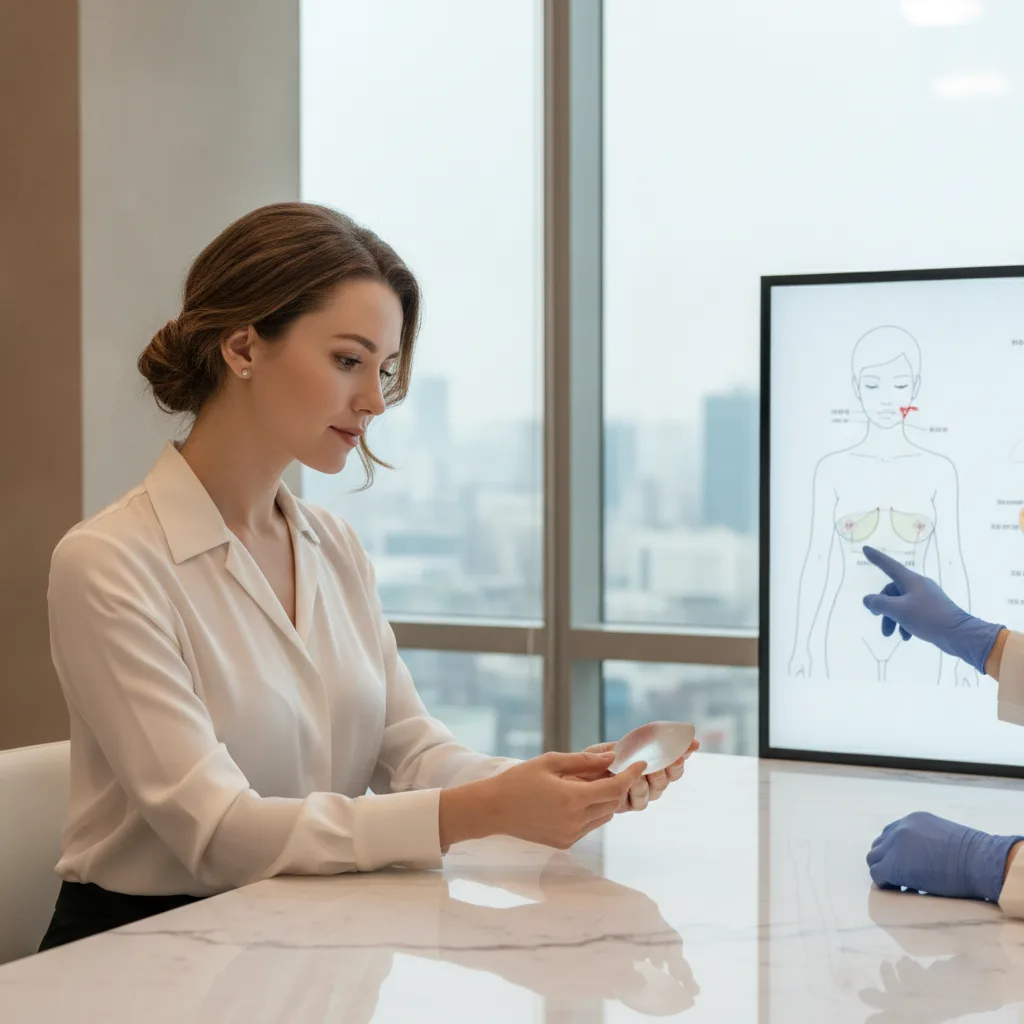
Nearly every Seoul breast augmentation consultation ends with the same drawing on a sheet of paper. A rib, a pectoralis major muscle, and three possible homes for the implant: above the muscle, below the muscle, or half-and-half. The pocket plane your surgeon picks shapes your scar visibility, your bounce, your ten-year revision odds, and whether a mammogram will read your tissue cleanly. For foreign patients flying in for 7 to 14 days, the plane decision matters even more because it dictates how fast you can lift a suitcase and how much pec soreness travels home with you.
THE THREE PLANES IN PLAIN LANGUAGE
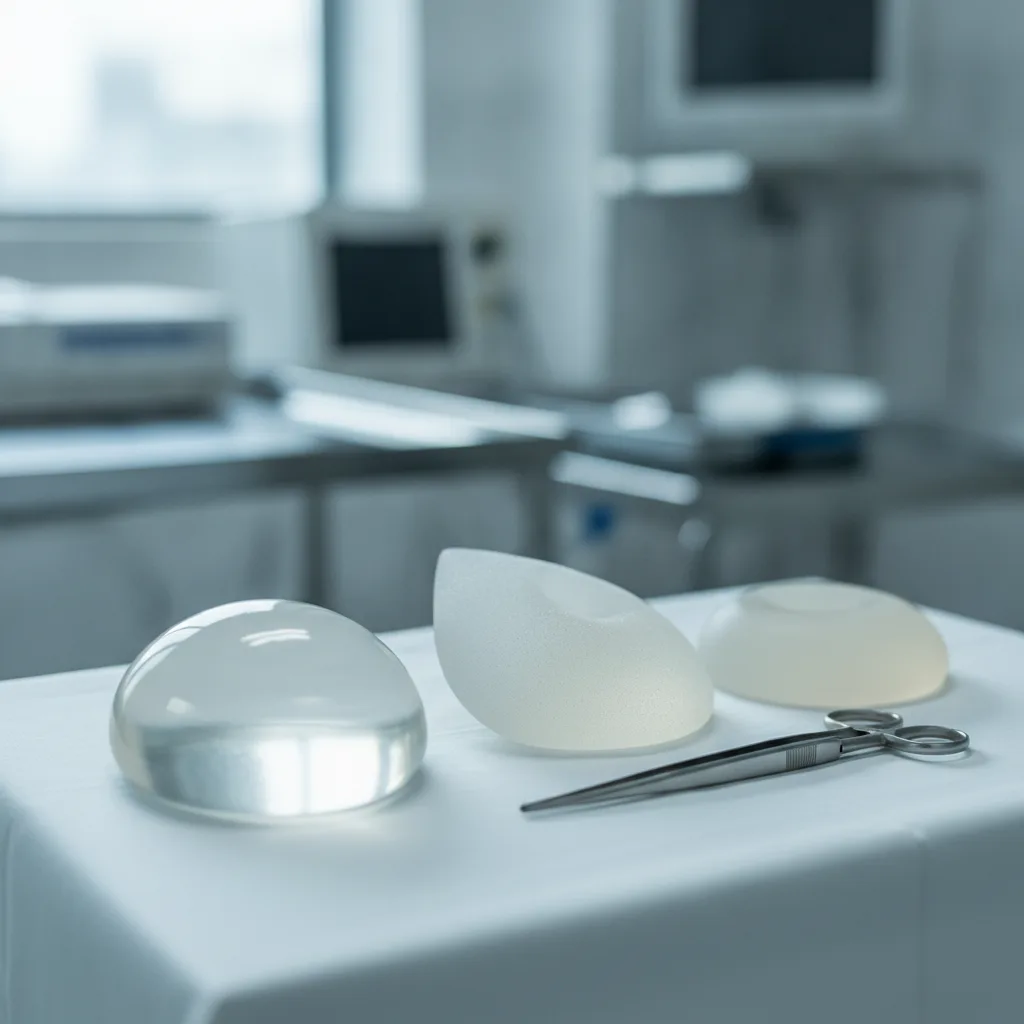
Subglandular places the implant between your breast tissue and the pectoralis major muscle. It is the shallowest plane, the fastest surgery, and the softest post-op recovery because the muscle is never cut or stretched. Submuscular (also called subpectoral or total submuscular) tucks the implant fully behind the pec and, in the lower half, behind the serratus anterior and rectus fascia. It gives the thickest soft-tissue coverage over the implant edge, which is why thin-chested patients get sent to this plane. Dual plane is the hybrid most Seoul surgeons default to in 2026: the upper two-thirds of the implant sits behind the pec, and the lower pole is released into the subglandular space so the breast tissue drapes naturally over the lower curve.
Korean surgeons describe dual plane in three sub-levels, usually written Dual Plane I, II, and III. Level I releases only the pectoralis insertion along the inframammary fold. Level II releases the pec off the breast gland for about 2 to 4 cm higher. Level III releases up to the upper border of the areola. The deeper the release, the more the implant sits like a subglandular in the lower pole, and the better it fills a mildly ptotic (sagging) breast without a lift. The consultation sketch you get at ID Hospital or Grand Plastic Surgery will usually show which sub-level the surgeon is recommending for your tissue.
HOW SEOUL SURGEONS CHOOSE A PLANE
Pinch test first. The surgeon pinches the upper pole of your breast tissue above the areola. Under 2 cm of tissue pushes the recommendation toward submuscular or dual plane, because a thin cover above a smooth round implant will show rippling and visible edges within a year. 2 to 3 cm of tissue opens up dual plane. More than 3 cm, with firm skin and good gland volume, is where subglandular becomes a reasonable option for patients who want a tight bounce and the shortest recovery.
Chest wall shape is the second filter. A flared ribcage or a wide intermammary distance (the gap between the breasts) often sends a surgeon to dual plane with a textured anatomical implant because the muscle release lets the implant settle medially instead of drifting lateral. Breast base width matters too: a 12 cm base with a 13 cm implant diameter forces a submuscular plane because subglandular would leave the implant edge palpable at the side. April31 Aesthetics and JW Plastic Surgery both document base width and tissue thickness in the preoperative photo set so you can see the measurements that drove the plane decision.
Lifestyle matters third. Competitive bodybuilders, CrossFit coaches, and powerlifters who train pec-heavy are often steered to subglandular because a submuscular implant moves visibly during a bench press, an effect called animation deformity. Yoga, running, and casual lifting are compatible with any plane. The surgeon will ask about your training on the intake sheet, and if the English-speaking coordinator skips the question, bring it up yourself.
WHAT EACH PLANE FEELS LIKE ON DAY 1, DAY 7, AND YEAR 5
Subglandular is the easy opening act. Most patients walk unassisted within 6 hours of surgery, shower on day 2, and ditch the surgical bra at the 2-week mark. There is no pec stretch, so lifting carry-on luggage at 10 days is manageable with care. The trade-off shows up at year 2 to 5: higher capsular contracture rates (studies cluster around 8 to 12 percent for smooth round subglandular versus 2 to 5 percent for submuscular), more visible rippling in thin patients, and a mammogram that reads less of the natural breast tissue because the implant sits in front of the gland.
Submuscular is the hardest first week. The pec is cut off its lower insertions and stretched over the implant, so days 1 through 5 feel like a severe weight-training strain across the chest. Sleeping flat is uncomfortable for most patients until night 4 or 5. By week 2 the pec soreness has faded and most patients can resume desk work. The plane rewards you with the thickest coverage over the implant edge, the cleanest mammograms, and the lowest capsular contracture rates in the primary augmentation data. Animation deformity shows during pec flexion in roughly 70 to 80 percent of total submuscular cases, which is why most Seoul surgeons avoid full submuscular unless the patient has very thin tissue.
Dual plane sits in the middle on every axis. Recovery is softer than submuscular because the pec release is partial. The upper pole gets muscle coverage so rippling is hidden where it would be most visible in a V-neck. The lower pole drapes naturally over the breast fold so the result looks less like a shelf and more like a native breast. At year 5 to 10, dual plane shows the lowest revision rate for cosmetic reasons across the Korean national audit data, which is a big reason it has become the Seoul default. See Breast Augmentation Recovery in Seoul for the week-by-week recovery breakdown.
KRW PRICE BANDS BY PLANE IN SEOUL 2026
- 01Subglandular with smooth round silicone (Mentor or Allergan Natrelle): ₩4.8M to ₩6.5M (about $3,500 to $4,700) at mid-tier Gangnam clinics
- 02Dual plane with Motiva Ergonomix or SmoothSilk: ₩6.8M to ₩9.5M (about $4,900 to $6,900), the busiest price band for foreign patients
- 03Dual plane with Motiva Ergonomix and ERID warranty registration: ₩7.5M to ₩10.5M (about $5,400 to $7,600) at [JW Plastic Surgery](/clinics/jw_plastic_surgery), [HERSHE Plastic Surgery](/clinics/hershe_plastic_surgery), and [Nana Plastic Surgery](/clinics/nana_plastic_surgery)
- 04Full submuscular with anatomical textured implants: ₩7.2M to ₩9.8M (about $5,200 to $7,100), slightly more because the surgery runs longer
- 05Revision breast augmentation to change the plane: ₩9M to ₩14M (about $6,500 to $10,100), heavily dependent on scar tissue and implant removal complexity
The jump from subglandular to dual plane is usually ₩1.5M to ₩2M in Seoul because the pec release adds operating time and a longer anesthesia block. Foreign patients should ask whether the VAT refund (10 percent) applies at the clinic they choose, since not all plastic surgery clinics are foreigner-designated for the tax refund. The Tax Refund in Seoul for Aesthetic Treatments 2026 post lists which clinics have the designation.
HOW LONG SHOULD I STAY IN SEOUL FOR EACH PLANE?
Subglandular minimum stay is 7 nights. Day 1 surgery, day 2 to 5 recovery and compression bra fitting, day 6 drain removal if drains were used, day 7 stitch check and fly-home clearance. The surgeon will usually prefer that you fly 10 days post-op if your return flight is longer than 8 hours, since the first 48 hours in a pressurized cabin can increase swelling and seroma risk.
Dual plane and full submuscular need 10 to 14 nights for comfort. The pec soreness peaks days 3 to 5, and most foreign patients find that lifting a suitcase or sitting cramped in economy at day 7 is uncomfortable but survivable, while day 10 is noticeably easier. Clinics like Grand Plastic Surgery and April31 Aesthetics offer longer stay packages that include recovery apartment nights, airport pickup, and tax-refund paperwork bundled into the price. See Flying Home After Seoul Plastic Surgery 2026 for the full fly-home timing table.
WHICH PLANE HAS THE LOWEST REVISION RATE AT TEN YEARS?
Dual plane with a smooth, cohesive-gel round implant (Motiva Ergonomix is the dominant Seoul choice) has the lowest ten-year revision rate in the pooled Korean plastic surgery audit data, with figures hovering around 6 to 9 percent across the major Seoul groups. Full submuscular comes in slightly higher at 9 to 12 percent, largely driven by animation deformity revision requests. Subglandular ten-year revision sits at 15 to 22 percent, dominated by capsular contracture and visible rippling corrections. The data is noisier for revision because patient demographics differ by plane, but the ranking is consistent across audits.
CAN I PICK MY OWN PLANE OR DOES THE SURGEON DECIDE?
Both. A reasonable Seoul breast surgeon will present two planes that both work for your anatomy and let you choose between them based on recovery tolerance, lifestyle, and aesthetic priority. What a good surgeon will not do is place a subglandular in a thin-tissue patient just because you asked, because the rippling and edge visibility will drive a revision inside two years. If the surgeon only offers one plane, ask why. The answer should mention your pinch test number, your base width, and your tissue thickness, not just "this is what we do here."
English-speaking coordinators at foreigner-designated clinics (ID, Grand, April31, JW, Banobagi) will usually run the plane conversation twice: once with the coordinator before the consult, then again with the surgeon during the examination. Use the first pass to understand the terminology, then push the surgeon on specifics in the second pass. The First-Time Breast Augmentation in Seoul walk-through has the full consultation script foreign patients should prepare.
WHAT ABOUT MOTIVA ERGONOMIX WITHOUT A PLANE CHOICE?
Motiva Ergonomix is marketed in Korea as a soft-touch implant that works in any plane. The marketing is close to true for average-tissue patients, which is why dual-plane Motiva has become the Seoul default. The marketing understates how much plane choice still matters for thin-tissue, athletic, or revision patients. If you are a 45 kg frame with a 1.5 cm upper-pole pinch, dual plane with Motiva Ergonomix is still a better choice than subglandular with Motiva, even though both will "work." See the Motiva vs Mentor vs Nagor Implants in Seoul 2026 breakdown for how implant choice stacks with plane choice.
HOW DOES ANIMATION DEFORMITY ACTUALLY LOOK?
Animation deformity is the implant visibly flattening or distorting when you flex the pec: pushing yourself up from the floor, bench pressing, or holding a dog's leash tight. In full submuscular, roughly 70 to 80 percent of patients will see some degree of this during pec flex. In dual plane, the incidence drops to 15 to 25 percent and the distortion is milder because only the upper pole is behind muscle. In subglandular, animation deformity is essentially zero because the pec never contracts over the implant. The amount of flex-time in your weekly life is the honest question to answer in the consult.
Comparisons · 11 min · Oct 9, 2026
← all posts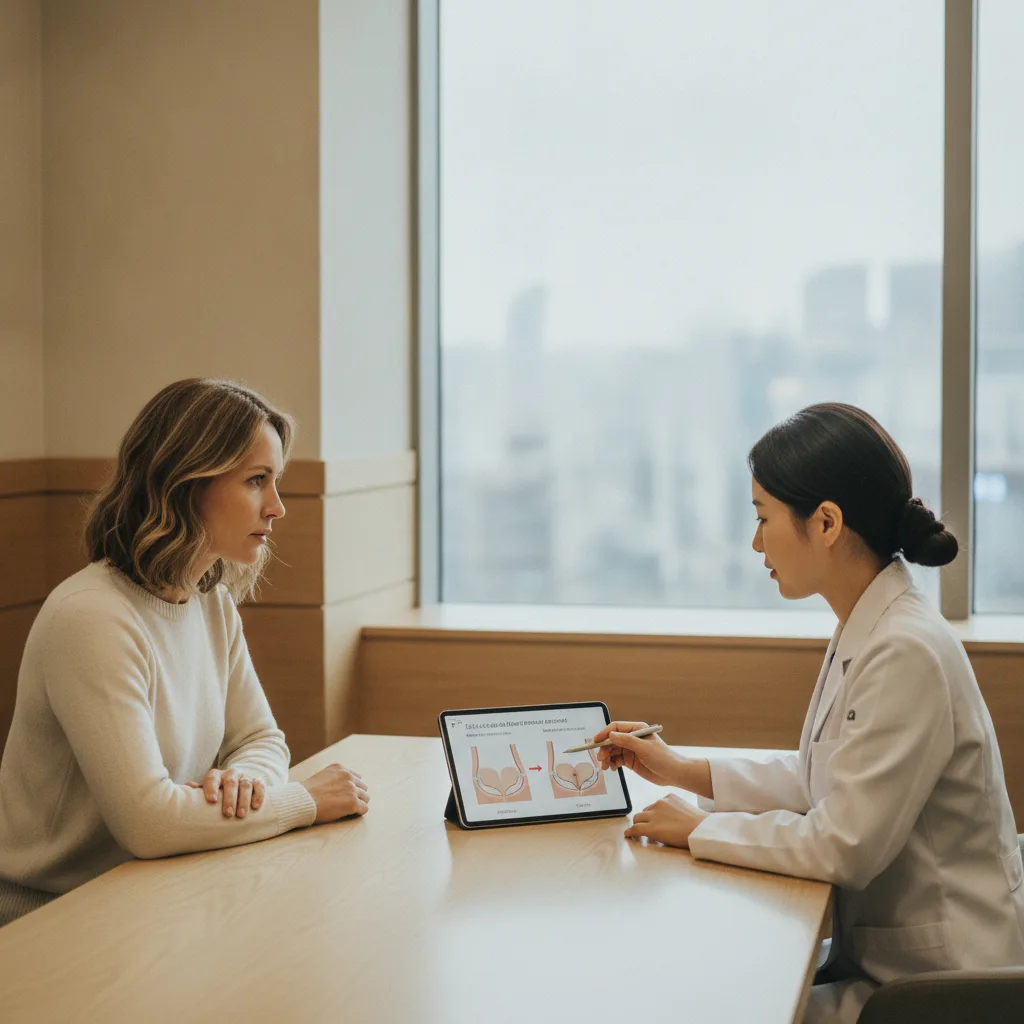
BREAST IMPLANT REMOVAL SEOUL 2026: EN BLOC VS CAPSULECTOMY VS EXPLANT
The three protocols Seoul surgeons use to take breast implants out, how they pick between them, and what each one costs and recovers like for foreign patients in 2026.
JUVEDERM VS RESTYLANE VS BELOTERO: SEOUL FILLER BRANDS 2026
The three Western HA filler families Seoul injectors actually stock, where each one wins on the face, and what foreign patients pay per syringe in 2026.
MINT PDO VS WONDERLIFT VS SILHOUETTE SOFT THREADS SEOUL 2026
The three thread brands Seoul clinics argue about, how surgeons actually pick between them, and what each costs for foreign patients in 2026.
FAT TRANSFER VS IMPLANTS BREAST AUGMENTATION SEOUL 2026
Head-to-head verdict on fat grafting and silicone implants in Seoul, with KRW price bands, revision rates, and the clinic types that run each procedure well.
PICOSURE VS PICOWAY VS DISCOVERY PICO SEOUL 2026
Head-to-head on the three pico lasers Seoul clinics actually use for melasma, pigmentation, and tattoo removal, with real KRW price bands.
▶▶▶ stop reading. start matching.
FIND YOURS.
We'll pull five clinics matched to your case. WhatsApp reply within 24h.