FLYING HOME AFTER SEOUL PLASTIC SURGERY 2026: TIMING BY PROCEDURE
Minimum flight-safe windows, cabin-pressure risk, and the paperwork you need at Incheon after Korean surgery.
By Editorial
Every clinic in Gangnam will tell you a different number of days before you can fly, and most of those numbers are optimistic. The real limit is set by cabin pressure, cabin dryness, and the specific tissue you had cut. This guide gives the minimum flight-safe window by procedure, the paperwork that moves you through Incheon and your home-country customs without a scene, and the small operational decisions that decide whether you land swollen and comfortable or swollen and in trouble.
WHY CABIN PRESSURE AND DRY AIR PUNISH FRESH SURGERY
Commercial cabins pressurise to roughly 1,800 to 2,400 metres of altitude, which is enough to drop blood oxygen a few percentage points and expand any trapped gas in soft tissue. For a seven-day-post-rhinoplasty septum, that pressure differential turns a packed nose into throbbing pain for the first two hours of climb. For a 72-hour-post-two-jaw jaw, it can push swelling to peak at exactly the moment you cannot ice or elevate properly. Cabin humidity sits at 10 to 20 percent, roughly one-third of a hotel room, which dries incision lines, cracks lip-flap stitches, and makes dressings itch.
Immobility is the other half of the risk. A nine-hour sector from Incheon to London or a 14-hour sector to Los Angeles means your calves do not pump for extended stretches, and post-surgical patients already run elevated clot risk from inflammatory response and dehydration. Deep-vein thrombosis is rare but it is the single complication that turns a routine recovery into a hospital admission. The flight-safe windows below are built around pressure tolerance, swelling peaks, and clot risk together. They are deliberately on the conservative side of what surgeons quote, because the surgeon is not the one sitting at 36,000 feet.
MINIMUM FLIGHT-SAFE WINDOW BY PROCEDURE
These windows assume uncomplicated recovery, no fever, no active bleeding, drainage removed, and clearance from the operating surgeon at your post-op check. Short-haul under four hours tolerates earlier flights than long-haul over eight hours, so the ranges reflect sector length. If you have a stop-over, count the longest leg, not the total trip time.
- 01Rhinoplasty (primary): 7 to 10 days for short-haul, 10 to 14 days for long-haul. Splint usually off before you fly. See the full week-by-week in the [rhinoplasty recovery timeline](/blog/rhinoplasty-recovery-timeline-seoul-2026).
- 02Revision rhinoplasty: add 3 to 5 days to primary windows. Scar tissue swells longer and cabin pressure is less forgiving.
- 03Double eyelid (incisional): 5 to 7 days short-haul, 7 to 10 long-haul. Non-incisional 3 to 5 days either way.
- 04Lateral canthoplasty or ptosis: 7 days minimum, long-haul 10 days. Dry cabin air aggravates fresh conjunctival work.
- 05Facelift (SMAS or deep plane): 10 to 14 days minimum, 14 to 21 for long-haul. Drains out, no neck-contour change in 48 hours before flight. Review the [facelift recovery timeline](/blog/facelift-recovery-timeline-seoul-2026) before booking a flight.
- 06Mini facelift or neck lift alone: 7 to 10 days, add days if a lower-face lift was combined.
- 07Two-jaw (bimaxillary) surgery: 14 to 21 days short-haul, 21 to 28 long-haul. This is the most pressure-sensitive procedure on the menu. Confirm against the [two-jaw recovery timeline](/blog/two-jaw-recovery-timeline-seoul-2026).
- 08V-line, zygoma, or genioplasty (bone contouring): 10 to 14 days, long-haul closer to 21. Residual swelling peaks around day 5 and must be past peak before you board.
- 09Breast augmentation (implants): 7 days short-haul, 10 to 14 long-haul. Compression bra on, no overhead bin lifting. More in the [breast augmentation recovery timeline](/blog/breast-augmentation-recovery-seoul-2026).
- 10Breast lift or breast reduction: 10 to 14 days, long-haul 14 to 21. Skin-only tension lines dislike pressure cycling.
- 11Liposuction or lipo 360: 5 to 7 days short-haul, 7 to 14 long-haul depending on volume removed. Compression garment stays on through the flight. Cross-check the [liposuction recovery timeline](/blog/liposuction-recovery-timeline-seoul-2026).
- 12Tummy tuck (abdominoplasty): 10 to 14 days short-haul, 14 to 21 long-haul. Drains must be out and clinic clearance explicit.
- 13FUE or DHI hair transplant: 7 to 10 days, grafts secure by day 10. Wear a loose bucket hat, not a tight cap. See the [first-time hair transplant guide](/blog/first-time-hair-transplant-seoul-2026) for aftercare specifics.
POST-OP LETTERS, PRESCRIPTIONS, AND CUSTOMS PAPERWORK
Every reputable Seoul surgical clinic will issue a post-operative letter in English on request. Ask for it at your final check, not at the airport. The letter should list the date and name of the procedure, the surgeon's registration number, the medications you are travelling with by generic name and dose, and a clinic phone number reachable 24 hours. This single sheet of paper clears you through airport security that would otherwise flag your medication bag, calms any border officer who sees fresh bruising, and gives your home-country GP something concrete when you need a follow-up appointment.
Prescription painkillers from Korea are often tramadol, codeine with acetaminophen, or NSAIDs. All three cross most borders in sealed, labelled Korean pharmacy packaging if you carry the clinic prescription slip. The United Arab Emirates, Singapore, and Japan are stricter and may require advance import permission for codeine or tramadol. If you transit through any of these, ask the clinic to switch you to a non-controlled alternative or finish the stronger course before departure. Antibiotics almost never cause issues at any border, but keep them in the clinic-dispensed bottle with the Korean label intact.
HOW TO ACTUALLY SURVIVE THE LONG-HAUL FLIGHT HOME
Business class matters more for face and body work than for eye or nose work, because a 180-degree flat bed lets you sleep elevated at 30 degrees without creasing the surgical site. If you are flying lie-flat after a facelift or two-jaw, request a seat on the aisle, not the window, so you can reach a flight attendant without climbing over anyone. Compression stockings are not optional after lipo, tummy tuck, or any procedure over four hours of operating time. Buy class-II medical-grade stockings in Gangnam before you fly for roughly ₩40,000 to ₩70,000 at any pharmacy.
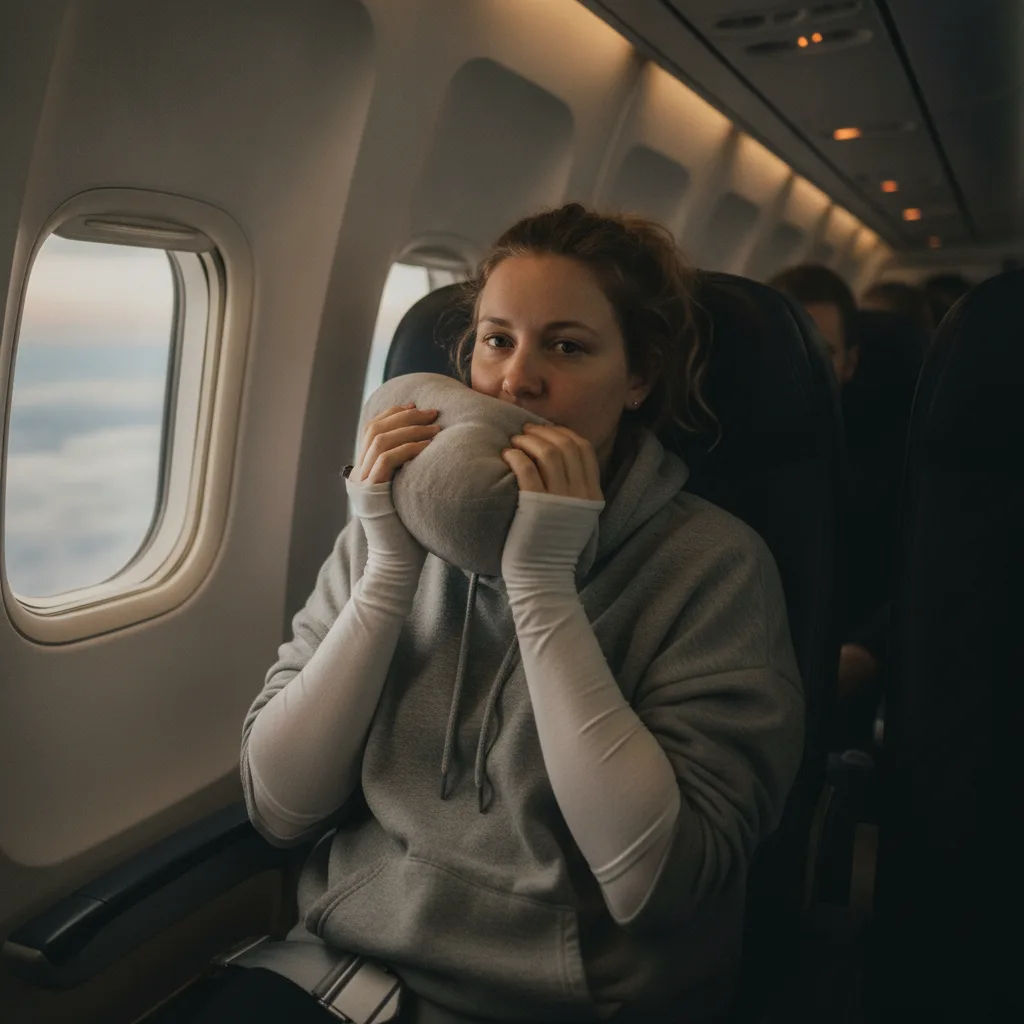
The small bag at your seat should contain the post-op letter, prescription receipts, saline nasal spray, eye drops, a small ice pack that will refreeze in the galley, a soft neck pillow that will not press on your incision line, your clinic coordinator's WhatsApp or KakaoTalk number, and travel insurance details. The translator services at Seoul aesthetic clinics guide covers how to keep that coordinator contactable during your transit. Hydrate with 250 ml of water every hour, walk the aisle every two hours, and set a watch alarm because sedation and anti-nausea medication will put you under deeper than you expect.
- 01Compression stockings on from gate to gate, no exceptions
- 02Aisle seat for any face or jaw procedure, lie-flat if available for facelift and two-jaw
- 03Clinic post-op letter and prescription receipts in your personal item, not checked
- 04Saline spray every 90 minutes for any nasal or sinus work
- 05Soft travel pillow that avoids the incision line, not the horseshoe style
- 06Set an alarm every two hours to walk the aisle
HOW MANY DAYS SHOULD I WAIT TO FLY AFTER RHINOPLASTY?
Seven to ten days is the floor for primary rhinoplasty on short-haul routes under four hours, and ten to fourteen days is safer for long-haul over eight hours. The splint comes off around day seven, and that is also when internal swelling peaks before falling. Flying earlier than day seven risks pressure-driven bleeding from the septum, and flying before the splint is removed means you cannot clean the nostrils in-flight. Revision rhinoplasty patients should add three to five days on top of these windows because scar tissue holds swelling longer.
WILL MY KOREAN PRESCRIPTION PAINKILLERS GET THROUGH CUSTOMS?
In most Western and Southeast Asian countries, yes, provided three conditions are met. The medication must be in the original Korean pharmacy packaging with the printed label intact, you must carry the clinic prescription receipt, and the quantity must be reasonable for personal use (usually under 30 days supply). Tramadol and codeine are the two to watch, since the UAE, Singapore, Japan, and some Gulf states treat them as controlled substances and may require advance import permits. When in doubt, ask the clinic to prescribe acetaminophen plus NSAIDs for the flight-and-first-week window instead.
SHOULD I UPGRADE TO BUSINESS CLASS FOR MY RECOVERY FLIGHT?
If your procedure was facelift, two-jaw, deep neck lift, tummy tuck, lipo 360, or any combined-procedure session over four hours of operating time, yes. The lie-flat seat lets you sleep at a 30-degree elevation that premium-economy and economy cannot match, which cuts facial swelling and lowers DVT risk from immobility. For rhinoplasty, blepharoplasty, breast augmentation under implants only, or FUE hair transplant, premium economy with extra legroom is usually enough, and the saved budget is better spent on a longer hotel stay in Seoul for post-op check-ins. The hidden costs guide breaks down where that upgrade money actually goes.
How-to · 9 min · Oct 1, 2026
← all posts
CREDIT CARD FEES AT SEOUL AESTHETIC CLINICS 2026: SURCHARGES & FX
What foreign patients actually pay in card surcharges, FX markups, and daily caps at Seoul aesthetic clinics in 2026.
RECOVERY STAYS SEOUL PLASTIC SURGERY 2026: HOTELS AND PRICES
Where foreign patients actually stay after rhinoplasty, two-jaw, breast and body surgery in Seoul, with KRW night rates by district and what to book.
TRAVEL INSURANCE FOR SEOUL PLASTIC SURGERY 2026: WHAT ACTUALLY COVERS YOU
Standard travel policies exclude elective cosmetic surgery. Here is what covers complications abroad, what pays for a stuck flight home, and which Seoul clinics include their own policy.
TAX REFUND IN SEOUL FOR AESTHETIC TREATMENTS 2026: VAT RULES EXPLAINED
What foreign patients actually pay in 10% VAT at Seoul aesthetic clinics, which treatments qualify for the Medical Tourism Tax Refund, and how to claim your won back at Incheon.
MEDICAL VISA FOR SEOUL PLASTIC SURGERY 2026: RULES BY COUNTRY
Visa-free entry, K-ETA, and C-3-3 medical tourist visas explained for foreign patients flying to Seoul for plastic surgery in 2026.
▶▶▶ stop reading. start matching.
FIND YOURS.
We'll pull five clinics matched to your case. WhatsApp reply within 24h.