TRANSLATOR SERVICES AT SEOUL AESTHETIC CLINICS: HOW THEY WORK (2026)
From bilingual coordinators to remote medical interpreters, here is how Seoul clinics actually handle non-Korean patients in 2026.
By Editorial
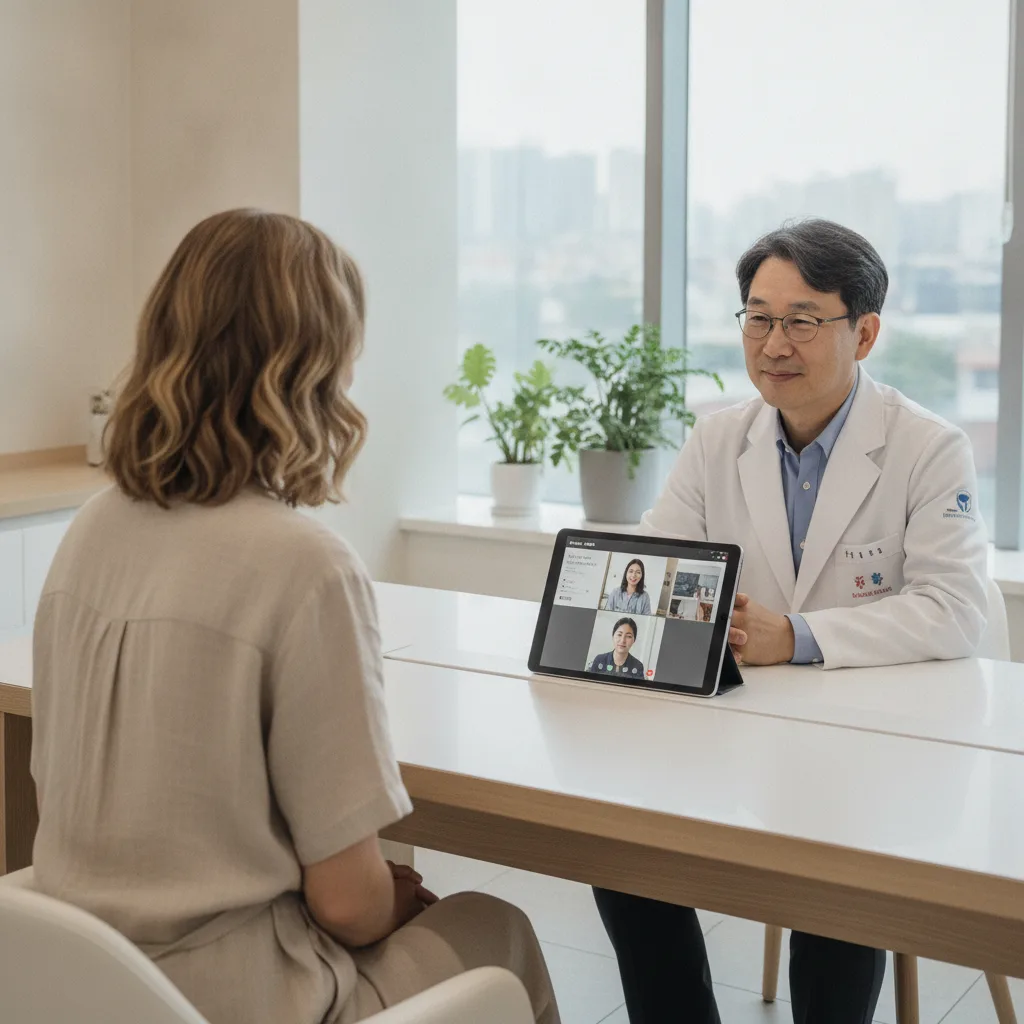
When I booked my first Seoul consultation from Bangkok, the part that worried me was not the laser. It was sitting across a desk from a Korean doctor and not knowing if 'lifting effect' meant Ultherapy, threads, or something I had not actually agreed to. Language friction shapes every visit, and the way Seoul clinics solve it has changed sharply in 2026.
THE FOUR TIERS OF LANGUAGE SUPPORT YOU WILL ACTUALLY FIND IN SEOUL
Clinics in Seoul do not all support English the same way, and the marketing copy almost always overstates what is on offer. The actual ladder runs from a native English-speaking doctor at the top, through two staffing models in the middle, down to a panicked Naver Papago session at the bottom. Knowing which tier your clinic sits on tells you how much friction to expect during consultation, the procedure, and follow-up. It also tells you whether you should book a third-party medical translator before you land. The wrong assumption here is the most common pre-trip mistake foreign patients make.
At the top sit clinics with a native English-speaking doctor on site, usually partly trained abroad or part of a foreign-patient division. These are concentrated in Apgujeong and Cheongdam, and they price accordingly. The middle tier splits two ways: a dedicated international patient coordinator who interprets in real time during the consult, and a bilingual front-of-house staffer who handles intake then disappears once the doctor enters the room. The bottom tier is clinics where no one speaks fluent English and you are handed a translation app or a phone for a remote translator service to dial in.
If you have read our Gangnam district guide, you have seen the cluster pattern. Most large clinics on Gangnam-daero and around Sinnonhyeon Station Exit 6 run tier-two coordinator setups. Smaller, cheaper clinics in Seocho and parts of Hongdae are more often tier-three, where the translator is your responsibility and not theirs.
HOW DOES A THIRD-PARTY TRANSLATOR SESSION ACTUALLY RUN?
A third-party translator works one of two ways. The most common in 2026 is a remote phone or video interpreter who joins the consult through a tablet on the doctor's desk. The clinic dials a service like KoreaMed Translate or a hospital-affiliated line, and the interpreter joins live. Sessions cost roughly KRW 30,000 to KRW 60,000 per 30-minute block, billed either to you directly or rolled into a 'foreigner package' line item on the invoice. Quality varies by service, and the better lines are booked out during the September to November tourism peak.
The second model is an in-person freelance interpreter you hire yourself. Rates start around KRW 80,000 per hour for general English-Korean and run KRW 120,000 to KRW 180,000 per hour for medical-grade work. You meet them outside the clinic, walk in together, and they sit in for the consult and the procedure. For longer treatments where you will be face-down on a table, an in-person translator is overkill. For a complex consult comparing thread types or filler placement across multiple areas, they pay for themselves inside the first twenty minutes.
The trap is the 'free in-house translator' some clinics advertise. In practice that is often a junior staffer with conversational English who does not know the difference between Allergan, Daxxify, and the four major Korean toxins. If your decision turns on protocol nuance, treat their interpretation as marketing copy rather than medical advice. For background on why those brand nuances matter at the consult, see Korean Botox brands vs Allergan.
WHICH SEOUL DISTRICTS HAVE THE STRONGEST ENGLISH SUPPORT?
Apgujeong and Cheongdam lead, and it is not close. Premium clinics here built foreign-patient infrastructure for K-pop adjacent Asian tourists first, and that pipeline has matured into proper bilingual coordinators on staff. Expect at least one fluent English speaker per consult, often two, with translator fees frequently waived above a treatment threshold of roughly KRW 1,500,000. The trade-off is sticker price across the board, mapped in our Apgujeong premium district guide.
Sinnonhyeon comes next. The walkable five-block stretch around Sinnonhyeon Station Exit 6 packs mid-tier and mid-premium clinics that serve a heavy Southeast Asian and Western tourist load, so coordinator-level English support is the norm rather than the exception. For the block-by-block breakdown, the Sinnonhyeon guide maps where the density sits. Myeongdong runs heavy on translator support too, mostly through hospital-tourism partnerships, though clinic quality there varies sharply and the upsell pressure is higher than elsewhere.
Hongdae and Seocho sit at the lower end of language support. You can absolutely find English-fluent doctors in both districts, but the median clinic expects you to bring your own interpreter or rely on Papago. Hongdae's younger client base has pushed a handful of clinics toward better translator setups in the last eighteen months. Seocho's value-tier clinics generally have not, which is partly why their pricing stays competitive.
WHAT DO TRANSLATOR FEES LOOK LIKE IN 2026?
Pricing is unbundled in most clinics now, which is good news because it means you can choose your level of support rather than swallowing a flat foreign-patient surcharge. A remote interpreter in a 30-minute block runs KRW 30,000 to KRW 60,000, roughly USD 22 to USD 44. That covers a single-treatment consult where you already know what you want. A full 90-minute remote session runs KRW 80,000 to KRW 150,000, about USD 58 to USD 109, and suits a first-time multi-treatment consult where the doctor will walk through a few options.
In-person freelance interpreters with medical-grade vocabulary sit at KRW 120,000 to KRW 180,000 per hour, around USD 87 to USD 130. The cost stings on paper and pays back the moment you sit down for staged work like double eyelid surgery or a rhinoplasty consult, where the wrong nuance becomes a permanent shape on your face. The same logic applies to a thread lift or a deep filler plan, where decisions compound across multiple sessions.
- 01Ask before the consult who pays the translator fee and on which invoice line it lands
- 02Get a written confirmation if the clinic claims translator fees are waived above a spend threshold
- 03Decline the 'package interpreter' upsell if you have already booked your own
- 04VAT may apply on top of the translator line item if it is invoiced through the clinic, not the translator agency
- 05Book the remote interpreter on a 60-minute window even for a 30-minute consult, since Korean medical conversations run slower through relay
WHEN DOES A TRANSLATOR SAVE YOU MONEY, AND WHEN DO THEY COST YOU?
A real translator earns their fee on any consult where you are comparing options or sizing budgets across treatments. Without one, you will either over-buy because the coordinator quietly steered you toward the higher-margin protocol, or under-buy because you could not articulate that you also wanted to know about skin boosters on the same trip. The savings on a single redirected decision usually clear KRW 200,000 by themselves.
They cost you on quick, single-protocol procedures with locked, posted pricing. Walking in for a known Botox top-up at a clinic with an English price menu rarely needs an interpreter. Same for a routine Rejuran session you have done before or a basic toning treatment with a fixed price. Pay for the interpreter only where the consult includes a decision, not just an injection.
One overlooked cost is time. A remote translator session can stretch a 20-minute consult into 50 minutes of relay, since both the doctor and the interpreter need to pause for each handoff. If you have packed three consults into a single afternoon, the math gets ugly fast and you will arrive late to the third clinic. Book wider gaps when you know you will be translator-dependent, ideally 90 minutes between consults rather than 45.
HOW DO I CONFIRM LANGUAGE SUPPORT BEFORE I FLY?
Three pre-flight steps cover most of the risk. First, email the clinic in English and watch what comes back. A reply written by an actual coordinator inside 24 hours is signal. A delayed, partly machine-translated reply tells you what to expect in person. Second, ask explicitly who will be in the consultation room and what their English level is. The vague answers are the bad answers, and you should treat 'we have English support' without specifics as a tier-three setup. Third, ask whether translator fees are itemised or bundled, and request a sample invoice if the clinic is comfortable sending one.
For high-stakes consults, pre-book your own in-person interpreter through a Seoul-based medical translation agency and tell the clinic you are bringing one. The clinic posture shifts noticeably when staff know an independent ear is in the room with you. Pricing transparency improves, protocol detail improves, and the upsell pressure drops. If you are still mapping the trip end to end, the pre-treatment checklist covers what to lock in during the seven days before you fly, including the translator confirmation step and a script for the clinic email.
How-to · 9 min · Jun 22, 2026
← all posts
CREDIT CARD FEES AT SEOUL AESTHETIC CLINICS 2026: SURCHARGES & FX
What foreign patients actually pay in card surcharges, FX markups, and daily caps at Seoul aesthetic clinics in 2026.
RECOVERY STAYS SEOUL PLASTIC SURGERY 2026: HOTELS AND PRICES
Where foreign patients actually stay after rhinoplasty, two-jaw, breast and body surgery in Seoul, with KRW night rates by district and what to book.
TRAVEL INSURANCE FOR SEOUL PLASTIC SURGERY 2026: WHAT ACTUALLY COVERS YOU
Standard travel policies exclude elective cosmetic surgery. Here is what covers complications abroad, what pays for a stuck flight home, and which Seoul clinics include their own policy.
TAX REFUND IN SEOUL FOR AESTHETIC TREATMENTS 2026: VAT RULES EXPLAINED
What foreign patients actually pay in 10% VAT at Seoul aesthetic clinics, which treatments qualify for the Medical Tourism Tax Refund, and how to claim your won back at Incheon.
MEDICAL VISA FOR SEOUL PLASTIC SURGERY 2026: RULES BY COUNTRY
Visa-free entry, K-ETA, and C-3-3 medical tourist visas explained for foreign patients flying to Seoul for plastic surgery in 2026.
▶▶▶ stop reading. start matching.
FIND YOURS.
We'll pull five clinics matched to your case. WhatsApp reply within 24h.