CREDIT CARD FEES AT SEOUL AESTHETIC CLINICS 2026: SURCHARGES & FX
What foreign patients actually pay in card surcharges, FX markups, and daily caps at Seoul aesthetic clinics in 2026.
By Editorial
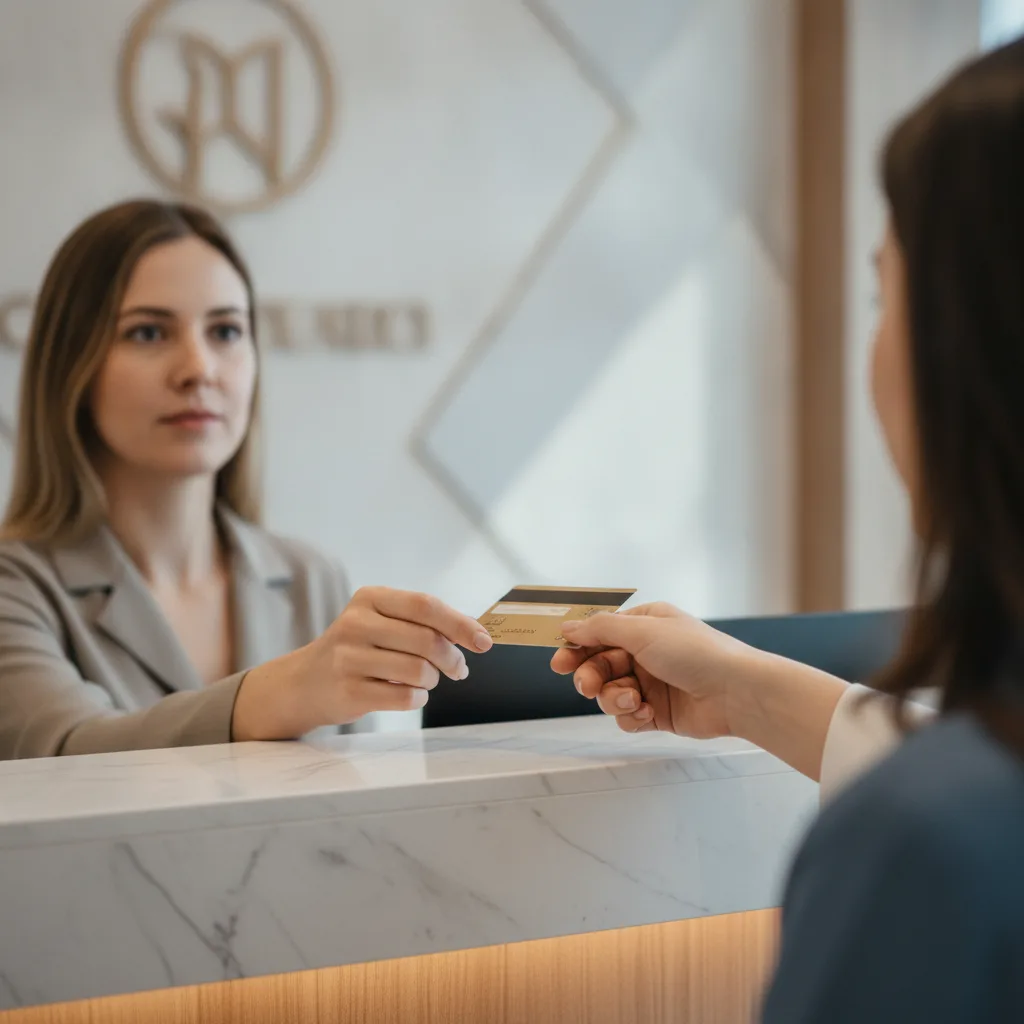
Every foreign patient who books a Seoul aesthetic clinic eventually hits the same question at checkout. Pay by card, pay cash, or wire from home. The headline treatment price is only part of the bill. Card surcharges, foreign-exchange markups, and daily spending caps can quietly add 3 to 8 percent on top, and in a few cases make the card simply refuse to run.
WHY SEOUL CLINICS TREAT CARDS DIFFERENTLY FROM SHOPS
Korean retail is mostly card-first. Convenience stores, taxis, and department stores all take Visa and Mastercard without blinking, and the surcharge is baked into the shelf price. Aesthetic clinics operate under a different margin structure. Most clinics in Gangnam, Apgujeong, and Sinnonhyeon post their menu prices on the assumption of cash or domestic bank transfer, then quietly apply a card fee at the counter for foreign-issued cards. The clinic is not scamming you. It is passing on the acquirer fee that Korean payment processors charge for cross-border card transactions, which runs higher than the fee for a domestic KEB Hana or Shinhan card.
The size of the pass-through varies by clinic. Budget clinics in Sinnonhyeon and Myeongdong often charge 3 to 4 percent on foreign cards. Premium clinics in Apgujeong and Cheongdam charge 5 to 7 percent, and a few cap it at 8 percent for Amex specifically. If you are paying a ₩2,000,000 bill and the surcharge is 5 percent, that is ₩100,000 extra, about on top of the posted price. The receptionist will usually tell you the exact percentage before swiping, but not always. Ask before you hand the card over.
Compare this with how paying at Seoul aesthetic clinics with cash versus KRW deposits is handled. Cash avoids the surcharge entirely, which is why clinics quote their lowest menu prices on the assumption of cash payment. The gap between the cash price and the card price is almost always the surcharge.
VISA AND MASTERCARD VS AMEX AT SEOUL CLINICS
Visa and Mastercard are accepted at virtually every clinic that treats foreign patients. The surcharge for a foreign-issued Visa or Mastercard typically runs 3 to 5 percent at mid-tier clinics and 5 to 7 percent at premium clinics. These are the safest cards to bring because the terminal almost never refuses them for aesthetic amounts, and the back-office authorization flow with Korean acquirers is well-trodden.
American Express is a different story. Many smaller clinics in Sinnonhyeon and Hongdae simply do not accept Amex. The ones that do often charge an extra 1 to 2 percent on top of their Visa surcharge, so you can see 7 to 8 percent total on an Amex transaction. Premium clinics in Apgujeong are more Amex-friendly because their patient mix includes more international clients, but even there the surcharge sting is real. If your main card is a Platinum or a Gold, bring a backup Visa or Mastercard for Seoul.
UnionPay is accepted broadly for mainland-Chinese patients and tends to carry the lowest foreign-card surcharge, often 2 to 3 percent, because the Korean-UnionPay rails are mature. JCB works at Japanese-oriented clinics in Myeongdong but less reliably elsewhere. Discover is rarely accepted. If you are flying in from the US with only a Discover card, assume you will pay cash or wire.
THE DCC TRAP: PAY IN KRW, NOT IN YOUR HOME CURRENCY
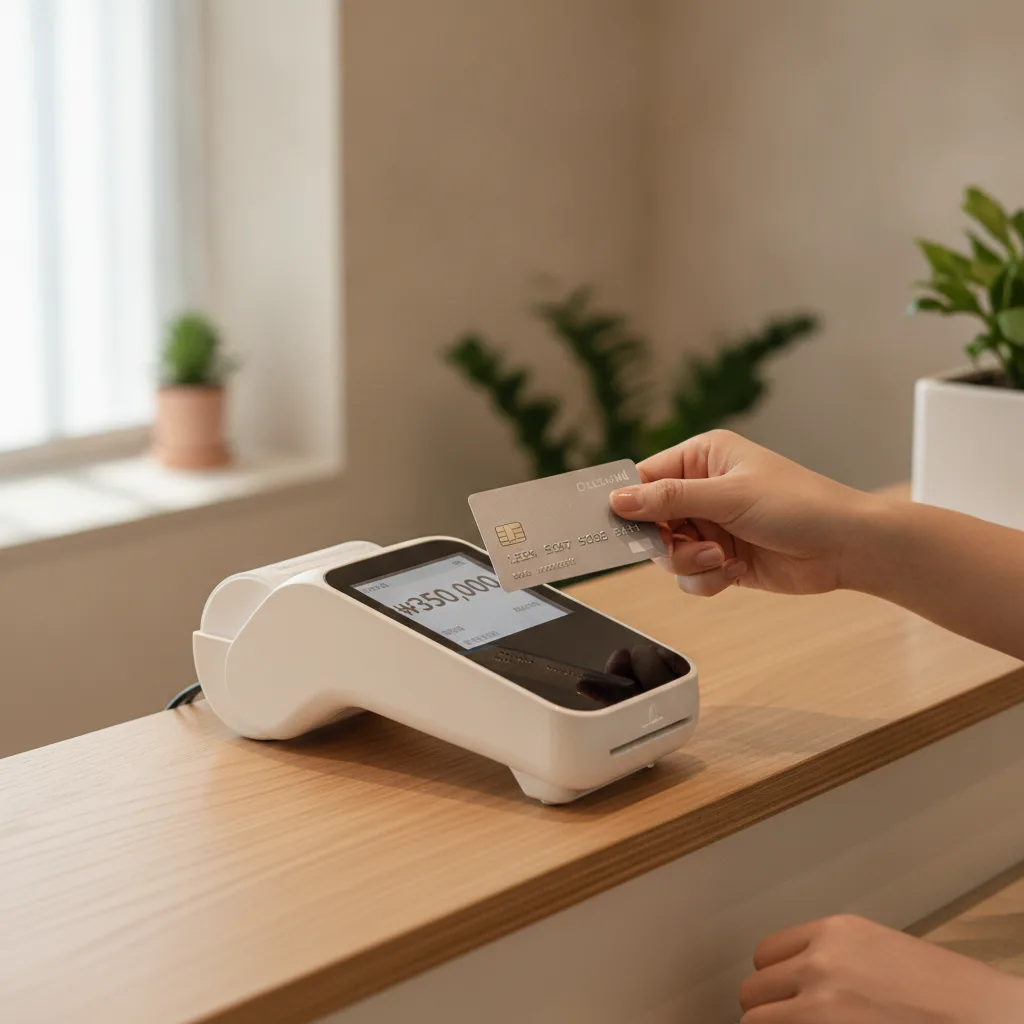
When the terminal prompts you to choose between paying in Korean won or in your home currency, always choose Korean won. The home-currency option is called Dynamic Currency Conversion, or DCC, and it is one of the most expensive payment choices you can make in Korea. The exchange rate the terminal uses is set by the merchant acquirer, not by Visa or Mastercard, and the markup is typically 4 to 7 percent on top of the mid-market FX rate. On a ₩3,000,000 rhinoplasty consultation deposit, that is a $90 to $160 markup that nobody warned you about.
If you pay in KRW, your card issuer handles the conversion using the Visa or Mastercard network rate. On most Western cards that is within 0.3 to 1 percent of the mid-market rate, and premium travel cards like the Chase Sapphire Reserve or Amex Platinum charge zero foreign transaction fee on top. The all-in cost of paying in KRW on a no-FX-fee card is usually 1 to 2 percent total, versus 5 to 9 percent if you take the DCC prompt. The savings on a Seoul plastic surgery trip can run four digits.
DAILY CARD LIMITS AND HOW TO AVOID A DECLINED ₩6,000,000 CHARGE
Most foreign-issued credit cards have a daily spending cap that gets triggered by a large single aesthetic bill. For a US Chase or Capital One card, the standard daily cap for international transactions is often 5,000 to 10,000, enough for a Botox-and-filler afternoon but tight for a two-jaw surgery or breast augmentation deposit. For UK and EU cards, the cap can be lower if the card has not been flagged as travel-active. For Australian and Singaporean cards, caps are often lower still.
Call your card issuer before the trip and raise the daily cap for the specific date range you are in Korea. Ask for a cap at least 20 percent above your largest expected single charge. If you are depositing on surgery, that deposit alone can be ₩3,000,000 to ₩10,000,000 (roughly ,100 to ,900), so your cap needs to accommodate it. See the deposit and refund policies at Seoul clinics for how most clinics structure the up-front payment.
Clinics will often split a large charge across two cards or two days to work around a declined transaction. This works but doubles your surcharge exposure. If you can confirm your cap in advance and run the whole bill on one no-FX-fee card, you win on both the surcharge math and the simplicity.
- 01Visa and Mastercard foreign-issued: 3 to 5 percent surcharge at mid-tier, 5 to 7 percent at premium clinics
- 02American Express: 7 to 8 percent typical, often refused at smaller clinics
- 03UnionPay: 2 to 3 percent surcharge, accepted broadly for Chinese patients
- 04DCC home-currency conversion: adds 4 to 7 percent on top of the merchant surcharge
- 05Daily cap for US cards on international charges: often capped at $5,000 to $10,000 by default
WIRE TRANSFER AND CASH: WHEN THEY BEAT CARDS
For bills under ₩2,000,000, cards almost always win on convenience even after the surcharge. The ATM withdrawal limits in Korea are tight for foreign cards (often ₩1,000,000 per transaction and ₩3,000,000 per day), and the ATM fees plus the cash-advance fee from your card issuer usually exceed the clinic surcharge. For a ₩600,000 Botox session, pay by card and move on.
For bills above ₩5,000,000, the math shifts. A ₩10,000,000 breast augmentation on a 5 percent card surcharge is ₩500,000 extra. A direct SWIFT wire from your home bank costs 20 to 60 at the sending end, nothing at the receiving end in most cases, and no FX markup if you use a service like Wise or Revolut to pre-fund the KRW. The clinic will give you their KEB Hana or Shinhan account details on request. Expect a 1 to 3 business day settlement window, so wire a week before your treatment date, not the day of.
Cash sits in the middle. Clinics in Gangnam will happily take ₩5,000,000 in physical won if you bring it, and the price is often negotiable downward by 2 to 3 percent on cash since the clinic avoids the acquirer fee entirely. Walking around Myeongdong with ₩5,000,000 in your money belt is not a huge security risk in Seoul, but it is a hassle. For first-time patients, we recommend card for small bills and wire for anything above ₩5,000,000.
WHAT THE FINAL RECEIPT SHOULD SHOW
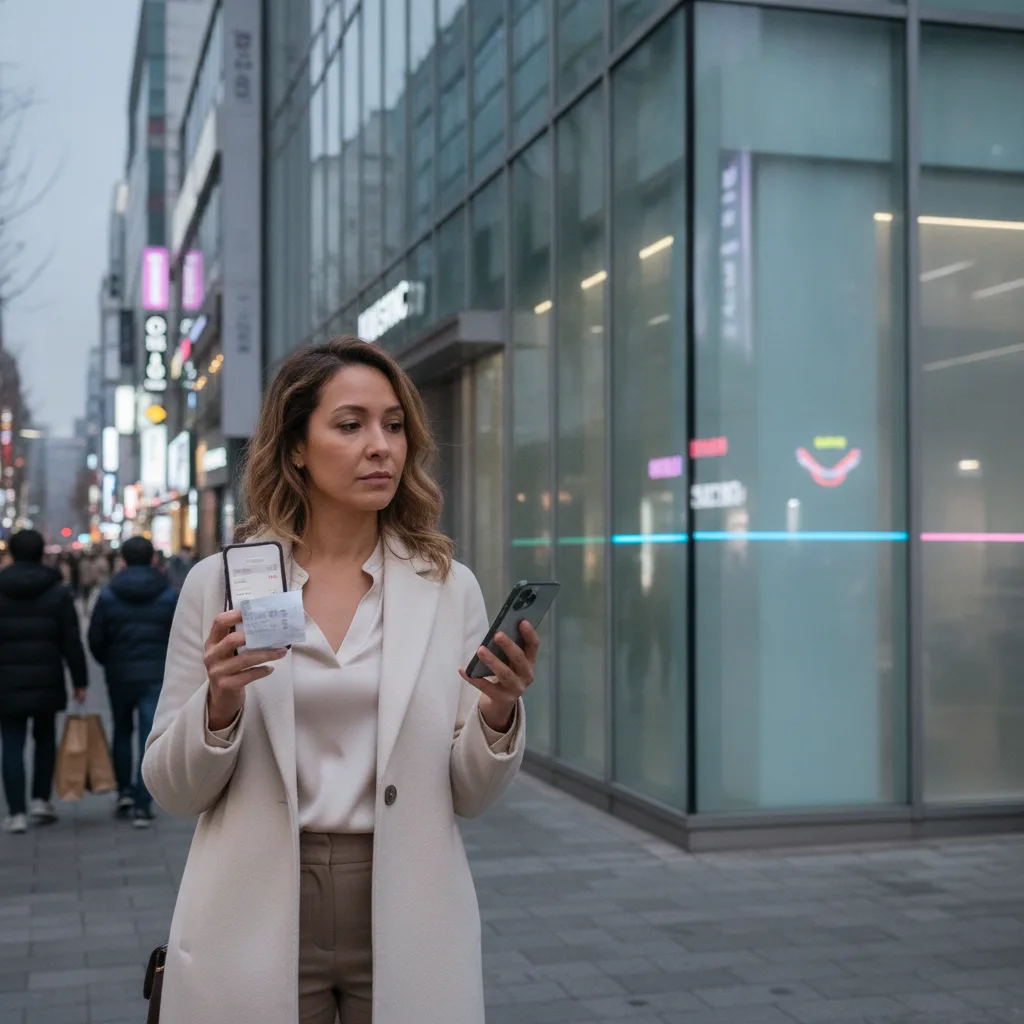
Ask for an itemized Korean tax receipt after any card payment. It should show the base treatment price, the VAT line (either included or 10 percent plus, depending on the clinic — see the VAT and KRW foreigner pricing guide for how to read this), the card surcharge if any, and the total KRW amount charged to your card. If the surcharge is bundled into the headline total with no breakout, ask the receptionist to re-issue the receipt with the surcharge on a separate line. You need this for VAT refund claims at Incheon, for any insurance reimbursement letter you plan to file, and for your own expense tracking.
A clean receipt also protects you if the charge shows up differently on your statement. On a Visa or Mastercard, the charge posts in KRW and then your issuer converts it. The amount in your home currency on the statement is set by the network rate on the posting date, not the swipe date, and that can shift a day or two. If the posted amount is more than 2 percent off what the mid-market rate implies, your issuer applied an FX fee you should check against your card's terms.
How-to · 8 min · Oct 8, 2026
← all posts
RECOVERY STAYS SEOUL PLASTIC SURGERY 2026: HOTELS AND PRICES
Where foreign patients actually stay after rhinoplasty, two-jaw, breast and body surgery in Seoul, with KRW night rates by district and what to book.
TRAVEL INSURANCE FOR SEOUL PLASTIC SURGERY 2026: WHAT ACTUALLY COVERS YOU
Standard travel policies exclude elective cosmetic surgery. Here is what covers complications abroad, what pays for a stuck flight home, and which Seoul clinics include their own policy.
TAX REFUND IN SEOUL FOR AESTHETIC TREATMENTS 2026: VAT RULES EXPLAINED
What foreign patients actually pay in 10% VAT at Seoul aesthetic clinics, which treatments qualify for the Medical Tourism Tax Refund, and how to claim your won back at Incheon.
MEDICAL VISA FOR SEOUL PLASTIC SURGERY 2026: RULES BY COUNTRY
Visa-free entry, K-ETA, and C-3-3 medical tourist visas explained for foreign patients flying to Seoul for plastic surgery in 2026.
DEPOSIT AND REFUND POLICIES AT SEOUL CLINICS 2026
How non-refundable deposits, cancellation windows, and chargeback options really work for foreign patients booking Seoul aesthetic clinics.
▶▶▶ stop reading. start matching.
FIND YOURS.
We'll pull five clinics matched to your case. WhatsApp reply within 24h.