MOTIVA VS MENTOR VS NAGOR IMPLANTS IN SEOUL 2026
The three implant brands Korean surgeons actually offer, and how the choice changes the price, the scar, and the ten-year plan.
By Editorial
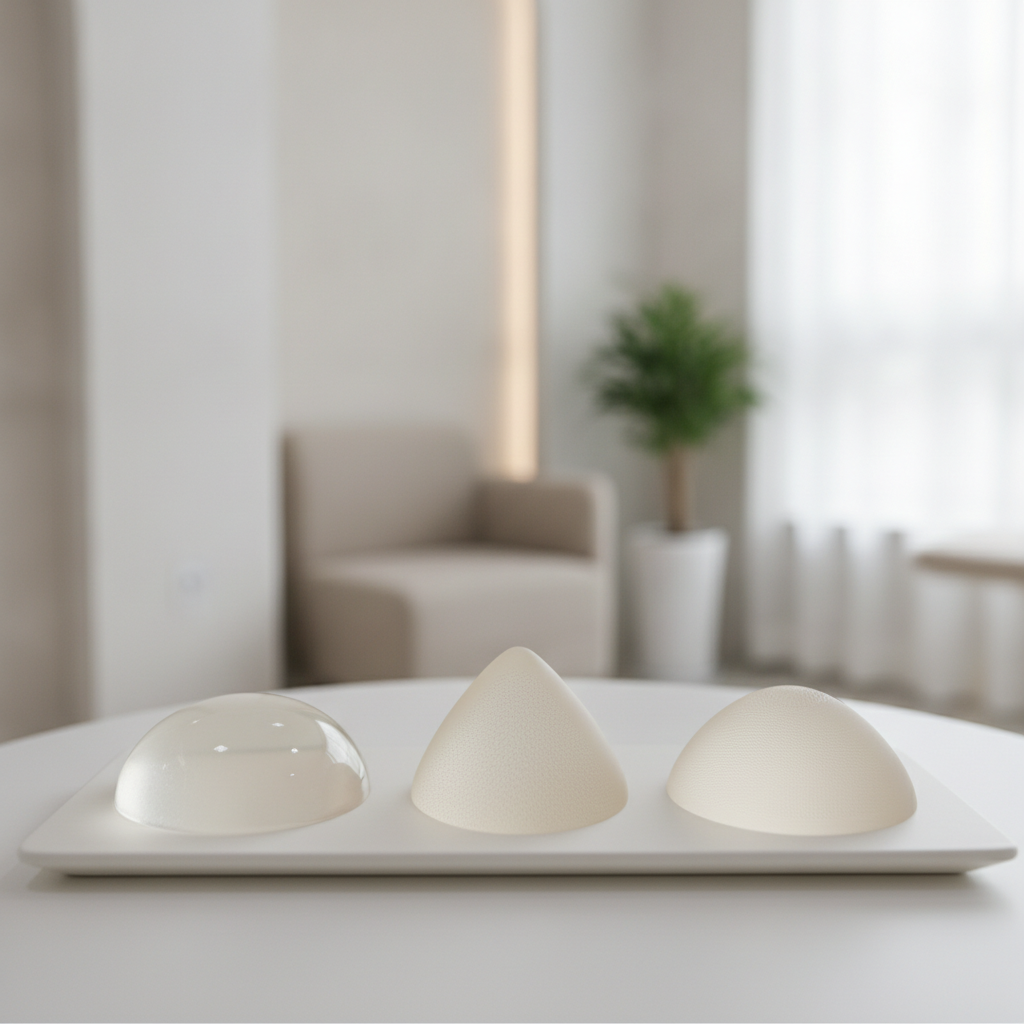
Every consultation for breast augmentation in Seoul opens with the same question, and it is almost never the one first-timers expect. Before size, before profile, before scar location, the surgeon asks which implant brand you want. In Korea in 2026 the practical answer narrows to three: Motiva from Establishment Labs, Mentor MemoryGel from Johnson & Johnson, and Nagor from GC Aesthetics. The choice sets your price, your warranty, and your revision odds a decade from now.
WHY THE BRAND ACTUALLY MATTERS IN KOREA
Korean surgeons rotate through more implant brands than surgeons in most Western markets because Korean women historically preferred smaller, subtler augmentation and the domestic market fragmented across profiles that suited petite frames. The three brands you will see priced on a 2026 Gangnam menu each solve a slightly different problem. Motiva Ergonomix is the newest generation shell, marketed for its nano-textured surface and its ability to flex with the body, which many Korean surgeons pitch to first-timers who want a soft, natural teardrop shape without a fixed orientation. Mentor MemoryGel is the workhorse brand for cohesive round silicone in Korea, and it dominates in patients who want a fuller upper pole. Nagor sits between the two on price and on shape options, and its GC Aesthetics parent has aggressive lifetime warranty terms that resonate with medical tourists who will not fly back for check-ups.
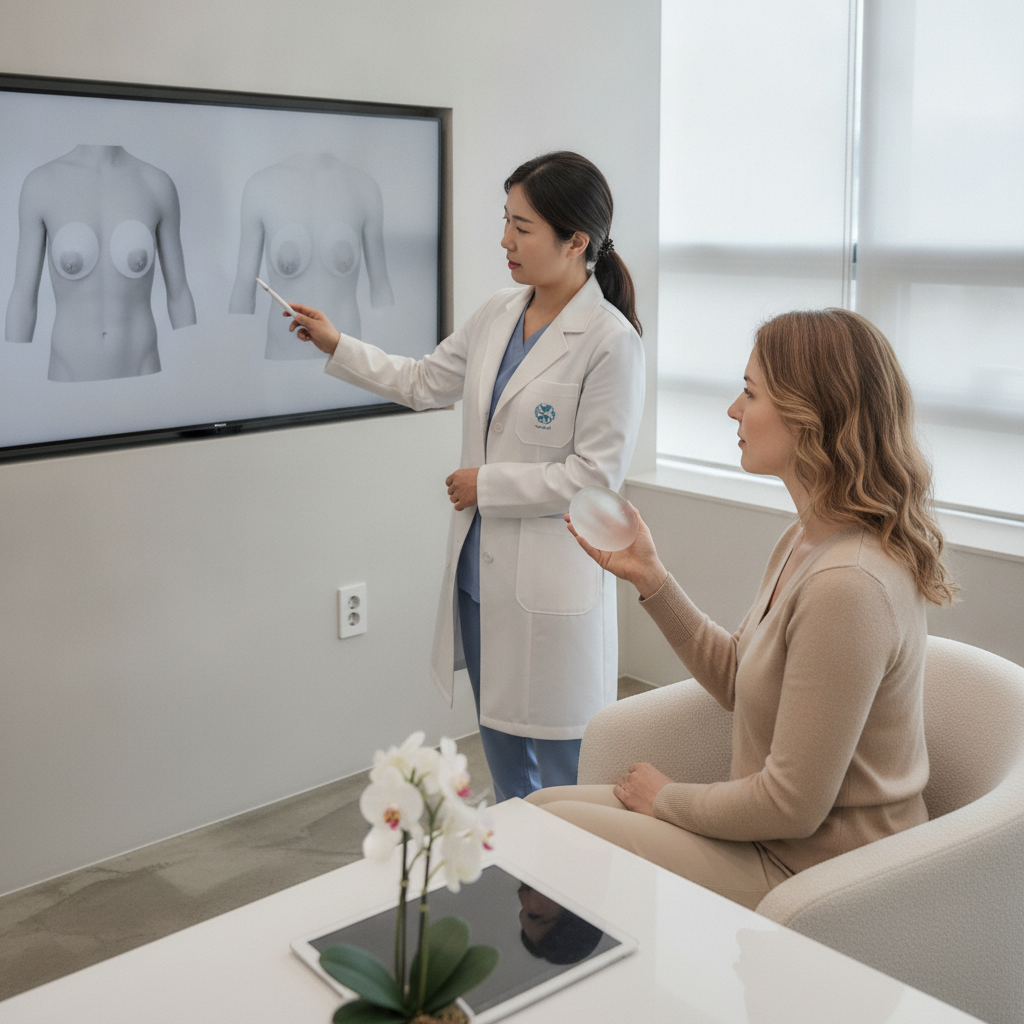
The clinical conversation matters more than the marketing one. Korean surgeons in Apgujeong and Cheongdam will often show you all three shells during the consultation and let you feel the difference in your hands, which is one reason a Seoul augmentation feels less abstract than the same decision elsewhere. If the clinic only offers one brand and refuses to explain why, that is your signal to walk. See the broader risk map in the breast augmentation risks guide.
MOTIVA ERGONOMIX IN SEOUL: THE CURRENT DEFAULT
Motiva Ergonomix is the implant most Seoul clinics will quote first in 2026, and it has become the informal default in the Gangnam belt. The shell uses a nano-textured surface that Establishment Labs calls SmoothSilk, and independent registries have logged capsular contracture rates under 1 percent at five years, which is why Korean surgeons are willing to use it in patients with a history of tight scar formation. Ergonomix implants are round when a woman is on her back and take a soft teardrop shape when she stands up, which removes the rotation risk of anatomical implants and gives the natural drop that Korean patients tend to ask for. The typical Seoul price for a bilateral augmentation with Motiva Ergonomix runs ₩7,500,000 to ₩11,000,000, or roughly $5,400 to $8,000, with the higher end reserved for board-certified surgeons in Apgujeong.
Motiva also ships with an embedded RFID chip called Q Inside, which stores the implant model, serial number, and manufacture date. A Korean surgeon can scan it in-clinic and confirm you are getting exactly what you paid for, which matters in a market where implant substitution scandals have hit the local news in previous years. The Motiva warranty covers rupture and Baker grade III to IV contracture for life, and adds a small replacement contribution for the first ten years. First-timers who plan to fly home after surgery should read the flying home recovery rules before booking, because Motiva does not change your two-week no-flight window.
MENTOR MEMORYGEL: THE FULLER UPPER POLE OPTION
Mentor MemoryGel Xtra is the implant Korean surgeons reach for when a patient wants visible upper-pole fullness rather than a soft slope. The gel is more cohesive than Motiva Ergonomix, so the implant holds a rounder shape whether you are lying down or standing, and the result reads as more surgically enhanced than natural teardrop. That is not a criticism. Many patients from Southeast Asia and the Middle East fly into Seoul specifically because they want the fuller Mentor look with Korean-level scar work, and they are frustrated when a surgeon quietly pushes them toward the flatter Ergonomix shape.
Mentor pricing in Seoul in 2026 sits ₩1,000,000 to ₩1,500,000 below Motiva at most clinics, so a bilateral augmentation with MemoryGel Xtra typically comes in at ₩6,500,000 to ₩9,500,000, roughly $4,700 to $6,900. The trade-off is that Mentor implants use a smooth or lightly textured shell without embedded identification, so verification depends on the clinic showing you the sealed box, the barcode, and the manufacturer certificate at the pre-op briefing. Ask for a photograph of all three during your consultation. Mentor's core warranty covers rupture for life and offers financial support for capsular contracture in the first ten years, which is comparable to Motiva but without the RFID audit trail.
NAGOR IMPLEO AND THE WARRANTY CASE
Nagor is the brand you will hear about in Seoul when you specifically ask about lifetime coverage. GC Aesthetics runs the CoGa warranty on Nagor Impleo and Nagor Cristalino implants, which covers rupture, contracture, and even certain revision costs across the full life of the implant, not just the first decade. That structure appeals to medical tourists from Australia, Europe, and the Middle East who accept they will never fly back to Seoul for a revision consult and want the paperwork to travel with them. Nagor Impleo uses a smooth round shell with cohesive gel, and Nagor Cristalino uses a smoother BioQ shell aimed at reducing capsular reaction. Both are common in Gangnam mid-tier and premium clinics.
Seoul pricing for Nagor Impleo lands between Mentor and Motiva at ₩7,000,000 to ₩10,000,000, or about $5,050 to $7,250, and Cristalino usually runs ₩500,000 higher. The trade-off is quieter clinical data in Korea. Nagor has strong European track records but a shorter deployment history in Seoul than Motiva, so second-opinion consultations sometimes flag the brand as less familiar. If your surgeon has not personally placed at least a hundred Nagor implants, ask which brand they place most and why. A confident surgeon will explain the answer without steering you.
- 01Motiva Ergonomix: ₩7,500,000 to ₩11,000,000 bilateral, RFID verification, soft dynamic teardrop, best for natural drop and tight scar history
- 02Mentor MemoryGel Xtra: ₩6,500,000 to ₩9,500,000 bilateral, more cohesive gel, best for visible upper-pole fullness
- 03Nagor Impleo and Cristalino: ₩7,000,000 to ₩10,000,000 bilateral, GC Aesthetics CoGa lifetime warranty, best for medical tourists who prioritise long-term coverage
HOW KOREAN SURGEONS ACTUALLY DECIDE
A good Seoul surgeon will not sell you an implant brand. They will match a shell to your soft-tissue envelope, your rib shape, your baseline breast width, and your career and lifestyle. A ballet dancer with a narrow chest and thin skin coverage will hear a different recommendation than a business owner with prior pregnancy and stretched skin. The measurement session at consultation should take fifteen to twenty minutes with calipers, 3D imaging on Vectra or Crisalix, and an explicit written volume in cubic centimetres for the left and right side, because most women are subtly asymmetric. If the surgeon skips the measurements and jumps to sizes, you are in a sales meeting not a consultation.
Ask three questions at the consultation. First, what would you place in your own sister for this soft-tissue profile. Second, what is your revision rate for this brand at five years. Third, what happens to the warranty if I develop capsular contracture in Bangkok or Sydney and cannot fly back. The answers matter more than the brand name on the box. Cross-check pricing against the breast augmentation cost guide so the quoted number lines up with the going 2026 rate for your chosen brand.
WHAT THE BRAND DOES NOT FIX
The implant matters less than the pocket. Sub-muscular versus sub-fascial versus dual-plane placement will change your recovery timeline, your ripple visibility, and your scar quality more than switching from Motiva to Mentor. Korean surgeons in the ₩8,000,000 to ₩12,000,000 bracket are usually meticulous about pocket dissection, and the extra cost buys you a surgeon who will spend forty minutes shaping the space rather than twenty. The breast augmentation recovery timeline shifts by a full week depending on pocket depth, and no shell brand compensates for a rushed dissection.
Comparisons · 9 min · Sep 15, 2026
← all posts
HAIR TRANSPLANT SEOUL VS TURKEY 2026: COST, QUALITY, RECOVERY
Seoul or Istanbul for your hair transplant in 2026? A direct comparison of price, technique, graft count, recovery time, and who each destination actually suits.
FACELIFT VS THREAD LIFTING IN SEOUL: WHICH LIFT IN 2026?
A surgical SMAS facelift and a Korean PDO/PCL thread lift solve different problems at very different price points. Here is how Seoul clinics actually decide between them.
SYLFIRM X VS POTENZA IN SEOUL: WHICH RF MICRONEEDLING IN 2026?
A side-by-side of Sylfirm X and Potenza in Seoul clinics: what each device does best, real KRW pricing, downtime, and how to pick for melasma, acne scars, or a lifting protocol.
LIPOSUCTION SEOUL VS BANGKOK VS ISTANBUL: WHERE TO FLY IN 2026
A working comparison of liposuction 360 in Seoul, Bangkok, and Istanbul for international patients weighing cost, technique, safety, and recovery in 2026.
HYDRAFACIAL VS AQUAPEEL SEOUL 2026: WHICH MEDICAL FACIAL WINS
Two of the most-booked medical facials in Seoul, compared on protocol, price, downtime, and which one actually fits your trip.
▶▶▶ stop reading. start matching.
FIND YOURS.
We'll pull five clinics matched to your case. WhatsApp reply within 24h.