BREAST AUGMENTATION RISKS IN SEOUL 2026: A SAFETY GUIDE
Capsular contracture, rupture, hematoma, and the red flags to catch before booking a Seoul clinic.
By Editorial
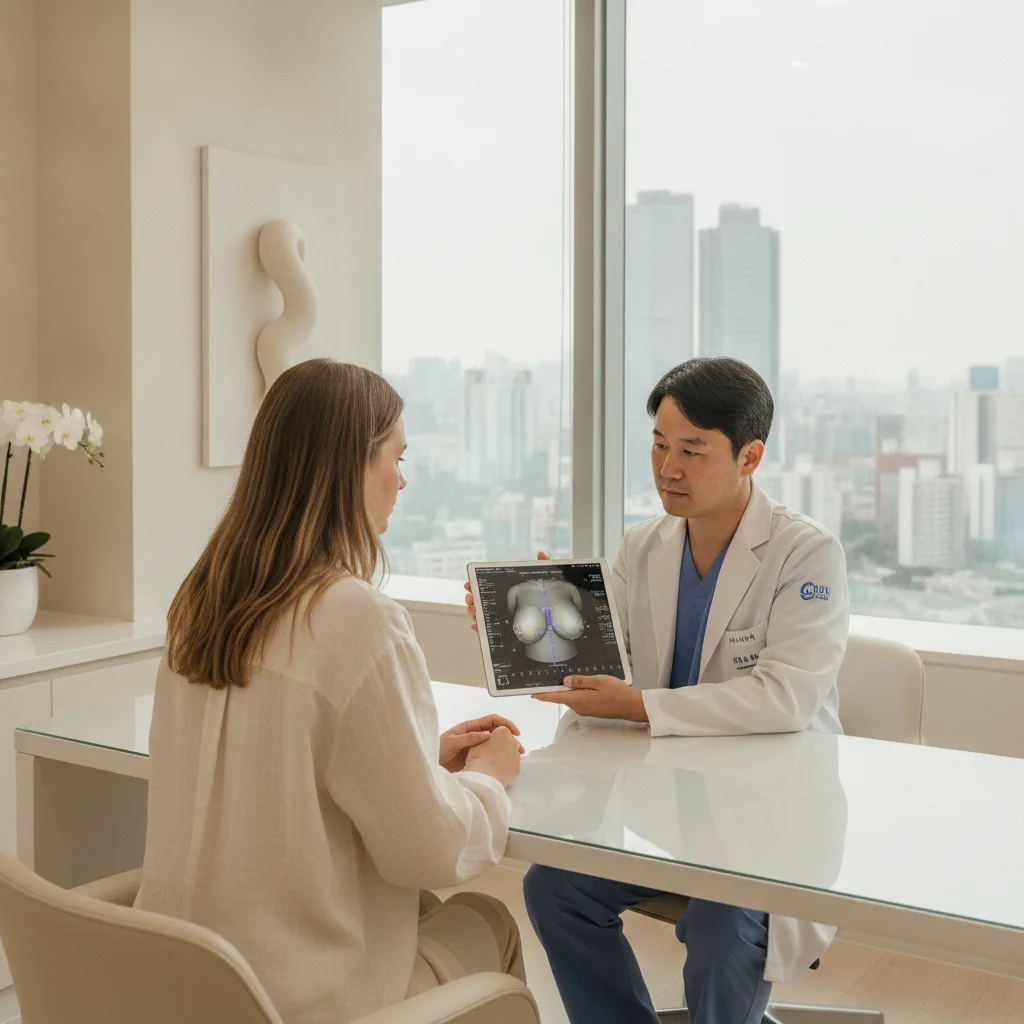
Seoul does more breast augmentation volume than most Western cities combined, and the outcome data at the top end of Gangnam is genuinely strong. The risk profile still exists, and for a medical tourist it comes with an extra wrinkle: complications usually appear after you fly home. Knowing which risks matter, which clinic signals reduce them, and what the fly-home timeline looks like is the difference between a good trip and a $12,000 lesson.
WHAT ACTUALLY GOES WRONG AFTER BREAST AUGMENTATION
The three complications that dominate breast augmentation registries worldwide are capsular contracture, hematoma, and implant malposition. In Korean plastic surgery data pooled across board-certified KAPRS surgeons, symptomatic capsular contracture sits in the 4 to 8 percent range over five years for smooth-shell implants placed under the muscle, which tracks with global figures. Hematoma inside the first 48 hours is rarer, roughly 1 to 2 percent, and it is the reason clinics like Braun Plastic Surgery in Seocho keep an in-house anesthesiologist on site rather than an outside contractor. Implant malposition, where the pocket heals unevenly and the implants sit too wide or too low, shows up on the six-week photo review and is the single most common reason patients need a revision consultation.
Rupture is a slower story. Modern cohesive silicone implants used in Seoul, mostly Motiva, Mentor, and Sebbin, carry a rupture rate around 1 percent per year, cumulative. That is why Korean surgeons book patients into a 10-year MRI or high-resolution ultrasound cadence even after they fly home. Infection is the rarest of the serious complications, well under 1 percent when the operating room uses laminar airflow and disposable single-use sizers. The absence of any of those signals in a consultation deck is meaningful.
BIA-ALCL, the lymphoma linked to textured implants, is the risk that changed the market. Allergan Biocell was pulled from Korea in 2019. Reputable Seoul clinics now offer smooth-shell implants by default and will document the exact device, lot number, and manufacturer in your discharge paperwork. If a clinic hedges on which implant model they plan to use before the operating day, treat that as diagnostic rather than administrative.
HOW SEOUL CLINICS REDUCE SURGICAL RISK
Foreigner-designated status from the Korea Health Industry Development Institute is the baseline signal. It does not certify surgical outcomes, but it does confirm English-language coordinators, itemised billing in KRW, and a legally binding complaint pathway. Grand Plastic Surgery in Apgujeong and April31 Aesthetics in Gangnam carry this designation, along with 20-plus years of operating history. Neither is the cheapest quote in your inbox, and neither should be.
Beyond the government designation, the harder signals are structural. A dedicated in-house anesthesiologist rather than a shared per-diem contractor. Full CCTV coverage of the operating room, which several Seocho and Gangnam clinics like Braun and Girin Plastic Surgery publish openly. Board certification through KAPRS (the plastic surgery society) as opposed to a general medical license, and ideally ISAPS or IPRAS international membership. ID Hospital publishes a 12-surgeon board-certified roster and a government accreditation that specifically covers breast augmentation as a listed procedure. Small clinics without a written anesthesia protocol are where the fatalities have historically come from.
- 01In-house anesthesiologist on staff, not a shared external contractor
- 02CCTV coverage of the operating room, footage retrievable on request
- 03KAPRS or ISAPS board certification named on the actual operating surgeon, not the marketing brand
- 04Written protocol for post-op complications after the patient returns home
- 05Implant device, manufacturer, and lot number confirmed in writing before surgery day
- 0610-year MRI or ultrasound follow-up schedule included in the package
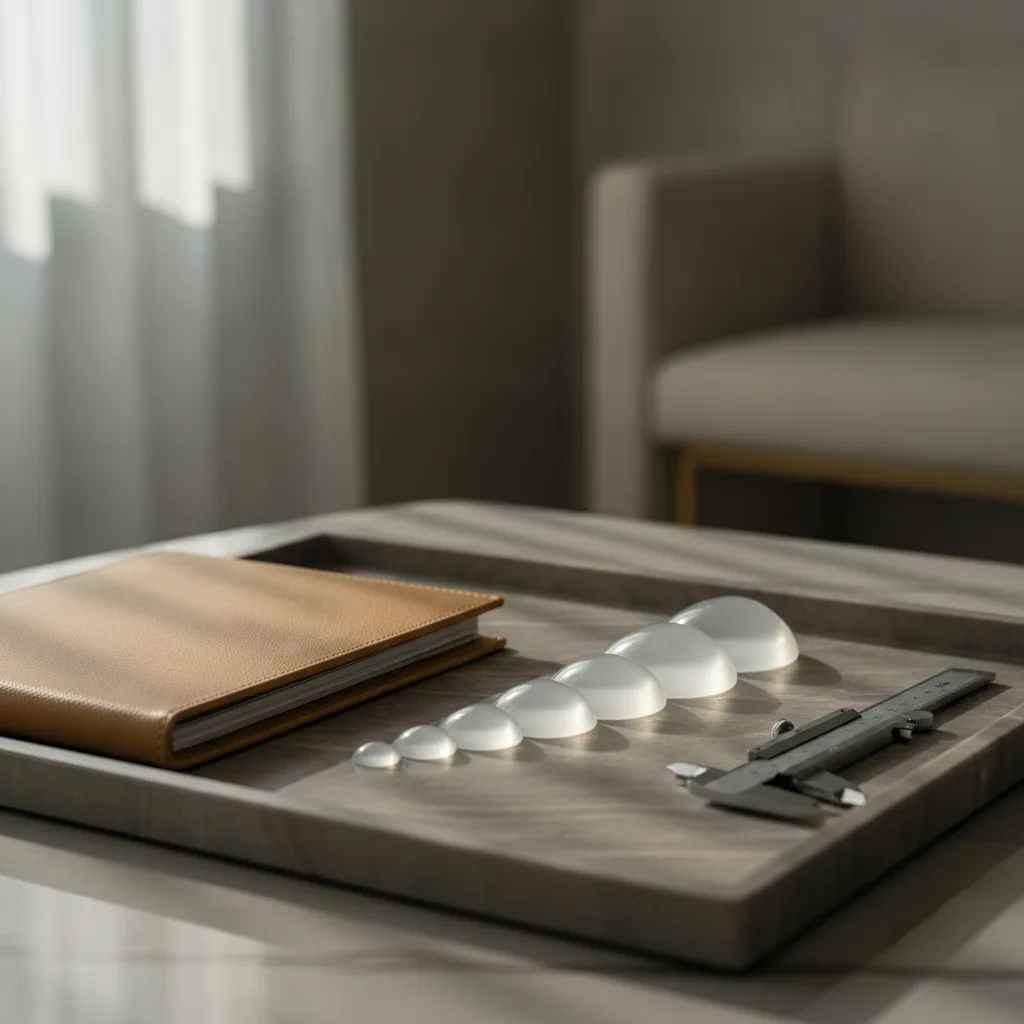
RED FLAGS TO CATCH DURING YOUR CONSULTATION
The consultation is a stress test of the clinic, not a formality. If the surgeon who will hold the scalpel is not the one in the room during your consultation, ask for a scheduled call with the operating surgeon before you pay a deposit. Ghost-surgery cases in Korea, where a junior operates without the patient knowing, still occur at low-tier volume clinics and are the single scenario Korean regulators have prosecuted most aggressively over the last three years. Consent forms in Seoul now often include a photograph of the actual operating surgeon. If yours does not, request one in writing.
Pressure discounts are the second flag. A clinic that quotes you a firm price by email and then offers a 30 percent same-day discount inside the consultation room is telling you the printed price is fictional. Real clinics in Apgujeong hold the line on quoted prices and will itemise the anesthesia fee, the implant cost, and the post-op garment separately. A quote that bundles everything under one lump sum is harder to compare against a revision estimate later, which matters more than it sounds.
The third flag is timeline compression. If your consultation on Monday leads to surgery on Wednesday, you are not being screened, you are being processed. Serious clinics want blood work, a 24 to 48 hour reflection window, and photo documentation of your baseline chest anatomy before they operate. For cost benchmarks and package structure see the breast augmentation cost guide.
THE FLY-HOME TIMELINE: WHEN COMPLICATIONS SHOW UP
Day zero to day three is the hematoma window. This is why most Seoul packages keep foreign patients within 30 minutes of the clinic for the first 72 hours, and why the good clinics will not discharge you to a hotel without a written emergency number staffed 24 hours in Korean and English. If a breast becomes visibly larger, harder, or more painful than the other inside the first three days, that is a hematoma until proven otherwise and it needs a return to the operating room, not a phone call from Bangkok.
Day 7 to day 14 is when most patients fly home, and this is the seroma and infection window. Low-grade fever above 38 degrees Celsius, spreading redness, or fluid drainage from the incision are the three symptoms that mean go to a hospital, not wait for your follow-up. Capsular contracture is a longer story that unfolds over months. Grade III or IV contracture, where the breast becomes visibly firm and distorted, usually appears between month three and month eighteen and is the most common reason for revision. For the pre-flight timing rules that reduce clot risk see the anti-flying rules guide. For the parallel safety picture on body surgery see liposuction risks in Seoul 2026.
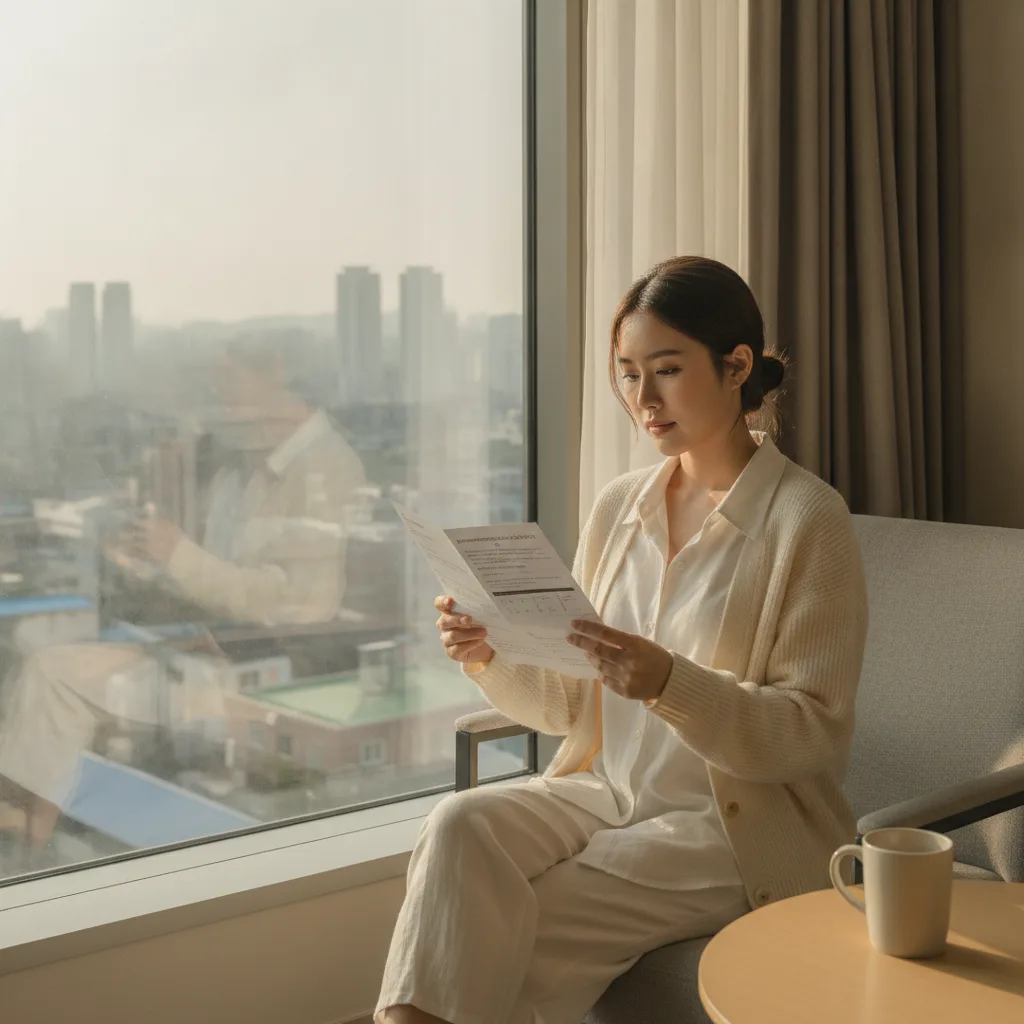
The implant model and lot number should land on your file in writing, not promised verbally during the glossy consult. Walk the clinic through the 15-question consultation checklist so the operating surgeon, the anaesthesia protocol, the device batch, and the revision policy all get captured on the same signed page. Clinics that cannot produce those answers before the deposit is paid are the clinics that go dark after a complication. Consistency between what gets quoted and what gets injected is the only real protection you have once you fly home.
HOW COMMON IS CAPSULAR CONTRACTURE AFTER BREAST AUGMENTATION IN SEOUL?
Symptomatic capsular contracture affects roughly 4 to 8 percent of patients over five years when smooth-shell cohesive silicone implants are placed under the muscle by a KAPRS-certified surgeon in Seoul. Grade III or IV cases requiring revision fall closer to 2 to 4 percent. Risk climbs with textured shells, sub-glandular placement, and post-op hematoma, which is why Gangnam clinics have moved almost entirely to smooth Motiva or Mentor devices in a dual-plane pocket.
WHAT HAPPENS IF MY IMPLANT RUPTURES AFTER I FLY HOME?
Cohesive gel implants do not leak in the classic sense. On rupture the gel stays largely inside the shell, but the shape changes and the implant needs to be replaced. Most Seoul packages include a manufacturer warranty (Motiva Always Confident, Mentor MentorPromise) that covers the replacement device and often part of the surgical fee if rupture is confirmed by ultrasound or MRI within a defined window, typically 10 years. Your local surgeon can perform the revision, and the Korean clinic will typically ship replacement devices under warranty.
HOW SOON CAN I FLY HOME AFTER BREAST AUGMENTATION?
Seven days is the minimum most reputable Seoul clinics will sign off on, and 10 to 14 days is what they prefer for international patients. The concern is not the implants but the deep-vein thrombosis risk from immobility on long-haul flights, compounded by anesthesia within the previous week. Compression stockings, aisle seats, and hourly walking are non-negotiable. Anything shorter than seven days should trigger a second opinion on whether the clinic is prioritising your safety or your travel calendar.
DO KOREAN SURGEONS WORK WITH WESTERN BODY FRAMES?
Yes, and the high-volume international clinics do this weekly. Grand Plastic Surgery reports 30,000-plus international patients across 100-plus countries, and ID Hospital publishes case volumes on Western and Southeast Asian anatomy specifically. The technical variables that matter are chest width, pectoral thickness, and existing breast tissue volume, all of which are measured during your consultation regardless of nationality. Ask to see before-and-after photos of patients with your build, not the Korean domestic average.
WHAT IF I NEED REVISION, AND WHO PAYS?
Revision policy is where clinics separate themselves. Girin Plastic Surgery offers a written 1-year post-op guarantee that covers surgeon fees on revisions for capsular contracture and asymmetry. Most Apgujeong clinics cover the surgical fee for one year and pass the implant and anesthesia costs to the patient. Beyond a year, expect to pay revision at roughly 60 to 80 percent of primary surgery cost. Get the revision policy in writing, in English, before you pay the deposit.
Concerns · 8 min · Sep 5, 2026
← all posts
TWO-JAW SURGERY RISKS IN SEOUL 2026: WHAT TO KNOW BEFORE BOOKING
A candid look at nerve injury, occlusion problems, airway swelling, and revision odds for international patients considering orthognathic surgery in Korea.
BUNNY LINES BOTOX IN SEOUL 2026: NOSE WRINKLE FIX GUIDE
Small dose, big difference. What bunny lines Botox costs in Seoul, which brand to pick, and how to avoid a frozen nose.
LIPOSUCTION RISKS IN SEOUL 2026: RED FLAGS TO AVOID
The real complications from Seoul lipo, the clinic red flags that predict them, and how medical tourists reduce their odds.

HAND REJUVENATION IN SEOUL 2026: AGE SPOTS, VOLUME & VEINS
Non-surgical hand rejuvenation in Seoul: pico toning for age spots, Radiesse and Profhilo for volume loss, sclerotherapy for veins, and honest 2026 pricing.
HAIR LOSS INJECTIONS IN SEOUL 2026: EXOSOMES, PDRN & SCALP MESOTHERAPY
Non-surgical scalp injections for thinning hair in Seoul: exosomes, PDRN and mesotherapy protocols, costs, and where foreigners actually book.
▶▶▶ stop reading. start matching.
FIND YOURS.
We'll pull five clinics matched to your case. WhatsApp reply within 24h.