TWO-JAW SURGERY RISKS IN SEOUL 2026: WHAT TO KNOW BEFORE BOOKING
A candid look at nerve injury, occlusion problems, airway swelling, and revision odds for international patients considering orthognathic surgery in Korea.
By Editorial
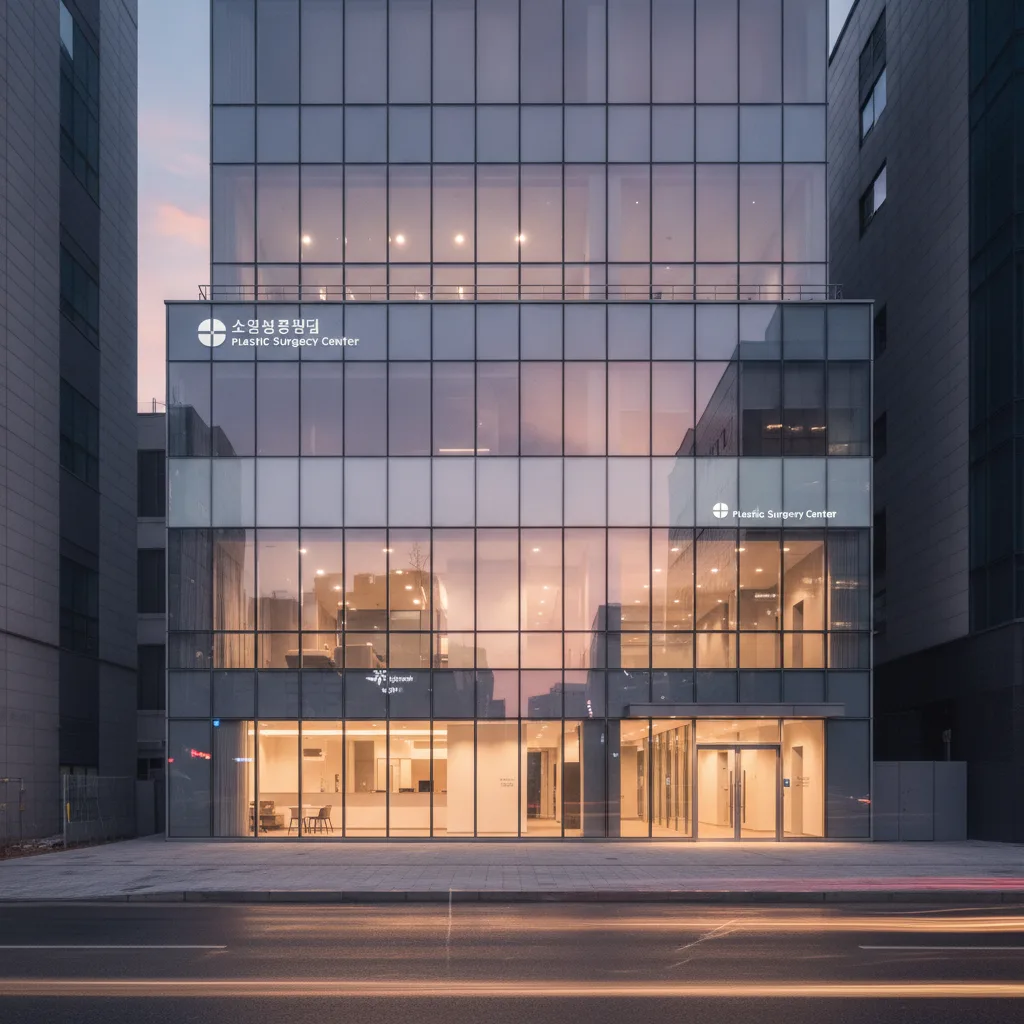
Two-jaw surgery in Seoul draws thousands of international patients every year because Korean orthognathic teams operate on volumes most Western hospitals never see. The upside is refined technique and predictable aesthetic outcomes. The downside is a real complication profile that flight-in patients often underestimate, from inferior alveolar nerve numbness to post-op airway swelling that can extend the hospital stay. This guide breaks down the failure modes worth understanding before you sign the consent form at an Apgujeong or Gangnam clinic.
WHAT TWO-JAW SURGERY ACTUALLY INVOLVES
Two-jaw surgery, technically bimaxillary osteotomy, cuts and repositions both the upper maxilla (Le Fort I) and the lower mandible (bilateral sagittal split osteotomy, or BSSO). The bones are fixed with titanium plates and screws, and in Seoul the average operating time runs 4 to 6 hours under general anaesthesia. Recovery involves 2 to 3 nights in-hospital, roughly 6 weeks on a soft or liquid diet, and 6 to 12 months for full sensory and functional settling. It is a functional operation with cosmetic benefit, not the reverse, and Korean surgeons who take on flight-in aesthetic cases work under that framing.
Because the operation touches the trigeminal nerve branches, the airway, and the occlusion, its complication list is longer than any pure cosmetic procedure. It is not comparable to a rhinoplasty or a buccal fat removal, both of which recover in weeks with far lower morbidity. Anyone weighing two-jaw against V-line reduction alone should read that risk gap carefully, because the two operations are often marketed side by side in Seoul brochures but sit at very different points on the surgical risk curve.
NERVE DAMAGE: THE RISK EVERY SURGEON WARNS ABOUT
The inferior alveolar nerve runs through the mandible and supplies sensation to the lower lip, chin, and lower teeth. Because BSSO splits the bone around this nerve, transient numbness in the lower lip is near-universal in the first weeks. Published Korean series report permanent sensory deficit in roughly 5 to 15 percent of cases, with women over 30 and revision cases at the higher end. Seoul teams at ID Hospital, Braun Plastic Surgery, and Girin Plastic Surgery quote these numbers openly in consent documents, and patients should push back if a clinic promises zero risk.
Upper-jaw work carries its own nerve exposure. Le Fort I disrupts branches of the infraorbital nerve, which can leave the upper lip, cheek, or nose numb for months. Most sensation returns within 6 to 9 months, but a small percentage of patients live with permanent patches of altered feeling. If your work depends on fine facial expression, from broadcast to performance, this is a non-trivial trade-off to weigh before flying to Saero Plastic Surgery or any other Gangnam team for consultation.

OCCLUSION AND BITE PROBLEMS AFTER SURGERY
The whole point of orthognathic surgery is to land a stable, functional bite. When the plan misfires, the malocclusion can be worse than the starting position. Common post-op bite problems include an anterior open bite (front teeth do not meet), a shifted midline, and posterior interferences that make chewing painful for months. Most of these are correctable with post-surgical orthodontics if the underlying bones are set correctly, but the orthodontic phase can extend 12 to 24 months and is not always included in the Seoul surgical package price.
Relapse is the other bite issue that catches foreign patients off guard. Even with rigid titanium fixation, condylar remodelling in the first year can shift the mandible by 1 to 3 millimetres, sometimes enough to reopen a bite that closed on the operating table. Korean surgeons manage this with condylar positioning devices, careful splint therapy, and long-term follow-up, which is exactly the follow-up international patients rarely stay for. If you cannot commit to at least one in-person post-op review at 3 to 6 months, factor that gap into your risk calculus.
- 01Anterior open bite (front teeth fail to meet)
- 02Midline shift greater than 2 millimetres
- 03Condylar resorption or remodelling causing relapse
- 04Post-op TMJ pain and clicking
- 05Need for additional orthodontic finishing (6 to 24 months)
AIRWAY, SWELLING, AND HOSPITAL STAY
Immediate post-op swelling can compromise the airway, which is why Seoul hospitals keep two-jaw patients in an inpatient bed for at least one night, often two. Nasotracheal intubation, sometimes tracheostomy in high-risk cases, is standard, and the ICU may be involved when the surgeon anticipates significant swelling. This is the phase where medical tourism patients most often regret staging their trip on a tight schedule. If your recovery apartment is far from the hospital or you booked a return flight at day 10, a swelling flare on day 4 or 5 becomes a logistics problem on top of a medical one.
Deep vein thrombosis is a smaller but real risk after 4 to 6 hours of general anaesthesia in a jet-lagged patient who just flew 10 hours from Europe or North America. Korean protocols use sequential compression devices in-hospital and early mobilisation on day one. Foreign patients booking short recovery windows should plan a minimum 14-day post-op stay in Seoul, not 7, and should avoid a long-haul flight until swelling and coagulation risk have settled. The liposuction risk guide covers the DVT trade-off in more detail for anyone comparing surgical stays.
Before signing a two-jaw consent, get the KAPRS or KAOMS certification number, the operating surgeon's personal case volume, and the written follow-up protocol captured on paper, not inside a sales pitch. The 15-question consultation checklist covers every line that matters for a procedure where ghost surgery and skipped orthodontic review are the two most common failure modes. If a Gangnam coordinator stalls on any of those answers, you have your answer already.
HOW DO SEOUL CLINICS SCREEN CANDIDATES?
Reputable Seoul orthognathic teams require a full workup before accepting a foreign patient. Expect 3D CBCT imaging, cephalometric analysis, panoramic X-ray, dental impressions or intraoral scan, and a joint consult with an orthodontist. Clinics operating under KAPRS-certified plastic surgeons or KAOMS-certified maxillofacial surgeons will refuse patients with active TMJ disorders, uncontrolled sleep apnea, or unrealistic aesthetic goals. If a Gangnam consultation quotes you a surgery date within a week of first contact and skips the orthodontic review, treat that as a warning sign, not a convenience.
WHAT DOES TWO-JAW REVISION COST IN SEOUL?
Revision two-jaw surgery in Seoul typically runs 30 to 50 percent above the primary case price, so a primary at around ₩22,000,000 to ₩35,000,000 (roughly $16,000 to $25,000 USD) becomes a ₩30,000,000 to ₩50,000,000 revision. Scar tissue, altered anatomy, and residual hardware make revision technically harder and longer in the OR. Because most revisions happen 12 to 24 months after the primary, the foreign patient is usually flying in a second time, which adds another $3,000 to $5,000 in travel and recovery costs on top.
CAN I FLY HOME TWO WEEKS AFTER TWO-JAW SURGERY?
Most Seoul surgeons clear two-jaw patients for a long-haul flight at day 14 to 21, once acute swelling has resolved and DVT risk is lower. Short-haul flights within Asia can happen slightly earlier, from day 10. The higher risk is late-onset bleeding from a healing osteotomy line, which is rare but presents worse at 35,000 feet than on the ground. Book a flexible return ticket and budget an extra week of hotel or serviced apartment in case the surgeon delays clearance.
ARE FOREIGN PATIENTS HIGHER-RISK FOR TWO-JAW SURGERY?
Foreign patients are not biologically higher-risk, but their care pathway is. Missed follow-ups, self-managed splint therapy without a local orthodontist, and unfamiliarity with Korean emergency access all raise the practical complication rate. The safest medical tourism pathway pairs your Seoul surgeon with a home-country orthodontist who has agreed in writing to manage the post-surgical finishing phase. Skip that handoff and your outcome depends entirely on how well you can manage a splint and a soft diet from another continent.
HOW DO I VERIFY A SEOUL TWO-JAW SURGEON'S CREDENTIALS?
Ask for the surgeon's KAPRS (Korean Association of Plastic and Reconstructive Surgeons) or KAOMS certification number. Confirm the hospital is a foreigner-designated medical institution registered with the Korea Health Industry Development Institute. Cross-check the surgeon's actual case volume rather than the marketed hospital volume, because large hospitals list multiple surgeons under one brand. If the clinic cannot produce these credentials on request, or the coordinator deflects to a director's biography instead of the operating surgeon's, that is a hard stop.
WHAT WARNING SIGNS SHOULD I WATCH FOR AFTER DISCHARGE?
Sudden increase in swelling after day 5, bleeding that soaks through gauze faster than every 30 minutes, fever above 38.5°C, breathing difficulty, or numbness that suddenly worsens rather than slowly improves all warrant a same-day return to the hospital. Persistent malocclusion at 6 weeks needs a splint review, not a wait-and-see plan. Facelift patients face different warning signs, which the facelift guide covers separately, but the escalation threshold for two-jaw is lower because the airway and nerve territory are less forgiving.
Concerns · 11 min · Sep 3, 2026
← all posts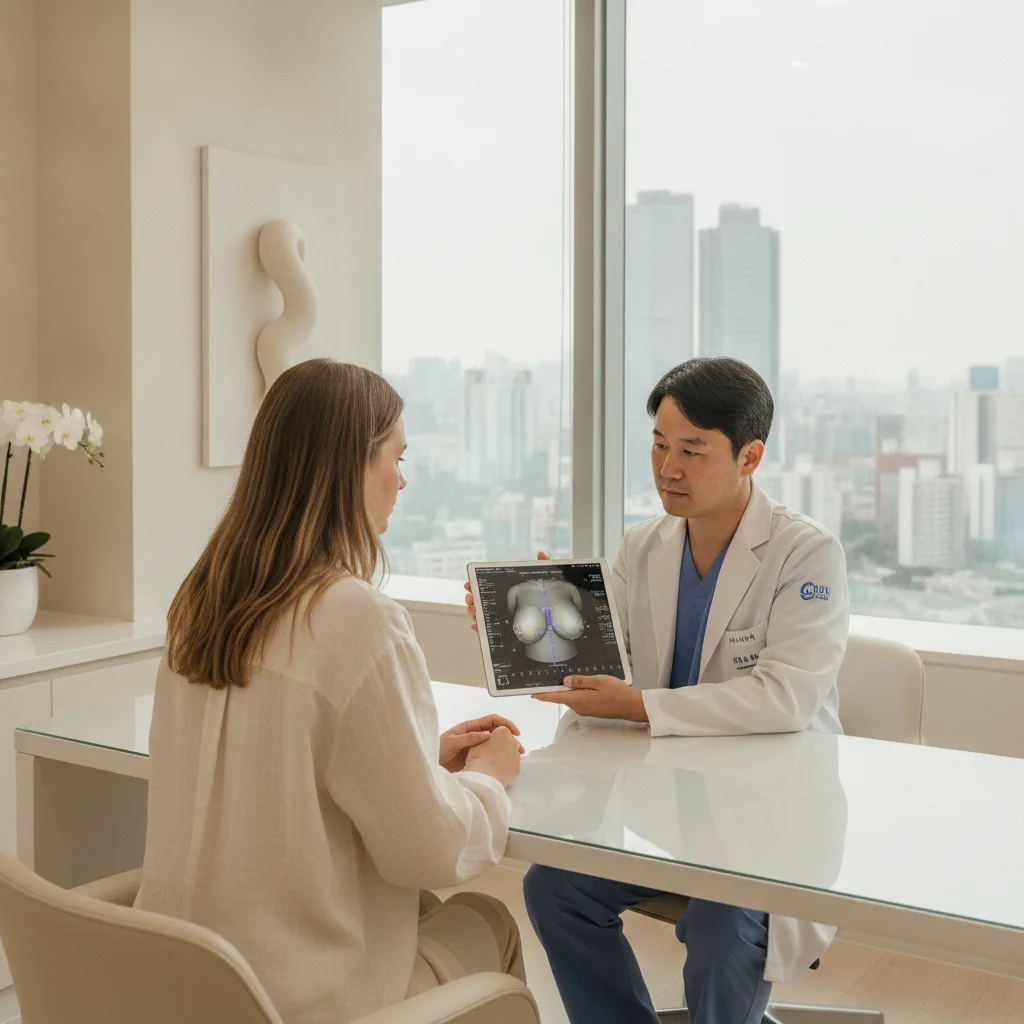
BREAST AUGMENTATION RISKS IN SEOUL 2026: A SAFETY GUIDE
Capsular contracture, rupture, hematoma, and the red flags to catch before booking a Seoul clinic.
BUNNY LINES BOTOX IN SEOUL 2026: NOSE WRINKLE FIX GUIDE
Small dose, big difference. What bunny lines Botox costs in Seoul, which brand to pick, and how to avoid a frozen nose.
LIPOSUCTION RISKS IN SEOUL 2026: RED FLAGS TO AVOID
The real complications from Seoul lipo, the clinic red flags that predict them, and how medical tourists reduce their odds.
HAND REJUVENATION IN SEOUL 2026: AGE SPOTS, VOLUME & VEINS
Non-surgical hand rejuvenation in Seoul: pico toning for age spots, Radiesse and Profhilo for volume loss, sclerotherapy for veins, and honest 2026 pricing.
HAIR LOSS INJECTIONS IN SEOUL 2026: EXOSOMES, PDRN & SCALP MESOTHERAPY
Non-surgical scalp injections for thinning hair in Seoul: exosomes, PDRN and mesotherapy protocols, costs, and where foreigners actually book.
▶▶▶ stop reading. start matching.
FIND YOURS.
We'll pull five clinics matched to your case. WhatsApp reply within 24h.