TWO-JAW SURGERY IN SEOUL 2026: COMPLETE GUIDE
Bimaxillary orthognathic surgery in Seoul, decoded: candidacy, technique, cost in KRW and USD, recovery week by week, revision risk, and how to pick a KAPRS-credentialed surgeon.
By Editorial
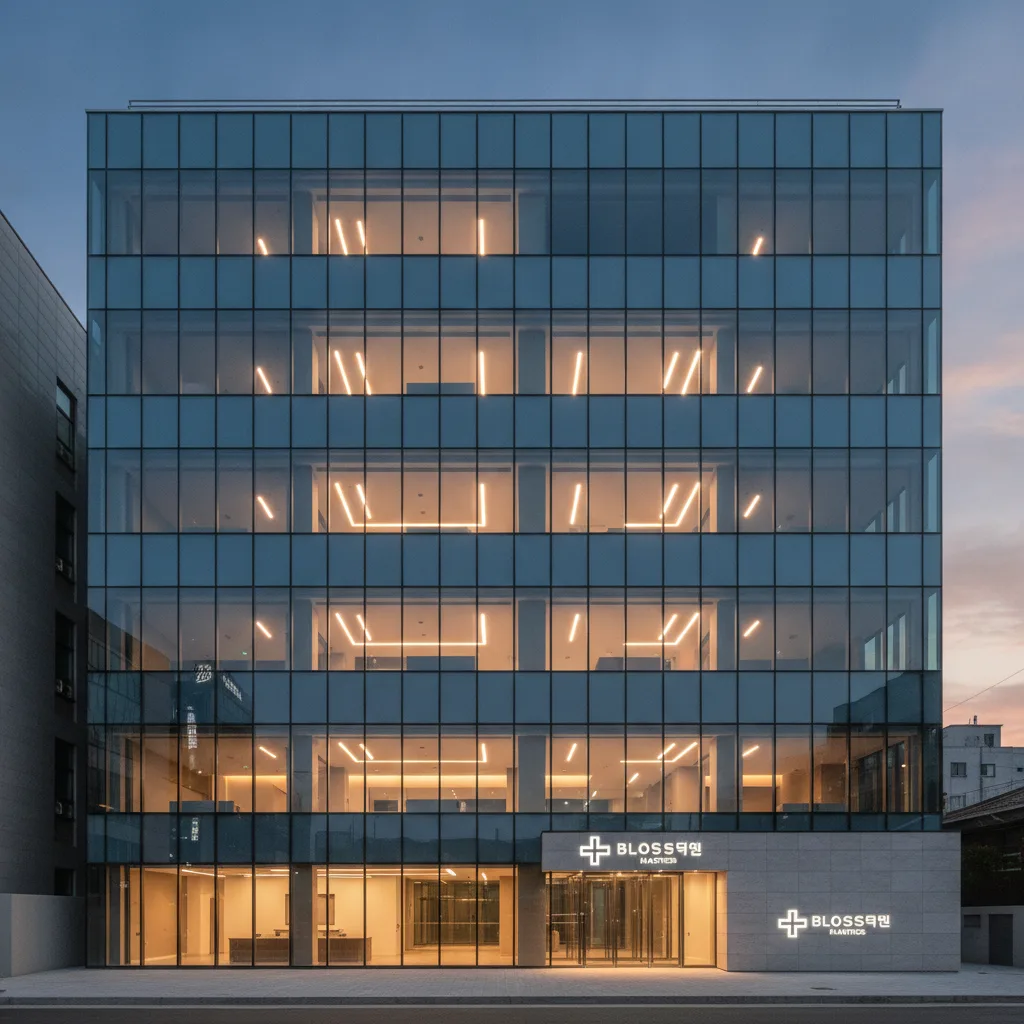
Two-jaw surgery is the biggest thing you can do to a face without a scalpel touching the skin. Seoul performs more of it, per capita, than any city on earth, and the procedure has quietly become one of the top reasons Western and Southeast Asian patients fly into Incheon for a three-week trip. This guide covers who's actually a candidate, what a real Seoul quote looks like in 2026, how recovery unfolds week by week, and where the revision risk hides so you can spot it in a consultation.
WHAT TWO-JAW SURGERY ACTUALLY IS
Two-jaw surgery, called bimaxillary orthognathic surgery in the medical literature, moves both the upper jaw (maxilla) and the lower jaw (mandible) into a new position. The upper jaw is repositioned with a Le Fort I osteotomy, cutting the maxilla above the tooth roots and sliding it forward, back, up, or down. The lower jaw is split with a bilateral sagittal split osteotomy, or BSSO, which separates the tooth-bearing segment from the jaw joint side so the chin end can rotate independently. Titanium plates and screws hold the new position while bone heals over roughly 12 weeks. In Seoul, a genioplasty (chin osteotomy) is bundled into the same operation about 60 percent of the time, because moving both jaws often exposes a chin that no longer sits centered on the face.
The procedure was designed as a functional fix for severe malocclusion, sleep apnea, and open bites. In Korea, surgeons have refined it into a cosmetic tool as well: patients with a long midface, gummy smile, or protruding jaw come in specifically for the aesthetic change, and the functional bite correction rides along. This dual identity matters when you book. A pure aesthetic case at a private clinic is priced and staged differently from a functional case at a university hospital, and Korean surgeons will steer you honestly toward whichever fits your scan.
WHO IS ACTUALLY A CANDIDATE?
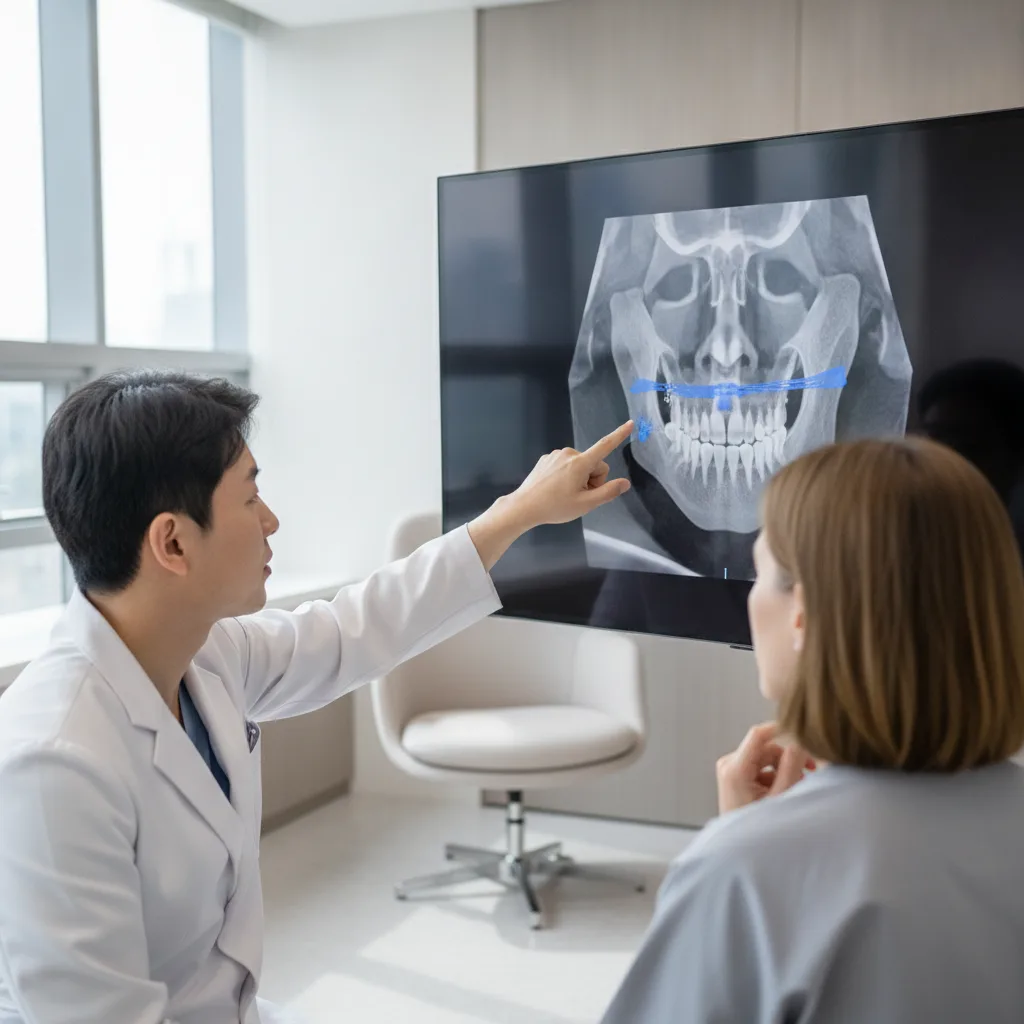
Two-jaw is not a V-line alternative for someone with a mildly wide jaw. If your bite is normal and you just want a slimmer lower face, V-line facial contouring is the correct procedure because it shaves the mandible without cutting through it. Two-jaw is indicated when your teeth do not close properly, your face is visibly asymmetric on scan, your upper jaw is set back or forward relative to your skull base, or you have a class III underbite where the lower teeth sit ahead of the upper. Surgeons at ID Hospital in Gangnam and Girin Plastic Surgery in Seocho both use 3D CT and lateral cephalometric X-rays to measure your skull base before offering a plan, and they will decline aesthetic-only requests that don't need the operation.
Bone maturity matters. Most Seoul surgeons require patients to be 18 or older with fully erupted second molars, since operating earlier risks a second surgery once growth completes. Upper age is soft; healthy patients into their late forties are accepted at every major Gangnam hospital, though bone healing slows past 45 and recovery timelines extend by two to three weeks. Smokers are asked to stop for four weeks pre-op and four weeks post-op because nicotine strangles bone healing at the osteotomy sites. If you have controlled diabetes, sleep apnea, or take SSRIs, disclose it in the pre-op questionnaire because it changes the anesthesia plan, not your eligibility.
WHAT IT COSTS IN SEOUL IN 2026
A private plastic-surgery-clinic two-jaw operation in Seoul in 2026 runs ₩13,000,000 to ₩25,000,000, which is roughly USD $9,700 to $18,700 at the ₩1,335 per dollar rate the tourism agencies quote this year. That range is dictated by three variables: whether the case includes a genioplasty, whether the surgeon uses custom 3D-printed cutting guides, and whether you pick a university hospital or a top-tier private clinic. University hospitals like Seoul National University Bundang sit at the top of the range and take functional referrals; private clinics like ID Hospital, Braun in Seocho, and Faceline in Gangnam sit in the middle to upper band because they built their reputation on aesthetic outcomes.
The quote you get from a Seoul clinic almost always excludes several line items that show up separately: the pre-op CT and cephalometric X-ray package (₩300,000 to ₩600,000), the two-night hospital stay (₩800,000 to ₩1,800,000 depending on private vs shared room), post-op medication and antibiotics (₩150,000 to ₩300,000), and revision touch-up visits if plates need adjustment. VAT treatment varies; foreigner-designated hospitals like Girin and Grand Plastic Surgery quote VAT-inclusive prices and process the 10 percent medical tourist tax refund at the front desk, while some smaller Apgujeong clinics quote VAT-exclusive. Ask up front. See our full Seoul aesthetic and surgical cost guide for how VAT and packages get itemized on Korean quotes.
- 01Two-jaw only, private clinic mid-tier: ₩13,000,000 to ₩17,000,000 (USD $9,700 to $12,700)
- 02Two-jaw plus genioplasty, private clinic mid-tier: ₩17,000,000 to ₩22,000,000 (USD $12,700 to $16,500)
- 03Two-jaw at flagship hospital (ID, Braun, Girin): ₩20,000,000 to ₩25,000,000 (USD $15,000 to $18,700)
- 043D-printed custom cutting guide add-on: ₩1,500,000 to ₩3,000,000
- 05Revision surgery (same clinic, within 1 year): often 30 to 50 percent of original fee
THE RECOVERY TIMELINE, WEEK BY WEEK
Week one is spent in-country. You wake with a light elastic band holding your bite in position (Seoul surgeons abandoned rigid wiring years ago), and you'll speak thickly and eat pureed food through a syringe or straw for five to seven days. Facial swelling peaks at 48 to 72 hours post-op and is genuinely dramatic. You look nothing like the projection scan yet, and this is where medical tourists panic on Reddit. It's normal. You'll be discharged from the hospital on day two or three, moved to a nearby recovery hotel like Ninetree Premier Insadong or L7 Gangnam that Seoul clinics partner with, and you'll return for stitch removal and swelling checks on day five and day seven.
Weeks two and three are when most patients fly home. Swelling drops sharply between days 10 and 14, and by week three you can eat soft solids like rice porridge, soft pasta, and steamed fish. Numbness in the lower lip and chin from BSSO nerve stretching is universal at this stage. It resolves in 85 to 95 percent of patients by month six, though 5 to 10 percent will keep some permanent numbness in a small patch. Follow our post-treatment care checklist for the injection-adjacent basics like sleeping elevated and avoiding aspirin, which apply here too, plus stricter jaw-specific rules from your surgeon.
Weeks four through twelve are bone healing. You'll graduate to normal solids around week six, and orthodontic fine-tuning of the bite starts around week eight if you had pre-op braces. The face keeps changing until roughly month six because residual swelling drains slowly from deep facial tissue planes, and the final aesthetic result isn't judged until the 12-month post-op photo. Do not fly transpacific in the first 14 days because cabin pressure worsens facial swelling and the risk of nasal bleeding from the Le Fort cut is real. See our anti-flying guide for post-surgical flight windows.

RISKS AND REVISION REALITY
The three risks that matter are inferior alveolar nerve injury (permanent lip and chin numbness in 5 to 10 percent), bad split during BSSO (unplanned fracture pattern, 1 to 3 percent at experienced hands, higher elsewhere), and relapse where the jaw drifts back toward its old position in the first year (small drift is normal; significant relapse below 5 percent at top Seoul clinics). Infection at plate sites is rare but real, and 3 to 5 percent of patients elect to have plates removed at 12 months if they irritate soft tissue. Ask any Seoul surgeon for their personal complication rate; hospitals that track their numbers volunteer them. Hospitals that dodge the question are telling you something.
Revision risk correlates hard with case complexity and surgeon volume. A straightforward class III underbite done by a surgeon who performs 200-plus two-jaws per year has a revision rate under 3 percent. A severe asymmetric case done by a lower-volume surgeon can push that above 10 percent. In Seoul the highest-volume two-jaw centers publish their case counts: ID Hospital cites 40,000-plus facial bone cases across its history, Braun advertises single-surgeon anesthesiologist coverage and CCTV-monitored ORs (a safety layer Seoul introduced after ghost-surgery scandals in the early 2020s), and Girin offers a written one-year post-op guarantee that covers revision costs if bone position measurably relapses. Cross-reference these against our Seoul plastic surgery risks guide for the general red flags that apply to any surgical booking.
HOW TO PICK YOUR SEOUL SURGEON
Board certification is table stakes, not a differentiator. Look for KAPRS (Korean Association of Plastic and Reconstructive Surgeons) membership on the surgeon's page, not just KAAS (aesthetics). KAPRS is the harder credential and covers reconstructive skull-base surgery, which is the skillset you actually want cutting your maxilla. Beyond that, three signals separate the top tier: personal two-jaw case volume above 500 lifetime (some ID Hospital surgeons are past 3,000), published 3D CT-based planning workflow (not freehand), and a same-hospital in-house anesthesiologist rather than a rotating contractor. Braun in Seocho and Girin in Seocho both meet all three; ID in Gangnam and Faceline in Gangnam meet the first two.
For international patients, foreigner-designated hospital status (a Korean government KFBA badge) is a practical filter. It requires English-, Chinese-, or Japanese-speaking coordinators, transparent pricing, and a formal medical-record handover for your surgeon back home. April31 Aesthetics in Gangnam, Grand Plastic Surgery in Apgujeong, and Girin in Seocho all carry the designation. Get your quotes from two or three of these before you book, and cross-reference the surgeon names on the KAPRS public registry. Our booking-from-abroad walkthrough covers the video consultation, deposit, and visa logistics that come after you've picked a shortlist.
HOW LONG DOES TWO-JAW SURGERY TAKE?
The operation itself runs three to six hours under general anesthesia, depending on whether a genioplasty is included and whether the surgeon uses 3D custom cutting guides (which speed things up). Total time in the hospital, from arrival for pre-op checks to same-day extubation, is closer to eight hours. Plan two nights of inpatient stay at minimum.
CAN I FLY HOME AFTER TWO WEEKS?
Not comfortably, and not recommended by most Seoul surgeons. The safe minimum for long-haul flights is 14 days for short intra-Asia routes and 21 days for transpacific or transatlantic flights. Cabin pressure worsens swelling at the Le Fort osteotomy site and can trigger nasal bleeding. Book a three-week Seoul stay minimum, and plan to have your final swelling check and stitch confirmation at day 14 before you fly.
WILL I NEED BRACES BEFORE OR AFTER?
Almost always. Pre-operative orthodontics for six to twelve months positions the teeth so the new jaw alignment closes correctly, and post-op orthodontics for another six to twelve months fine-tunes the bite. Some Seoul hospitals now offer 'surgery-first' protocols where the jaw is moved first and orthodontics follows, reducing total treatment time to about 12 months instead of 24. Ask specifically about surgery-first if your total timeline matters.
WHAT IF I JUST WANT A SLIMMER JAW, NOT A BITE CORRECTION?
Then you don't want two-jaw. You want V-line contouring, which shaves the mandible border and does not touch the maxilla or the bite. V-line is a shorter operation (two to three hours), lower risk, and cheaper. Read our V-line surgery guide and our buccal fat removal guide for the non-osteotomy face-slimming path. Reputable Seoul surgeons will refuse to perform two-jaw on a patient who doesn't clinically need it.
DO KOREAN SURGEONS OPERATE ON WESTERN BONE STRUCTURE?
Yes, and the top hospitals see international patients weekly. The technique is identical; the aesthetic target changes. Western patients typically ask for less aggressive posterior movement and preserved midface projection, since the Korean domestic ideal of a slimmer lower face and shorter midface doesn't translate one-to-one to Western features. Bring reference photos of your own past photos, not of Korean celebrities, and your surgeon will plan to preserve your ethnic identity rather than shift it.
WHAT DOES RECOVERY ACTUALLY FEEL LIKE?
The first 72 hours are the hardest: swelling, thick speech, and a lower face that feels frozen from nerve stretch. Pain itself is moderate and well controlled by IV then oral medication, since bone cuts are less painful than soft-tissue surgery. The mental part is harder than the physical. Most patients describe weeks two through four as an emotional low because the face looks distorted, eating is monotonous, and social confidence dips. By week six, when you can eat normally and the shape starts to settle, energy returns. Book your Seoul recovery hotel with someone you trust nearby if possible; the operation is safer with a friend running your errands.
Treatment guides · 12 min · Aug 30, 2026
← all posts
REJURAN VARIANTS EXPLAINED: HEALER, I, S, HB, EYE IN SEOUL
Every Rejuran type does something different. Here is what each variant treats, what it costs in Seoul, and which one your first booking should be.
SKIN BOOSTERS IN SEOUL 2026: JUVELOOK, PROFHILO, SCULPTRA GUIDE
A first-timer's cost, brand and clinic guide to skin boosters and collagen biostimulators in Seoul for 2026.
REVISION RHINOPLASTY IN SEOUL 2026: FIXING A FAILED NOSE JOB
A practical Seoul revision rhinoplasty guide covering cost, timing, cartilage sourcing, top districts, and which surgeons actually take secondary cases.
BREAST LIFT (MASTOPEXY) IN SEOUL 2026: COST, TECHNIQUES, RECOVERY
Everything a first-time medical tourist needs to know about mastopexy in Seoul: incision types, KRW pricing, recovery windows, and how it differs from augmentation.
LATERAL CANTHOPLASTY IN SEOUL: THE CAT EYE SURGERY GUIDE (2026)
How Korean surgeons lift the outer eye corner for a subtle cat-eye look, what it costs, and who it fits.
▶▶▶ stop reading. start matching.
FIND YOURS.
We'll pull five clinics matched to your case. WhatsApp reply within 24h.