THREAD LIFTING VS ULTHERAPY IN SEOUL: WHICH NON-SURGICAL LIFT WINS
A side-by-side look at how Seoul clinics use threads and Ultherapy, what each one actually costs in 2026, and which lift suits your face and your timeline.
By Editorial
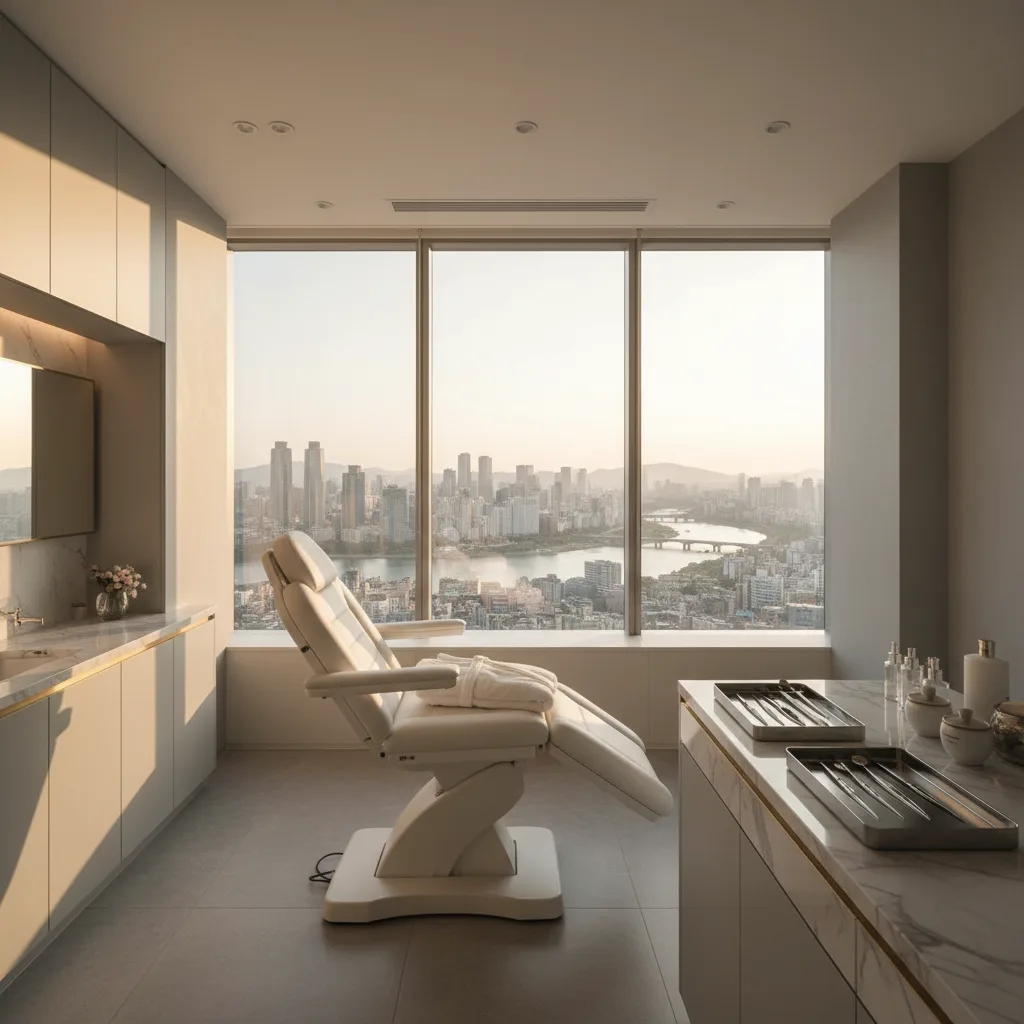
Walk into any Gangnam clinic with a softening jawline and you will leave with two recommendations on the consultation tablet: Ultherapy and thread lifting. Both promise a lift without surgery, both cost serious money in Seoul, and both work on completely different physics. This is the side-by-side a first-time medical tourist actually needs before they sign anything in Apgujeong or Gangnam.
HOW EACH TREATMENT LIFTS (AND WHY THAT DECIDES EVERYTHING)
Ultherapy is a microfocused ultrasound device. It fires precise thermal points at three depths beneath the skin: 1.5mm, 3.0mm, and 4.5mm, with that deepest layer reaching the SMAS, the same connective sheet a facelift surgeon tightens manually. The body reads each thermal point as a tiny injury and lays down new collagen over the next three to six months. Nothing is added to the face. Nothing is implanted. The lift you see at month four is your own tissue contracting on a new scaffold.
Thread lifting is mechanical. A clinician threads barbed or cogged absorbable sutures, usually PDO, PCL, or a hybrid like Mint or Wonderlift, through the subcutaneous layer with a long cannula. The barbs catch tissue, the clinician pulls the slack upward, and the threads anchor at the temple, hairline, or above the ear. You get visible lift the moment you sit up from the table. Over six to twelve months the threads dissolve, leaving a track of stimulated collagen behind.
That difference matters for one reason: Ultherapy tightens skin to bone, threads reposition tissue in space. A jaw that has lost volume and dropped 4mm needs threads to physically move that pad back up. A jaw that has just softened at the edges, with skin laxity but no real ptosis, gets a cleaner result from Ultherapy. Most Korean doctors will tell you the same thing in plain English if you ask: threads relocate, Ultherapy contracts.
WHAT IT ACTUALLY FEELS LIKE ON THE DAY
An Ultherapy session in Seoul runs 45 to 75 minutes depending on shot count and face coverage. Numbing cream goes on for 30 minutes, then the device delivers the lines of thermal points one transducer at a time. People describe the sensation as a hot pinch at the deepest setting, especially along the mandible and at the temples. Most clinics offer Pronox laughing gas for around ₩50,000 or a nerve block for an extra ₩100,000 to ₩150,000 if you struggle with the deep shots. You walk out with mild redness, a slightly puffy feeling, and zero downtime.
Thread lifting is a procedure, not a treatment. Topical numbing, then a row of local anesthetic injections at each entry point, then the threads themselves go in through tiny cannula entries you cannot see afterward. Total chair time is 60 to 90 minutes for a full lower-face lift with 8 to 12 threads. You leave with visible swelling, sometimes bruising at the entry points, and a tight, slightly pulled feeling that lasts four to seven days. Sleeping flat on your back for the first three nights is non-negotiable. So is skipping the gym for a week.

WHAT EACH ONE ACTUALLY COSTS IN SEOUL IN 2026
Ultherapy pricing in Seoul is now standardized around shot count. A full-face session of 300 shots sits between ₩600,000 and ₩900,000 (about $440 to $660) at credible mid-tier clinics in Sinnonhyeon and Seocho. The same 300 shots at a premium Apgujeong address with a name-brand director will run ₩1,200,000 to ₩1,800,000. Add the neck and you are looking at 450 to 600 shots, which roughly doubles the bill. Full breakdown lives in the Ultherapy Seoul cost guide.
Thread lifting is priced per thread, not per session. PDO mono threads are the cheapest at ₩30,000 to ₩50,000 each, but you need a lot of them, often 30 to 60 for any visible effect, and they only stimulate collagen without lifting. Barbed PDO threads run ₩80,000 to ₩150,000 each. PCL barbed threads (Mint, Wonderlift, Silhouette Soft) sit at ₩200,000 to ₩400,000 each and are what most foreigners actually leave Seoul with. A full lower-face lift with 10 to 12 PCL threads typically totals ₩2,500,000 to ₩4,500,000 (about $1,830 to $3,300).
- 01Ultherapy 300 shots full face: ₩600,000 to ₩1,800,000 depending on tier
- 02Ultherapy 600 shots face + neck: ₩1,100,000 to ₩3,000,000
- 03PDO barbed threads, full lower face (12 threads): ₩960,000 to ₩1,800,000
- 04PCL barbed threads, full lower face (10 threads): ₩2,000,000 to ₩4,000,000
- 05Mint or Wonderlift premium PCL, full lift (8 threads): ₩2,400,000 to ₩3,200,000
HOW LONG DOES EACH LIFT ACTUALLY LAST?
Ultherapy results peak at month four and hold for roughly twelve to fifteen months in someone in their thirties or early forties. After that the new collagen you built remains, but the active tightening fades and the face continues to age normally. Most patients in Seoul book a half-session of 150 to 200 shots every twelve to eighteen months as maintenance rather than waiting for a full reset. The longer you wait between sessions, the more you give back.
Thread lifting works on a different timeline. The mechanical lift you see on day one fades as swelling drops, then stabilizes around week four at roughly 70 to 80 percent of what you saw on the table. PDO threads dissolve at six months. PCL threads at nine to fifteen months. The collagen track they leave behind keeps giving structural support for another six to twelve months after that. Realistic total runway: twelve to eighteen months for PDO, eighteen to twenty-four months for PCL. After that you either re-thread or move to a different tool.
WHICH FACE SUITS WHICH LIFT?
Look in the mirror, push the skin near your ear gently upward with two fingers. If your jawline sharpens but the cheek pad doesn't move much, you have skin laxity without real tissue descent. Ultherapy is the cleaner answer. If your cheek pad lifts visibly and the lower face looks five years younger, you have ptosis. Threads will give you that result. Doctors in Sinsa and Apgujeong often use this two-finger test in consultations because it sorts patients in thirty seconds.
Skin thickness also matters. Thin Caucasian or European skin tolerates Ultherapy at the 3.0mm and 4.5mm depths but can show thread shadows at the cheek if the clinician pulls too aggressively. Thicker skin (often Southeast-Asian or Latin American) hides threads well but can blunt Ultherapy's surface tightening, which is why some Asian patients combine Ultherapy with RF microneedling on the same trip. Age plays in too. Under thirty-five with mild softening: Ultherapy alone. Forty-plus with real downward migration: threads, often combined with a small Ultherapy session three months later.
WHAT ABOUT COMBINING THEM?
This is the question most consultations end on, and Seoul doctors will combine them without hesitation when the face calls for it. The sequencing rule: threads first, then Ultherapy three to four months later. Threads need stable scaffolding to anchor against, and Ultherapy fires thermal points along the SMAS that you do not want hitting fresh thread tracks. Reverse the order and you risk both pulling on weakened tissue and degrading the threads with heat at the wrong depth.
Budget realistically. A combined plan in Seoul runs ₩3,500,000 to ₩6,500,000 depending on tier and thread count. For a single-trip foreigner, most clinics will sequence threads on day one or two, send you home with after-care instructions, and book a virtual follow-up at month three to decide whether you fly back for Ultherapy or do it locally. The trip cost breakdown for Seoul aesthetic visits walks through how to budget around this realistically.
RECOVERY, FLYING, AND TIMING YOUR TRIP
Ultherapy needs no recovery. You can fly the same day. Some patients book a session on landing day to avoid losing a treatment window to jet lag. Thread lifting needs a minimum of five days before a long-haul flight. Cabin pressure plus a freshly threaded face increases bruising, and you cannot afford pressure or sudden head movements on the threads while they settle. If your Seoul trip is four nights, threads on the morning of day two is the latest you should book.
Both treatments restrict the same lifestyle items in the first two weeks: no jjimjilbang saunas, no Pilates reformer or strength training, no facials or peels, no alcohol for 72 hours after threads (Ultherapy is fine after 24 hours). Sleeping on your back matters more for threads than Ultherapy but is recommended for both. None of this is theoretical. Clinics will refuse follow-up touch-ups if they see fresh sauna marks on a returning patient.
Comparisons · 8 min · May 20, 2026
← all posts
BREAST IMPLANT REMOVAL SEOUL 2026: EN BLOC VS CAPSULECTOMY VS EXPLANT
The three protocols Seoul surgeons use to take breast implants out, how they pick between them, and what each one costs and recovers like for foreign patients in 2026.
JUVEDERM VS RESTYLANE VS BELOTERO: SEOUL FILLER BRANDS 2026
The three Western HA filler families Seoul injectors actually stock, where each one wins on the face, and what foreign patients pay per syringe in 2026.
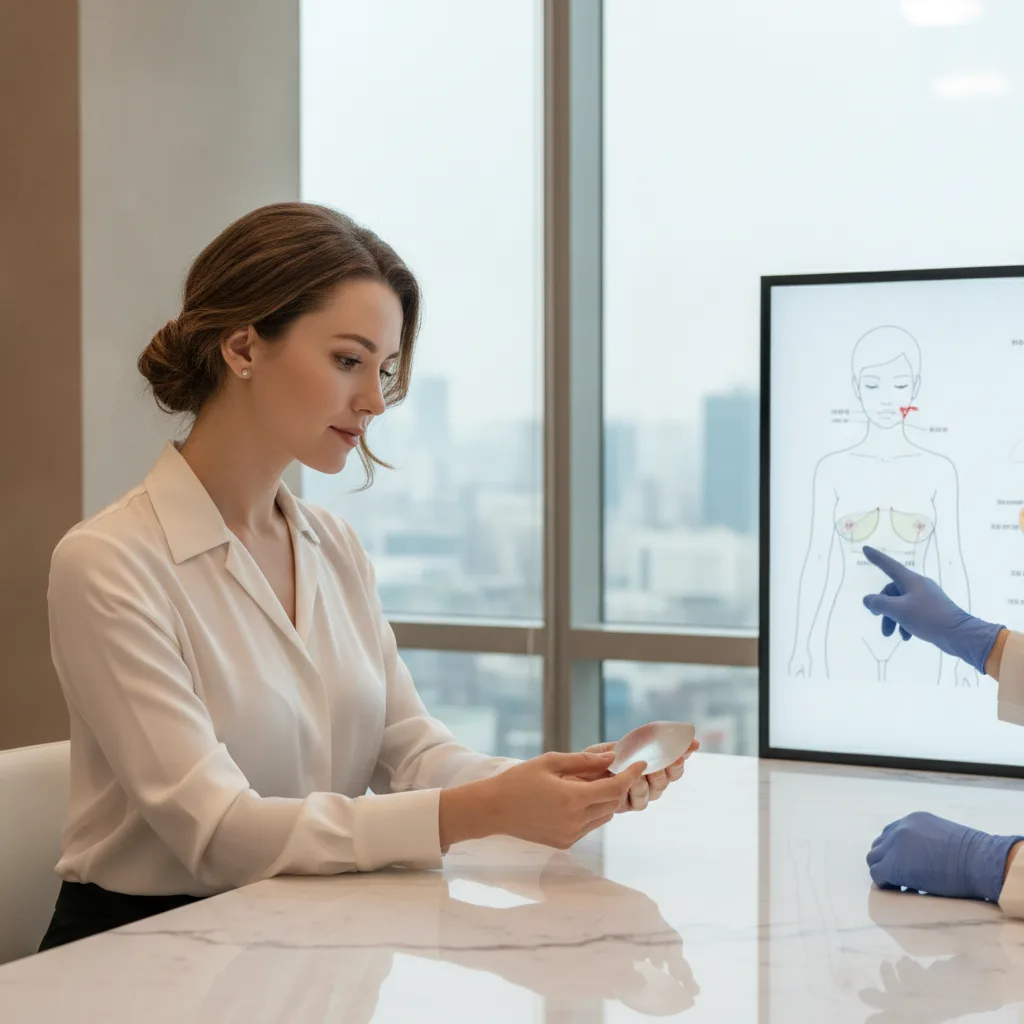
SUBGLANDULAR VS SUBMUSCULAR VS DUAL PLANE BREAST AUGMENTATION SEOUL 2026
The three pocket planes behind every Seoul boob job, how surgeons pick between them, and what each one means for recovery, feel, and ten-year results.
MINT PDO VS WONDERLIFT VS SILHOUETTE SOFT THREADS SEOUL 2026
The three thread brands Seoul clinics argue about, how surgeons actually pick between them, and what each costs for foreign patients in 2026.
FAT TRANSFER VS IMPLANTS BREAST AUGMENTATION SEOUL 2026
Head-to-head verdict on fat grafting and silicone implants in Seoul, with KRW price bands, revision rates, and the clinic types that run each procedure well.
▶▶▶ stop reading. start matching.
FIND YOURS.
We'll pull five clinics matched to your case. WhatsApp reply within 24h.