ACNE SCARS IN SEOUL: RF MICRONEEDLING VS LASERS 2026
The honest breakdown on what actually works for ice-pick, rolling, and boxcar scars at Seoul clinics this year.
By Editorial
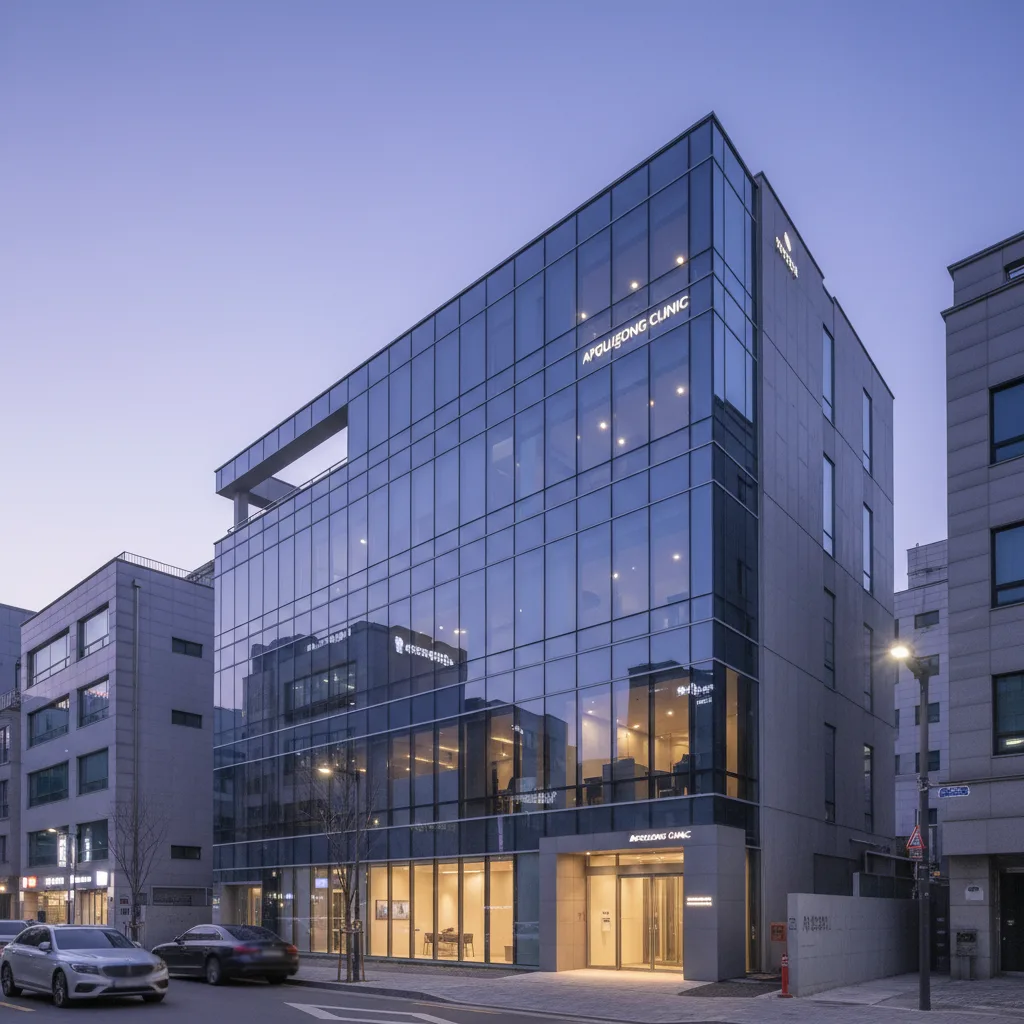
Acne scars are the slowest skin problem to fix, and Seoul is the city most likely to fix them properly. Clinics here run RF microneedling and lasers back-to-back on the same patient on most days, and a full course often costs a third of what a clinic in London or LA would quote. The trick is matching the device to the scar type, not walking into the nearest Gangnam clinic and asking for the package on the menu.
WHY DOES SCAR TREATMENT GO DIFFERENTLY IN SEOUL?
Korean dermatologists treat acne scarring as a multi-device problem from the first consultation. A typical plan stacks two or three modalities across four to six visits, spaced four to six weeks apart, and assumes you will travel back at least once. Walk into a Sinnonhyeon clinic with a few rolling scars and the doctor will map them in person under angled light, photograph them, and propose a sequenced course before anyone talks price. That kind of mapping is rare at most Western dermatology rooms, where insurance pressure pushes everything toward one device and one quick visit.
Seoul clinics also carry a far wider device inventory per room. The same treatment chair often sits next to a Sylfirm X RF microneedling head, a Fraxel Dual, a picosecond laser, and a CO2 fractional unit. The doctor can switch tools between visits based on how your skin is responding, and the assistant nurses are running these devices dozens of times a week. Repetition matters in scar work because the operator's judgement on energy levels and stamp density is the single biggest variable that decides whether you leave with smoother skin or with a hyperpigmentation aftermath. Pair that volume with the local price floor and you understand why Seoul quietly became the global benchmark for scar revision.
Cost compounds the advantage. A single RF microneedling pass in Apgujeong sits around ₩300,000 to ₩600,000, roughly $220 to $440, depending on tip type and clinic tier. A picosecond toning session runs ₩150,000 to ₩300,000. The same two services at a New York or Sydney clinic land closer to $900 to $1,400 per visit. A full Seoul scar course of four to six sessions can come in at $1,200 to $2,800 even at premium Apgujeong clinics, and that is before you factor in flight cost spread over a few trips.
WHAT TYPE OF ACNE SCAR DO YOU HAVE?
Most scar maps come back as a mix, but one type usually dominates. Ice-pick scars are deep and narrow, like the skin was pricked with a sharpened pencil, and they are the hardest to clear with any single device because the damage extends well past the dermal-epidermal junction. Rolling scars are the soft, undulating shadows you see in raking light, caused by fibrous bands tethering the dermis down to deeper tissue. Boxcar scars are wider, sharp-edged pits with a flat floor, often left behind by cystic breakouts, and they sit somewhere between the other two in terms of treatment response.
Korean dermatologists also flag two side issues that change the plan. Post-inflammatory hyperpigmentation, the brown shadow that hangs around after acne, often needs to be calmed first with picosecond toning or Rejuran before any aggressive resurfacing. Post-inflammatory erythema, the persistent red mark, usually softens on its own but can be sped up with a vascular laser or Sylfirm X in pulsed mode. Treating active inflammation while you still have breakouts usually triggers a fresh round of pigmentation, so a good Seoul clinic will pause your scar plan if your acne is flaring again.
- 01Ice-pick: narrow, deep, pencil-prick pattern. Needs depth. Best with subcision plus TCA CROSS.
- 02Rolling: soft, shadowed undulations under side lighting. Strongest response to RF microneedling with subcision.
- 03Boxcar: wide pits with sharp edges. Mixed response, often a CO2 fractional pass paired with RF microneedling.
- 04PIH and PIE: brown and red marks left over from old breakouts. Treat first with picosecond toning or vascular laser.
HOW DOES RF MICRONEEDLING WORK FOR SCARS?
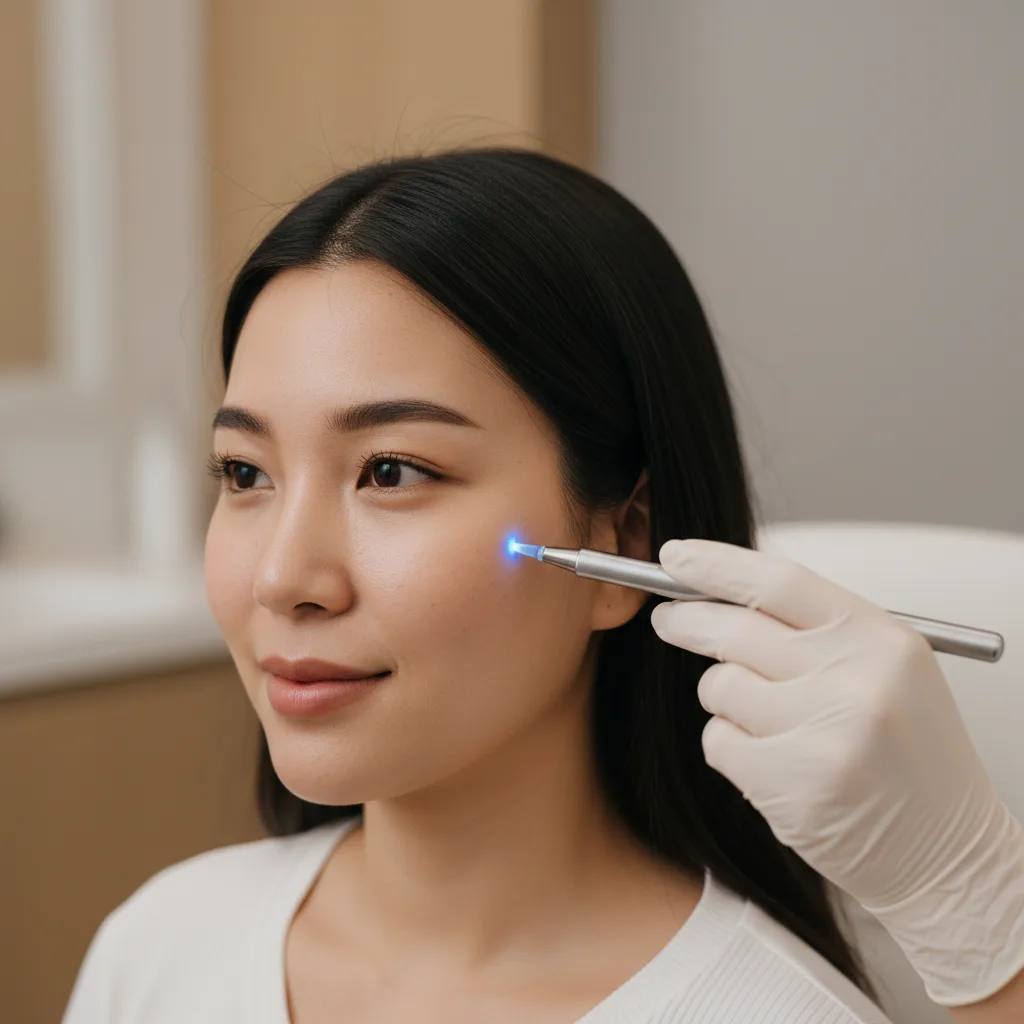
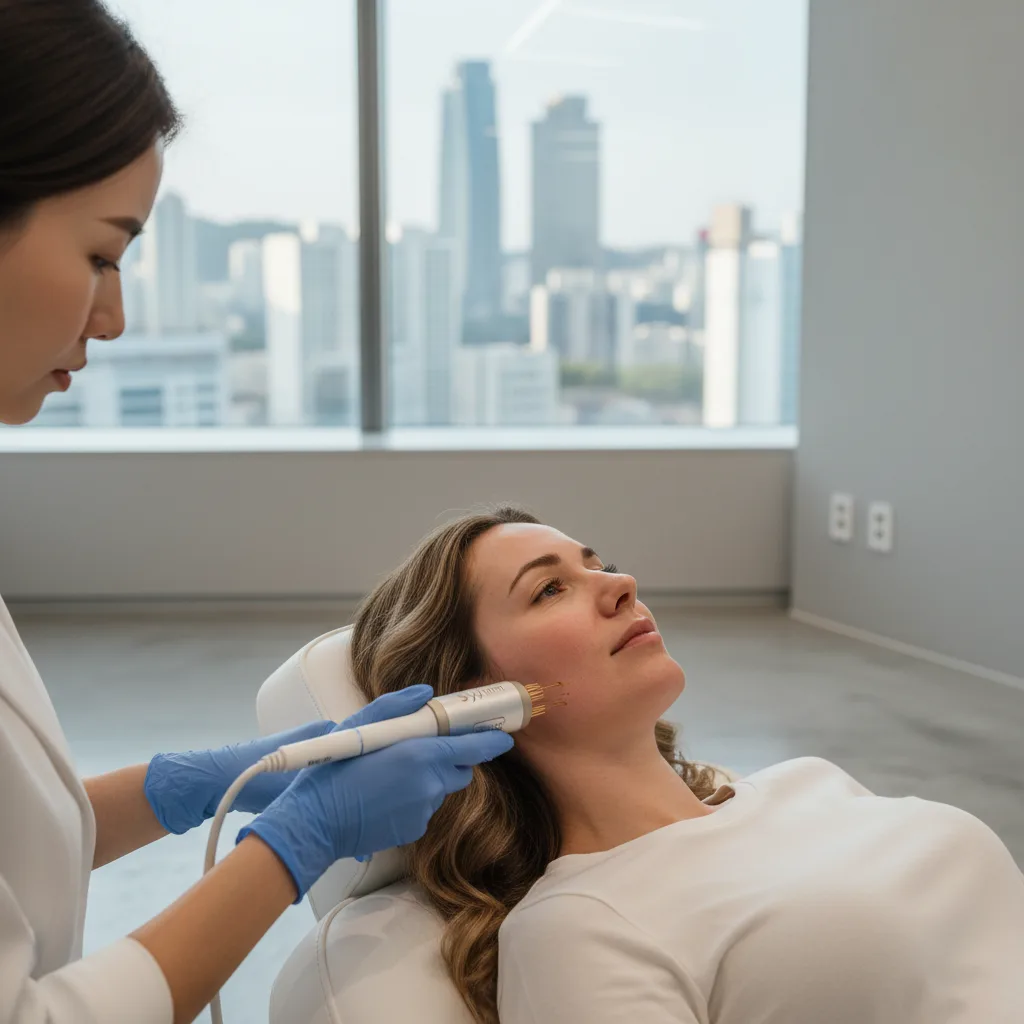
RF microneedling drives a grid of insulated needles into the dermis and releases radiofrequency energy at the tip. The combination wounds the deep skin without burning the surface, which triggers a months-long collagen remodelling response. Sylfirm X is the dominant unit in Seoul clinics right now, with Potenza and Inmode Morpheus8 showing up in higher-tier rooms. For rolling and boxcar scars the depth and energy can be dialled high enough to disrupt the fibrous tethers underneath, which is the thing surface lasers cannot do.
The visit lasts around 90 minutes including numbing. A typical session uses one or two passes at depths of 1.5 to 3.5 millimetres, and bleeding pinpoints across the cheeks are completely normal at the end. Downtime is two to four days of redness and slight crusting, much milder than a CO2 session. For deeper ice-pick scars, doctors often combine the RF microneedling pass with subcision, a needle release of the underlying tethers, in the same visit. Korean clinics have made this combo a standard rather than an upsell, which is one structural reason their outcomes look different from a single-device US treatment.
Where RF microneedling underperforms is on flat surface texture and pigment. It does very little for shallow pigment marks, and it will not erase fine lines or pore size on its own. That is why nearly every Seoul scar plan layers a laser modality on top, either at the same visit or alternating month-to-month. Going RF-only is the most common mistake patients make when they try to negotiate a cheaper package. For more on this device class on its own, see the RF microneedling Seoul guide.
HOW DO KOREAN LASERS HANDLE ACNE SCARS?
Seoul clinics run three main laser classes for scar work. CO2 fractional, often Lutronic eCO2 or the newer SmartXide, ablates microcolumns of skin to force resurfacing. Erbium and non-ablative fractional units like Fraxel Dual are gentler resurfacers, better for shallower scars and finer texture. Picosecond lasers, including the PicoSure, PicoWay, and the Korean-made picosecond units in the laser guide, work at ultra-short pulses that fragment pigment and stimulate dermal collagen without much surface damage.
CO2 fractional is the heaviest hitter. A single session at 25 to 35 percent density can soften boxcar edges noticeably, but downtime stretches to seven to ten days of redness, crusting, and very strict sun avoidance. Most Seoul dermatologists will only run a CO2 pass once per scar course, slotting in gentler picosecond or RF microneedling sessions around it. This sequencing matters most for darker skin types, since aggressive CO2 on Fitzpatrick IV to V skin can leave behind the very pigment shadow you came in to fix. Many Apgujeong rooms now default to mid-depth RF microneedling over CO2 for that reason alone.
Picosecond toning sits at the other end of the spectrum. It is gentle enough for monthly cadence, fades post-acne brown marks fast, and helps overall tone evenness while the RF microneedling work does the structural lifting. A common Seoul plan looks like this: one CO2 fractional pass to start, then alternating RF microneedling and picosecond every four to five weeks for four months. The order, the spacing, and the device pairing are the bits that take a doctor with real volume to get right.
RF MICRONEEDLING VS LASERS: WHICH ONE WINS?
There is no single winner, and any clinic that pitches one device as the complete solution is wrong about your skin. The most honest framing is by scar type. RF microneedling wins outright for rolling scars and most boxcar scars, especially when paired with subcision. CO2 fractional wins for boxcar scars with sharp edges that need the surface re-laid, but only at slower cadence and only on lighter skin types. Picosecond wins for PIH, PIE, and overall tone evenness, and is a maintenance device rather than a primary scar tool.
Ice-pick scars are the exception where neither device dominates. The realistic answer is TCA CROSS, a focal high-strength chemical peel applied to each pit by hand, layered over an RF microneedling base. Most Seoul clinics offer it as a standalone item rather than a package add-on, so you have to ask. Patients who come in with mostly ice-pick scarring and a tight budget often get better mileage from TCA CROSS plus light RF microneedling than from chasing a Shurink or HIFU upsell that does almost nothing for true atrophic scars.
The two real choices to make at consultation are sequencing and density. A clinic that runs four RF sessions in a row will probably get a worse outcome than one that alternates with picosecond, even at the same total spend. Density also matters: a Sylfirm X pass at 100 stamps per cheek is a different treatment from 250 stamps, and pricing should reflect that. Ask both questions before agreeing to anything.
WHAT DOES A SEOUL SCAR TREATMENT PLAN ACTUALLY COST?
- 01RF microneedling (Sylfirm X / Potenza): ₩300,000-600,000 / about $220-440 per session
- 02CO2 fractional resurfacing: ₩400,000-900,000 / about $290-660 per session
- 03Picosecond toning: ₩150,000-300,000 / about $110-220 per session
- 04TCA CROSS focal peel: ₩100,000-250,000 / about $75-185 per session
- 05Subcision add-on with RF: ₩100,000-200,000 / about $75-150 per visit
A complete four to six visit course at a mid-tier Sinnonhyeon clinic usually lands at ₩1.6m to ₩3.2m, roughly $1,200 to $2,400 all in. Apgujeong premium rooms run 30 to 50 percent higher, with the gap usually paying for better doctor time, longer consultations, and newer device generations. Cheongdam concierge clinics that target visitor patients can quote double that figure, and most of the premium goes to translator service and packaging rather than meaningfully better outcomes.
Budget rules a real plan more than any individual device. If you can only commit to two visits to Seoul, prioritise one RF microneedling and subcision combo per visit, with picosecond toning as a top-up at home if you can find it. If you can stretch to four visits across six months, layer in one CO2 fractional session early and finish with picosecond. That order respects healing time and lets the doctor on your first booking consultation sequence the rest properly.
Concerns · 9 min · May 17, 2026
← all posts
BREAST AUGMENTATION RISKS IN SEOUL 2026: A SAFETY GUIDE
Capsular contracture, rupture, hematoma, and the red flags to catch before booking a Seoul clinic.
TWO-JAW SURGERY RISKS IN SEOUL 2026: WHAT TO KNOW BEFORE BOOKING
A candid look at nerve injury, occlusion problems, airway swelling, and revision odds for international patients considering orthognathic surgery in Korea.
BUNNY LINES BOTOX IN SEOUL 2026: NOSE WRINKLE FIX GUIDE
Small dose, big difference. What bunny lines Botox costs in Seoul, which brand to pick, and how to avoid a frozen nose.
LIPOSUCTION RISKS IN SEOUL 2026: RED FLAGS TO AVOID
The real complications from Seoul lipo, the clinic red flags that predict them, and how medical tourists reduce their odds.

HAND REJUVENATION IN SEOUL 2026: AGE SPOTS, VOLUME & VEINS
Non-surgical hand rejuvenation in Seoul: pico toning for age spots, Radiesse and Profhilo for volume loss, sclerotherapy for veins, and honest 2026 pricing.
▶▶▶ stop reading. start matching.
FIND YOURS.
We'll pull five clinics matched to your case. WhatsApp reply within 24h.