FIRST-TIME SHURINK UNIVERSE IN SEOUL 2026: WHAT TO EXPECT
A practical walkthrough for medical tourists booking their first Shurink Universe HIFU lifting session in Seoul, from consult to shot count to what your skin actually feels like afterward.
By Editorial
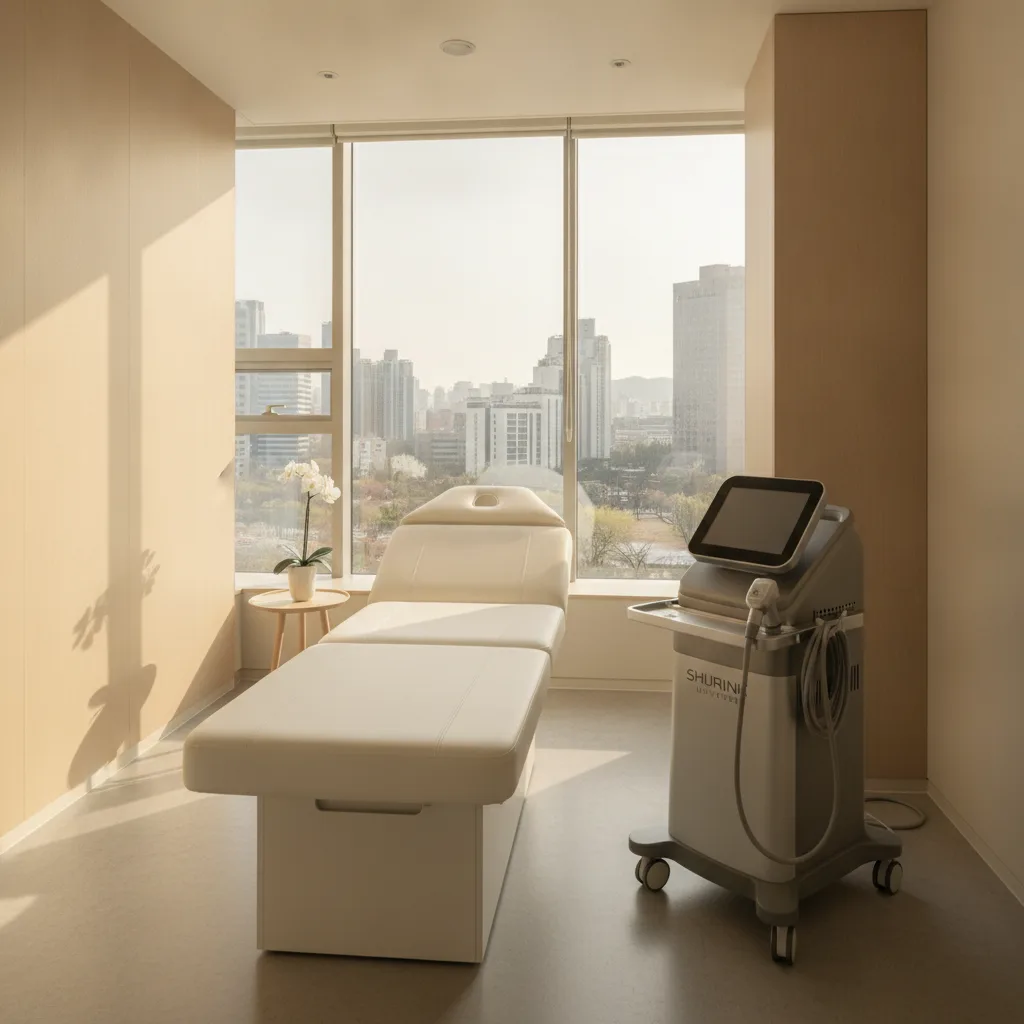
Shurink Universe is the HIFU device most Seoul clinics will offer you if you ask about non-surgical lifting and you are not specifically walking in for Ultherapy. It is Korean-designed, it is roughly half the price of a full Ultherapy face session, and it has quietly become the default HIFU platform in Gangnam and Apgujeong over the last two years. This guide covers what to expect on your first visit, how the shot counts and cartridges actually work, and what your face will look and feel like on the flight home.
WHAT SHURINK UNIVERSE ACTUALLY IS
Shurink Universe is a micro-focused ultrasound platform made by Classys, one of the larger Korean aesthetic device manufacturers. It fires ultrasound energy at three fixed depths, 1.5mm, 3.0mm and 4.5mm, targeting the same tissue layers that Ultherapy heats: dermis, deep dermis and SMAS. The clinical outcome is in the same family as Ultherapy, with tightening that shows up gradually over 8 to 12 weeks as fresh collagen forms in the treated planes. It is not a filler, it is not a thread lift, and it does not replace a facelift. It slows the sag.
The platform runs two shot modes clinics will talk about openly. MP mode is a linear firm cartridge that fires a continuous line of energy along the jawline and neck, tuned for lifting and cheek lift vectors. SD mode is a dot pattern used across the mid-face and lower face for tightening and pore refinement. Some clinics also offer a body cartridge for abdominal or arm tightening, but that is a separate session and not part of a first-time face booking. If you want a fuller taxonomy read our HIFU comparison of Shurink Universe vs Ultherapy before you sit in a consult chair.
HOW KOREAN CLINICS PRICE YOUR FIRST SHURINK SESSION
Shurink Universe is priced by shot count, not by session, and this is the single point that trips up almost every first-time patient. A typical Seoul entry-level session for a full face is quoted at 300 shots, which most clinics list around ₩350,000 to ₩550,000, roughly $250 to $400. This is the price you will see on Kakao Talk quotes and English booking pages, and it is a real session, but 300 shots is on the low end for a face plus jawline result. Most Korean regulars book 600 shots for a first real result, priced around ₩600,000 to ₩900,000, about $430 to $650. Full face and neck at 900 to 1,200 shots is where premium Apgujeong clinics land, usually ₩1,000,000 to ₩1,500,000, or $720 to $1,080. Cartridges are separate line items in a few clinics, but most bundle them into the shot count price for foreigners.
VAT handling varies by clinic. Some Gangnam clinics quote VAT-included, some quote plus 10 percent, and a few strip VAT for foreign passport holders as an incentive. Ask directly, and get the quote in KRW with the tax line visible before you agree. Our Seoul hidden-cost guide on VAT and packages covers the specific traps to watch for, and the Korean price menu decoder walks through how shot counts are usually written on the tablet the coordinator hands you.
WHAT THE FIRST CONSULTATION ACTUALLY LOOKS LIKE
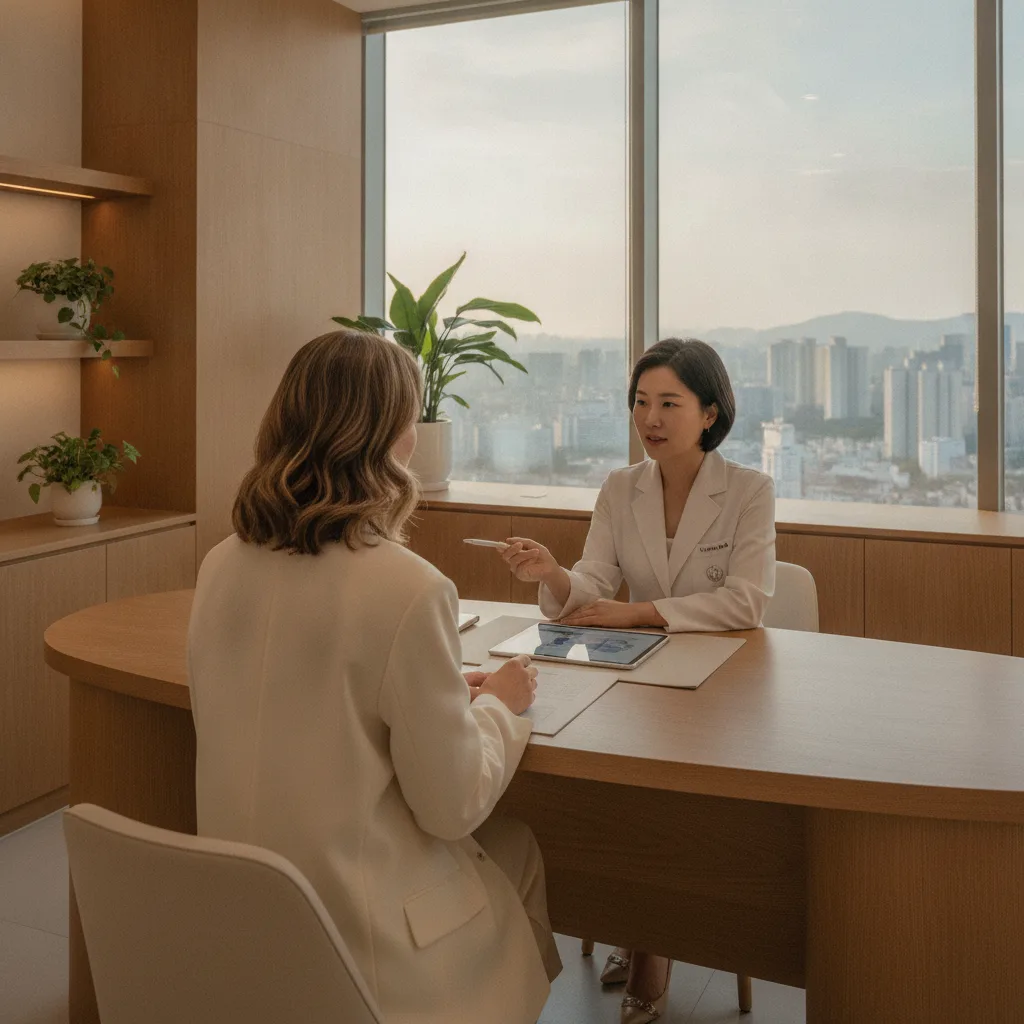
You will arrive, hand over your passport at the front desk, and fill in an English intake form covering allergies, previous injectables, blood thinners and current skincare. A coordinator will bring you into a small consult room, take standard front and 45-degree photos on a fixed light setup, and walk through what you want changed. Bring one recent selfie where you liked your face and one where you did not, and be specific about vectors: jowl heaviness, midface sag, nasolabial deepening. The doctor will come in for a five to ten minute review, mark rough zones with a white pencil, and quote a shot count. This is the moment to negotiate down or up, before the numbing gel goes on.
Numbing is topical lidocaine for 20 to 30 minutes. Some clinics upsell an oral painkiller or a nerve block for jawline work, and this can add ₩30,000 to ₩80,000. It is genuinely helpful if you have a bony face or a low pain threshold, and probably unnecessary if you have already done Ultherapy or thread lifting. If the consultation feels like it is drifting into six other treatments you did not ask about, read our avoiding-the-upsell guide before the doctor books you into a package.
- 01Bring your passport, a recent selfie you like, and a note listing any blood thinners or supplements
- 02Skip aspirin, ibuprofen, high-dose vitamin E and fish oil for 3 days before to reduce bruising risk
- 03No alcohol the night before, or you will feel every shot along the jawline
- 04Wear a button-down or zip top so you do not have to lift a t-shirt over your face after treatment
- 05Book the session for morning, so you have the rest of the day to rest and reassess swelling
HOW THE TREATMENT ITSELF FEELS
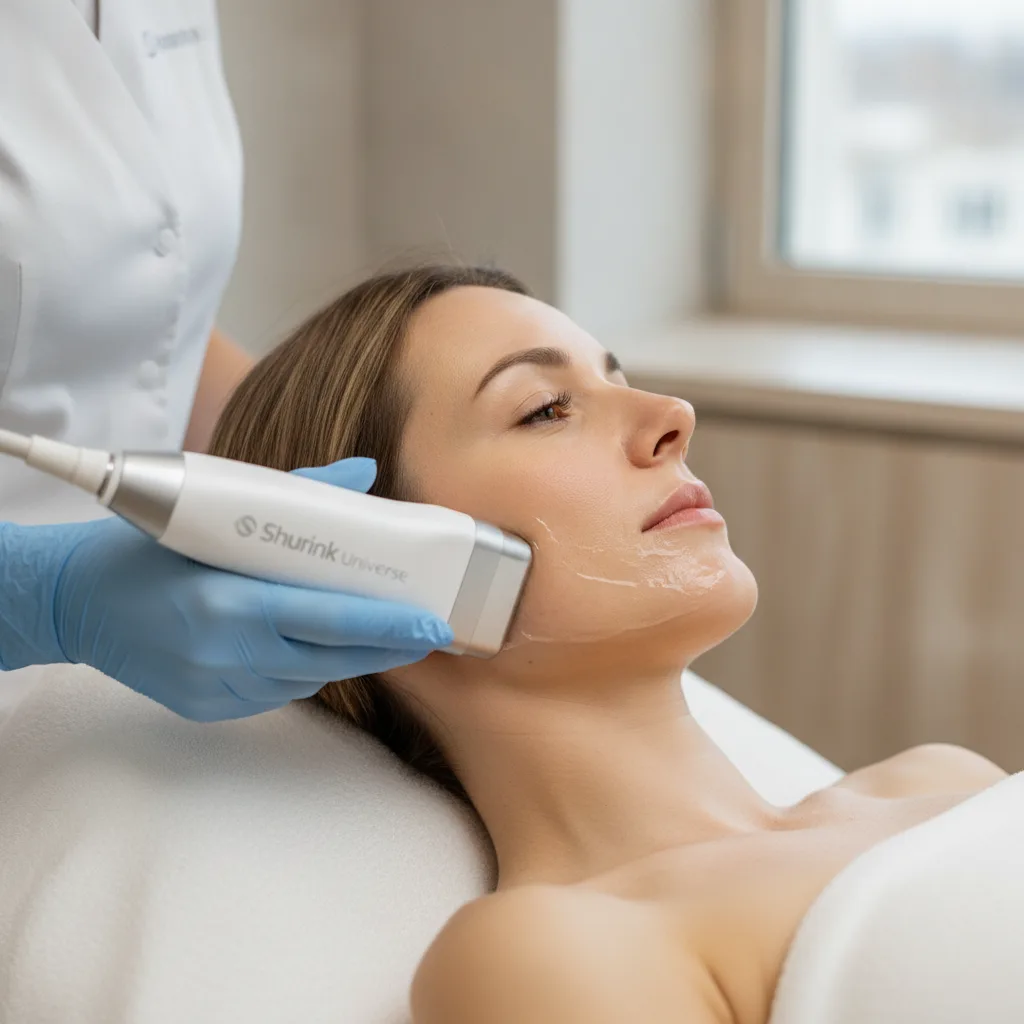
Once the numbing is wiped off, the practitioner applies ultrasound gel and starts the SD dot pattern across your forehead, temples and cheeks. Each shot is a short warm sting, similar to a firm rubber-band snap that immediately fades. The MP linear cartridge along the jawline and under the chin is the sharpest part of the session, and this is where the numbing matters most. A full 600-shot session runs 25 to 40 minutes total. Most first-timers describe the experience as tolerable but not comfortable, which is honest and worth budgeting for. If you cannot sit still, ask for a five-minute pause between zones instead of trying to power through.
Right after the session your face will be pink, mildly puffy along the jawline and neck, and slightly tender to the touch. Some patients get a few small welts along the linear cartridge track that fade inside two hours. There is no downtime in the traditional sense, and you can go straight to lunch, but you will not want to be on camera for the rest of the day. If you are combining this with other treatments in the same trip, our treatment-stacking guide covers safe sequencing so you do not overload one week.
WHAT THE NEXT 12 WEEKS LOOK LIKE
The next 48 hours will feel like your face has been through a gym session. Mild soreness when you smile or chew, slightly heavier jawline, and occasional numb or tingling patches along the treated lines. This is all expected. Swelling peaks around day 2 and drops off through day 5. You can wear sunscreen and light makeup from day 1, but skip retinol, acids and physical exfoliants for a full week. The Shurink Universe result does not show up on day 3, and if a coordinator promises an instant lift you should be suspicious.
The real change appears between weeks 4 and 12 as your dermis lays down new collagen in the heated planes. Jawline definition sharpens, the nasolabial fold looks less pinched at rest, and the neck sits closer to the mandible. Photos taken on the same phone under the same light at week 0, week 6 and week 12 are the only honest measure. Most Korean regulars re-book at 9 to 12 months, and the standard protocol is one full session per year with a top-up SD-only session at month 6 if you want to hold the result tighter.

HOW TO PICK A CLINIC FOR YOUR FIRST SHURINK SESSION
Almost every mid-tier and premium aesthetic clinic in Gangnam, Apgujeong, Sinsa and Sinnonhyeon runs Shurink Universe. The device is not what differentiates them. Operator experience, cartridge freshness and honest shot count reporting do. Ask directly how many cartridges will be used in your session, how many shots each cartridge fires before the clinic swaps it, and whether the doctor or a licensed nurse operates the handpiece. In Korea, a licensed nurse under doctor supervision is legal and common, and the operator's Shurink experience matters more than the title. A clinic that gets defensive about these questions is telling you what you need to know.
For a first-timer, an Apgujeong or upper Gangnam clinic with a coordinator, transparent KRW pricing and a printed cartridge report is worth the small premium over a Myeongdong tourist-track quote. Compare against a mid-tier Sinnonhyeon clinic if you want to save money and are comfortable operating in a mostly-Korean environment. Our Gangnam vs Hongdae vs Apgujeong district guide covers which district fits which type of patient.
First-timer · 7 min · Jul 16, 2026
← all posts
NBOM CLINIC HONGDAE REVIEWS: THE COMPLETE 2026 GUIDE
A reviewer's walkthrough of nBOM Clinic Hongdae: signature treatments, honest price bands, English support, and what repeat patients actually say.
SHINEBEAM GANGNAM: HONEST 2026 GUIDE & WHAT TO EXPECT
An honest reviewer's take on Shinebeam Gangnam in 2026, with real KRW prices, English support notes, and how a visit actually flows.
OCEAN CLINIC GANGNAM REVIEW: IS IT WORTH IT IN 2026?
An honest reviewer's take on Ocean Clinic Gangnam in 2026, with real KRW prices, English-support notes, and how it stacks against neighbors.
FIRST-TIME RHINOPLASTY IN SEOUL 2026: WHAT TO KNOW BEFORE YOU FLY
A first-timer's guide to booking, consulting, and recovering from primary rhinoplasty in Seoul, from cast day to splint removal.
FIRST-TIME HAIR TRANSPLANT IN SEOUL: 2026 FUE & DHI GUIDE
What to expect on your first hair transplant trip to Seoul, from consultation to flight home.
▶▶▶ stop reading. start matching.
FIND YOURS.
We'll pull five clinics matched to your case. WhatsApp reply within 24h.