FIRST-TIME HAIR TRANSPLANT IN SEOUL: 2026 FUE & DHI GUIDE
What to expect on your first hair transplant trip to Seoul, from consultation to flight home.
By Editorial
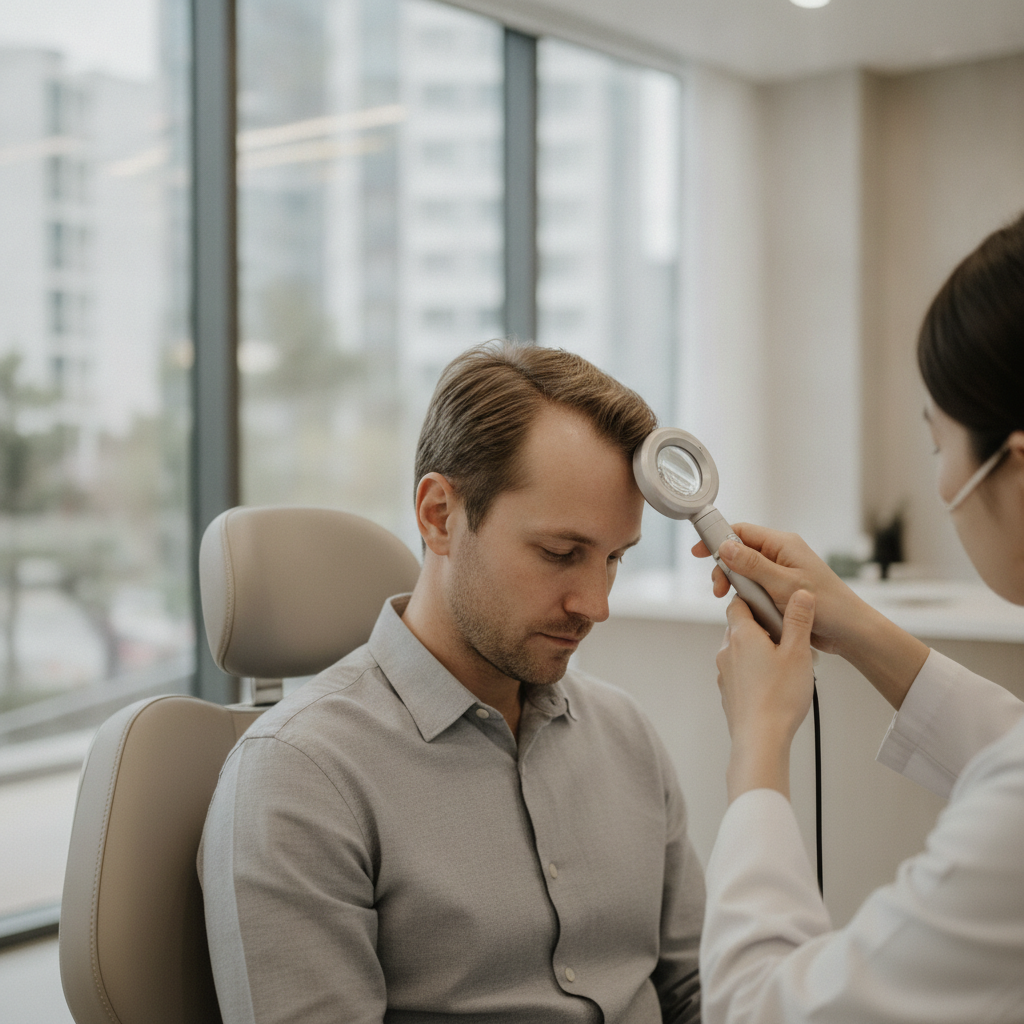
Seoul runs on precision, and hair transplant is one of the procedures where that precision shows up most in the mirror. First-timers usually arrive expecting the drama of a big surgery, then leave surprised that the hardest part was picking the clinic and sitting still for eight hours. This guide walks through what actually happens on a first hair-transplant trip to Seoul, from the FUE-versus-DHI decision to what your scalp will look like when you board the plane home.
WHY SEOUL FOR A FIRST HAIR TRANSPLANT?
Seoul does around 20,000 to 30,000 hair-transplant cases a year across dedicated hair clinics, and the density of operators has pushed graft costs down to roughly ₩1,500 to ₩4,500 per graft (about $1.10 to $3.35), compared to $4 to $8 per graft in New York or London. A standard 2,500-graft session runs around ₩5,000,000 to ₩9,000,000 all-in (about $3,700 to $6,700), which is why medical tourists from Australia, Singapore, the US and the Gulf treat it as a two-week Asia detour. For pricing detail across FUE and DHI tiers, see the Seoul hair transplant cost guide.
The other draw is technique depth. Korean hair clinics were early adopters of DHI (Direct Hair Implantation using Choi implanter pens) and now run non-shaven and partial-shave protocols as a default rather than a premium add-on. If you want the technical background on FUE versus DHI before your consultation, the FUE vs DHI Korea guide covers the trade-offs on density, transection rate and recovery.
WHICH CLINIC TYPE SHOULD A FIRST-TIMER BOOK?
There are three categories of hair-transplant provider in Seoul, and first-timers routinely book the wrong one. Dedicated hair clinics run only hair procedures, do 5 to 15 cases a day, and have technicians who plant nothing but grafts. General dermatology clinics offer hair transplant as one line item on a long menu, which usually means the surgeon dips in for the hairline design and hands the extraction to junior staff. Full-service plastic surgery hospitals like ID Hospital in Gangnam, Grand Plastic Surgery in Apgujeong and Braun Plastic Surgery in Seocho are landmarks of the surgical districts you'll orbit while consulting, but hair transplant is not their core specialty.
For a first case, book two to three dedicated hair clinics for consultation and skip the mixed-menu derm clinics. Ask each clinic directly: how many hair cases per week, who performs the extraction, who performs the implantation, and what percentage are DHI versus FUE. A clinic doing 40+ hair cases a week with the surgeon personally doing extraction is what a first-timer wants.
On English support, most dedicated hair clinics in Gangnam and Apgujeong have a coordinator who handles English intake but may not translate live in the surgical suite. Confirm the level of English at booking, not on arrival.
BOOKING, TIMING, AND THE PRE-OP WEEKS
Book your consultation window 6 to 8 weeks out. The consult itself is often free, but many clinics require a 10 to 20 percent deposit to lock in a surgery date. Sessions of 2,000 to 3,500 grafts take 6 to 9 hours in the chair, so most clinics will only slot you one case per day and popular surgeons are booked 4 to 6 weeks deep. For the mechanics of contacting clinics from overseas, the booking-from-abroad walkthrough covers deposit norms, WhatsApp channels and translator etiquette.
In the two weeks before surgery, stop finasteride and minoxidil only if the clinic tells you to (most Korean surgeons keep patients on both to protect existing hair through the shock-loss phase). Stop biotin and fish oil 7 days out to reduce bleeding at extraction sites. No alcohol for 3 days before, no aspirin or ibuprofen for 7 days before, and no scalp shaving before your appointment unless the clinic explicitly requests it. They prefer to shave the donor zone themselves at a precise 1 mm length so extraction punches sit cleanly.
Book the flight to arrive at least one day before surgery. Jet-lagged patients bleed more, sit less well, and make consult decisions they regret.
WHAT THE SURGERY DAY ACTUALLY LOOKS LIKE
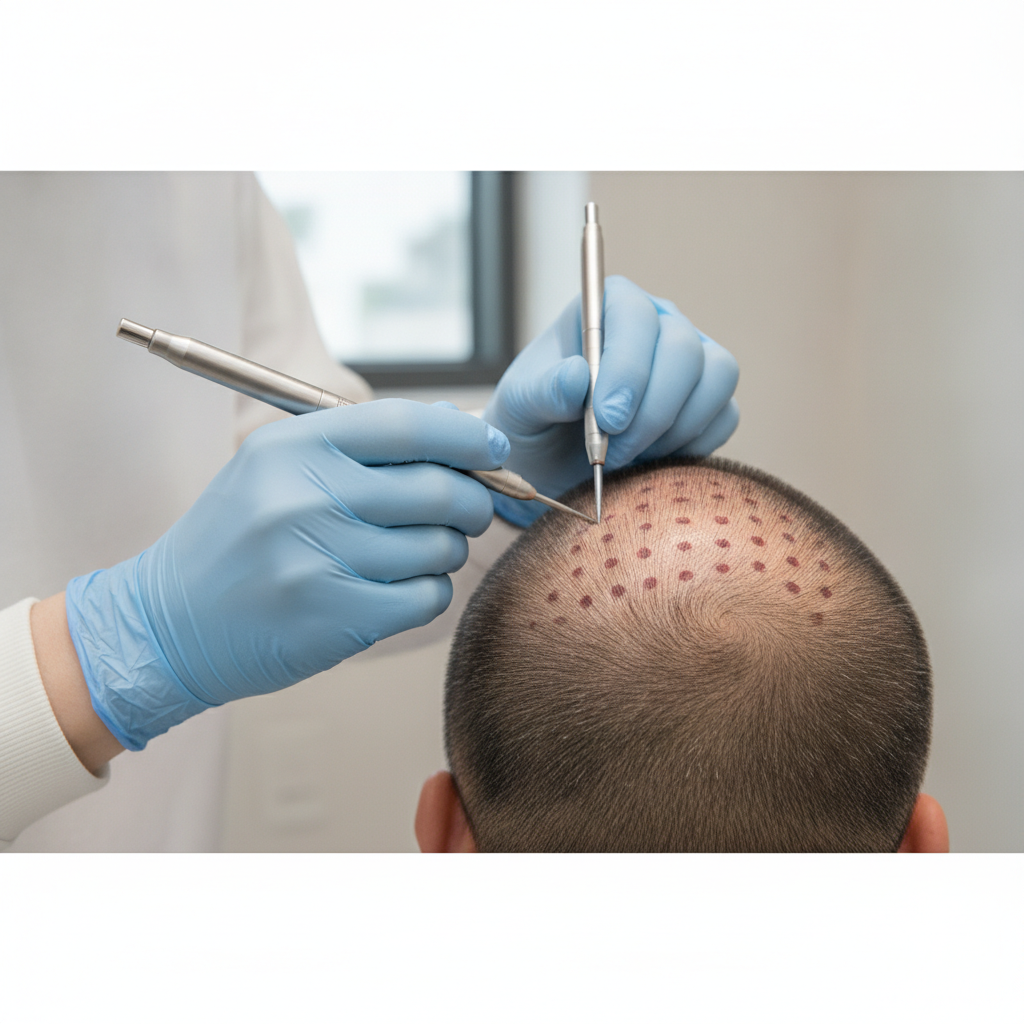
You'll arrive around 8:30 to 9:00 AM. First 60 to 90 minutes is intake, blood pressure, photos from 12 angles, and the hairline design where the surgeon draws directly on your scalp with a surgical marker. Push back if the hairline sits too low. Korean aesthetic taste runs conservative on male hairlines (finger-width above the highest forehead crease is a common baseline) but some clinics will drop it lower to sell more grafts. A first-timer should aim for the natural adult recession line, not the teenage line.
Local anaesthetic goes in around 10 AM: two rings of injections around the donor zone at the back of the scalp, then a second ring at the recipient area. This is the worst 15 minutes of the day; after that the scalp is fully numb. Extraction takes 2 to 4 hours depending on graft count. You lie face-down or sit forward, and clinics will play Netflix on a tablet clipped to the chair. Lunch is a boxed rice-and-soup around 1 PM, eaten upright.
Implantation runs 3 to 5 hours in the afternoon. In DHI clinics, technicians load grafts into Choi pens and place them one by one at the angle the surgeon marked. In FUE clinics, incisions are cut first, then grafts placed with forceps. The surgeon should be personally placing the hairline and temple rows; body placement can be delegated. You leave around 6 to 7 PM with a bandage over the donor zone and no bandage over the recipient area.
- 01Wear a loose zip-front top so you don't have to pull anything over your head after surgery
- 02Bring a neck pillow and a wide-brim hat, plus a soft hoodie for the taxi ride to the hotel
- 03Cash for the airport express and taxis (₩50,000 in small bills covers day 1)
- 04Saline spray, a spray bottle for the first shower, and unscented baby shampoo
- 05Passport, insurance details, and printed medication list in both English and Korean
HOW LONG UNTIL I CAN FLY HOME?
Most Seoul hair clinics require one post-op check the morning after surgery for a first shampoo and scalp reset. That means minimum 2 nights in Seoul after the procedure. Comfortable flight-home window is 5 to 7 days post-op, which lines up with a 7 to 10 day trip if you arrive the day before surgery. The scabs on the recipient area lift around day 7 to 10 and the donor zone red-fades by day 14. For airline pressure, cabin-air dryness and neck-pillow rules by procedure, the flying-home recovery timeline breaks it down day by day.
Do not book back-to-back procedures on the same trip. Combining hair transplant with rhinoplasty or eyelid surgery on one visit sounds efficient and produces bad healing on both. If you want a stacked trip, put hair transplant last and give yourself 4 weeks between procedures at minimum.
WHAT HAPPENS IN THE FIRST 12 MONTHS?
Shock loss hits at weeks 2 to 6. The transplanted hairs fall out because the follicles retract into a resting phase; this is normal and does not mean the graft failed. Existing native hair around the transplant zone can also shed temporarily. New growth starts around month 3 to 4, becomes visible around month 5 to 6, and the final density result lands at month 12 to 14. Photograph yourself every 30 days under identical lighting; the slow arc is impossible to see week to week.
Stay on finasteride 1 mg daily and topical minoxidil 5 percent for at least the first year unless a doctor tells you otherwise. Roughly 80 percent of first-timers who quit these within 6 months lose ground on the native hair the transplant was meant to frame. If you're combining the surgical result with non-surgical add-ons, some Seoul clinics also run Rejuran scalp protocols in the first three months to reduce inflammation, though evidence on graft-take improvement is thin.
HOW MUCH DOES A FIRST HAIR TRANSPLANT IN SEOUL COST?
For a 2,000 to 2,500 graft first case, budget ₩4,500,000 to ₩8,000,000 (about $3,400 to $6,000) for the procedure at a mid-tier dedicated clinic. Premium DHI clinics with a named surgeon touch every graft run ₩8,000,000 to ₩14,000,000 (about $6,000 to $10,500). Add ₩1,500,000 to ₩2,500,000 (about $1,100 to $1,900) for hotel, food and airport transfers across a 7 to 10 day trip. Total first-trip spend for most patients lands in the $5,000 to $9,000 range.
Check whether VAT is included in the quote. Korean clinics can quote plus-10-percent or all-in, and a 2,500-graft quote can swing $500 on that alone.
HOW MANY GRAFTS DO FIRST-TIMERS ACTUALLY NEED?
Norwood 2 to 3 (light frontal recession, temple corners): 1,200 to 1,800 grafts. Norwood 3 to 4 (defined M-shape, crown starting to thin): 2,000 to 3,000 grafts. Norwood 4 to 5 with visible crown: 3,000 to 4,500 grafts, often split across two sessions 12 months apart. Trust the clinic that quotes fewer grafts and stages the plan over one that promises to solve everything in one giant mega-session. Donor supply is finite, and burning it in one session leaves no reserve for touch-up 5 to 10 years out.
IS A SEOUL HAIR TRANSPLANT PAINFUL?
The anaesthetic injections at the start are the only real pain; most patients rate them 5 to 6 out of 10 for 10 to 15 minutes. The 8-hour procedure itself is 1 out of 10, more boring than painful. Post-op night 1 is uncomfortable because you have to sleep upright at a 45-degree angle to reduce swelling. Nights 2 and 3 are easier. By day 5 the scalp itches more than it hurts.
CAN SEOUL CLINICS DO NON-SHAVEN HAIR TRANSPLANTS?
Yes. Non-shaven DHI is standard at premium Seoul hair clinics and adds roughly ₩1,000,000 to ₩2,000,000 ($750 to $1,500) to the total. It's limited to smaller cases (usually under 2,000 grafts) because extraction is slower when the donor zone isn't shaved. Full non-shaven cases for 3,000+ grafts are technically possible but very few surgeons will do them in one session.
DO KOREAN SURGEONS WORK WELL ON NON-ASIAN HAIR TYPES?
Curly and coily Afro-textured hair is the one area where a first-timer should push hard on portfolio evidence. Ask any Seoul clinic for at least 5 case photos of Norwood 3 to 5 patients with your hair type, ideally with 12-month post-op shots. Straight and wavy Caucasian, South Asian and Latin hair types are handled routinely, and the finer graft calibration Korean clinics learned from working with East Asian hair actually helps on fine Caucasian hair. Coarse curly hair with high curl angles is where transection risk climbs, and only some Seoul clinics have the volume to be good at it.
WHEN SHOULD I SCHEDULE A REVISION OR SECOND SESSION?
Wait a minimum 12 months from the first surgery to assess final density. Book a second session only if the crown was intentionally under-treated in round one to protect donor supply, or if the frontal hairline needs a small density top-up. Most first-timers do not need a second session; they need to stay on finasteride and let year one finish its arc. If native hair loss continues past age 40 to 45, plan a preservation session rather than a repeat mega-transplant.
First-timer · 9 min · Sep 12, 2026
← all posts
FIRST-TIME RHINOPLASTY IN SEOUL 2026: WHAT TO KNOW BEFORE YOU FLY
A first-timer's guide to booking, consulting, and recovering from primary rhinoplasty in Seoul, from cast day to splint removal.
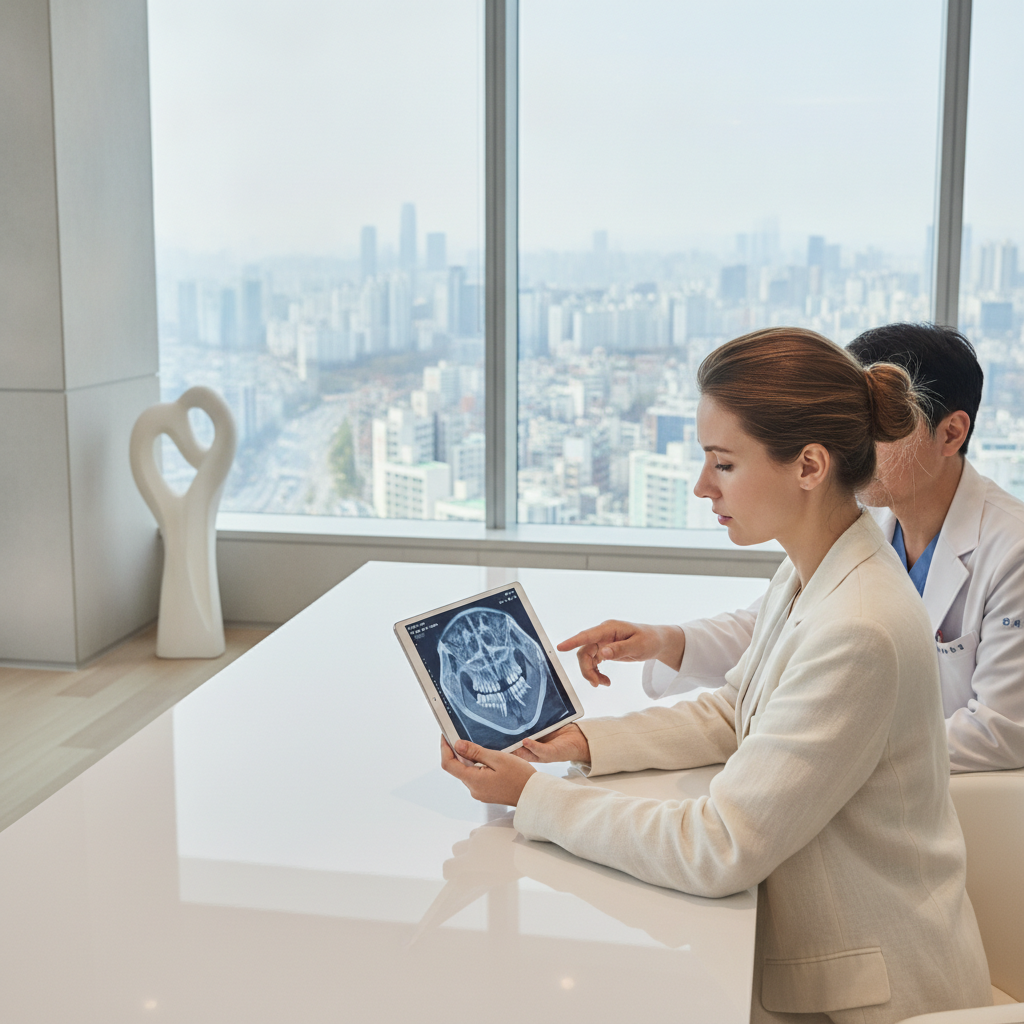
FIRST-TIME TWO-JAW SURGERY IN SEOUL: WHAT TO EXPECT (2026)
Two-jaw surgery in Seoul, first-timer edition: CT scans, three-day hospital stay, banding, and the six-month bite reset.
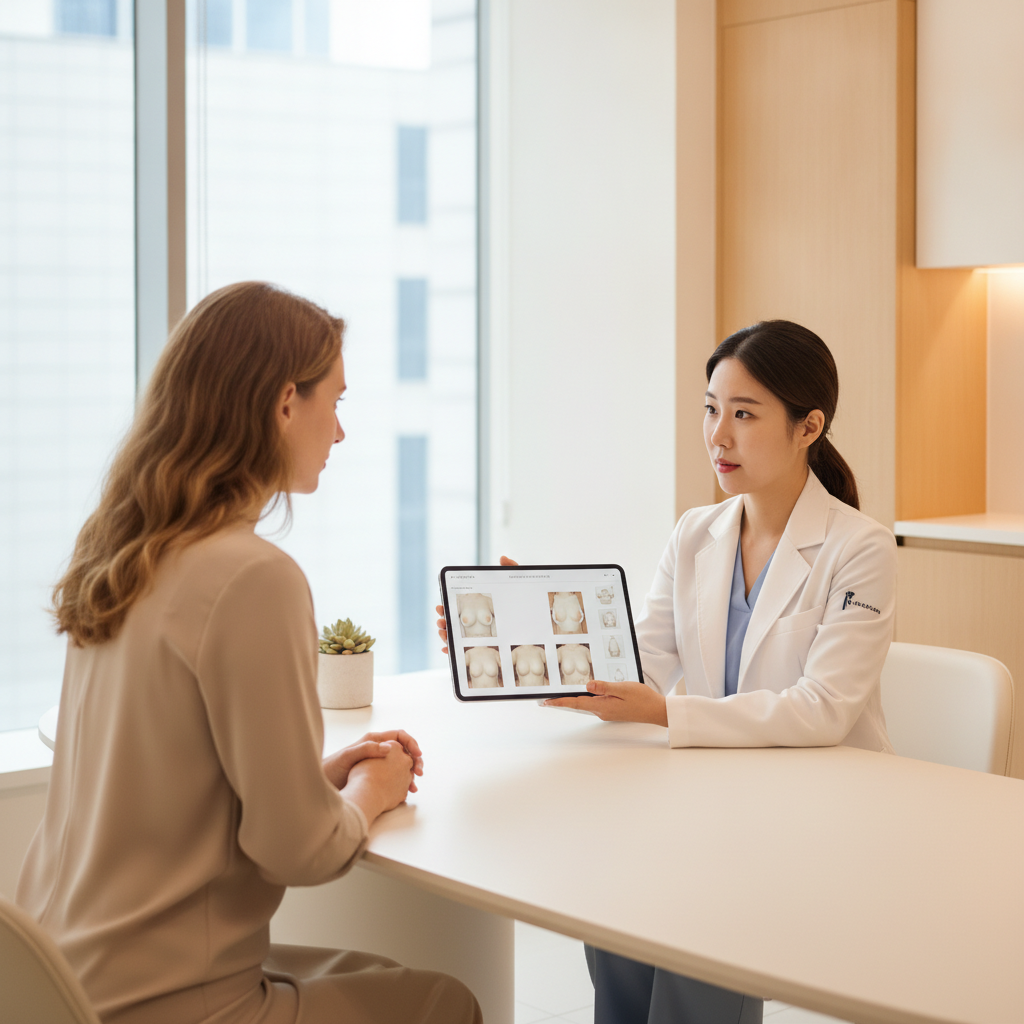
FIRST-TIME BREAST AUGMENTATION IN SEOUL: WHAT TO EXPECT (2026)
A first-timer's walkthrough of breast augmentation in Seoul in 2026: consultation, implant choices, hospital stay, recovery timeline, and the exact fees to expect.
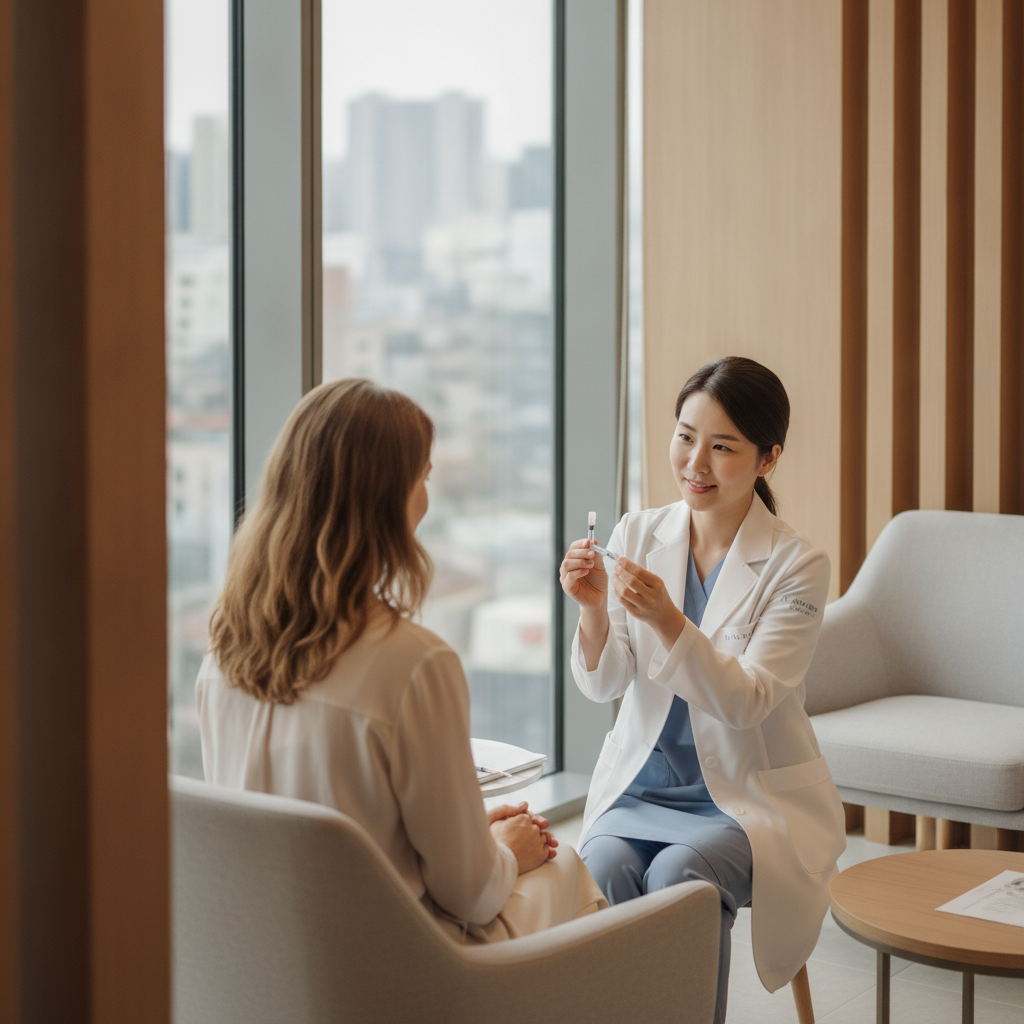
FIRST-TIME FILLER IN SEOUL: WHAT TO EXPECT IN 2026
A first-timer's walkthrough of dermal filler in Seoul: costs, brands, districts, pain, downtime, and the questions to ask before the syringe comes out.
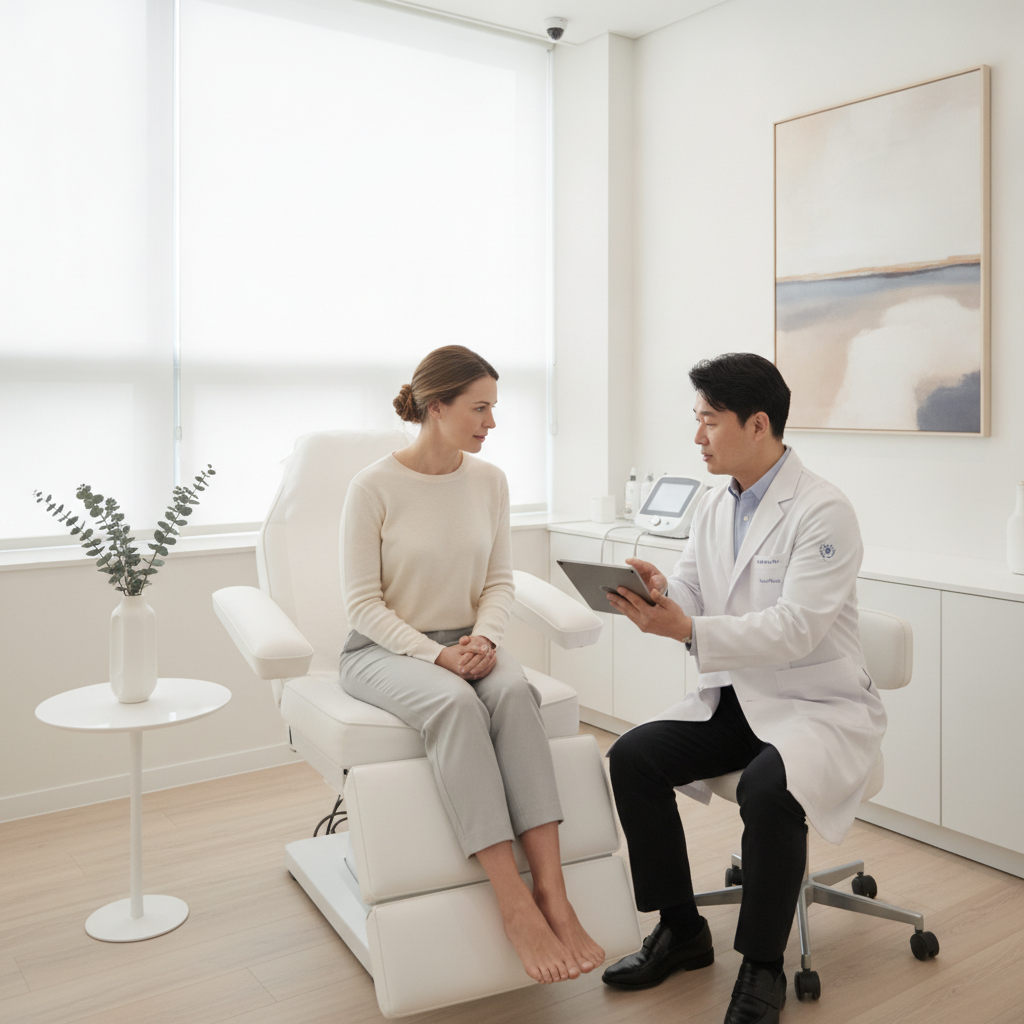
FIRST-TIME SKIN BOOSTERS IN SEOUL: WHAT TO EXPECT IN 2026
A first-timer's walkthrough of Juvelook, Profhilo and Sculptra sessions in Seoul: prep, cost and results.
▶▶▶ stop reading. start matching.
FIND YOURS.
We'll pull five clinics matched to your case. WhatsApp reply within 24h.