TEMPLE FILLER IN SEOUL 2026: COSTS, CANDIDATES AND WHERE TO BOOK
How Korean injectors rebuild hollow temples with HA fillers, what it costs, and where medical tourists get the best value.
By Editorial
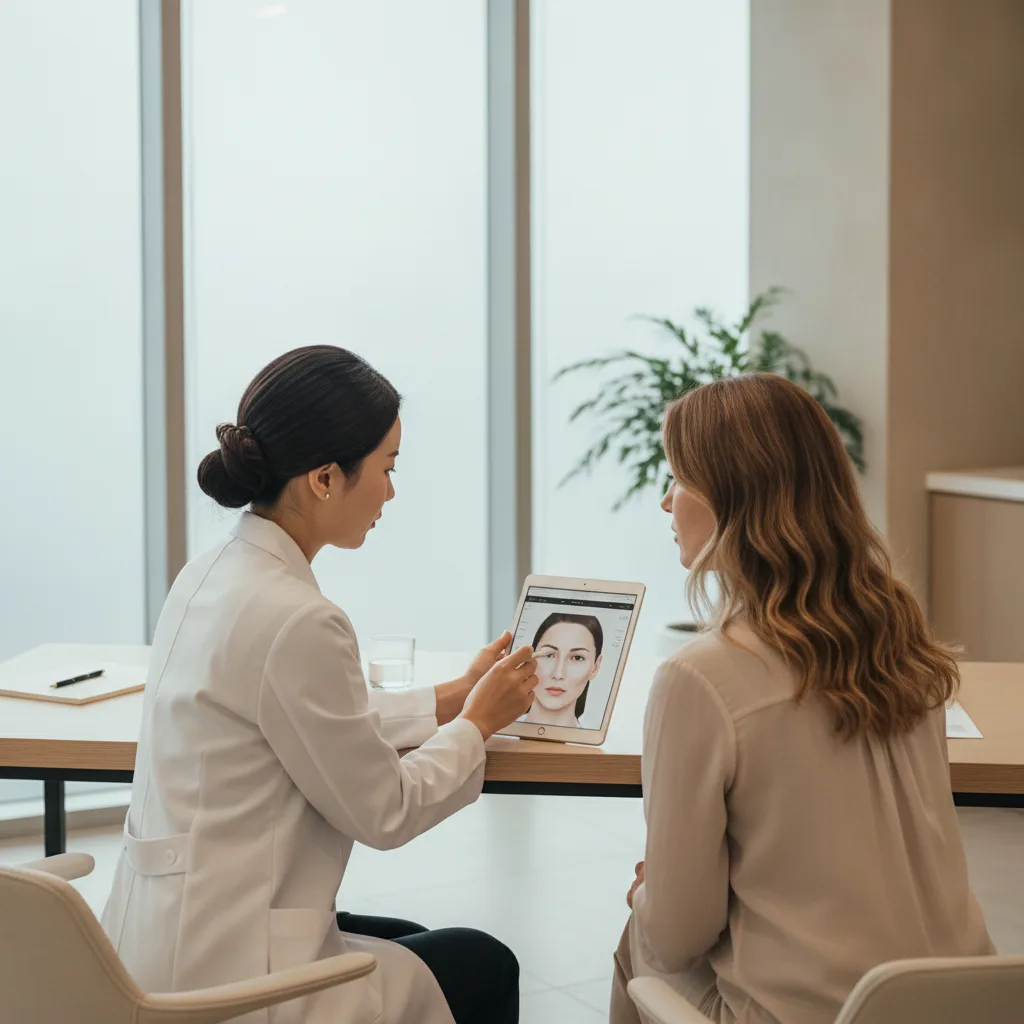
The temples are the quietest signal of facial aging most people never think about. When they hollow out, the whole upper third loses structure, the brow drops, and the eyes read tired even after eight hours of sleep. Temple filler puts the volume back in about fifteen minutes, and Seoul is where the technique got refined into a repeatable, low-drama protocol.
WHY TEMPLES HOLLOW, AND WHAT FILLER ACTUALLY DOES
Temple hollowing comes from three overlapping causes: bone remodeling in the greater wing of the sphenoid, atrophy of the deep temporal fat pad, and thinning of the temporalis muscle. All three progress from the mid-thirties onward and accelerate after weight loss, endurance training, or menopause. The result is a concave shadow between the tail of the brow and the hairline that catches light in an unflattering way, drags the lateral brow downward, and makes the cheekbones look sharper than they should.
Filler replaces the lost volume in the deep supraperiosteal plane, sitting on the bone under the muscle. Done well, the temple reads flat or gently convex, the brow lifts by two to four millimeters without a single unit of Botox, and the whole eye area opens up. Done poorly, it puffs out into a shelf or migrates into the forehead and looks like a bad wig line. The Seoul difference is that injectors here do this specific technique at volume, most weeks, on medical tourists whose bone anatomy varies more than the domestic caseload.
WHICH FILLERS KOREAN INJECTORS ACTUALLY USE IN THE TEMPLE
For deep temporal placement Korean clinics lean on high G-prime hyaluronic acid fillers. Juvederm Voluma remains the reference product for its lift capacity and 18 to 24 month duration. Restylane Lyft appears in clinics that want a stiffer scaffold at slightly lower cost. On the Korean-brand side, Neuramis Deep and Yvoire Contour are the workhorses at roughly 40 to 55 percent lower price than the imports, with similar lift performance and a shorter 12 to 15 month duration.
A subset of injectors prefers calcium hydroxylapatite (Radiesse) diluted 1:1 with saline for temples that need collagen-stimulation on top of instant fill. This is more common in Cheongdam and Apgujeong than in Gangnam-station clinics. Ask specifically which product goes into the temple during consultation, and ask why. If the injector cannot explain the choice in two sentences, book somewhere else. The Korean vs Allergan botox comparison covers similar brand-tier logic on the neurotoxin side and reads across cleanly here.
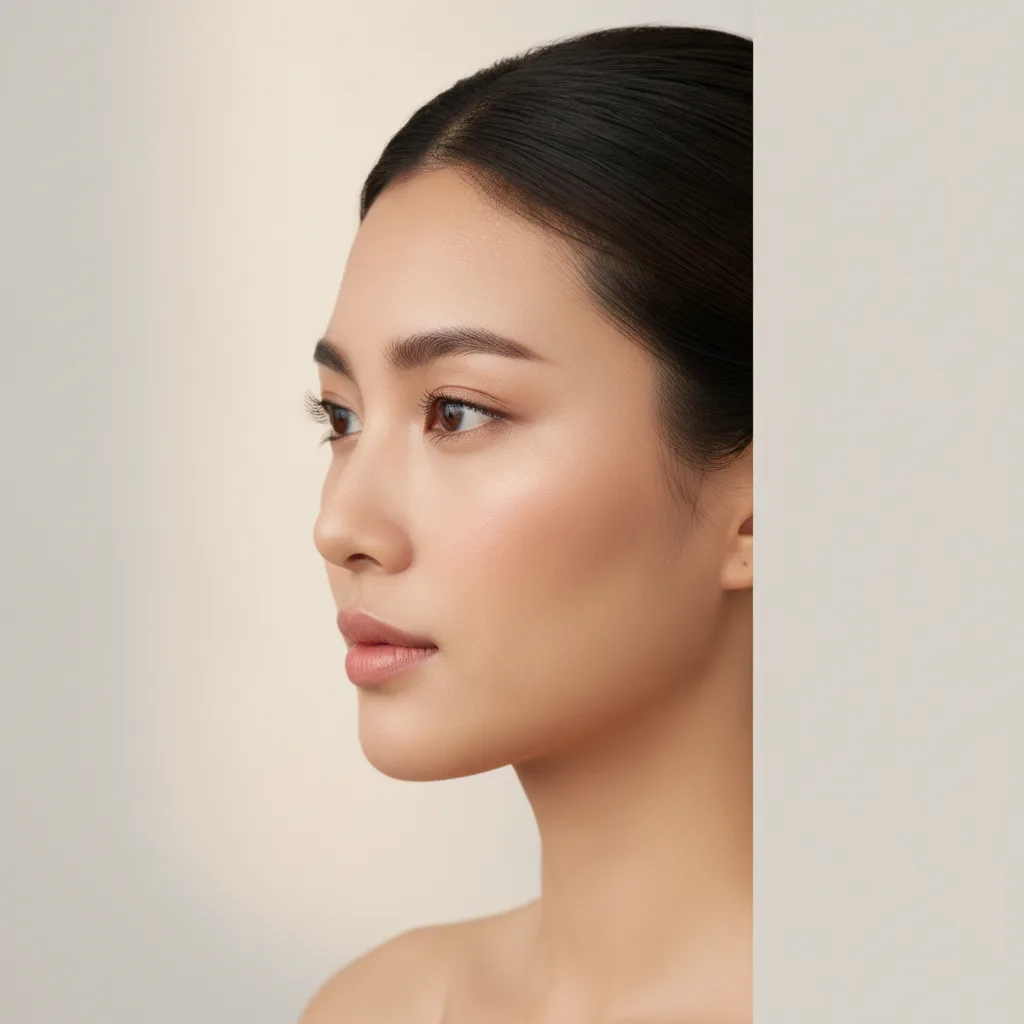
WHAT IT COSTS IN SEOUL IN 2026
Temple filler in Seoul is priced per syringe, and most cases need one to two syringes total, split across both sides. Expect the following ranges in mid-2026, VAT typically included at Gangnam and Apgujeong clinics that see foreigners regularly.
- 01Neuramis Deep or Yvoire Contour (Korean brand, 1cc): ₩280,000 to ₩380,000 per syringe (about $200 to $275)
- 02Juvederm Voluma (Allergan, 1cc): ₩550,000 to ₩750,000 per syringe (about $395 to $540)
- 03Restylane Lyft (Galderma, 1cc): ₩480,000 to ₩650,000 per syringe (about $345 to $470)
- 04Radiesse diluted for temples (1.5cc): ₩650,000 to ₩900,000 (about $470 to $645)
- 05Consultation fee (usually credited toward treatment): ₩30,000 to ₩100,000
Two syringes of Voluma across both temples runs about ₩1.1 to ₩1.5 million all-in. The Korean-brand equivalent lands closer to ₩560,000 to ₩760,000. For context, the same Voluma placement in Bangkok runs 20 to 30 percent more, in Singapore roughly double, and in London or Los Angeles two-and-a-half to three times the Seoul rate. Full pricing logic sits in the dermal filler cost guide and the hidden costs breakdown.
WHO IS A GOOD CANDIDATE, AND WHO SHOULD WAIT
The strongest candidates are people between 32 and 60 with visible temple concavity that catches shadow under overhead light. If a light source above your head throws a dark half-moon between the tail of your brow and your hairline, filler will fix it. Endurance athletes and post-weight-loss patients often need temple work earlier than their calendar age suggests, sometimes as young as 29. Menopausal and postmenopausal patients respond well because temple hollowing accelerates in that window.
Poor candidates are patients with thin skin over prominent temporal veins, patients on active anticoagulation, and anyone with unrealistic expectations about how much the brow will lift. Temple filler is a millimeter procedure. It does not replace a brow lift, it does not fix true ptosis, and it will not open hooded eyes the way thread lifting or upper-blepharoplasty does. If the goal is a dramatic lateral brow lift, the honest conversation should happen at consultation, not after the syringe is empty.
HOW LONG DOES TEMPLE FILLER LAST?
Juvederm Voluma placed on periosteum in the temple lasts 18 to 24 months in most patients, sometimes longer given how little the area moves. Restylane Lyft runs 12 to 18 months. Korean brands like Neuramis Deep and Yvoire Contour tend to hold 12 to 15 months in the same plane. Radiesse offers 12 to 15 months of fill plus ongoing collagen stimulation that lingers past the product itself.
Duration in the temple is longer than the same product would give in the lips or nasolabial folds because the injection sits deep, motion is minimal, and metabolic clearance in that plane is slow. A yearly touch-up of half a syringe per side is the typical maintenance protocol at good Seoul clinics.

WHERE TO BOOK: GANGNAM, APGUJEONG, CHEONGDAM
Three neighborhoods handle the bulk of foreigner temple filler bookings. Gangnam-station clinics (exits 10, 11, 12) offer the widest price range and the most English-friendly booking process, with typical Korean-brand pricing at the low end. Apgujeong is the injector-experience premium tier, where senior doctors have logged thousands of temple cases and pricing skews Allergan and Galderma. Cheongdam is where the marquee celebrity-adjacent clinics sit, with pricing 30 to 60 percent above Apgujeong and results that on paper are indistinguishable to the average patient.
For a first temple case as a medical tourist, Apgujeong offers the best ratio of injector experience to price. The Apgujeong district guide and the Gangnam district guide map the actual streets, subway exits, and clinic clusters. Book Monday to Thursday if possible. Weekend rates are slightly higher at some premium clinics, and the injector rotation on Saturdays skews toward newer associates.
WHAT RECOVERY LOOKS LIKE AND WHEN YOU CAN FLY
Temple filler is the shortest-recovery injectable procedure at a Korean clinic. Ice for ten minutes, cannula-based technique means bruising rates below 15 percent, and most patients walk out ready for dinner. Swelling peaks at 24 hours and settles by day three. The most common side effect is a mild frontal headache for six to twelve hours from the periosteal placement, which paracetamol handles fine.
Flying home is fine after 48 hours for most cases. The flying home recovery guide covers the full timeline. Avoid deep tissue face massage for two weeks, no hats with tight temple bands for one week, and skip strenuous exercise for 48 hours to reduce migration risk. Alcohol should wait 24 hours to keep bruising down.
“Two syringes of Voluma across both temples in Apgujeong runs about ₩1.2 million. The same result in London or Los Angeles is closer to ₩3.5 to ₩4 million.”
RED FLAGS AT CONSULTATION
Watch for four specific patterns. First, any clinic that pushes three or more syringes for a first-time temple case without showing you a photo of similar bone anatomy handled that way. Second, any clinic that will not name the specific product going into the syringe, or that packages temple filler into a bundle with unrelated treatments. Third, any injector who refuses to use a cannula and insists on sharp-needle technique for the temple, which raises the risk of hitting the superficial temporal artery. Fourth, any consultation that quotes a price wildly below the ranges in this guide, since that usually signals grey-market or expired product.
A good Seoul consultation for temple filler takes 20 to 30 minutes, includes a discussion of product choice with reasons, a mirror walk-through of the injection plan, and a written quote before consent. If any of those steps get skipped, walk out. Plenty of clinics in Gangnam and Apgujeong do this properly and welcome the second opinion.
Treatment guides · 8 min · Jul 8, 2026
← all postsFAQ.
How much do dermal fillers cost in Seoul?+
How long do fillers last?+
Are Korean fillers safe?+
What is the downtime after fillers?+
Can fillers be dissolved if I don't like the result?+
Pricing ranges reflect typical premium SeoulClinics partners and are indicative — actual quotes come from the consult. None of this replaces a licensed Korean clinician's evaluation.
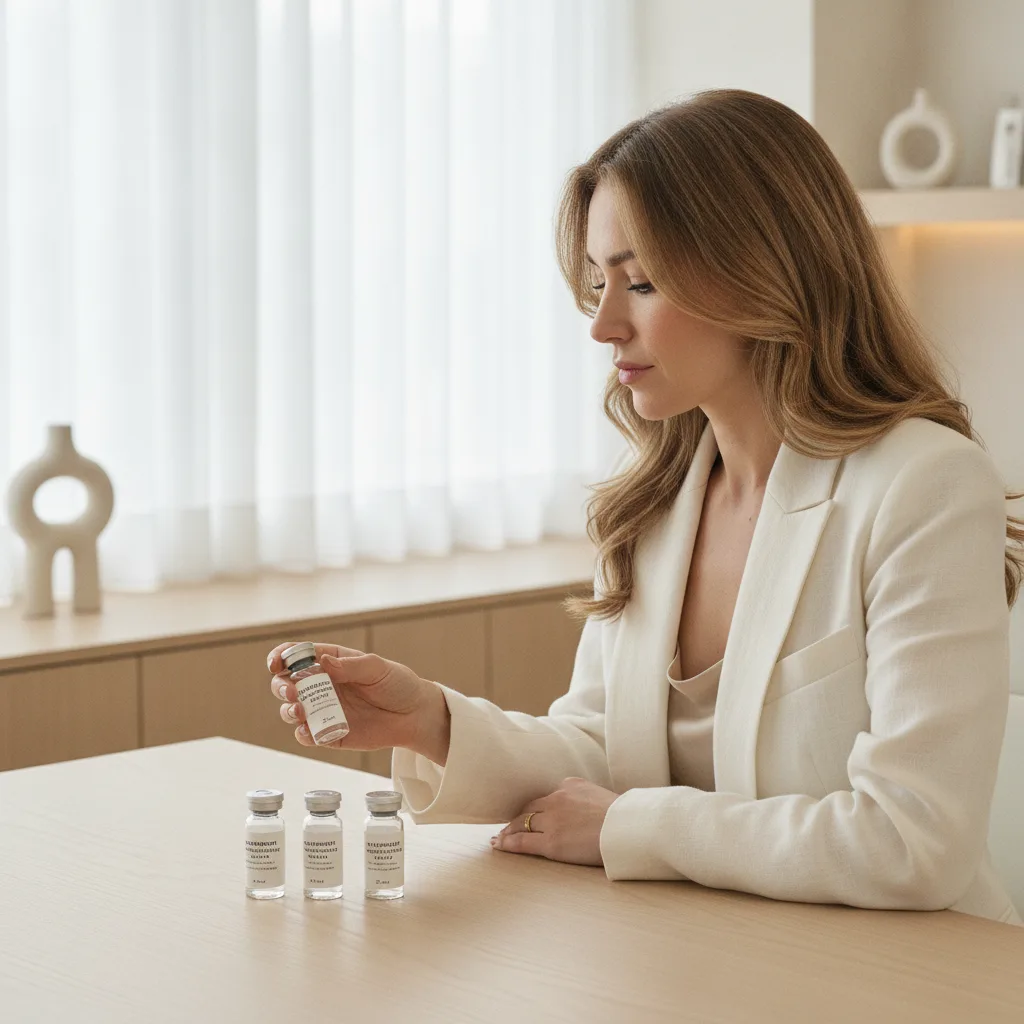
REJURAN VARIANTS EXPLAINED: HEALER, I, S, HB, EYE IN SEOUL
Every Rejuran type does something different. Here is what each variant treats, what it costs in Seoul, and which one your first booking should be.
SKIN BOOSTERS IN SEOUL 2026: JUVELOOK, PROFHILO, SCULPTRA GUIDE
A first-timer's cost, brand and clinic guide to skin boosters and collagen biostimulators in Seoul for 2026.
REVISION RHINOPLASTY IN SEOUL 2026: FIXING A FAILED NOSE JOB
A practical Seoul revision rhinoplasty guide covering cost, timing, cartilage sourcing, top districts, and which surgeons actually take secondary cases.
BREAST LIFT (MASTOPEXY) IN SEOUL 2026: COST, TECHNIQUES, RECOVERY
Everything a first-time medical tourist needs to know about mastopexy in Seoul: incision types, KRW pricing, recovery windows, and how it differs from augmentation.
LATERAL CANTHOPLASTY IN SEOUL: THE CAT EYE SURGERY GUIDE (2026)
How Korean surgeons lift the outer eye corner for a subtle cat-eye look, what it costs, and who it fits.
▶▶▶ stop reading. start matching.
FIND YOURS.
We'll pull five clinics matched to your case. WhatsApp reply within 24h.