HAIR TRANSPLANT SEOUL VS TURKEY 2026: COST, QUALITY, RECOVERY
Seoul or Istanbul for your hair transplant in 2026? A direct comparison of price, technique, graft count, recovery time, and who each destination actually suits.
By Editorial
Seoul and Istanbul are the two dominant hair transplant destinations for international patients in 2026, and they solve the same problem very differently. Istanbul optimises for volume and price, packaging thousands of grafts into a two-night trip for the cost of a European long weekend. Seoul optimises for finesse, hairline design, and physician-executed technique, and charges accordingly. If you pick the wrong one for your case, you either pay double for grafts you did not need or you save money on a result that looks like a wig.
THE HEADLINE PRICE GAP
Turkey is the cheapest credible market on earth for hair transplantation. A 3,500-4,500 graft FUE megasession at a mid-tier Istanbul clinic runs €1,800-2,800 all-in, hotel and airport transfers included, and the flagship Sisli clinics that market to Europeans sit around €2,500-3,500. Seoul is a different pricing universe. A 2,500-3,500 graft FUE at a Gangnam or Cheongdam specialist typically lands at ₩5,500,000-8,500,000, or roughly $4,000-6,300, before VAT. DHI in Seoul is priced per graft, usually ₩2,500-4,000 per follicular unit, which pushes a 2,000-graft DHI case to ₩5,000,000-8,000,000 on its own.
The gap is not a scam on either side. Turkish clinics run 8-15 concurrent chairs with technician-heavy teams, which is what lets them price a 4,000-graft case below €3,000. Korean clinics run 1-3 chairs per day, the physician stays in the room for the entire session, and Korean labour, real estate, and medical device costs are structurally higher. For a straightforward Norwood 3 case with dense donor supply, the Turkish price is genuinely fair. For a delicate hairline on a face that will be scrutinised at conversational distance, Korean pricing is buying something specific. Our rhinoplasty Seoul vs Bangkok breakdown covers the same structural cost logic across body contouring for readers weighing multiple procedures on one trip.
TECHNIQUE AND WHO ACTUALLY HOLDS THE PUNCH
Both markets have moved to FUE as the default and offer DHI as a premium upsell, but the labour model behind each session is different. In Istanbul, the operating surgeon typically opens the recipient sites and supervises, while trained technicians extract and implant grafts across a long 6-9 hour day. That model is legal in Turkey and is how the price gets cheap, but it also means the person handling your donor is not the person whose name is on the clinic. The variance clinic to clinic is huge, and revision cases from Turkish megasessions are a real category at Seoul clinics.
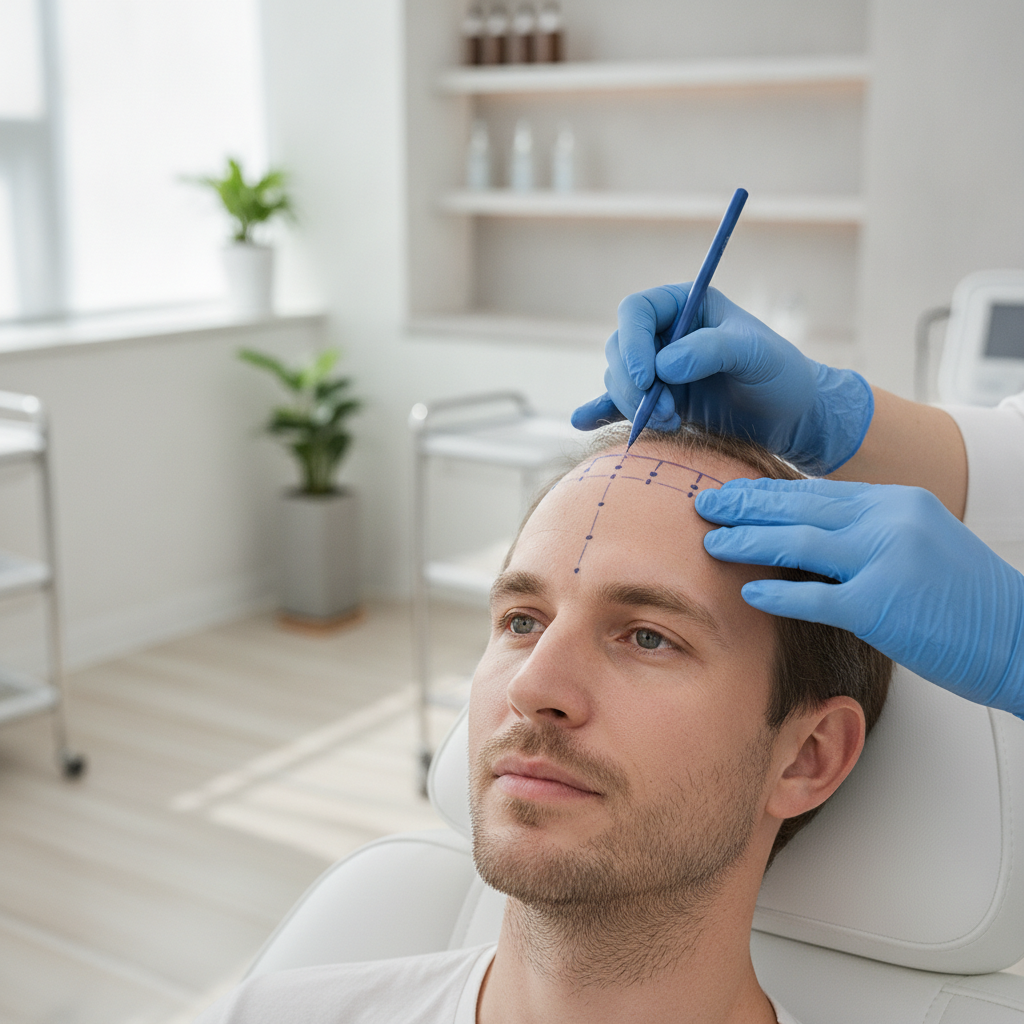
In Seoul, the physician performs the extraction, angle design, and often the implantation, or at minimum stays chair-side the entire session with one or two nurses. DHI in particular is treated as a physician-only procedure, using Choi implanters at 40-60 degree angles that match native hair emergence. That labour model is the reason a 2,500-graft Seoul case takes about the same hours as a 4,000-graft Istanbul case and costs more per graft. If you care about the front hairline, temporal peaks, or a female case where the parting has to disappear, Seoul's model is what you are paying for.
GRAFT COUNTS, AND WHY THE BIGGEST NUMBER IS NOT THE BEST NUMBER
Turkish clinics market on graft count. Quotes of 4,000, 5,000, even 6,000 grafts are common. Seoul clinics rarely propose above 3,500 in a single session, and most cap at 3,000. This is not Seoul being conservative for the sake of it. Donor density on the safe donor zone is finite, usually 6,000-8,000 lifetime grafts for a Caucasian scalp and often less for East Asian and Southeast Asian scalps that carry lower follicular unit density per square centimetre. Extracting 5,000 in one pass depletes the donor for any future work and raises the risk of visible donor thinning at short haircuts.
For a Norwood 4-5 case that legitimately needs coverage across crown, midscalp, and hairline, a Turkish megasession is often the honest answer, because two Seoul sessions of 2,500 grafts each cost more than one Istanbul session of 5,000. For Norwood 2-3 hairline refinement, a body of scarring revision work, or a female diffuse thinning case, Seoul's smaller high-density placement wins every time. Read our FUE vs DHI Seoul guide before you decide which technique you actually need.
RECOVERY, DOWNTIME, AND WHAT YOUR FACE LOOKS LIKE ON THE FLIGHT HOME
Recovery windows are similar in structure but different in intensity. Both markets tell you scabs form within 48 hours and shed by day 10-14, transplanted hair sheds around week 3-6 in the shock phase, and visible regrowth begins at month 4 with a real result at month 10-12. Where they differ is the appearance during the flight home. Turkish clinics tend to release patients with a tighter bandage schedule and a shorter clinic-side aftercare window, so travellers often fly with visible redness and residual scabbing at day 3. Seoul clinics keep patients in country 5-7 nights on average, with a formal post-op wash on day 3 and a scab-removal check at day 7 before flying.
For work-facing patients this matters. A Seoul trip is roughly 7-10 days door to door, priced accordingly. A Turkey trip can be done in 3-4 nights, but you will land home mid-heal. Neither is wrong, but the timing implication is a cost the sticker price hides. Our flying after aesthetic treatment guide breaks down cabin-pressure timing for injectables and surgical cases in more detail.
MEDICAL INFRASTRUCTURE AND THE SAFETY NET WHEN SOMETHING GOES WRONG
Korea's Ministry of Health foreigner-designated system is a real layer of consumer protection. Clinics like Braun Plastic Surgery in Seocho, Grand Plastic Surgery in Apgujeong, April31 Aesthetics in Gangnam, and VG Plastic Surgery in Gangnam sit inside a licensing regime that requires in-house anesthesia protocols, board-certified surgeons, and disclosed complication tracking. Foreigner-designated status is not marketing. It is a government audit. Turkey's Ministry of Health license exists too, but the enforcement is looser, and the gap between a well-run Sisli clinic and a graft mill in the same district is much wider than the gap between a top-tier Gangnam clinic and a mid-tier one.
For elective, low-risk hair work this asymmetry is not decisive. For scalp reduction, corrective work on a botched previous transplant, or a patient with mild bleeding history, the Seoul regulatory floor is worth the premium. Follow-up complications are also easier to route through a designated clinic that expects international patients back for a 6-month photo check. Turkish clinics generally rely on WhatsApp follow-up, which works right up until it does not.
- 01Turkey wins on: 4,000+ graft cases, tight budgets under $3,500 all-in, patients willing to trade physician attention for lower cost
- 02Seoul wins on: hairline refinement, female diffuse thinning, revision of previous transplants, patients who want the physician holding the punch, cases needing predictable post-op infrastructure
- 03Tie on: Norwood 3 mid-scalp density work where either market delivers a good result, mostly depending on the individual clinic pick
SO WHO SHOULD FLY TO SEOUL AND WHO SHOULD FLY TO TURKEY?
Pick Turkey if your primary need is graft volume on a limited budget, you have thick Norwood 4-5 loss with dense donor supply, and you can tolerate an operator-heavy delivery model. The mid-tier Sisli clinics deliver competent 4,000-graft FUE for money that will not exist anywhere else. Pick Seoul if the visible outcome matters more than the graft count, if your case is a hairline design job under 3,000 grafts, if you are a woman with diffuse thinning, or if you are revising a previous transplant. Also pick Seoul if you are already planning to stack the trip with other work like rhinoplasty or facial contouring, since combining consultations at foreigner-designated clinics gets you tax refund efficiency and a single medical concierge managing the calendar.
HOW MUCH DOES A HAIR TRANSPLANT IN SEOUL COST COMPARED TO TURKEY?
A 2,500-3,500 graft FUE in Seoul runs ₩5,500,000-8,500,000, roughly $4,000-6,300 USD before VAT. The same graft range in Istanbul is €1,800-2,800 at mid-tier clinics and €2,500-3,500 at flagship Sisli clinics. Seoul DHI adds ₩2,500-4,000 per graft on top of that base. For a like-for-like 3,000-graft case, Seoul lands about 2 to 3 times the Turkish price.
IS KOREAN HAIR TRANSPLANT TECHNIQUE ACTUALLY BETTER THAN TURKEY?
Better is the wrong frame. Korean clinics deliver a physician-executed model with tighter hairline design and smaller session sizes. Turkish clinics deliver technician-executed high-volume work at lower unit cost. For a Norwood 4-5 patient needing coverage, Turkey's volume model is efficient. For a Norwood 2-3 refinement case or a female patient, Korea's design-first model produces better front-line results.
HOW LONG DO I NEED TO STAY IN SEOUL FOR A HAIR TRANSPLANT?
Plan for 7-10 nights. That covers arrival, consultation and design on day 1-2, the procedure on day 2-3, a post-op wash on day 3, a scab check at day 7, and a flight home once the visible scabbing has cleared. Turkish clinics typically cycle patients out in 3-4 nights, which saves hotel cost but means you fly home mid-heal.
CAN I COMBINE A HAIR TRANSPLANT WITH RHINOPLASTY OR FACELIFT IN SEOUL?
Yes, but sequence matters. Hair transplant is best done first because the scalp work is done before any facial swelling. A rhinoplasty or facelift the same week is possible if the surgeons at both clinics coordinate anesthesia clearance. Most foreigner-designated clinics like Braun, April31, and Grand PS have concierge desks that will build the schedule around a single anesthetist review.
WHAT HAPPENS IF MY HAIR TRANSPLANT FAILS?
Failure means less than 60-70 percent regrowth at month 12, visible pluggy or angled placement, or scarring in the donor. Korean foreigner-designated clinics generally offer a documented revision policy, often at 30-50 percent off the touch-up graft count. Turkish clinics vary widely on revision terms and revisions almost always require returning to Istanbul. Revision cases from Turkey are one of the fastest-growing segments at Seoul specialists.
DO SEOUL CLINICS OPERATE ON WESTERN HAIRLINES AND HAIR TEXTURES?
Yes. Foreigner-designated clinics see thousands of Caucasian, Southeast Asian, and Middle Eastern patients per year and adjust angle design and density calibration for finer or coarser hair. Ask specifically for the surgeon's non-Korean case portfolio during consultation. A clinic that only shows Korean before-and-afters may be less calibrated for a Western hair diameter and colour contrast.
Comparisons · 9 min · Sep 21, 2026
← all posts
MOTIVA VS MENTOR VS NAGOR IMPLANTS IN SEOUL 2026
The three implant brands Korean surgeons actually offer, and how the choice changes the price, the scar, and the ten-year plan.
FACELIFT VS THREAD LIFTING IN SEOUL: WHICH LIFT IN 2026?
A surgical SMAS facelift and a Korean PDO/PCL thread lift solve different problems at very different price points. Here is how Seoul clinics actually decide between them.
SYLFIRM X VS POTENZA IN SEOUL: WHICH RF MICRONEEDLING IN 2026?
A side-by-side of Sylfirm X and Potenza in Seoul clinics: what each device does best, real KRW pricing, downtime, and how to pick for melasma, acne scars, or a lifting protocol.
LIPOSUCTION SEOUL VS BANGKOK VS ISTANBUL: WHERE TO FLY IN 2026
A working comparison of liposuction 360 in Seoul, Bangkok, and Istanbul for international patients weighing cost, technique, safety, and recovery in 2026.
HYDRAFACIAL VS AQUAPEEL SEOUL 2026: WHICH MEDICAL FACIAL WINS
Two of the most-booked medical facials in Seoul, compared on protocol, price, downtime, and which one actually fits your trip.
▶▶▶ stop reading. start matching.
FIND YOURS.
We'll pull five clinics matched to your case. WhatsApp reply within 24h.