HOW TO READ A KOREAN CLINIC PRICE MENU: 2026 SEOUL GUIDE
A line-by-line decoder for Seoul aesthetic clinic price menus, so you catch the VAT trap, the vial count game, and the package math before you pay.
By Editorial

A Korean clinic price menu is a specific document with its own rules, and if you read it like a Western medspa menu you will pay more than you should. The prices are usually correct, but the way units, vials, and packages are quoted hides the real number until you sit in the consultation chair. This guide walks the menu top to bottom the way a local reads it, so you land in Seoul knowing exactly what the KRW figure in front of you actually means.
THE STRUCTURE OF A KOREAN CLINIC MENU
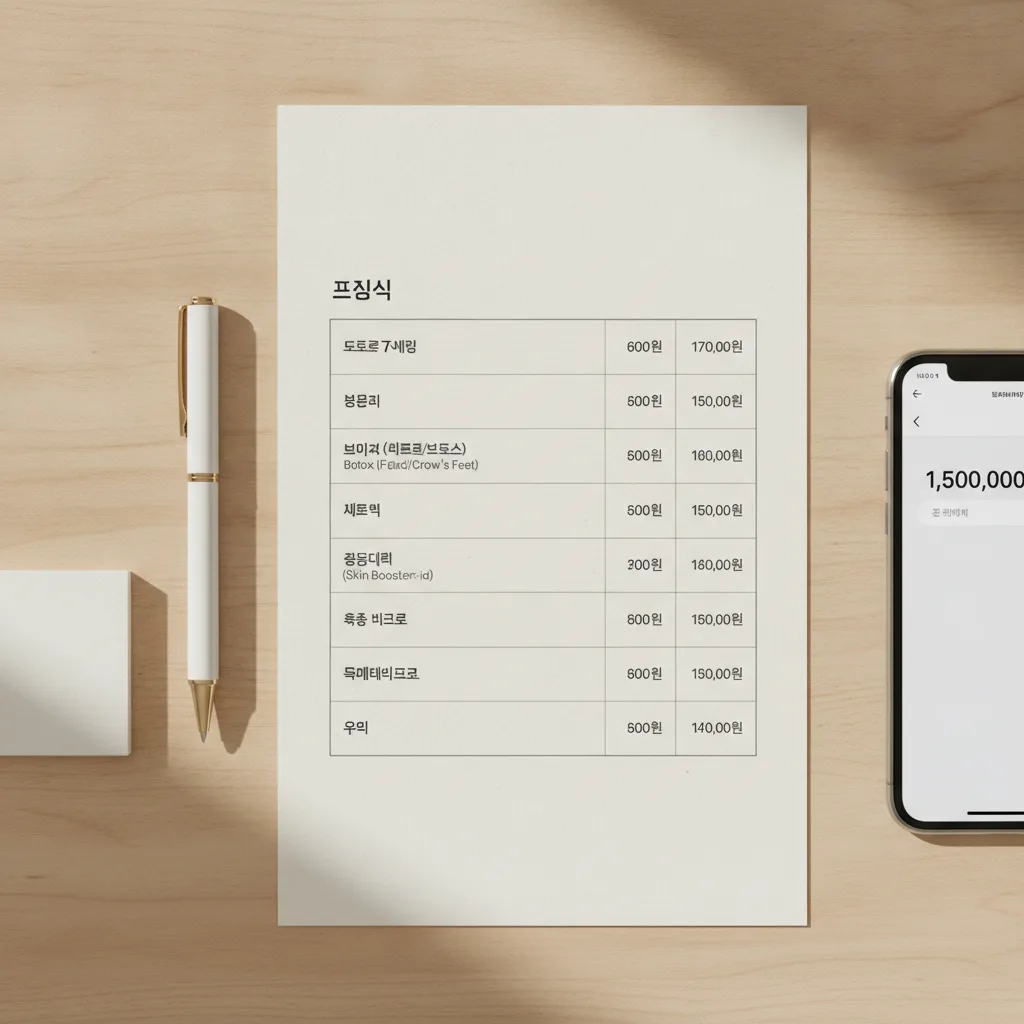
Most Seoul clinics still print a physical menu, laminated and about the size of a placemat, and a shorter digital version sent by KakaoTalk on request. Both follow the same shape. The top block covers injectables (botox, filler, skin boosters, exosomes, PDRN), the middle covers device treatments (lasers, HIFU, RF microneedling, thread lifts), and the bottom holds packages and bundled programs. Surgery is almost never printed on the same menu, since it lives on a separate department price sheet that a coordinator hands you after a consultation.
The prices are stacked in KRW with no decimal marks, so ₩150,000 reads as "150,000" and ₩1,500,000 reads as "1,500,000". That trailing three zeros vs six zeros distinction is the first thing to check on every row, because a fast scan of a menu at reception can shift a filler quote from to 100 if you miscount. The second thing to check is the small print at the bottom of the page. If you cannot find a VAT line in Korean or English, ask before the consultation starts, since a 10% VAT can be added on top of every quoted price at a small clinic and already included at a large one.
BOTOX: READ THE BRAND AND THE UNIT, NOT THE AREA
Botox is where menu misreading costs foreigners the most, because Western patients ask for a price per area ("forehead", "crows feet") and Korean menus quote per unit and per brand. A typical Gangnam menu shows four to six brand rows stacked together. The Korean brands (Nabota, Botulax, Wondertox, Innotox, Meditoxin) sit at the top around ₩3,000 to ₩5,000 per unit, and Allergan Botox, Xeomin, and Dysport sit below them at ₩7,000 to ₩12,000 per unit. Some clinics list the row as a flat price for a fixed unit count instead, like "Nabota masseter, 50 units, ₩180,000".
The trap is that a single treatment area does not equal a single row on the menu. Masseter jaw slimming uses 40-60 units, forehead uses 10-20, crows feet uses 8-14 per side, and a full-face session often runs 100-150 units total. If the menu prints a per-unit price, multiply. If it prints a per-area package, ask whether topping up over the standard unit count is a flat fee or per unit, since aggressive quotes assume the minimum dose and the doctor upsells to a real dose during consultation. The Korean vs Allergan botox brand comparison walks the actual dose economics for each brand in more detail, and the full 2026 botox cost breakdown shows what a real total looks like once units, areas, and brand are locked in.
FILLER AND SKIN BOOSTERS: THE VIAL COUNT GAME
Dermal filler and skin booster rows are quoted per vial, and the vial size is the variable most first-time patients miss. A Juvederm Voluma row at ₩550,000 is a 1 mL vial. A Rejuran row at ₩250,000 is a 1 mL or 2 mL vial depending on the product code (Rejuran Healer is 2 mL, Rejuran HB is 1 mL, Rejuran I for the eye area is 1 mL). Skin boosters like Profhilo (2 mL), Juvelook (1 mL), and Rejuran Healer (2 mL) all follow the same rule: check the small (mL) marker in parentheses beside the row, because two Rejuran rows on the same menu often use different vial sizes.
A single tear-trough job needs 0.5-1 mL of filler, a lip enhancement needs 1 mL, a chin projection needs 1-2 mL, and cheek augmentation needs 2-4 mL. Match your goal to the vial math before you get in the chair. Also read the syringe brand line closely, since HA fillers from Korean makers (Neuramis, Cleviel, Yvoire) list around ₩250,000 to ₩450,000 per vial and imported brands (Juvederm, Restylane, Belotero) list ₩450,000 to ₩750,000 per vial. Both are safe for standard use, but the vial-count math changes what a full face costs by ₩1-2 million. The dermal filler cost guide shows a full-face quote broken out by brand and area.
HOW DO PACKAGE DEALS ACTUALLY WORK?
Bundled programs sit at the bottom of the menu with names like "K-Glow Program", "Wedding Care Package", or "3-Month Skin Reset". The pattern is a fixed number of sessions at a discount versus buying them a la carte. A typical Sylfirm X package prices four sessions at 25% off the single-session rate. A skin booster program often bundles Rejuran + Juvelook + laser toning as three visits for around ₩1,200,000, saving ₩300,000 over paying by session. The savings are real when you finish the program.
The catch is the refund policy on unused sessions. Most Seoul clinics do not refund a package once you start it, and a few refund only 50% of the unused sessions minus a "consultation fee" pulled out of your remaining balance. Ask this specific question before you commit: "If I leave Seoul early and cannot finish, what happens to the remaining sessions?" A clinic that will not answer clearly is telling you the real refund answer. Package math also breaks if you get talked into adding a fourth treatment during the consultation, since the "discount" is only against the original package and the add-on lands at full retail.
- 01Check whether the price is per unit, per vial, per session, or per area. Every row uses only one of these.
- 02Confirm VAT: included in the row, added on top, or written in as a footer line.
- 03Confirm vial size in mL, since two rows of the same brand can carry different volumes.
- 04Ask how add-ons during consultation are priced, and ask whether package sessions are refundable if a trip is cut short.
- 05Ask for the KRW total, not a USD approximation, since the coordinator's exchange rate is not what your card issuer will apply.
DEVICE TREATMENTS: SHOTS AND LINES
HIFU (Ultherapy, Shurink Universe, Ulfit, Oligio) and RF (Thermage, Inmode, Ondaline) are almost always quoted by shot count or line count. A Shurink Universe row at ₩450,000 for 300 shots is one dose block. A full lower face takes 300-600 shots, a full face plus neck takes 600-900. Ultherapy is priced the same way, with 300 lines being the standard face block and 600 lines being face plus neck. If a menu shows only a single price for "Ultherapy full face", ask for the line count, since a 300-line quote at a discount is often smaller than a 600-line quote at retail once you convert.
Thermage FLX runs the same shot logic (600 shots eyes and forehead, 900 shots full face, 1200 shots face and neck). RF microneedling menus vary more, and Sylfirm X is priced by pass count rather than shot count, so a two-pass session runs about 40% less than a three-pass session on the same face. The ultherapy vs thermage vs sofwave comparison walks the shot/line economics next to actual clinical output for each device.
FOREIGNER PRICING AND THE VAT QUESTION
Some clinics run one printed price sheet for locals and a slightly different one for foreign patients, usually because the foreign menu bundles a coordinator or translator fee into the row. This is not necessarily an upcharge. A ₩550,000 filler row on the foreign menu vs ₩500,000 on the Korean menu typically covers a bilingual coordinator's time, and that is fair. What is not fair is a 20% swing on the same product with no service explanation. If a coordinator quotes a number that is materially higher than the posted VAT and foreigner pricing guide suggests for that treatment, ask them to itemise the delta.
On VAT: Korea's 10% consumption tax applies to aesthetic (non-medically-necessary) treatments. Large Gangnam clinics almost always price VAT-inclusive to keep quotes clean. Smaller Sinnonhyeon and Myeongdong shops sometimes quote pre-VAT to look cheaper on the menu, then add 10% at the counter. If a printed price feels 10% lower than what you saw at three other places, that is your signal to ask before consultation. Foreigners are not eligible for the aesthetic-treatment VAT refund at the airport (that program applies only to certain medically-necessary procedures registered under the Korea Medical Tour VAT refund scheme), so budget for VAT as a real cost.
WHAT A REAL MENU READ LOOKS LIKE
A useful first pass: photograph the menu at reception (most clinics allow this if you ask), take it back to your seat, and open a calculator. Add up your intended treatments at posted rates first, then add 10% if VAT status is unclear, then add 10-20% for the near-certain consultation upsell (the doctor will recommend one extra vial or a paired treatment, and that number lands on your final invoice more often than not). That gives you a realistic ceiling before the pressure of the consultation room hits.
During consultation, ask for the total in KRW written on paper before you agree to anything. If a coordinator answers only in USD or in vague per-treatment ranges, that is a signal to slow down. Read avoiding consultation upsell if you are stacking multiple treatments in one trip, since the upsell dynamics compound when the doctor is quoting a program instead of a single session. The rule that works across every district is simple. The menu is the quote. Anything above the menu is a decision you make in the room, not a price you have to accept.
How-to · 7 min · Jul 19, 2026
← all posts
INSURANCE LETTERS FOR SEOUL PLASTIC SURGERY 2026: WHAT TO ASK FOR
What a Seoul clinic can and cannot put in writing for your employer, insurer, or home-country reimbursement claim.
WHERE TO STAY IN SEOUL FOR AESTHETIC TREATMENTS 2026
Hotels and serviced apartments by district, matched to clinic location, recovery needs, and real nightly rates.
RECOVERY APARTMENTS SEOUL 2026: GANGNAM VS APGUJEONG VS SINSA
Where to actually stay after plastic surgery in Seoul, by district, with nightly rates and clinic distance in minutes.
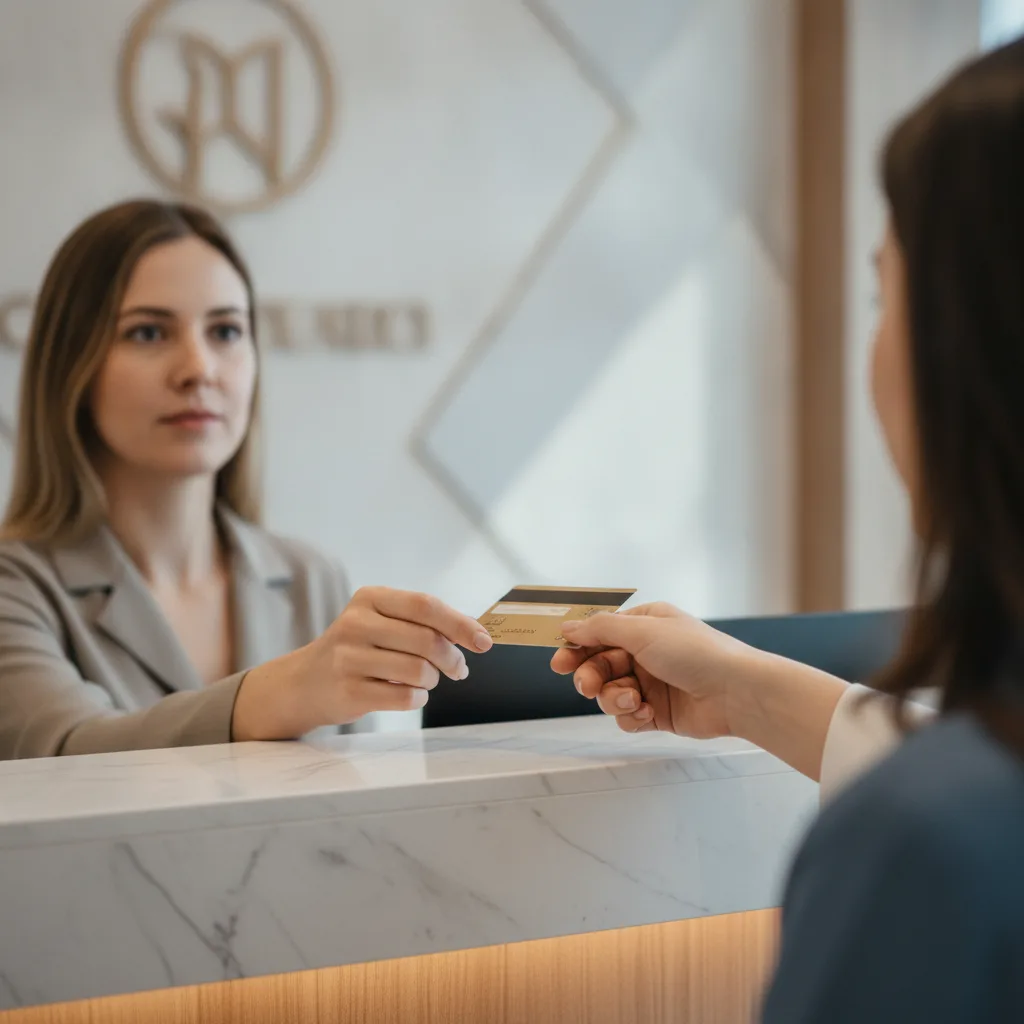
CREDIT CARD FEES AT SEOUL AESTHETIC CLINICS 2026: SURCHARGES & FX
What foreign patients actually pay in card surcharges, FX markups, and daily caps at Seoul aesthetic clinics in 2026.
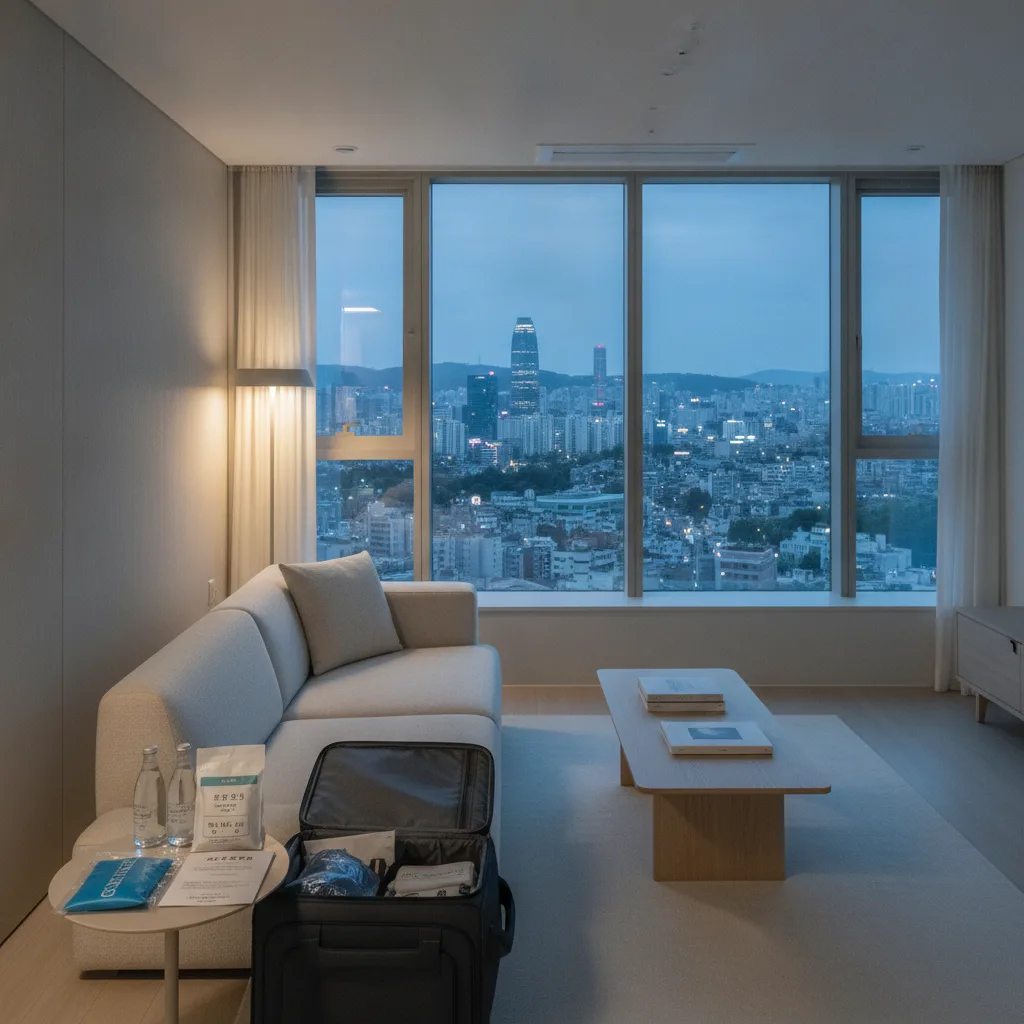
RECOVERY STAYS SEOUL PLASTIC SURGERY 2026: HOTELS AND PRICES
Where foreign patients actually stay after rhinoplasty, two-jaw, breast and body surgery in Seoul, with KRW night rates by district and what to book.
▶▶▶ stop reading. start matching.
FIND YOURS.
We'll pull five clinics matched to your case. WhatsApp reply within 24h.