BIMAXILLARY VS SAGITTAL SPLIT OSTEOTOMY SEOUL 2026
Full two-jaw bimax moves both bones. BSSO moves only the mandible. The cost gap is around ₩8M and the recovery gap is weeks.
By Editorial
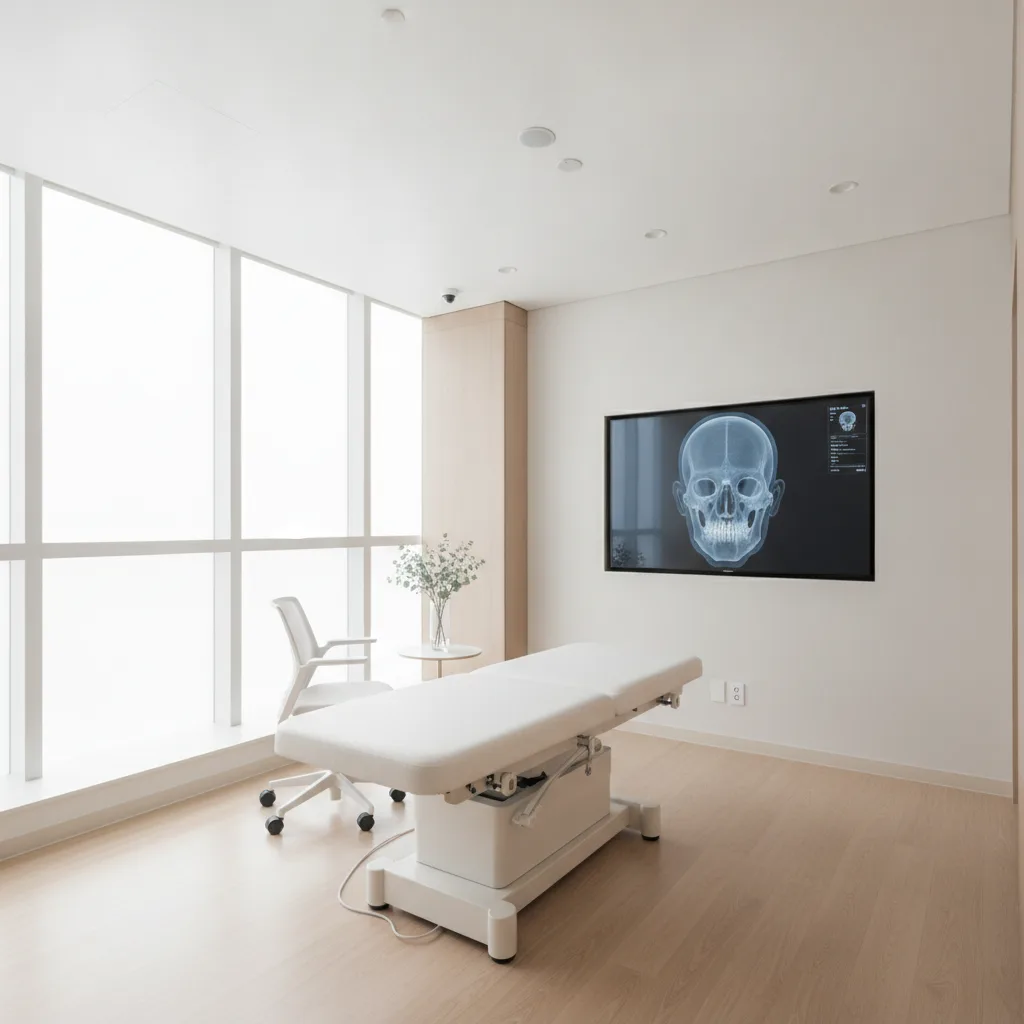
The decision patients burn weeks on is not which Seoul hospital to pick for jaw surgery. It is whether they need the full bimaxillary operation that moves both jaws, or a sagittal split osteotomy that moves only the lower one. The two surgeries sit on the same consultation menu but carry different price tags, different swelling arcs, and different functional outcomes. Getting the match wrong adds cost, revision risk, and roughly four weeks of productive life.
WHAT THE TWO SURGERIES ACTUALLY DO
Bimaxillary surgery, called bimax or two-jaw in Seoul, combines a Le Fort I osteotomy on the maxilla with a bilateral sagittal split osteotomy on the mandible. The surgeon cuts across the upper jaw above the tooth roots, mobilises it, repositions it in three dimensions, and plates it. The mandible is then split along the ramus, slid forward or back, and fixed with titanium plates and screws. Both arches move together, which lets the surgeon correct bite, chin projection, midface flatness, and gummy smile in one operation.
A bilateral sagittal split osteotomy, called BSSO on its own, keeps the maxilla untouched and splits only the mandible. The surgeon makes an angled cut through the ramus on each side, slides the tooth-bearing segment forward for Class II retrognathia or backward for Class III prognathism, and plates the segments together. The upper teeth, the midface, and the nose base do not move. The chin can be addressed in the same session with a separate genioplasty cut if the chin itself is deficient.
WHO NEEDS BIMAX, WHO NEEDS BSSO ALONE
Bimax is the right operation when the problem lives in both jaws. Open bite, long-face syndrome, canted maxilla, severe midface deficiency, and skeletal Class III cases where the upper jaw is also retruded all demand that the maxilla move. Patients with a gummy smile over 4mm of exposure, or with a vertical maxillary excess that drops the smile line, cannot be fixed by mandible-only surgery because the problem is upstream.
BSSO alone works when the maxilla is in acceptable position and only the mandible is off. Class II patients with a normal maxilla and a short, retruded chin get a mandibular advancement BSSO, often with a genioplasty slide. Mild Class III cases with a prognathic mandible and a normal upper jaw get a BSSO setback. The maxilla is left alone. Surgery time drops from six to seven hours down to three to four, blood loss drops, and the plate hardware is roughly half.
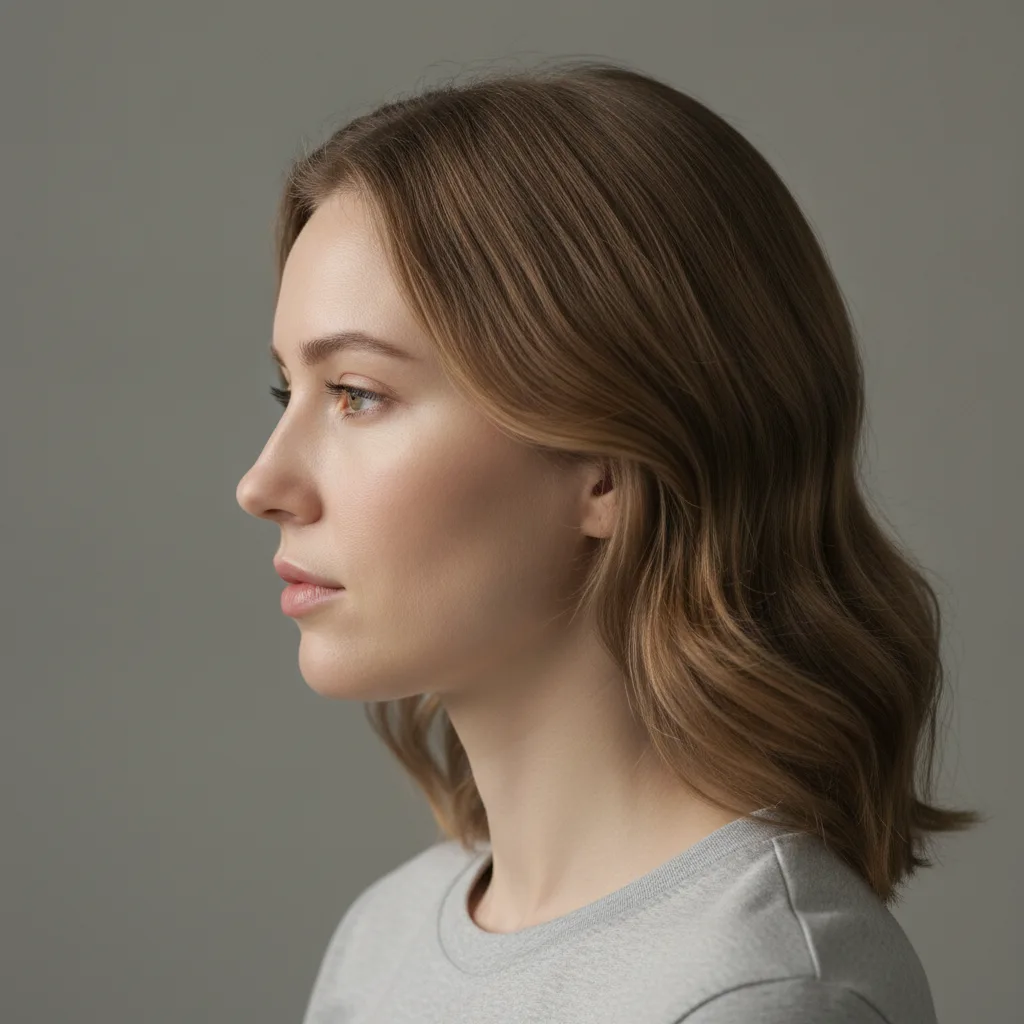
COST GAP IN SEOUL FOR 2026
Seoul orthognathic pricing scales with jaws moved. Expect ₩18M to ₩25M for a BSSO-only mandibular setback or advancement at a mid-tier hospital like 345 Plastic Surgery or Girin Plastic Surgery in Seocho. A full bimaxillary runs ₩24M to ₩38M across the same tier, climbing to ₩38M to ₩55M at a flagship like ID Hospital in Gangnam or Braun Plastic Surgery in Seocho where the orthognathic suite handles cleft and syndromic revision work. Those bands cover general anesthesia, two or three nights of inpatient stay, plates, screws, and routine post-op visits across six months. The full cost breakdown for two-jaw surgery in Seoul has clinic-by-clinic prices and the hidden line items most quotes miss.
Hidden costs sit on top of both procedures but weigh heavier on bimax. Pre-surgical orthodontics with braces or clear aligners runs 12 to 18 months at ₩3M to ₩5M. Post-surgical orthodontics for final occlusion refinement adds another 6 to 12 months at ₩1.5M to ₩3M. Both procedures require a 3D CT and model surgery that most hospitals bundle, but revision surgery for malposition or plate removal is quoted separately at ₩2M to ₩4M.
- 01BSSO-only setback or advancement, Seocho mid-tier: ₩18M to ₩25M
- 02BSSO plus genioplasty, Gangnam mid-tier: ₩22M to ₩30M
- 03Bimaxillary at a mid-tier hospital: ₩24M to ₩38M
- 04Bimaxillary at ID Hospital or Braun flagship: ₩38M to ₩55M
- 05Pre-surgical orthodontics, 12 to 18 months: ₩3M to ₩5M
- 06Return flight for plate removal consult at 12 months: ₩1M to ₩2M
RECOVERY TIMELINES DIVERGE AFTER THE FIRST TWO WEEKS
The first two weeks look similar on paper. Both surgeries ship patients home in a tight elastic jaw bracing, on a liquid diet, with facial swelling that peaks around day four and halves by day fourteen. Numbness along the lower lip and chin from inferior alveolar nerve stretch is universal for BSSO and bimax alike, because both operations touch that nerve. Most patients drop 3kg to 5kg in the first three weeks from the liquid-only diet, then plateau as soft foods come online.
After week two the paths split. BSSO patients return to desk work at four to six weeks, return to running at eight weeks, and complete sensory recovery of the lower lip by six months in roughly 85 percent of cases. Bimax patients add two to four more weeks across each milestone because the maxilla also needs to consolidate. Final occlusal stabilisation takes nine to twelve months for BSSO and twelve to eighteen for bimax, which is when post-op orthodontics usually wraps. See the two-jaw recovery timeline guide for the week-by-week benchmarks and when it is safe to fly.
RISKS THAT DIFFER BY PROCEDURE
BSSO's dominant risk is inferior alveolar nerve injury. Transient lower-lip numbness happens in nearly every case for the first four to twelve weeks. Permanent paresthesia in some portion of the lip or chin runs 15 to 30 percent at twelve months in published series, with mandibular setbacks over 7mm carrying the higher end. Bad splits, where the ramus fractures unpredictably, happen in 1 to 3 percent of BSSO cases and extend operating time but rarely change the outcome.
Bimax carries the BSSO risk set plus the maxillary risk set. Le Fort I osteotomy can injure branches of the maxillary artery, cause bone necrosis of a repositioned segment, and in rare cases disrupt the nasolacrimal duct. Infraorbital nerve numbness, which is a cheek rather than lip sensation, affects most patients transiently and resolves in 90 percent by six months. Relapse of the maxillary position by more than 2mm is seen in 5 to 15 percent of bimax cases depending on the direction of movement and the surgeon's plate selection. The full two-jaw surgery risk breakdown covers consent-form items in detail.
HOW SEOUL HOSPITALS ROUTE THE DECISION
At ID Hospital in Gangnam, bimax runs five to seven cases per surgical day with a dedicated orthognathic team and in-house maxillofacial CT. Patients bring a referral from a Korean or home-country orthodontist, and the hospital's planning team builds a 3D virtual osteotomy before the pre-op consultation. BSSO-only cases are triaged to a different surgeon track that keeps operating-room time shorter. Braun Plastic Surgery in Seocho runs a similar split, with Dr Park's team taking bimax and a second lead handling isolated mandibular work.
345 Plastic Surgery and Girin Plastic Surgery in Seocho position themselves on BSSO plus genioplasty combinations for Class II patients, which is where the cost-to-outcome ratio is strongest for foreign patients who do not need maxillary movement. Grand Plastic Surgery in Apgujeong markets to Chinese and Southeast Asian patients and keeps a bilingual coordinator team on both tracks. If you are weighing where to book two-jaw surgery between Gangnam and Apgujeong, the district choice tends to matter less than whether the surgeon runs 200+ bimax cases per year.

HOW DO I KNOW IF I NEED TWO-JAW OR BSSO ONLY?
A lateral cephalometric X-ray with SNA and SNB angle measurements is the first filter. If the SNA is within 80 to 84 degrees, the maxilla is in position and BSSO alone usually suffices. If SNA sits outside that range, or if ANB is corrected only by moving the maxilla, bimax enters the plan. Patients with a gummy smile over 4mm, an open bite, or a canted upper arch almost always need bimax regardless of SNB. Most Seoul hospitals send the X-ray and 3D CT to the planning team before issuing a quote, so expect to upload scans before the first video consultation.
CAN I COMBINE BSSO WITH CHIN SURGERY?
Yes, and most mid-tier Seoul hospitals bundle BSSO plus genioplasty as a single procedure at ₩22M to ₩30M. The genioplasty is a separate chin osteotomy that lets the chin segment move independently from the tooth-bearing segment the BSSO already repositioned. This matters for Class II patients whose chin is more deficient than the dental arch indicates. Combining the two in one anesthesia session saves roughly ₩3M versus staging and shortens total recovery.
HOW MANY DAYS DO I NEED IN SEOUL?
BSSO patients book 10 to 14 days in Seoul. That covers pre-op CT and clearance on day one, surgery on day three, inpatient stay for two nights, and a stitch-removal visit on day ten before flying. Bimax patients extend to 14 to 21 days because the second week includes the first post-op orthodontic adjustment and a swelling check. Flying earlier is possible but increases the risk of plate complications under cabin pressure change. The post-surgery flying rules for Seoul plastic surgery cover minimum intervals and when to upgrade to business class.
WHICH SURGERY HAS A SHORTER ORTHODONTIC PHASE?
BSSO. A clean BSSO case with a well-aligned upper arch finishes post-surgical orthodontics in six to nine months. Bimax usually runs twelve to eighteen months of post-op orthodontics because both arches need to settle. Pre-surgical orthodontics is roughly equivalent for both at 12 to 18 months. If orthodontic time is a decisive factor, flag it with the surgeon early because borderline cases can sometimes be shifted to BSSO plus camouflage orthodontics instead of full bimax.
DOES INSURANCE COVER EITHER PROCEDURE IN KOREA?
Korean national insurance covers orthognathic surgery for severe skeletal deformity with functional impairment, which can drop the hospital bill to under ₩5M for Korean nationals. Foreign patients paying out of pocket are quoted the private rate across all surgery types, bimax and BSSO alike. Some home-country insurance plans reimburse the medical portion if the surgery is classified as functional rather than cosmetic. Request the detailed Korean operative report, the ICD-10 and procedure codes, and an itemised hospital bill at discharge if you plan to file abroad.
Comparisons · 10 min · Oct 25, 2026
← all posts
MOTIVA VS MENTOR VS ALLERGAN BREAST IMPLANTS SEOUL 2026
Three implant brands dominate Seoul breast augmentation menus. Here is how Motiva, Mentor, and Allergan actually differ on shell, warranty, feel, and KRW price before you pick a clinic.
BEST VALUE HONGDAE AESTHETIC CLINICS 2026: BOTOX, FILLERS, BOOSTERS
A medical-tourist ranking of Hongdae aesthetic clinics in Seoul with KRW price bands, English support levels, and what each clinic does best.

BEST VALUE GANGNAM RHINOPLASTY CLINICS 2026: 8 PICKS RANKED
Eight Gangnam plastic surgery rooms ranked on surgeon tenure, international-patient infrastructure, and the KRW bands they actually quote for primary open rhinoplasty in 2026.
BEST VALUE SINSA RHINOPLASTY CLINICS 2026: 7 PICKS RANKED
A ranked shortlist of seven Sinsa plastic surgery clinics that quote 15 to 25 percent below the Apgujeong median for primary open rhinoplasty, with KRW price bands and surgeon-fit notes.
FUE VS DHI VS ROBOTIC HAIR TRANSPLANT SEOUL 2026
Head-to-head on graft survival, downtime, cost per graft, and which Seoul clinics actually run each platform in 2026.
▶▶▶ stop reading. start matching.
FIND YOURS.
We'll pull five clinics matched to your case. WhatsApp reply within 24h.