EXOSOMES VS REJURAN IN SEOUL: WHICH REGENERATIVE WINS IN 2026?
Both heal skin from the inside, but they work on different problems. Here's how Seoul clinics actually choose between exosomes and Rejuran in 2026.
By Editorial
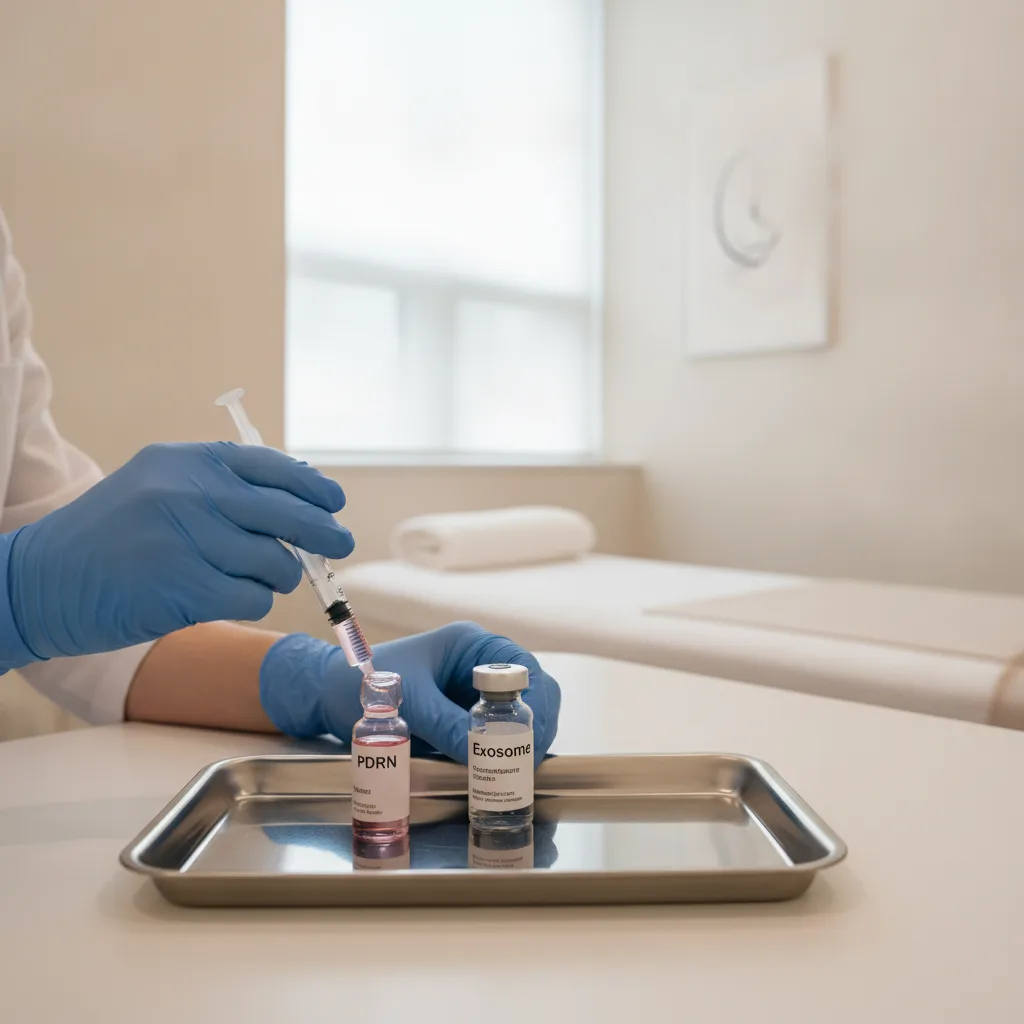
Walk into any Gangnam aesthetic clinic in 2026 and the consultation will likely steer you toward one of two regenerative protocols: Rejuran or exosomes. Both promise smoother texture, fewer fine lines, and that quiet glow that reads as good skin from across a room. They are not the same treatment, and Seoul clinics increasingly stack them in different positions on the menu. This guide breaks down what each one actually does, what they cost in 2026, and which works better for the problem you walked in with.
WHAT EACH TREATMENT REALLY IS
Rejuran is a polynucleotide injection derived from salmon DNA, marketed in Korea under the Rejuran Healer line and its newer variants like Rejuran HB Plus and Rejuran I for the under-eye. The active fragments signal fibroblasts to repair damaged dermis, which over a 3-session course produces measurable improvements in elasticity, pore size, and acne-scar texture. It has been on the Korean market since 2014, KFDA-cleared, and prescribed across more than ten thousand clinics nationwide. The full clinical write-up is in our Rejuran Healer Seoul guide.
Exosomes are a newer class of regenerative therapy. The injectable is a concentrated dose of extracellular vesicles, usually harvested from stem cell cultures (ASCE+ from rose stem cells is the most common product in Seoul, alongside Benev from human adipose). These vesicles carry growth factors and microRNA that wake up the skin's repair machinery directly, without needing the body to first metabolize a precursor. The result is faster visible recovery, stronger anti-inflammatory effects, and better performance on damaged, irritated, or post-procedure skin. The deep dive lives in our exosomes Seoul guide.
WHAT DOES EACH ONE ACTUALLY FIX?
Rejuran is best at slow structural repair. The polynucleotides are not a quick fix. Most patients see modest changes after the second session and a clear difference at week 8 after the third. The treatment shines on fine crepey texture around the eyes, mild acne scars, enlarged pores on the cheeks, and the dull dehydrated look that lingers after a long winter or a 14-hour flight. Rejuran does not lift, does not volumize, and will not erase deep scars. It rebuilds the layer underneath.
Exosomes are better at calming and reset. The growth factors switch on rapid healing, which is why Seoul clinics layer exosomes immediately after RF microneedling, fractional lasers, or aggressive chemical peels. Redness fades faster, the skin barrier rebuilds in days instead of weeks, and the post-procedure glow shows up the morning after instead of two months later. Exosomes also outperform Rejuran on rosacea-type redness, post-acne pigmentation, and the patchy inflamed look that comes from over-exfoliated skin.
HOW DOES EACH TREATMENT FEEL DURING THE SESSION?
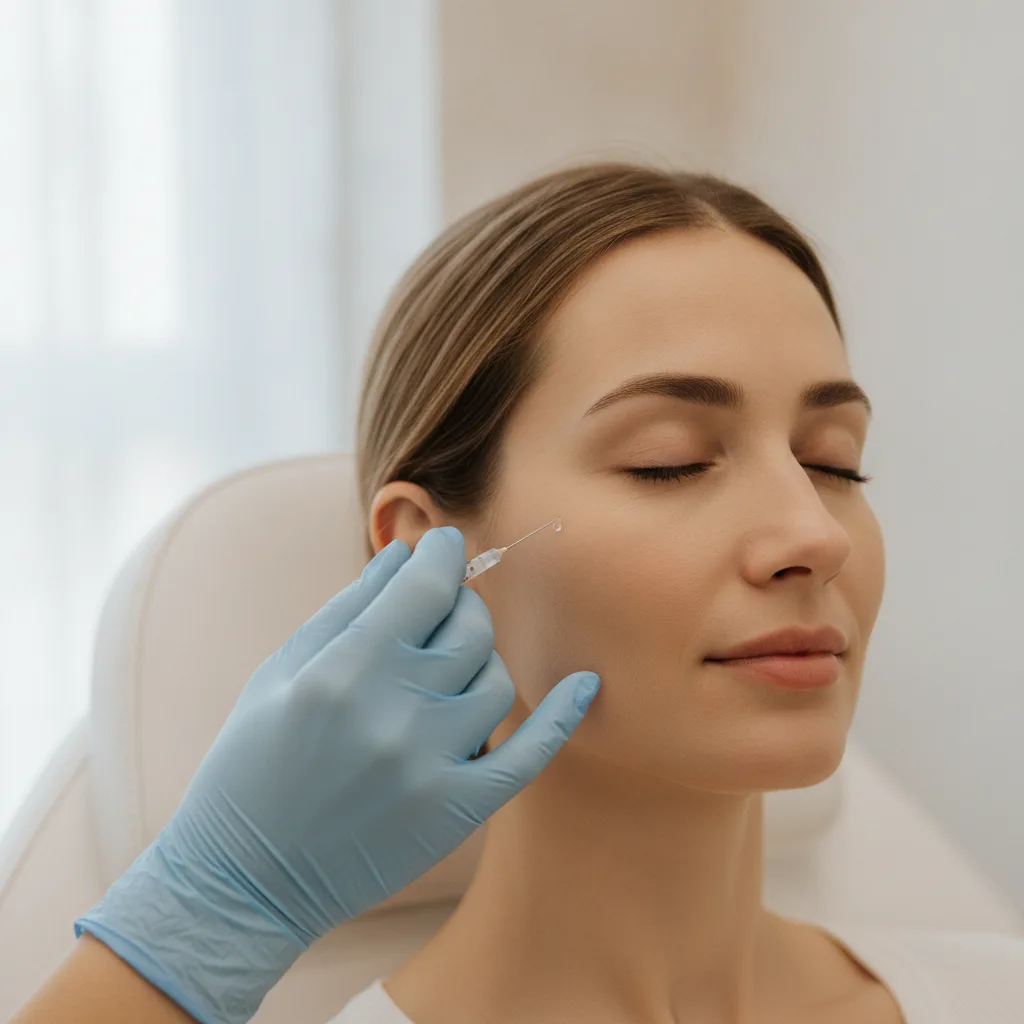
Rejuran is delivered by direct microinjection across the cheeks, forehead, and neck, usually about 80 to 120 micro-pricks per side. Numbing cream is applied for 30 minutes, but it still stings, and the skin develops visible bumps that take 4 to 6 hours to flatten. Most Gangnam clinics now offer a hybrid mode where part of the dose is layered through a meso-gun and part through a hand-injected technique for the under-eye. Plan for 24 hours of small puffy welts before your skin looks normal again.
Exosomes are kinder on session day. The vesicles are usually delivered topically over freshly micro-channeled skin after RF microneedling, Sylfirm X, or a Pico toning pass. Some clinics in Apgujeong now offer pure injection protocols with a 32G needle, but the more common pairing is laser plus topical drench plus a 20-minute LED rest. There are no visible bumps after, and most patients can wear makeup the next morning without any concealing tricks.
COST IN SEOUL, 2026
Rejuran pricing in 2026 has stayed remarkably stable, helped by intense local competition. A single vial of Rejuran Healer runs ₩180,000 to ₩280,000 (around 0 to 0) at credible Gangnam clinics, and a 3-session course is typically bundled at ₩650,000 to ₩850,000. Apgujeong premium clinics push the bundle to ₩1.1M when a board-certified dermatologist injects personally. Full price tables and clinic tiers are broken down in our Rejuran cost Seoul guide.
Exosomes cost meaningfully more. Per session, expect ₩350,000 to ₩550,000 (about 0 to 0) for a topical drench paired with a laser, and ₩600,000 to ₩900,000 if you go injected. The product cost itself is the driver, since each ASCE+ kit lands the clinic somewhere between ₩180,000 and ₩240,000 wholesale. We tracked the going rates across 40 clinics in our exosomes cost Seoul guide.
- 01Rejuran 3-session course: ₩650,000 to ₩1,100,000 (~5 to ~5)
- 02Exosomes 3-session course: ₩1,050,000 to ₩2,700,000 (~5 to ~,000)
- 03Add-on to RF microneedling or Pico laser: budget another ₩200,000 to ₩400,000 per session
- 04Under-eye Rejuran I or Rejuran HB Plus: ₩280,000 to ₩380,000 per single vial
- 05Most clinics in Gangnam discount the second course by 15 to 25% if booked within the same trip
WHICH ONE SHOULD YOU PICK?
If your main complaint is texture, fine lines around the eyes, mild rolling acne scars, or skin that has lost its bounce since your mid-thirties, start with Rejuran. The price-to-result ratio is better, the evidence base is thicker, and the polynucleotide story is more boring in the way you want a medical product to be boring. Three sessions spaced 4 weeks apart will give you a quiet improvement you can keep building on with a yearly top-up.
If you are flying in for a Seoul glow-up trip with a 5-day window, your skin is reactive or post-procedure red, or you want maximum payoff stacked onto an RF microneedling session, choose exosomes. The downtime curve is flatter, the visible result lands inside 72 hours, and the anti-inflammatory effect is genuinely strong on irritated skin. The trade-off is the price tag and a thinner long-term evidence base compared to PDRN.
Many Seoul clinics now build hybrid protocols that use exosomes as the rescue layer right after a laser pass and Rejuran for the slow structural rebuild a week later. If you can extend your trip to two visits 7 to 10 days apart, this stacked approach is what the dermatologists in Apgujeong tend to do for themselves. For a related comparison covering Rejuran against another popular collagen builder, see our Rejuran vs skin boosters Seoul breakdown.
HOW DO YOU AVOID THE UPSELL TRAP?
Both treatments are heavily marketed in Seoul, and the consultation room is where the upsell happens. A common pattern is the consultant pitching a 5-session Rejuran package plus 3 exosome top-ups plus a Sylfirm X bundle in the same visit. Walk in with the single concern you want solved, ask the clinician to recommend one product first, and only stack the second after you have seen the result from the first. If your budget is fixed, the smarter play is one full Rejuran course this trip and one exosome session on the last day before flying.
For the first-timer side of this decision, including what to ask in your booking enquiry and how to read the clinic's English-language menu, walk through our first consultation guide before you arrive in Seoul.
Comparisons · 7 min · Jun 25, 2026
← all posts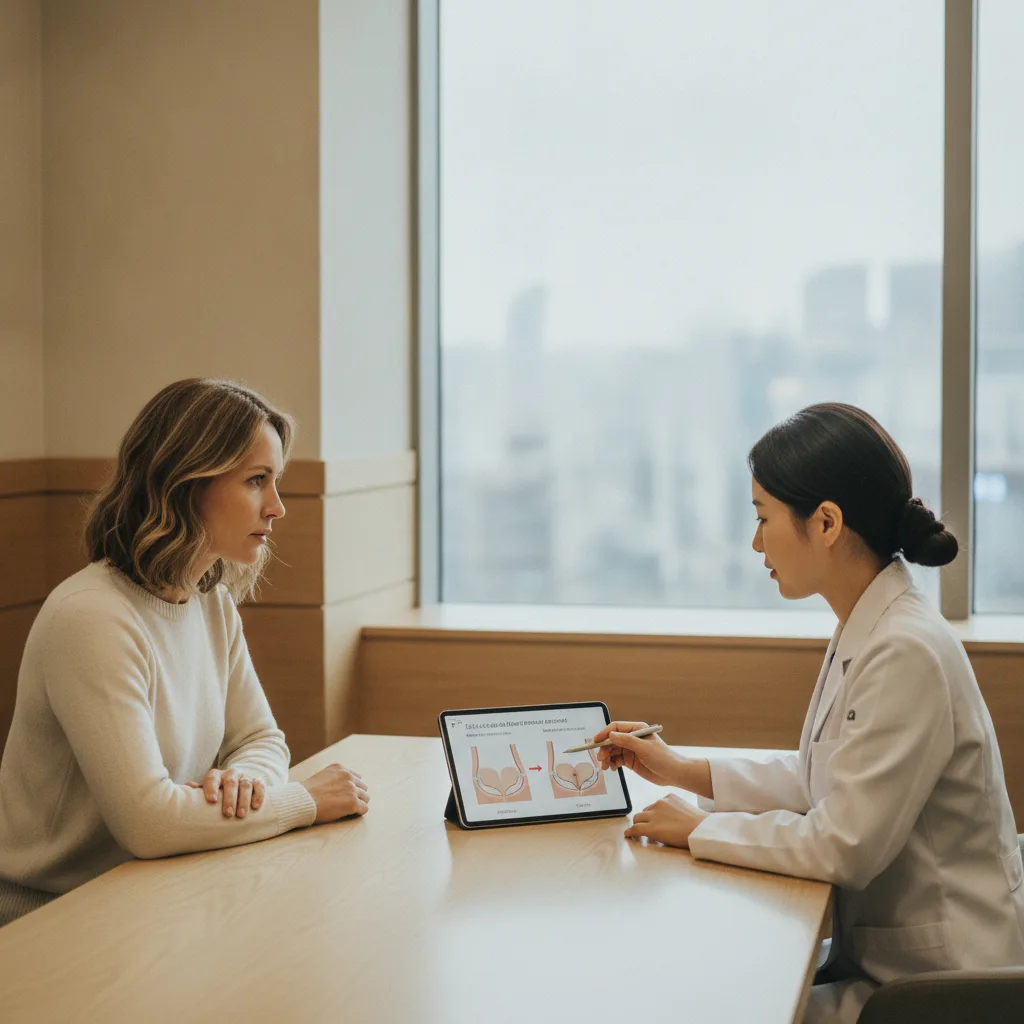
BREAST IMPLANT REMOVAL SEOUL 2026: EN BLOC VS CAPSULECTOMY VS EXPLANT
The three protocols Seoul surgeons use to take breast implants out, how they pick between them, and what each one costs and recovers like for foreign patients in 2026.
JUVEDERM VS RESTYLANE VS BELOTERO: SEOUL FILLER BRANDS 2026
The three Western HA filler families Seoul injectors actually stock, where each one wins on the face, and what foreign patients pay per syringe in 2026.
SUBGLANDULAR VS SUBMUSCULAR VS DUAL PLANE BREAST AUGMENTATION SEOUL 2026
The three pocket planes behind every Seoul boob job, how surgeons pick between them, and what each one means for recovery, feel, and ten-year results.
MINT PDO VS WONDERLIFT VS SILHOUETTE SOFT THREADS SEOUL 2026
The three thread brands Seoul clinics argue about, how surgeons actually pick between them, and what each costs for foreign patients in 2026.

FAT TRANSFER VS IMPLANTS BREAST AUGMENTATION SEOUL 2026
Head-to-head verdict on fat grafting and silicone implants in Seoul, with KRW price bands, revision rates, and the clinic types that run each procedure well.
▶▶▶ stop reading. start matching.
FIND YOURS.
We'll pull five clinics matched to your case. WhatsApp reply within 24h.