FIRST-TIME RHINOPLASTY IN SEOUL 2026: WHAT TO KNOW BEFORE YOU FLY
A first-timer's guide to booking, consulting, and recovering from primary rhinoplasty in Seoul, from cast day to splint removal.
By Editorial
Seoul does more rhinoplasty than any other city in the world, and roughly 15 percent of those cases come from patients flying in from outside Korea. For a first-timer, the process is compressed: one consultation, one surgery, ten days in the country, one splint removal before you fly home. Getting the framing right before you book saves money, avoids revision, and cuts the anxiety of a surgical procedure in a language you do not speak.
WHAT FIRST-TIME RHINOPLASTY ACTUALLY MEANS IN SEOUL
Korean clinics separate primary rhinoplasty from revision from the first email. Primary cases run 2.5 to 4 hours in the operating room, typically under IV sedation with local infiltration rather than full general anesthesia, and use one of three approaches: closed (all incisions inside the nostril), open (a small columellar incision between the nostrils), or tip-only. First-time patients whose only concern is a wide or bulbous tip usually book a tip plasty. Patients with a dorsal hump, deviation, or short nose usually need a full open rhinoplasty with septal cartilage grafting.
The most common surgery marketed to Western first-timers in Seoul is called natural-look primary rhinoplasty, which pairs a small silicone implant on the bridge with a septal or ear cartilage graft at the tip. Silicone is used because Korean patients typically have low bridges. Western noses often already have a bridge, so a competent Seoul surgeon will refuse a silicone implant on a Caucasian nose and use pure cartilage grafting instead. The rhinoplasty hub guide breaks down every technique variant in more depth.
CHOOSING A SURGEON BEFORE YOU BOOK A FLIGHT
Search Seoul rhinoplasty and you will surface 400+ clinics across Gangnam, Apgujeong, Sinsa, and Seocho. Filter first by board certification. The Korean Society of Plastic and Reconstructive Surgeons (KAPRS) and the Korean Society for Aesthetic Plastic Surgery (KSAPS) are the two credentials that matter. A clinic that lists only plastic surgery without a named KAPRS or KSAPS surgeon should be treated with skepticism, because Korean law allows general practitioners to open aesthetic clinics.
Foreigner-designated clinics carry a Ministry of Health badge, which requires a full-time international coordinator, English documentation, and complaint handling under a Korean tourism law framework. On the surgery-focused side, Braun Plastic Surgery in Seocho runs an in-house anesthesiologist and CCTV-monitored operating rooms. Girin Plastic Surgery in Seocho offers a 1-year post-op guarantee that covers minor revisions on primary cases. April31 Aesthetics in Gangnam has held KFBA foreigner designation since 1999 and coordinates airport pickup plus VAT refund paperwork. Grand Plastic Surgery in Apgujeong has treated 30,000+ international patients across 100+ countries and is a common starting point for European bookings. ID Hospital in Gangnam is Korea's largest facial-bone specialist with 40,000+ recorded cases.
INSIDE THE FIRST CONSULTATION
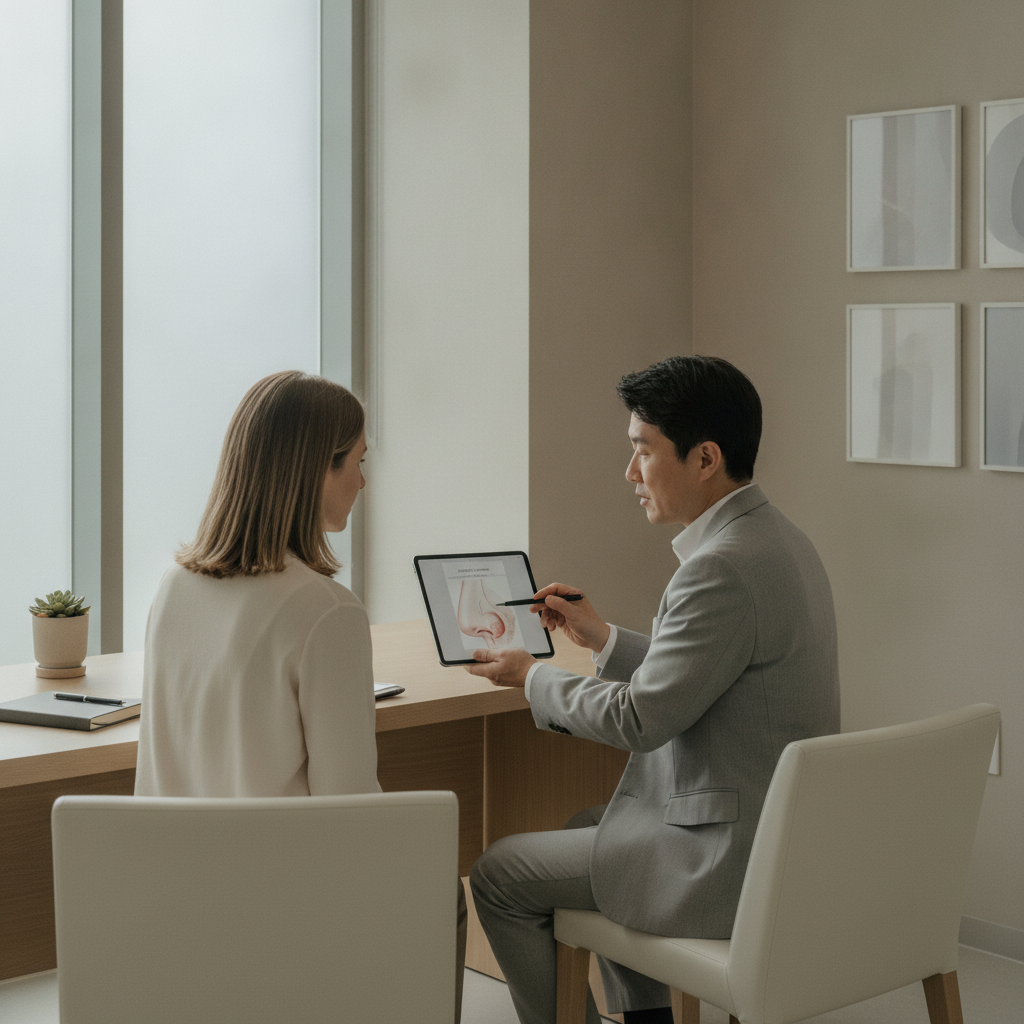
First consultations run 30 to 60 minutes. A surgeon (not a coordinator) should measure your nose, take standardized photos in five angles, and use morphing software to preview the target shape. Serious clinics will not commit to a technique in the first meeting until they see your CT scan, which is done same-day and priced around 50,000 to 100,000 KRW (about $35 to $70). A CT reveals septum thickness, any prior fracture, and available cartilage, all of which change the surgical plan.
Consultation etiquette in Seoul rewards being specific. Bring 6 to 10 reference photos of noses you like on faces similar to yours, and 2 to 3 photos of what you want to avoid. Ask directly whether the surgeon will personally perform your surgery, how many primary rhinoplasties they do per month, and what their revision rate is. A surgeon who quotes a revision rate around 5 percent is being honest for primary open rhinoplasty; anything they claim is under 2 percent is a red flag. See the pre-treatment checklist for medications to stop before you fly.
- 01Passport and travel insurance card (some foreigner-designated clinics require both on file)
- 026 to 10 reference photos of noses you like, saved offline in case WiFi fails
- 03Full list of every medication, supplement, and vitamin you take (fish oil and ibuprofen are stopped 10 days pre-op)
- 04Old rhinoplasty records or ENT reports if you have had prior nasal surgery or injury
- 05Bank card that supports Korean POS terminals, since deposits (usually 20 to 30 percent) are taken at consultation
WHAT THE SURGERY DAY LOOKS LIKE
You arrive at the clinic between 8 and 10 am, change into a surgical gown, and meet the anesthesiologist for a pre-op check. First-time rhinoplasty in Seoul is typically performed under IV sedation with local infiltration rather than general anesthesia, which shortens recovery and reduces nausea. The surgery itself runs 2.5 to 4 hours depending on whether ear or rib cartilage is harvested. A cast is placed on the outside of your nose and taped down; internal splints or silicone sheets sit inside the nostrils for the first week.
You wake up in the recovery room within 20 to 40 minutes and stay at the clinic for another 2 to 4 hours of observation. You leave the same day. A driver or hotel shuttle is required because you cannot ride the subway with a fresh cast, and Kakao Taxi rides are usually pre-booked by the clinic coordinator. For a full hour-by-hour recovery breakdown, see the rhinoplasty recovery timeline.
HOW LONG DO I NEED TO STAY IN SEOUL?
Plan for 10 to 12 nights on the ground. Day 1 is the surgery, days 2 through 6 cover the swelling and bruising peak, day 7 or 8 is cast removal, and day 10 is the final follow-up before you fly. Some surgeons will clear you at day 7 if healing is fast, but international patients who fly home before splint removal end up paying $1,500 to $3,000 for an unplanned return trip when an implant shifts. The flying home post-treatment guide covers cabin pressure and swelling risk in detail.
HOW MUCH DOES FIRST-TIME RHINOPLASTY COST IN SEOUL?
Primary rhinoplasty in Seoul costs 4,500,000 to 9,000,000 KRW (about $3,300 to $6,600) at a foreigner-designated clinic in Gangnam or Apgujeong, VAT included. Tip plasty alone runs 2,500,000 to 4,000,000 KRW (about $1,800 to $2,900). Prices climb past $5,500 when rib cartilage is used, and premium Apgujeong practices with a named surgeon can quote $8,000+ for a signature nose. Budget clinics in Sinnonhyeon quote $2,500 to $3,500, but surgeon case volume and post-op follow-up are usually thinner. Full pricing breakdown lives in the rhinoplasty cost guide.
CAN KOREAN SURGEONS OPERATE ON WESTERN NOSES?
Yes, but you have to filter. Roughly one in five Seoul plastic surgeons has meaningful experience with Caucasian, Southeast Asian, or mixed-race nasal anatomy. The bridge height, skin thickness, and tip cartilage on a Western nose require a different surgical plan than the low-bridge, thick-skinned Korean nose that most Seoul surgeons train on. Ask directly for before-and-after photos of patients whose ethnicity matches yours. If the clinic cannot show 5+ recent cases, look elsewhere. High-volume international clinics in the Apgujeong premium district will pull the portfolio without being asked.
WHAT HAPPENS IF I NEED A REVISION?
Revision rhinoplasty in Seoul is a separate surgery with separate pricing. A revision at your original clinic within the first year usually runs at 40 to 60 percent of the primary cost if the issue is a minor tip asymmetry or implant shift, and is sometimes free under a written guarantee (Girin and some Apgujeong practices carry these). A revision at a different clinic starts at 7,000,000 to 14,000,000 KRW (about $5,100 to $10,200) and requires 12 months of healing before it can be performed. Save your operative report, cartilage graft notes, and every photo from the original surgeon before you fly home.
DO I NEED SOMEONE WITH ME FOR RECOVERY?
You can technically do a first-time Seoul rhinoplasty solo, but the first 72 hours are hard. Bruising extends into both eyes, breathing routes through the mouth for 5 to 7 days while internal splints are in place, and swelling peaks overnight. A companion helps with meals, medication timing, and cast-integrity checks. Solo travelers should book a serviced apartment with a kitchen (Fraser Place Central Seoul or Somerset Palace Jongno are common picks) rather than a hotel room, because ordering food with a splint in your nose is slower than cooking. The clinic will supply a discharge kit with saline sprays, antibiotics, and cold packs.
First-timer · 7 min · Sep 14, 2026
← all posts
FIRST-TIME HAIR TRANSPLANT IN SEOUL: 2026 FUE & DHI GUIDE
What to expect on your first hair transplant trip to Seoul, from consultation to flight home.
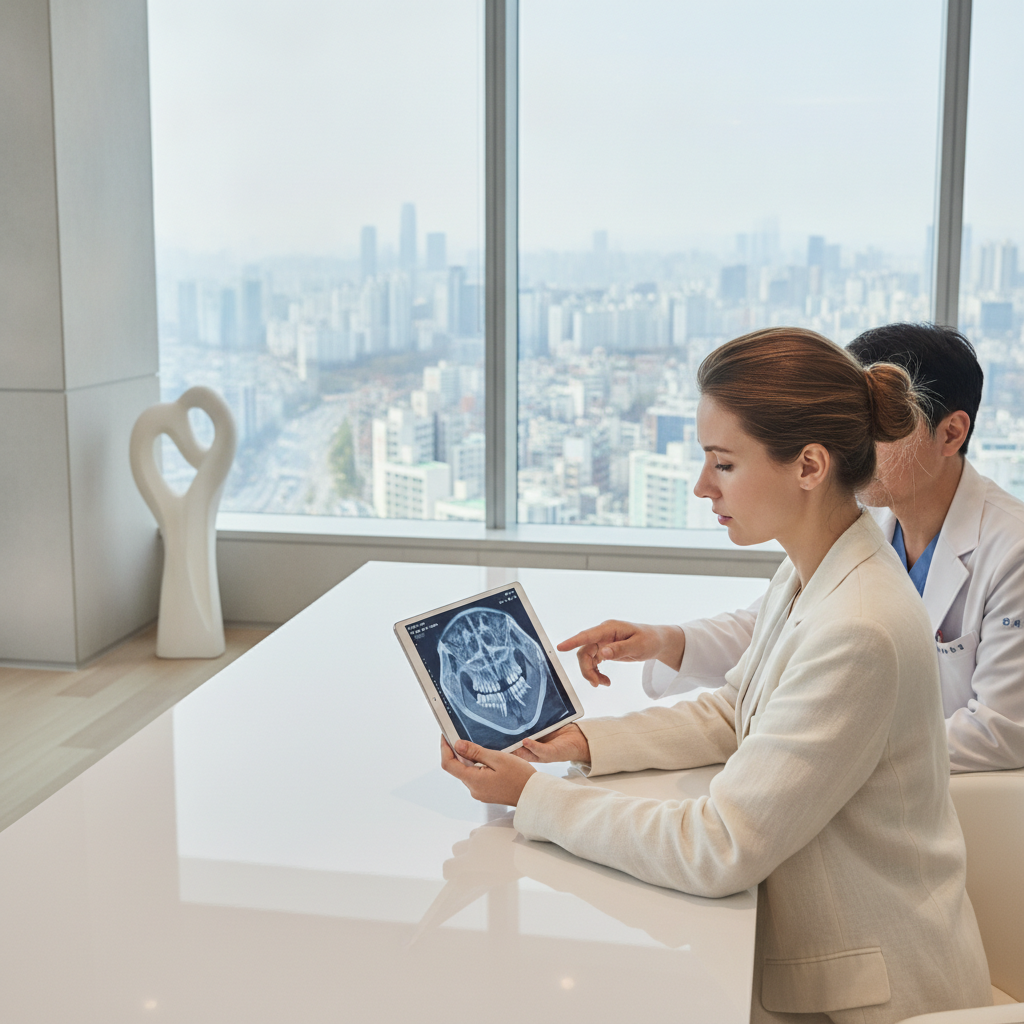
FIRST-TIME TWO-JAW SURGERY IN SEOUL: WHAT TO EXPECT (2026)
Two-jaw surgery in Seoul, first-timer edition: CT scans, three-day hospital stay, banding, and the six-month bite reset.
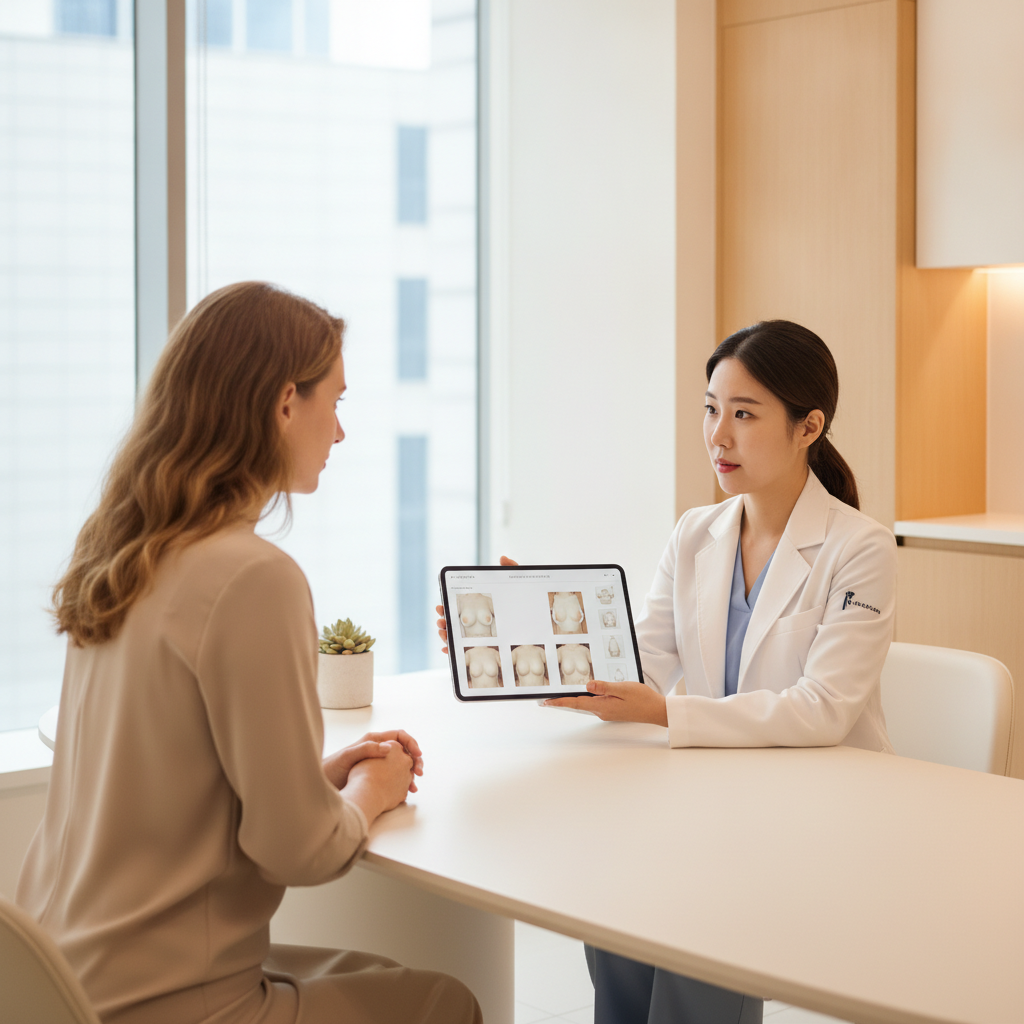
FIRST-TIME BREAST AUGMENTATION IN SEOUL: WHAT TO EXPECT (2026)
A first-timer's walkthrough of breast augmentation in Seoul in 2026: consultation, implant choices, hospital stay, recovery timeline, and the exact fees to expect.
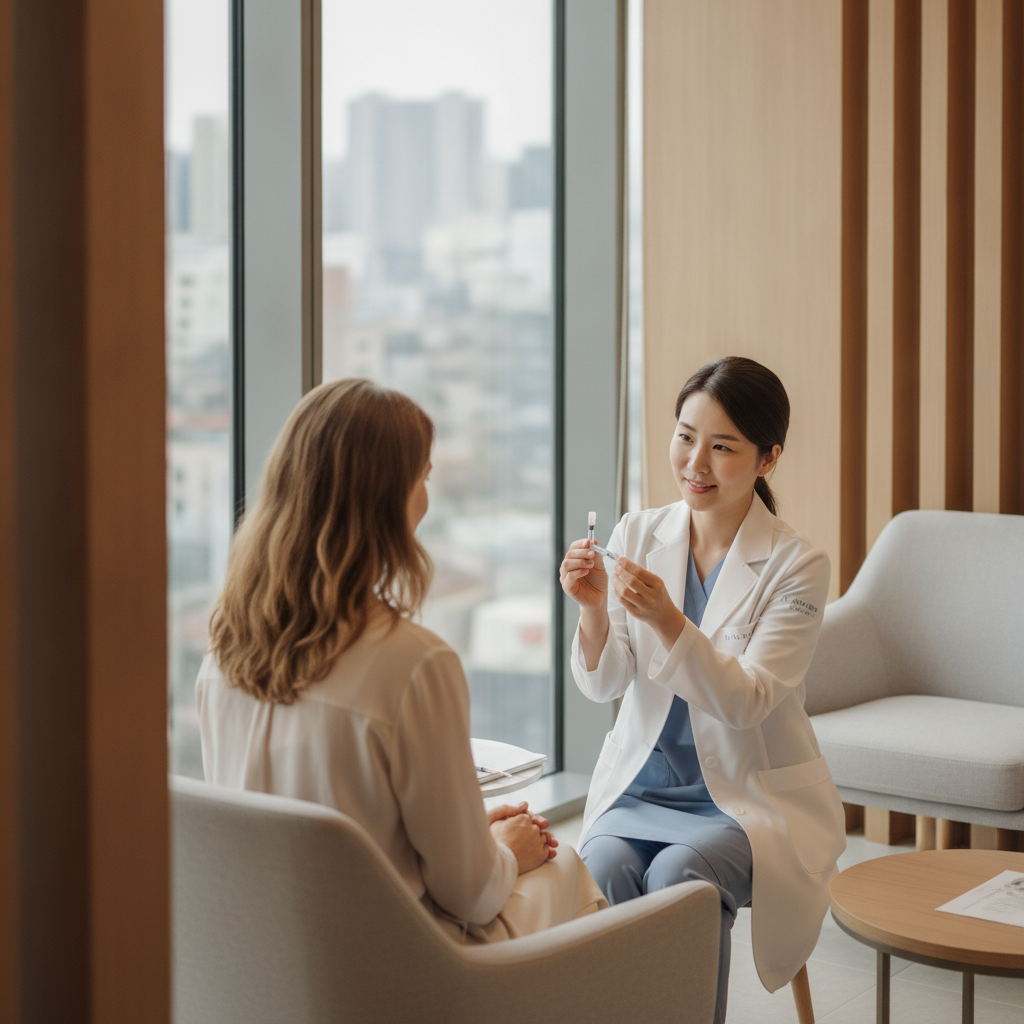
FIRST-TIME FILLER IN SEOUL: WHAT TO EXPECT IN 2026
A first-timer's walkthrough of dermal filler in Seoul: costs, brands, districts, pain, downtime, and the questions to ask before the syringe comes out.
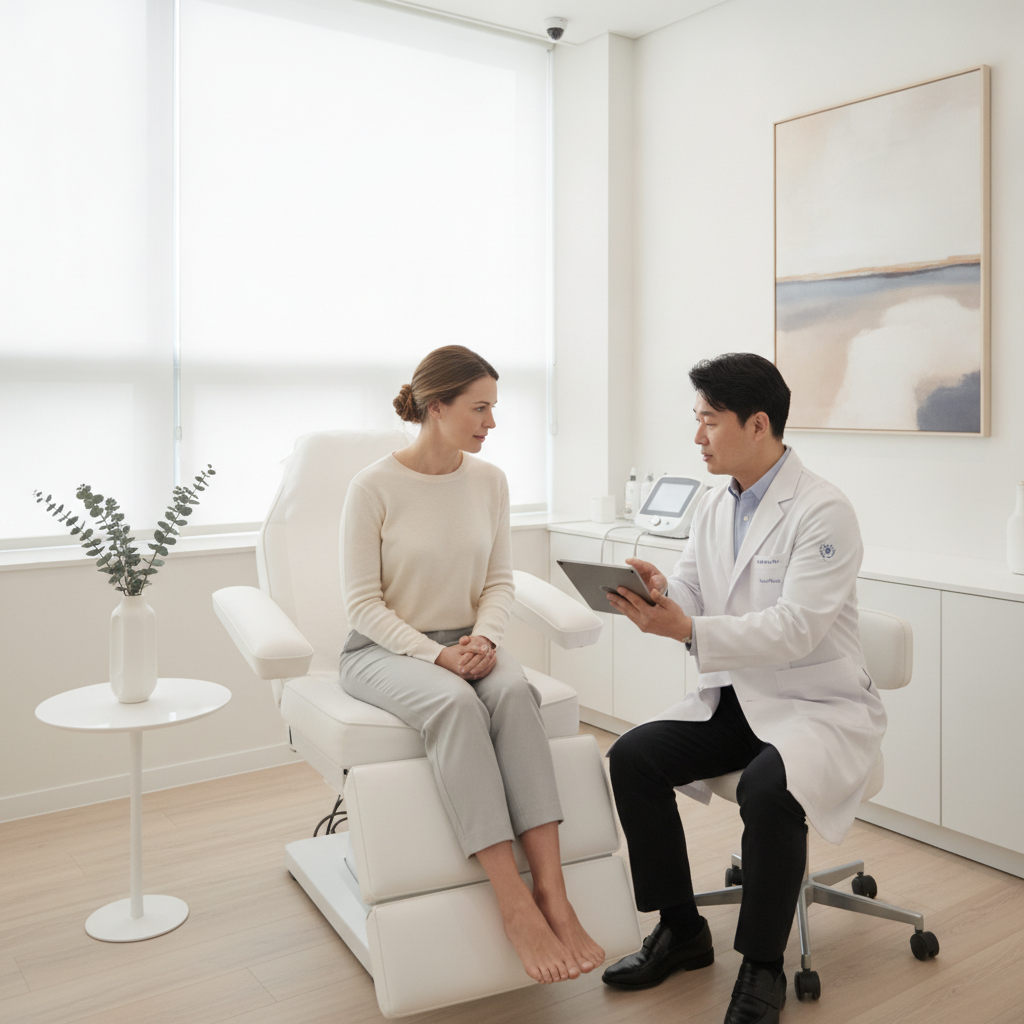
FIRST-TIME SKIN BOOSTERS IN SEOUL: WHAT TO EXPECT IN 2026
A first-timer's walkthrough of Juvelook, Profhilo and Sculptra sessions in Seoul: prep, cost and results.
▶▶▶ stop reading. start matching.
FIND YOURS.
We'll pull five clinics matched to your case. WhatsApp reply within 24h.