RHINOPLASTY RECOVERY IN SEOUL 2026: WEEK-BY-WEEK TIMELINE
A day-by-day, week-by-week recovery map for rhinoplasty in Seoul, from splint removal to final tip refinement at month twelve.
By Editorial
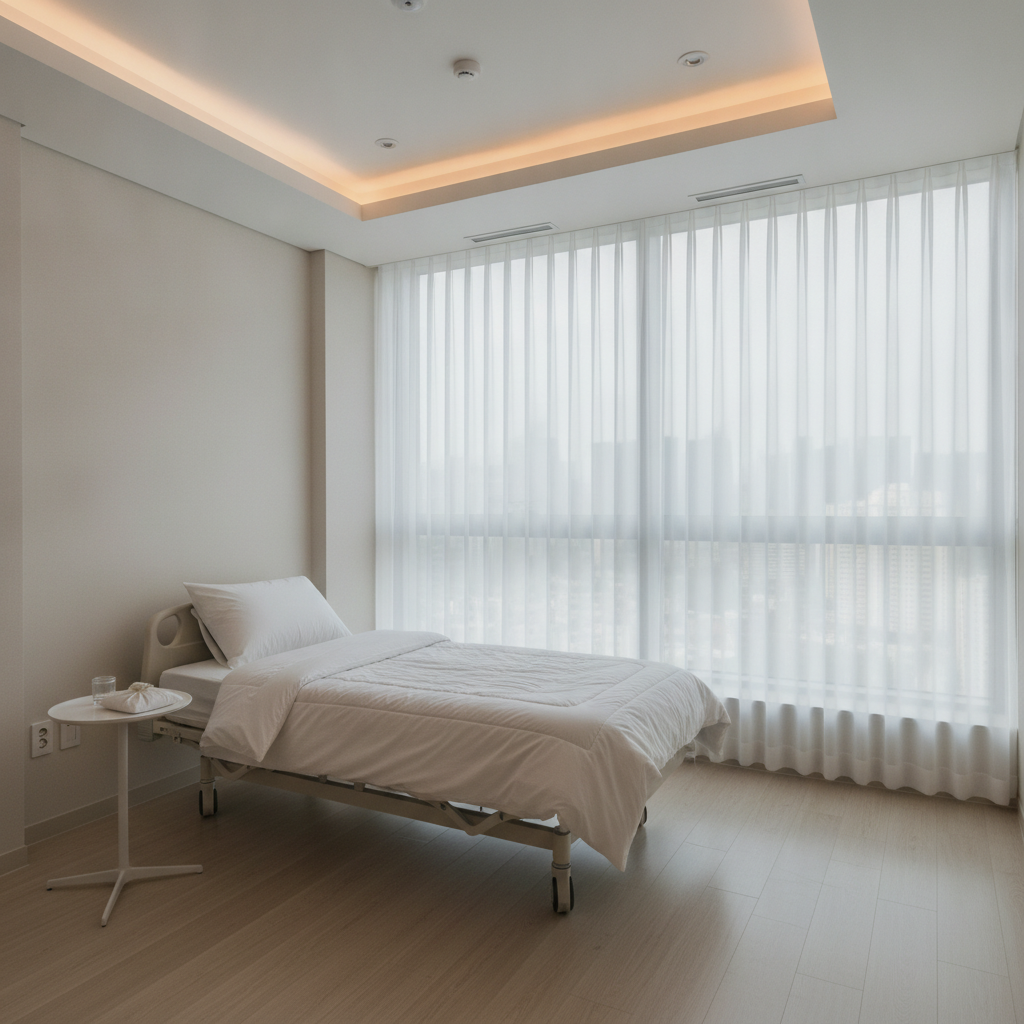
Rhinoplasty in Seoul is one of the most predictable procedures a medical tourist can book, but only if the recovery is planned as tightly as the surgery. The first two weeks decide whether you fly home looking like yourself or arrive at the airport still swollen and cold-packing under sunglasses. This guide walks the full timeline, from the ride back to the hotel through the twelve-month tip settle.
DAY 0 TO DAY 2: SPLINT, ICE, AND THE HOTEL ROOM
You wake up in the recovery ward with an external nasal splint taped from the bridge to the tip, internal silicone splints inside each nostril, and a small drip pad taped under your nose to catch oozing. Most Seoul clinics discharge closed rhinoplasty patients the same afternoon and open rhinoplasty patients after one overnight, so plan your hotel within a fifteen-minute taxi ride of Gangnam or Apgujeong. Book a room with a headboard tall enough to sleep sitting at a forty-five-degree angle, because lying flat will double the swelling by morning.
Cold packs go on the cheeks and under the eyes, never directly on the nose or splint, for twenty minutes on and twenty minutes off through the entire first forty-eight hours. Expect blood-tinged mucus, a metallic taste, and a headache that peaks around hour twelve and then fades. Korean clinics dispense a stacked pain-and-antibiotic pack in a labeled daily blister, so you take everything at once at 8am, 2pm, and 8pm without thinking. If the clinic offers the optional lymphatic decongestion drip on Day 1 for around ₩150,000 (about $110), take it — bruising drops noticeably by the Day 2 check-in.
DAY 3 TO DAY 6: BRUISE PEAK AND THE FIRST REAL SLEEP
Bruising under the eyes hits its darkest shade on Day 3 or Day 4, then starts to yellow. This is normal and not a sign that something went wrong. Swelling of the mid-face and upper lip peaks in the same window, which is why every rhinoplasty patient in Cheongdam is walking around in a wide-brim hat and a KF94 mask, not for style but for camouflage. You will feel congested because the internal splints are still in place; breathe through your mouth and keep a humidifier running in the hotel.
By Day 5 the clinic will call you back for a wound check, tape change, and a light saline nasal wash. This is a good moment to also book your first-timer rhinoplasty consult follow-up questions if anything felt unclear the day of surgery. Sleep on two firm pillows or a wedge, keep salt intake below two grams per day, and skip anything hot enough to steam your face. If you were considering pairing recovery with skin work, hold off on injectables. The 14-day post-injectable care guide still applies for any pre-surgery Botox, but new needle work near the surgical field is off the table for at least six weeks.
DAY 7 TO DAY 10: SPLINT OFF, CAST OFF, FIRST LOOK
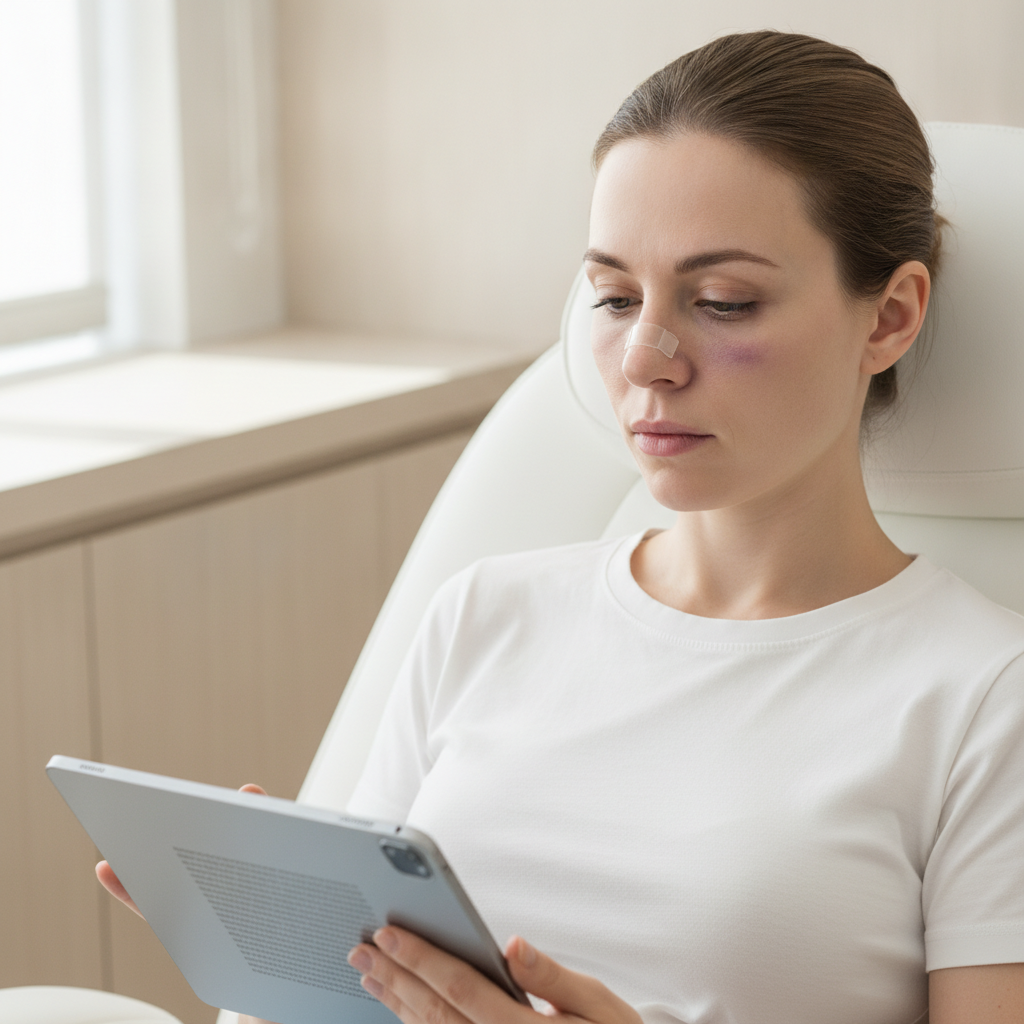
Day 7 is splint removal day. Most Seoul clinics book this appointment as a thirty-minute slot: the external splint is peeled off with adhesive remover, the internal silicone splints are pulled out through the nostrils in one quick motion, and the nose is cleaned and re-taped with paper micropore tape. The internal removal feels strange but takes under ten seconds. What you see under the splint will look bigger, shinier, and more upturned than the final result. This is scaffolding swelling, and it drops noticeably in the next ten days.
By Day 10 you can shower normally, wash your face gently around the taped bridge, and return to light desk work. Stitches at the columella (for open rhinoplasty) come out at the Day 7 visit or Day 8 depending on the surgeon. If you had an osteotomy for a hump reduction, expect the sides of the nose to still feel numb and slightly firm — this is the bone-healing zone and settles across months two and three. Continue sleeping elevated for one more week.
This is also the window when Seoul clinics recommend the paid post-op regenerative add-ons. A short course of PDRN scalp and skin injections has crossover benefits for wound healing, and a single session of low-fluence pico toning around Day 21 can shorten the redness phase. None of these are required, but they are the reason Gangnam recovery packages exist.
WEEK 2 TO WEEK 4: FLY HOME, COVER UP, WAIT
Most medical tourists fly home between Day 10 and Day 14. Cabin pressure will not damage the nose at this point, but it will inflame residual swelling, so book a window seat, wear a mask, and drink a full liter of water per two hours of flight. Skip alcohol and caffeine on travel day. If you can pay for premium economy or business, do it — the reclined sleep angle matters more than the food.
From Week 2 through Week 4, the bridge continues to firm up while the tip remains rounded and stiff. You can wear glasses again around Week 4 if they rest on the forehead pads, not the bridge. Makeup goes back on at Day 10, but skip any pressure massage until Week 6. If you had a rib-cartilage rhinoplasty, expect the chest-wall donor site to be sore for three weeks and to itch for six. Sneezing with your mouth open, not your nose, is a rule for the full first month.
- 01Sleep elevated at 30–45 degrees for the first 14 days.
- 02Cold-pack cheeks and under-eye, never directly on the splint.
- 03No glasses on the bridge for the first 4 weeks.
- 04No gym, yoga inversions, or heavy lifting for 4 weeks.
- 05No swimming pools, saunas, or jjimjilbang for 6 weeks.
- 06Sneeze with your mouth open for the full first month.
- 07Sunscreen SPF 50 daily from Day 10 to prevent bruise-hyperpigmentation.
MONTH 2 TO MONTH 6: THE BORING MIDDLE
This is the phase nobody photographs. Ninety percent of the visible swelling has resolved by Week 6, which is when most patients quietly return to normal social life. The remaining ten percent lives in the tip and the supratip area, and it moves in slow motion. You will notice the tip feel stiff and slightly numb, especially in the morning, and it will look a little bulbous under harsh downlight. This is not the final shape. Cartilage grafts take three to six months to fully integrate, and the skin envelope contracts on its own timeline.
Month 3 is when Seoul surgeons typically do the first serious follow-up. If you are still in Korea or making a return trip, book this in advance because these slots fill up. If you are home, most Gangnam clinics now do a Kakao or WhatsApp video review at this milestone at no extra charge. Thick-skinned noses take longer to reveal detail than thin-skinned noses, and revision rhinoplasty patients should assume the full timeline runs closer to eighteen months, not twelve. Compare notes with a facelift recovery patient in the same clinic and you will hear a similar pattern: the shape you see at month one is not the shape you keep.
MONTH 6 TO MONTH 12: TIP REFINEMENT AND FINAL RESULT

By month six the bridge is fully settled and the tip is around eighty percent of the way there. The final twenty percent — the fine definition, the supratip break, the columellar show — arrives between month nine and month twelve. Photographs taken at month twelve alongside photographs taken at month one show a strikingly different nose, and this is the moment most Seoul clinics ask you to send in your final result photos for their portfolio consent.
Revision rhinoplasty, if needed, is not discussed until at least month twelve, and reputable Gangnam and Apgujeong surgeons will actively discourage earlier revisions. The tissue is not settled, the scar is not mature, and the risk of over-correction is high. If you want to compare surgical costs and typical package inclusions ahead of a revision decision, the Seoul rhinoplasty cost breakdown is the starting point. Most patients who follow the timeline patiently never need a revision at all.
How-to · 8 min · Sep 12, 2026
← all posts
LIPOSUCTION RECOVERY TIMELINE SEOUL: WEEK BY WEEK (2026)
Realistic week-by-week liposuction recovery in Seoul, from compression garment days through swelling peaks to the earliest safe flight home.
TWO-JAW SURGERY RECOVERY TIMELINE IN SEOUL 2026: WEEK BY WEEK
A realistic week-by-week recovery map for orthognathic surgery in Seoul, from the ICU-adjacent first night to bone consolidation at month six.
BREAST AUGMENTATION RECOVERY IN SEOUL: WEEK-BY-WEEK TIMELINE 2026
A day-by-day and week-by-week recovery map for international patients getting breast implants in Gangnam, from surgery day through the six-week clearance.
FACELIFT RECOVERY TIMELINE IN SEOUL: WEEK BY WEEK (2026)
A realistic day-by-day and week-by-week facelift recovery timeline for medical tourists in Seoul, from compression day 1 to fully settled month six.
HOW TO AVOID CONSULTATION UPSELL AT SEOUL CLINICS (2026)
A practical script for foreigners: how Seoul aesthetic clinics upsell, and the exact lines that keep your quote honest.
▶▶▶ stop reading. start matching.
FIND YOURS.
We'll pull five clinics matched to your case. WhatsApp reply within 24h.