INSURANCE LETTERS FOR SEOUL PLASTIC SURGERY: 2026 FOREIGN PATIENT GUIDE
What the letter has to contain, which Seoul surgery hospitals issue it cleanly, and how to use it for home-country reimbursement in 2026.
By Editorial

The letter your Seoul surgeon hands you at discharge is the single document that decides whether your home-country insurer reimburses a cent of the ₩25M you just spent on surgery. Most foreign patients do not ask for it until they land back in Sydney, London, or Los Angeles, and by then the clinic's medical records team is three timezones away and the window to request specific codes has closed. The template matters. The signatures matter. The ICD-10 codes matter. This guide walks what the letter has to contain to be usable abroad, which Seoul surgery hospitals issue it cleanly, and the operational steps for requesting it during your pre-op consultation rather than at discharge.
WHAT A USABLE INSURANCE LETTER HAS TO CONTAIN
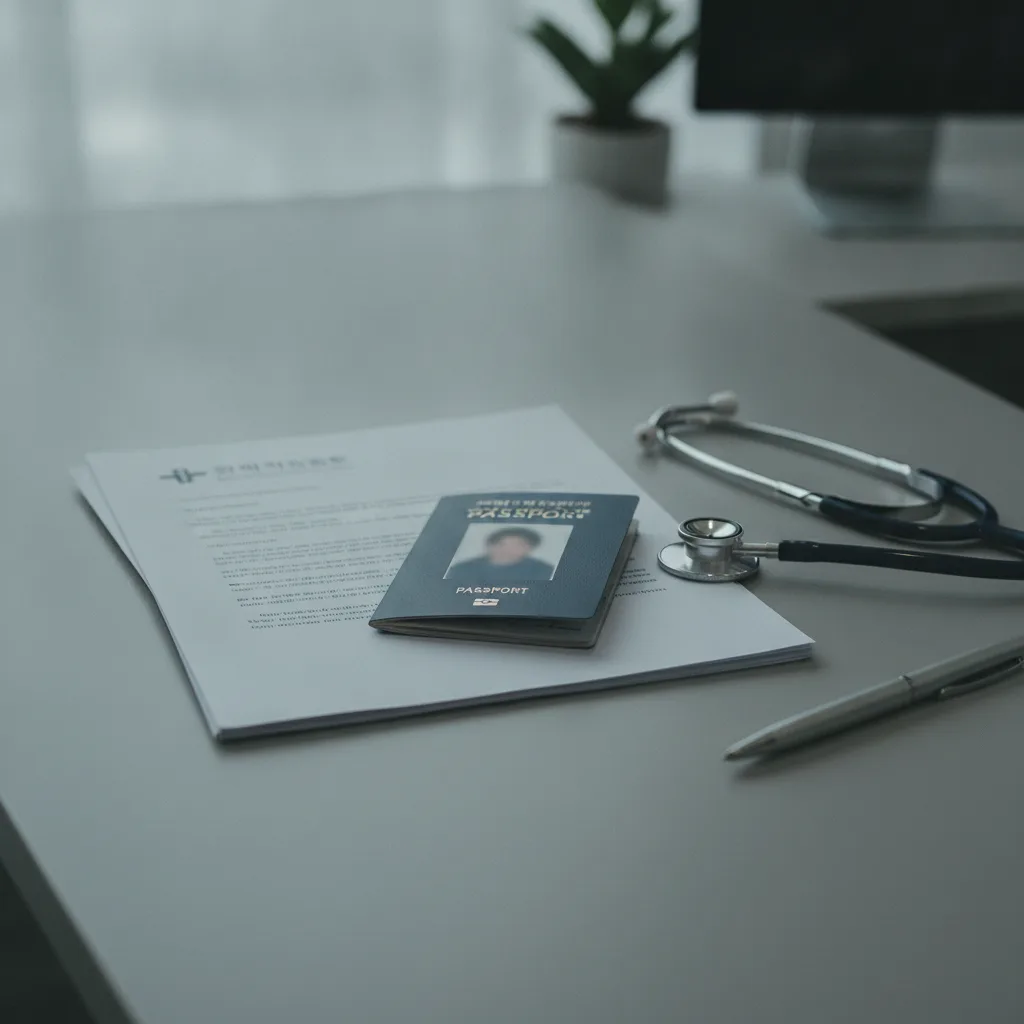
A letter that actually moves money with a foreign insurer needs eight elements, and absence of any one sends the claim into manual review or outright denial. The first is the full legal name of the patient, the passport number used for Korean medical record ID, and the date of surgery in international format. Second is the diagnosis stated in plain clinical English alongside the ICD-10 code, which is the coding system almost every Western insurer uses as the input for reimbursement decisions. Third is the procedure performed, written both as a plain-language description and as a CPT code where applicable. Fourth is the operating surgeon's full name, their Korean license number, and the hospital's registration number.
The remaining four elements are what separates a usable letter from a souvenir. Fifth is a functional versus cosmetic distinction, written explicitly, because most insurers reimburse only the functional portion. A septorhinoplasty where the deviated septum is documented pre-operatively has a reimbursable functional component that a pure cosmetic rhinoplasty does not. Sixth is an itemised breakdown of charges in Korean won, with the functional portion separated from the cosmetic portion on the same bill. Seventh is the official hospital letterhead with the Korean stamp, which most insurers treat as the equivalent of a notary seal. Eighth is a certified English translation of the Korean operative report, not just the discharge summary.
HOW SEOUL SURGERY HOSPITALS ACTUALLY ISSUE THE LETTER
Request the letter at pre-op, not at discharge. The international patient coordinator at a foreigner-designated Seoul hospital builds the documentation packet in parallel with the surgical plan, and specifying the insurance letter up front costs you nothing. Request it after discharge and you are paying for records-office time, waiting 7 to 14 business days for the operative report translation, and sometimes paying ₩50,000 to ₩150,000 per page for certified translation that should have been bundled. The pre-op request also lets the surgeon document any functional component on the chart during the operation itself, which is almost impossible to retrofit.
Hand the coordinator four things in writing at the pre-op consultation. First, the email address or portal where your home-country insurer accepts documents. Second, any specific form your insurer requires completed by the operating surgeon, downloaded in advance and printed in both English and Korean. Third, a request that the operative report list the ICD-10 code and the functional indication if any exists. Fourth, a request for the itemised bill to separate functional and cosmetic line items. Clinics that run strong international programs will handle all four without pushback. For a wider look at the pre-op paperwork load, see our pre-treatment checklist for Seoul aesthetic trips.
WHICH SEOUL SURGERY HOSPITALS ISSUE DOCUMENTATION CLEANLY
Letter quality tracks whether the hospital carries foreigner-designated status from the Korean Ministry of Health, because that designation requires a formal medical record handover protocol. ID Hospital in Gangnam issues bilingual Korean-English operative reports as standard on two-jaw and facial-bone cases, and their international team includes a dedicated insurance-documentation specialist for patients from Australia, Singapore, and the UK where functional reimbursement is most achievable. Braun Plastic Surgery in Seocho pairs its CCTV-monitored operating room with a records team that will complete pre-printed foreign insurer forms if you bring them at pre-op. Grand Plastic Surgery in Apgujeong has handled 30,000+ foreign patients across 100+ countries, and the records office knows every major insurer's format on sight.
On the mid-tier, April31 Aesthetics in Gangnam and Girin Plastic Surgery in Seocho both issue usable bilingual letters as part of their foreigner-designated protocol. Banobagi in Yeoksam ships clean letters on contouring and body cases. Smaller clinics without KFBA designation can issue the Korean operative report cleanly but often need a third-party certified translator for the English version, which adds ₩300,000 to ₩600,000 and 5 to 10 business days to the turnaround. If your reimbursement path matters, filter your clinic shortlist by foreigner-designated status first. The best value Seoul rhinoplasty clinics ranking and the best value breast augmentation clinics guide both flag KFBA designation per clinic.
FUNCTIONAL CODES THAT REIMBURSE, COSMETIC CODES THAT DO NOT
Seoul surgeons will document a functional component where one genuinely exists, but will not fabricate one. Rhinoplasty paired with septoplasty for a documented deviated septum often carries ICD-10 J34.2 and CPT 30520, which many Western insurers partially reimburse. Breast reduction above a tissue-removal threshold documented by pre-op imaging carries N62 or N64 variants and reimburses where medical necessity is established. Blepharoplasty with documented visual-field obstruction on a Humphrey test, which some Seoul hospitals will run pre-op on request, carries H02.4 and reimburses in parts of Europe and Australia. Two-jaw surgery for documented malocclusion with functional impairment carries K07.x codes and is reimbursable at many Western insurers when the orthognathic indication is clear.
- 01Septorhinoplasty with deviated septum: ICD-10 J34.2 + CPT 30520 on the operative report
- 02Reduction mammaplasty above tissue threshold: ICD-10 N64.4 or N62 with pre-op imaging documented
- 03Functional blepharoplasty: ICD-10 H02.4 with Humphrey visual-field test attached
- 04Orthognathic two-jaw for malocclusion: ICD-10 K07.x with cephalometric measurements
- 05Pure cosmetic rhinoplasty, augmentation, lipo, facelift: no reimbursable code, document anyway for revision context
- 06Hair transplant for scarring alopecia only: ICD-10 L66.8 reimbursement path varies by insurer
- 07Scar revision for burn or trauma: ICD-10 L90.5 plus trauma history documentation
RECEIPT LINE, VAT REFUND, AND THE PAPER TRAIL FOR TAXES
The insurance letter is one of three documents you leave Seoul with. The second is the detailed hospital receipt in Korean won, which is what the VAT refund desk at Incheon stamps for the 10 percent foreign medical tourist refund. The third is the itemised bill broken into functional and cosmetic lines, which some home-country tax authorities accept for medical-expense deductions where private insurance did not cover the full spend. All three documents should match on patient name, surgery date, and procedure description to the character. A mismatch across any field makes every downstream claim harder. For how VAT fits into the total trip math, see our VAT and KRW foreigner pricing guide.
Hand your passport to the hospital records office at discharge and ask the clerk to photocopy the identity page onto every document. Korean records offices keep digital copies for seven years under local law, which means you can request reissue of the letter from Melbourne or Berlin in 2029 if your insurer requests a duplicate. Save the records office email address in your phone before you fly home. The clinic's main English-speaking coordinator line often rotates staff quarterly, but the records office stays stable.
WHAT SHOULD I ASK THE CLINIC TO INCLUDE IN THE INSURANCE LETTER?
Ask for your full passport name, the surgery date in international format, both the Korean operative description and its English translation, the ICD-10 and CPT codes written on the report, the operating surgeon's full name and license number, the hospital registration number and official stamp, an explicit functional versus cosmetic distinction, and an itemised bill in Korean won that separates functional and cosmetic line items. Request all of this at the pre-op consultation, not at discharge, so the surgeon can document functional findings during the operation itself.
DOES THE INSURANCE LETTER HELP IF THE SURGERY WAS PURELY COSMETIC?
Usually no for primary reimbursement, but yes for three downstream uses. Most Western insurers do not reimburse pure cosmetic surgery. The letter is still worth keeping for revision-surgery continuity with a home-country surgeon, for travel insurance claims if a complication occurs during the return trip, and for medical-expense tax deductions where your jurisdiction allows cosmetic surgery to count against medical thresholds. A clean letter costs nothing extra at a foreigner-designated Seoul hospital and is cheap optionality.
WHICH ICD-10 OR CPT CODES DO SEOUL HOSPITALS ISSUE?
Seoul hospitals document the ICD-10 diagnosis codes and the KCD-7 Korean classification codes on every operative report by default. CPT procedure codes are not Korean standard and are added on request at foreigner-designated hospitals for patients whose insurers use American coding. Common codes issued on request include CPT 30520 for septoplasty, CPT 21198 for mandibular osteotomy, CPT 15823 for functional upper blepharoplasty, and CPT 19318 for reduction mammaplasty. Ask for both ICD-10 and CPT at pre-op if your insurer is US-based.
HOW LONG DOES IT TAKE TO GET THE LETTER AFTER SURGERY?
At a foreigner-designated hospital with the request made at pre-op, the bilingual letter is usually ready at discharge, which lands 2 to 3 days after a facial-bone case and 1 to 2 days after a routine aesthetic surgery. At a clinic without the pre-op request, expect 5 to 10 business days after discharge for the full bilingual packet, and up to 15 business days if certified third-party translation is required. Letters requested after you have returned home take 10 to 20 business days and often cost ₩100,000 to ₩300,000 in records-office fees.
CAN I GET THE OPERATIVE REPORT TRANSLATED TO ENGLISH?
Yes at every foreigner-designated Seoul hospital, usually bundled free with the insurance letter if requested at pre-op. Non-designated clinics will issue the Korean operative report and refer you to a certified medical translator, which is a separate 5 to 10 day turnaround. Certified medical translation in Seoul runs ₩50,000 to ₩150,000 per page in 2026. For a two-jaw operative report of 4 to 6 pages, budget ₩300,000 to ₩900,000 if translation is not bundled.
WHICH SEOUL SURGERY HOSPITALS ISSUE THE STRONGEST INSURANCE DOCUMENTATION?
ID Hospital in Gangnam, Braun Plastic Surgery in Seocho, and Grand Plastic Surgery in Apgujeong lead on documentation quality, bilingual turnaround, and insurer-form completion. April31 Aesthetics in Gangnam, Girin Plastic Surgery in Seocho, and Banobagi in Yeoksam ship clean bilingual packets as part of their foreigner-designated protocol. Smaller non-KFBA clinics can still produce usable documentation but usually need third-party translation. If reimbursement matters, filter your clinic shortlist by KFBA designation before you filter by price.
CAN I REQUEST THE LETTER FROM ABROAD AFTER I RETURN HOME?
Yes. Korean law requires hospitals to retain medical records for seven years, and foreigner-designated hospitals keep bilingual digital copies accessible to the records office. Email the records office email address, not the main clinic line, and include your passport number, surgery date, surgeon name, and a scan of your passport identity page. Expect 10 to 20 business days for a duplicate bilingual packet. The fee is typically ₩100,000 to ₩300,000 and is wired by international transfer or PayPal.
How-to · 9 min · Nov 4, 2026
← all posts
FLYING HOME AFTER SURGERY IN SEOUL 2026: SAFE TIMELINES BY PROCEDURE
Rhinoplasty, facelift, breast, lipo, two-jaw: how many nights to book before the return flight, and what cabin pressure actually does to swelling.
FLYING HOME AFTER PLASTIC SURGERY IN SEOUL 2026: DAYS BY PROCEDURE
Minimum wait before boarding a long-haul flight after rhinoplasty, double eyelid, V-line, breast augmentation, two-jaw, lipo, facelift, and FUE.
SEOUL AESTHETIC TRIP LENGTH 2026: DAYS YOU NEED BY TREATMENT
Minimum stay in Seoul for each aesthetic treatment, with downtime, flight rules, and buffer days for touch-ups.
VAT AND TAX REFUND FOR SEOUL PLASTIC SURGERY 2026: WHAT FOREIGNERS CAN ACTUALLY CLAIM
Cosmetic surgery in Korea carries 10% VAT, and foreign patients can reclaim most of it. Here's which procedures qualify, which clinics process the refund cleanly, and what to carry to Incheon on your way home.
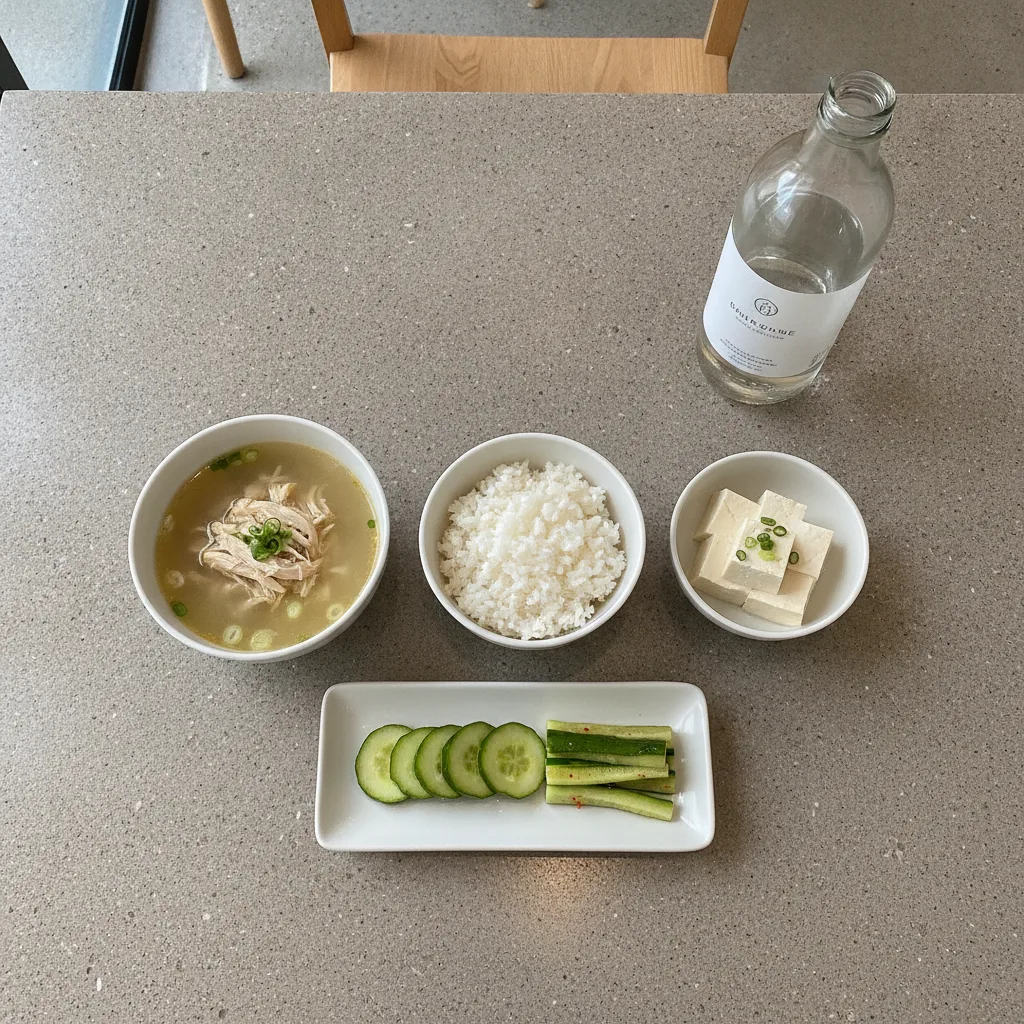
POST-TREATMENT FOOD RULES IN SEOUL 2026: EAT, AVOID, DELAY
What foreign patients can safely eat after botox, fillers, lasers, and rhinoplasty in Seoul, with timings in hours and specific Korean foods to delay.
▶▶▶ stop reading. start matching.
FIND YOURS.
We'll pull five clinics matched to your case. WhatsApp reply within 24h.