HYDRAFACIAL VS AQUAPEEL SEOUL 2026: WHICH MEDICAL FACIAL WINS
Two of the most-booked medical facials in Seoul, compared on protocol, price, downtime, and which one actually fits your trip.
By Editorial
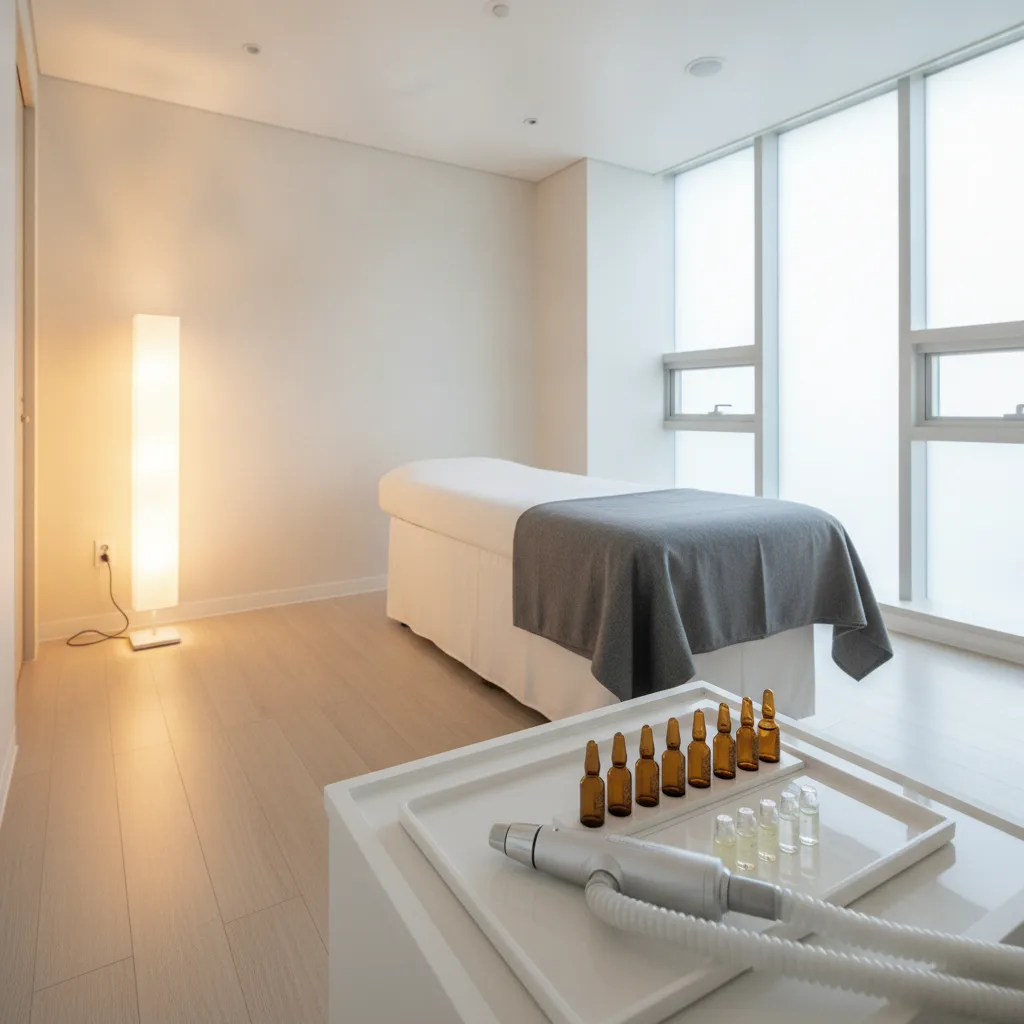
Hydrafacial and Aquapeel are the two facials every Seoul clinic seems to push at the end of a consultation, and most first-timers cannot tell them apart. They are both hydradermabrasion devices, they both promise a hydrated post-treatment glow, and they both sit in the ₩90,000 to ₩250,000 range at reputable clinics. The differences show up in the protocol, the ampoule stack, and how well they slot into a packed Seoul aesthetic trip.
WHAT EACH MACHINE ACTUALLY DOES
Hydrafacial is a US-developed patented system from HydraFacial LLC. It uses a spiral vortex tip that simultaneously exfoliates, suctions out sebum and dead cells, and infuses serum, all in one pass. The three signature steps are cleanse and peel with a glycolic-salicylic solution, extract and hydrate using vortex suction, and fuse and protect with antioxidant serums. Every Hydrafacial in Seoul runs the same core protocol because the machines and consumables are shipped from HydraFacial LLC. That is the whole point of the brand: standardised results, wherever you book it.
Aquapeel is the Korean answer, and in Seoul it is far more common than the imported machine. Aquapeel is a broad category rather than a single device. Korean clinics run brands like Aquasure H2, JetPeel, and Silkpeel, all of which spray a saline or acid solution onto the skin under pressure while a suction tip lifts debris off. Because Aquapeel devices are cheaper for clinics to buy and run, they get bundled into first-visit packages, membership plans, and pre-injectable prep sessions. The tech is similar in spirit to Hydrafacial, but the ampoules, tips, and protocols vary by clinic.
PRICE RANGES IN SEOUL RIGHT NOW
Hydrafacial in Seoul runs ₩150,000 to ₩250,000 (about $110 to $185) for the standard 30-minute Signature protocol. The Deluxe adds a booster serum and LED and lands ₩220,000 to ₩320,000. Platinum with lymphatic drainage and a full booster stack sits ₩280,000 to ₩400,000. Clinics in Apgujeong and Cheongdam price at the top end. Sinnonhyeon and Gangnam Station clinics discount for first visits and often bundle it with a consultation.
Aquapeel is where the value shows up. A standalone Aquapeel session at a Gangnam or Sinnonhyeon clinic is ₩70,000 to ₩150,000 (about $50 to $110). Membership packages of 5 sessions drop the per-visit cost to around ₩50,000 to ₩90,000. Some clinics offer Aquapeel free with a booked injectable, which is how many first-time visitors end up trying it without asking. VAT is usually included on menu prices, but confirm before you sit down.
HOW THE ACTUAL SESSION FEELS
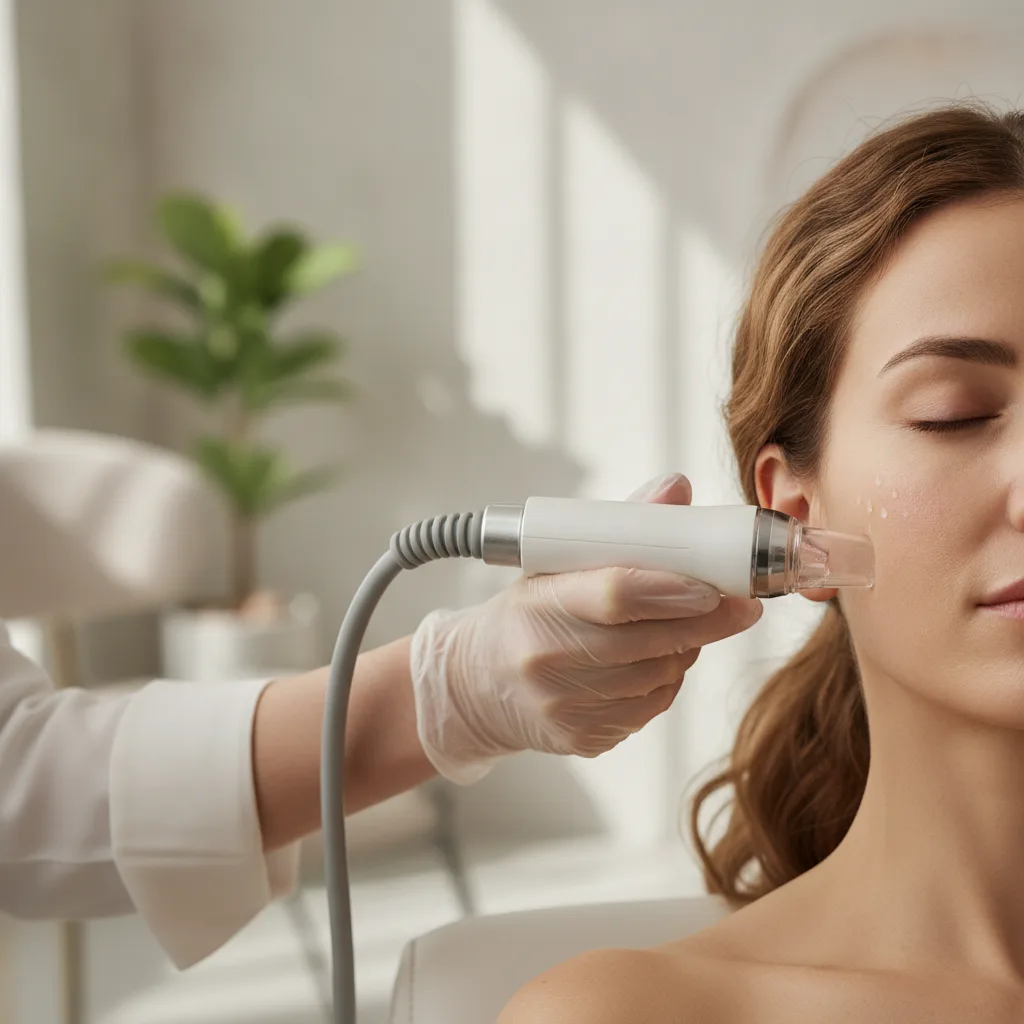
A Hydrafacial takes 30 to 45 minutes depending on tier. You lie flat, the aesthetician cleanses, then works the vortex tip in slow passes across the T-zone, cheeks, jaw, and neck. The suction feels like a firm rolling pressure. There is no scraping, no needling, no injection. The acid step tingles for a few seconds on the nose. Then serum passes for hydration and antioxidant infusion. You walk out slightly pink, cleared out, and glossy. Makeup can go on immediately.
Aquapeel is shorter and more variable. A standard session is 20 to 35 minutes. The saline spray feels cool and misty rather than a suction-drag. Because Korean clinics tune protocols to their in-house serums, the finish varies: some Aquapeels prioritise deep pore extraction, others focus on hydration, and a few finish with LED or a sheet mask. If you are booking Aquapeel as a booking-abroad first-timer, ask the clinic which ampoule stack they use and what the finish looks like. A quality Aquapeel in Apgujeong feels close to a Signature Hydrafacial. A budget Aquapeel in a walk-in Myeongdong clinic feels closer to a good cleansing facial.
WHICH ONE FITS WHICH TRIP?
If this is your first Seoul aesthetic trip and you want a predictable, brand-standard result on day one before injectables, book Hydrafacial. The protocol is the same as at your clinic back home, the ampoules are consistent, and the finish photographs well for that first mirror-selfie moment. It also pairs cleanly with Rejuran or skin boosters 24 hours later, because it has already prepped and hydrated the skin without breaking the barrier.
If you are staying two weeks or building a treatment stack around a wedding, event, or an Ultherapy session, Aquapeel is the smarter buy. You can run it twice inside the trip for the price of one Signature Hydrafacial, and clinics happily bundle it before RF microneedling or laser toning. Ask for the Aquapeel with a brightening ampoule if your goal is post-injectable glow, or with a salicylic ampoule if you are prone to breakouts from long-haul flights.
- 01Choose Hydrafacial for: standardised results, first-time visitors, one-off glow before a photo day, sensitive skin that reacts unpredictably to unknown products
- 02Choose Aquapeel for: value trips, membership stacking, pre-injectable prep, repeat sessions across a two-week visit, congested or oily skin needing deep extraction
- 03Avoid either if: you had a fresh peel or laser in the last 7 days, active rosacea flare, cold sore breakout, or open acne lesions
- 04Book both across a trip: Hydrafacial on day 2 to reset the skin, Aquapeel on day 8 or 9 as maintenance before flying home
WHAT TO ASK AT THE CONSULTATION
For Hydrafacial, confirm which tier you are booked into (Signature, Deluxe, or Platinum), which booster is being added, and whether LED is included. Some clinics call the base Signature protocol a Hydrafacial but skip the antioxidant fuse step to save on serum cost. If the consultation staff cannot name the booster serum, you are being sold a discounted version.
For Aquapeel, ask which device the clinic uses, which ampoule goes in for your skin type, and whether the session includes LED, cryo, or a mask. Ask if the price on the menu includes VAT, and whether the clinic charges extra for the extended neck-and-decollete pass. If the clinic quotes a suspiciously low Aquapeel and then adds three optional upgrades at the chair, that is the classic Seoul upsell pattern. Nod politely, decline the add-ons, and see how to avoid consultation upsell.
Comparisons · 7 min · Sep 4, 2026
← all posts
FUE VS DHI VS ROBOTIC HAIR TRANSPLANT SEOUL 2026
Head-to-head on graft survival, downtime, cost per graft, and which Seoul clinics actually run each platform in 2026.
BEST VALUE APGUJEONG RHINOPLASTY CLINICS 2026: 7 PICKS RANKED
A reviewer-ranked shortlist of seven Apgujeong plastic surgery clinics worth the premium postcode, with KRW price bands and what each room does well.

BREAST IMPLANT REMOVAL SEOUL 2026: EN BLOC VS CAPSULECTOMY VS EXPLANT
The three protocols Seoul surgeons use to take breast implants out, how they pick between them, and what each one costs and recovers like for foreign patients in 2026.
JUVEDERM VS RESTYLANE VS BELOTERO: SEOUL FILLER BRANDS 2026
The three Western HA filler families Seoul injectors actually stock, where each one wins on the face, and what foreign patients pay per syringe in 2026.
SUBGLANDULAR VS SUBMUSCULAR VS DUAL PLANE BREAST AUGMENTATION SEOUL 2026
The three pocket planes behind every Seoul boob job, how surgeons pick between them, and what each one means for recovery, feel, and ten-year results.
▶▶▶ stop reading. start matching.
FIND YOURS.
We'll pull five clinics matched to your case. WhatsApp reply within 24h.