LIPOSUCTION IN SEOUL 2026: COMPLETE BODY CONTOURING GUIDE
A first-timer's guide to liposuction in Seoul: techniques, real cost ranges, recovery week by week, and how to vet a Gangnam surgeon.
By Editorial
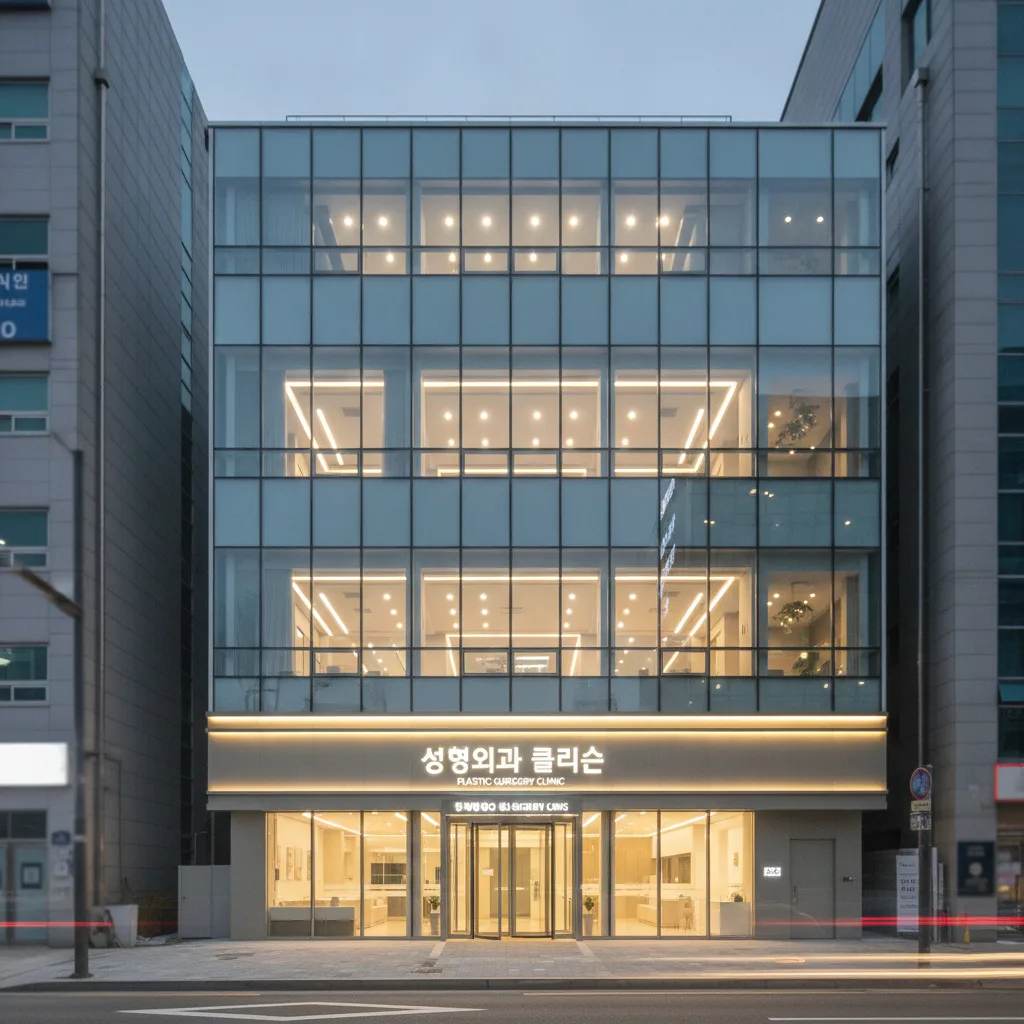
Liposuction is the most performed body-contouring surgery in Seoul, and the volume is a real advantage: high-frequency surgeons see thousands of body types a year, techniques get refined faster, and prices for foreigners have compressed since 2024. This guide walks first-time medical tourists through what Seoul liposuction actually is in 2026, what it costs in KRW and USD, and how to recover safely before the flight home.
WHAT LIPOSUCTION REMOVES, AND WHAT IT DOES NOT
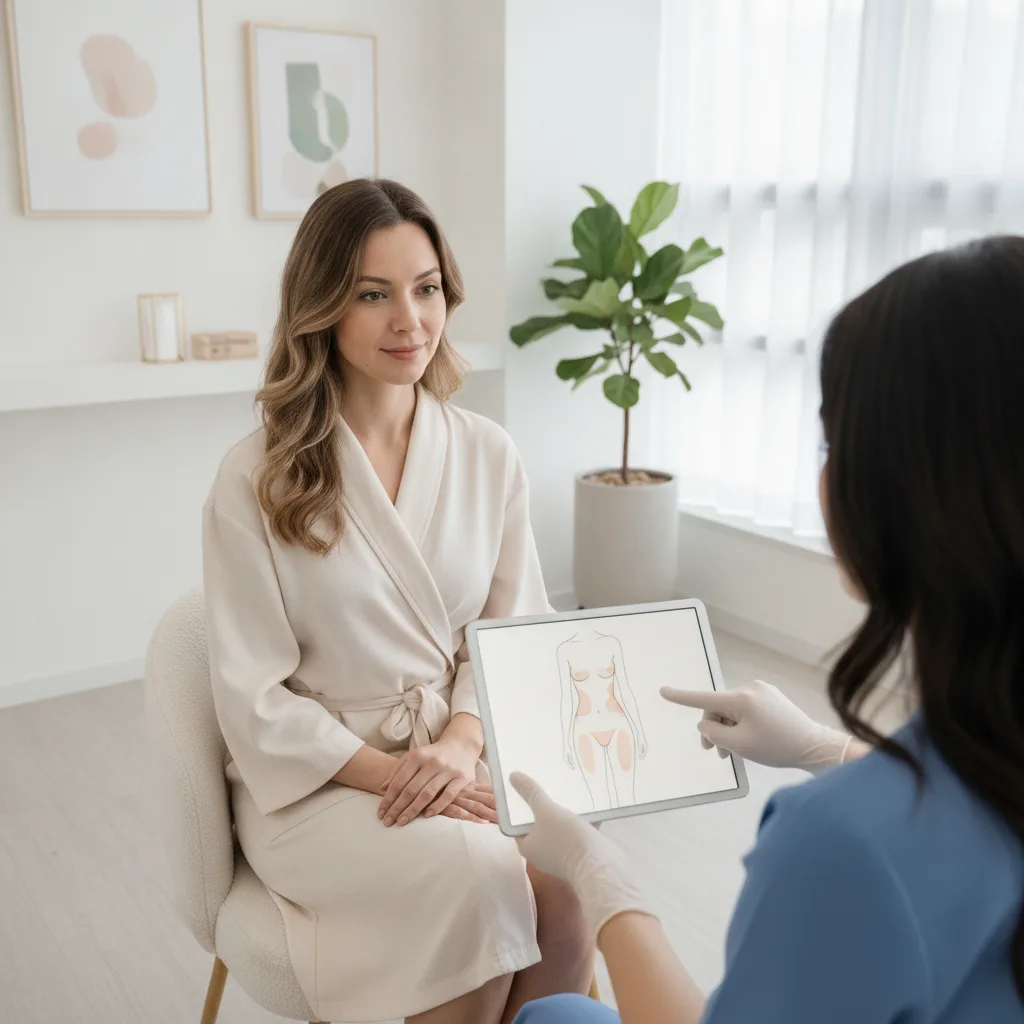
Liposuction physically extracts subcutaneous fat through 3 to 5 mm cannulas inserted via small incisions, most often placed inside the belly button, above the pubic line, or in natural body creases. Korean surgeons in Gangnam usually treat the abdomen, flanks, back bra roll, inner and outer thighs, upper arms, and submental (double chin) area in one session, with total aspirate volumes typically capped at 5,000 mL to stay inside safety guidelines. The operation reshapes contour, it does not tighten skin on its own, and it removes fat cells at the treatment site permanently.
What lipo does not do is treat visceral fat sitting behind the abdominal wall, and it does not replace weight loss. Most Seoul surgeons want a BMI under 30 and stable weight for six months before booking, because rapid post-op weight regain distorts the contour they just sculpted. If your goal is skin tightening after pregnancy, a tummy tuck or paired abdominoplasty with lipo is the honest conversation, not lipo alone. If your goal is jawline slimming from a strong masseter rather than fat, a masseter botox route is cheaper and less invasive.
TECHNIQUES YOU WILL HEAR IN A SEOUL CONSULT
The Korean market runs on four techniques, and knowing them protects you from being upsold into an unnecessary package. Tumescent liposuction is the baseline: a saline, lidocaine, and epinephrine solution is infiltrated to numb tissue and reduce bleeding, then a manual cannula extracts fat. Power-assisted liposuction (PAL, brand names Microaire and Lipomatic) vibrates the cannula tip so the surgeon works faster with less shoulder fatigue, which matters on a five-hour lipo 360. VASER (ultrasound-assisted) uses ultrasonic energy to emulsify fibrous fat before aspiration, which is why it dominates male chest and back cases in Apgujeong.
Laser-assisted lipo (SmartLipo, SlimLipo) is marketed heavily to foreigners but is still niche among senior Korean surgeons because thermal risk is higher and skin retraction benefits are modest. Lipo 360 is not a technology, it is a scope: circumferential treatment of the abdomen, flanks, and lower back in one operation, and it is the single most requested foreigner package in Gangnam. Ask the surgeon which technique they will use per region, and whether the aspirate volume estimate is realistic for your body type.
HOW MUCH DOES LIPOSUCTION COST IN SEOUL IN 2026?
Prices are quoted per region and stack when you combine areas. A single-region case (abdomen only, or inner thighs only) in a mid-tier Gangnam clinic runs about ₩3,000,000 to ₩5,500,000, roughly $2,200 to $4,000 USD. Lipo 360 covering upper abdomen, lower abdomen, flanks, and lower back sits at ₩7,000,000 to ₩12,000,000, about $5,100 to $8,700 USD. Arm lipo alone is usually ₩2,500,000 to ₩4,000,000, thigh circumference (inner plus outer plus banana roll) is ₩6,000,000 to ₩10,000,000. Apgujeong premium clinics quote 30 to 50 percent above the Gangnam median for the same scope, and Seocho clinics often quote 10 to 20 percent below.
The quote is not the final bill. Expect general anesthesia (₩500,000 to ₩1,200,000), post-op compression garment (₩150,000 to ₩250,000), lymphatic drainage sessions (₩60,000 to ₩120,000 per session, most protocols recommend 5 to 10), and follow-up ultrasound (usually included). VAT is typically included on the surgical line item but added to consumables, so ask the coordinator to itemize. If you are paying in cash and staying multiple days, some clinics knock 5 to 10 percent off the total, especially in the softer summer months of July and August. A full 2026 pricing playbook lives in the liposuction risks and pricing traps post.
- 01Single region (abdomen only): ₩3.0M-5.5M / $2,200-$4,000
- 02Lipo 360 (abdomen + flanks + lower back): ₩7.0M-12.0M / $5,100-$8,700
- 03Arms only: ₩2.5M-4.0M / $1,800-$2,900
- 04Thigh circumference: ₩6.0M-10.0M / $4,400-$7,300
- 05Submental (double chin): ₩1.5M-3.0M / $1,100-$2,200
- 06Compression garment + 5 lymphatic sessions add-on: ~₩700,000 / ~$500
RECOVERY TIMELINE, WEEK BY WEEK
Day 0 to day 3 is the swelling and drainage phase. Expect straw-colored fluid leaking from incision sites for 48 to 72 hours, this is intentional and the compression garment absorbs it. You will feel bruised, sore, and heavy, similar to a hard leg-day workout that never ends. Most clinics keep foreign patients on-site or in a partner hotel for the first two nights, with a next-morning check-in for wound inspection and first lymphatic drainage. Sleeping is easier on your back with a wedge pillow, and short walks every two hours cut clot risk.
Day 4 to day 10, swelling peaks around day 5 then starts to fall, bruising turns yellow-green, and the compression garment stays on 22 hours a day. You can shower after day 3, gentle office work is fine from day 7. Weeks 2 to 4, contour becomes visible under the swelling and most surgeons clear light cardio at week 3, weight training at week 6. Full skin retraction and final contour take three to six months, and the sculpted lines you saw at week 8 will keep tightening. Post-treatment care overlaps heavily with the 14-day injectables aftercare protocol, but for lipo the compression window is longer and lymphatic massage is mandatory, not optional.

WHICH CLINICS DO FOREIGNERS ACTUALLY BOOK?
Five clinics show up repeatedly in international lipo bookings, and each fits a different profile. Braun Plastic Surgery in Seocho runs a CCTV-monitored OR with an in-house anesthesiologist and 8-language coordination, which is why they attract European and Middle Eastern patients doing lipo 360 with an overnight stay. ID Hospital in Gangnam is a government-accredited large-format hospital with a KAPS-board team of 12+ surgeons, well suited to combined lipo plus facial contouring V-line cases. Grand Plastic Surgery in Apgujeong has served 30,000+ international patients across 100+ countries and is government-designated for foreigner care.
Girin Plastic Surgery in Seocho is KAPRS-registered with 11 specialists and a 1-year post-op guarantee, useful for patients flying home before revision timing. April31 Aesthetics in Gangnam is IPRAS-member, established 1999, with airport pickup and tax refund handling built into the foreigner package. Cost tiers roughly follow the pattern in the Gangnam vs Hongdae vs Apgujeong district guide, with Apgujeong at the top and Seocho offering the best price-to-safety ratio for body surgery.
HOW DO I VET A SEOUL PLASTIC SURGEON FOR LIPOSUCTION?
Ask three specific questions and the surgeon quality sorts itself. First, are you a board-certified plastic surgeon registered with KSPRS or KAPRS, and can I see the certificate on the wall? Korea has a legal category called cosmetic surgery specialist which is not the same as a plastic surgery board certification, and only KSPRS or KAPRS credentials mean full plastic surgery residency. Second, who is administering anesthesia during my case, an in-house board-certified anesthesiologist or a visiting one? For any lipo over 3,000 mL aspirate or combined with abdominoplasty, an in-house anesthesiologist is a safety non-negotiable.
Third, ask for the surgeon's personal revision rate for the exact body region you are treating, and their annual case volume for lipo 360. A high-volume Seoul surgeon should do 100+ lipo cases a year, and revision rates in that population sit around 5 to 8 percent. Anyone quoting zero is not counting. Cross-check the surgeon on the KSPRS public registry and read Google reviews in the language they were written in, translated reviews often lose the specific complaint that matters. The same vetting logic applies to your breast augmentation or facelift surgeon.
- 01KSPRS or KAPRS board certification (not just cosmetic surgery specialist)
- 02In-house board-certified anesthesiologist for any GA case
- 03100+ annual cases in the specific region you are treating
- 04Personal revision rate disclosed in writing, not marketing-brochure zero
- 05Written quote itemizing surgery, anesthesia, garments, and drainage sessions
- 06Post-op ultrasound and 6-month follow-up included, not billed later
CAN I FLY HOME AFTER SEOUL LIPOSUCTION?
Most Seoul surgeons clear short-haul flights (under 4 hours) from day 5, and long-haul flights from day 7 to day 10. The bottleneck is deep vein thrombosis risk from immobility plus surgical trauma, not the incisions themselves. Wear the compression garment on the plane, walk the aisle every hour, and hydrate aggressively. If you booked a lipo 360 or combined lipo plus abdominoplasty, plan a full 10 to 14 nights in Seoul before flying, and pre-book lymphatic drainage in your home city for weeks 2 to 6.
HOW LONG DO THE RESULTS LAST?
Fat cells removed at surgery do not regrow, so the treated regions stay contoured as long as your weight is stable. If you gain more than 5 to 7 kg post-op, the remaining fat cells in the treated area will still expand (proportionally less than untreated areas), and fat can accumulate in surprise regions like the upper back or ankles that were not touched. Most Seoul surgeons ask patients to hold post-op weight within a 3 kg band for the first year to lock in the final shape.
IS A TUMMY TUCK OR ABDOMINOPLASTY DIFFERENT FROM LIPO?
Yes, and mixing them up costs foreigners money in Seoul. Liposuction removes fat but does not remove loose skin or repair separated abdominal muscles. A full tummy tuck (abdominoplasty) removes a horizontal skin wedge from hip to hip, tightens the rectus muscles, and repositions the belly button, and it lives at ₩12,000,000 to ₩22,000,000 in Gangnam. Many post-pregnancy patients need lipo plus a mini or full tuck combined, not lipo alone.
WHAT ABOUT LIPOSUCTION REVISIONS IN KOREA?
Revision lipo is a real category, and Seoul is one of the few markets where surgeons will take on foreign-performed cases with contour irregularities. Revision runs 60 to 100 percent of a fresh case fee, and most surgeons wait a minimum of 6 months from the primary surgery so all swelling resolves. Bring the operative note from your first surgeon, the aspirate volumes per region, and post-op photos at week 12 and month 6 to the consult.
Treatment guides · 10 min · Aug 31, 2026
← all posts
REJURAN VARIANTS EXPLAINED: HEALER, I, S, HB, EYE IN SEOUL
Every Rejuran type does something different. Here is what each variant treats, what it costs in Seoul, and which one your first booking should be.
SKIN BOOSTERS IN SEOUL 2026: JUVELOOK, PROFHILO, SCULPTRA GUIDE
A first-timer's cost, brand and clinic guide to skin boosters and collagen biostimulators in Seoul for 2026.
REVISION RHINOPLASTY IN SEOUL 2026: FIXING A FAILED NOSE JOB
A practical Seoul revision rhinoplasty guide covering cost, timing, cartilage sourcing, top districts, and which surgeons actually take secondary cases.
BREAST LIFT (MASTOPEXY) IN SEOUL 2026: COST, TECHNIQUES, RECOVERY
Everything a first-time medical tourist needs to know about mastopexy in Seoul: incision types, KRW pricing, recovery windows, and how it differs from augmentation.
LATERAL CANTHOPLASTY IN SEOUL: THE CAT EYE SURGERY GUIDE (2026)
How Korean surgeons lift the outer eye corner for a subtle cat-eye look, what it costs, and who it fits.
▶▶▶ stop reading. start matching.
FIND YOURS.
We'll pull five clinics matched to your case. WhatsApp reply within 24h.