FLYING HOME AFTER RHINOPLASTY IN SEOUL 2026: DAY-BY-DAY TIMELINE
When foreign patients can safely board a flight after rhinoplasty in Seoul, what changes day by day, and what to pack for the cabin.
By Editorial
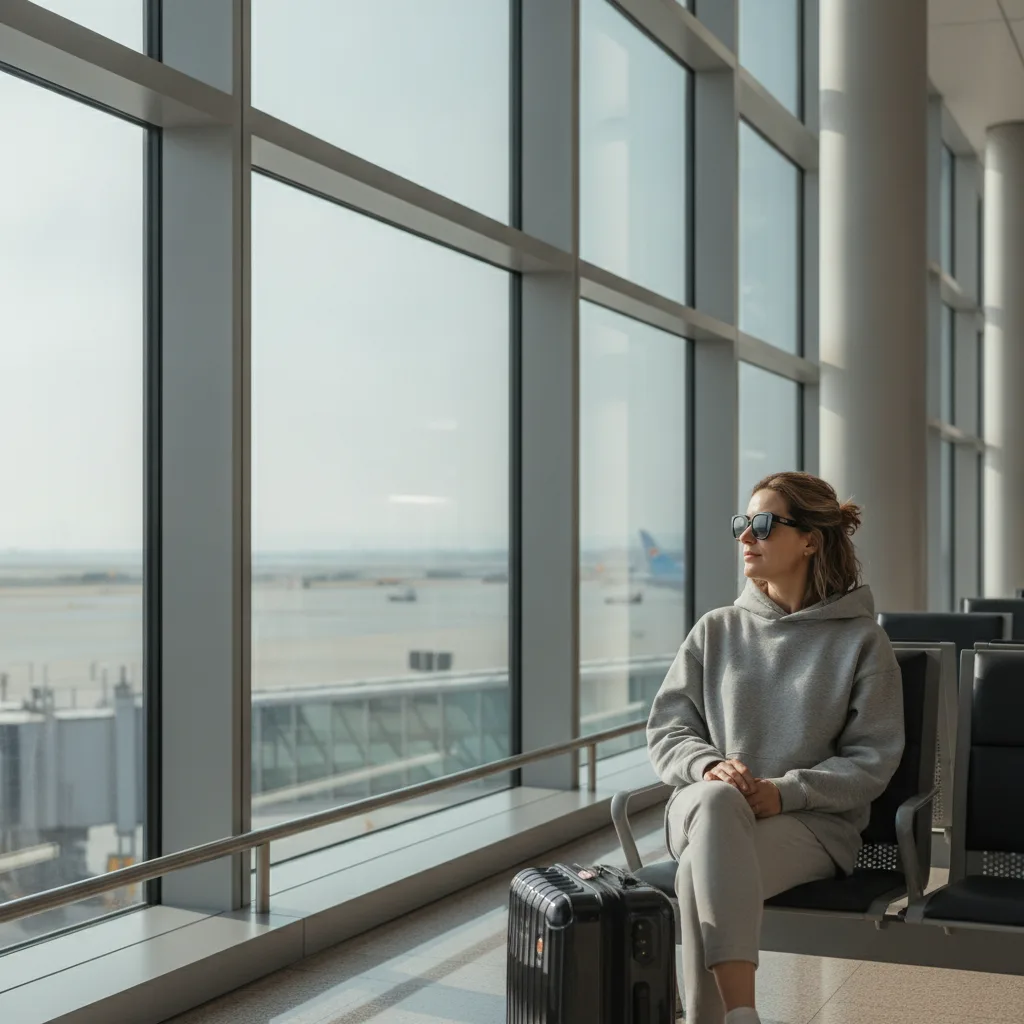
Most foreign rhinoplasty patients fly into Seoul expecting a tight week on the ground, and a lot of them underestimate how much the flight home shapes the recovery. Cabin pressure, dry air, and the unavoidable lifting of carry-ons interact with a fresh nasal splint in specific ways, and the surgeons at the city's major rhinoplasty hospitals have strong opinions about when it is actually safe to leave. This is the day-by-day version of that conversation for medical tourists booking from Bangkok, Sydney, Dubai, London, or Los Angeles.
HOW MANY DAYS AFTER RHINOPLASTY CAN YOU SAFELY FLY?
The consensus window across Gangnam, Apgujeong, and Cheongdam surgical practices is 10 to 14 days post-op for international flights longer than four hours. That is specifically the window after the external splint comes off around day seven, swelling has peaked and begun to settle, and any internal nasal packing or silicone splints have been removed. Flights shorter than three hours (Taipei, Tokyo, Hong Kong, Osaka) can be done closer to day eight with clinical sign-off, but most surgeons will tell you to add at least 48 hours to that for revision rhinoplasty, rib cartilage rhinoplasty, or any case that included osteotomies.
The real limit is not the flight itself. It is the pressure change during descent, the risk of a nosebleed at 35,000 feet with no immediate clinical help, and the weight of luggage in the overhead bin for a bruised patient who cannot lift above shoulder height yet. Clinics like JW Plastic Surgery in Apgujeong and Banobagi in Yeoksam will ask about your return flight length during consultation and often push foreign patients to extend by two to three days if the first scheduled flight sits under the ten-day mark.
THE SPLINT WEEK: DAY 1 THROUGH DAY 7
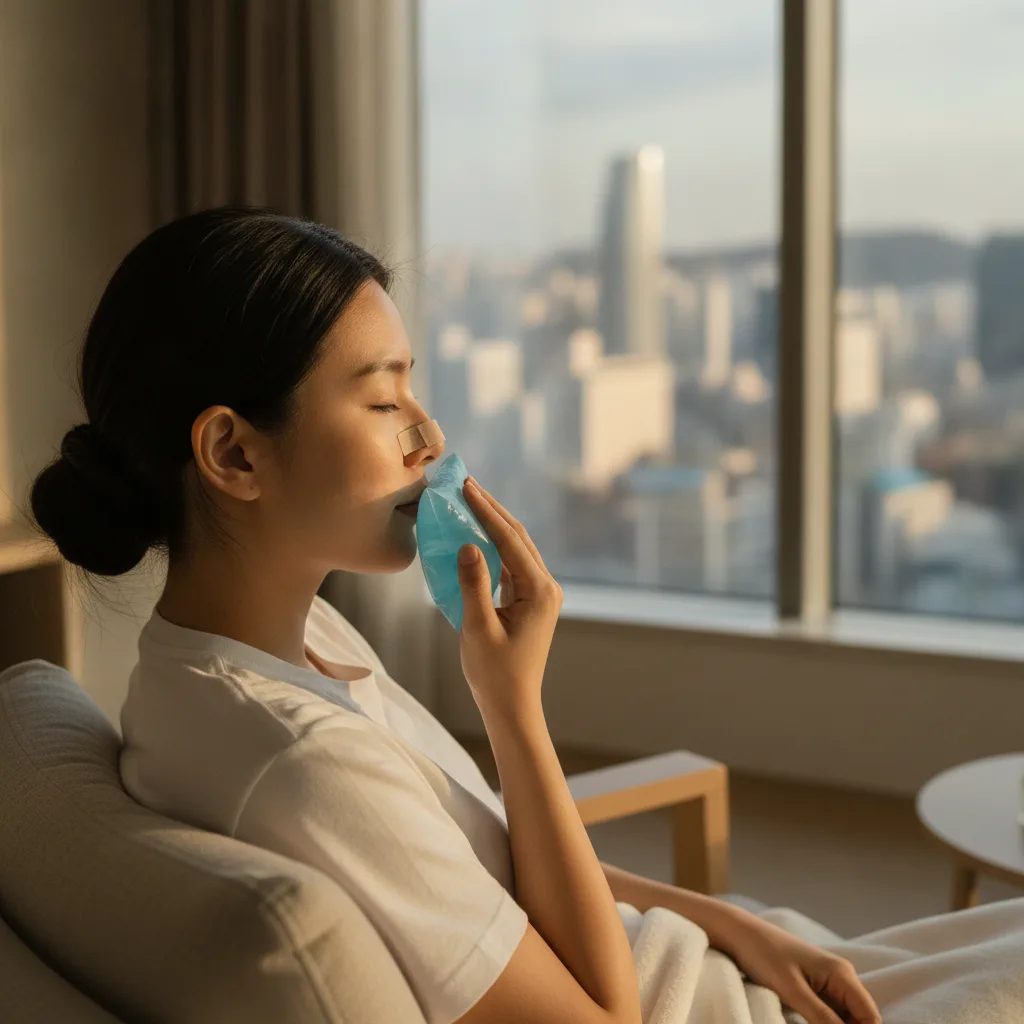
Day one is spent at the clinic recovery suite or a nearby recovery apartment, usually in Sinnonhyeon or along the Gangnam-daero corridor. The nasal splint is taped across the bridge, you are breathing through the mouth, and bruising around the under-eye is just starting to bloom. Ice packs on the cheekbones (not the nose itself) are rotated every 20 minutes for the first 72 hours. Expect to sleep elevated on two pillows and avoid any bending at the waist. Pain is moderate and controlled with the prescription set the clinic sends you home with, which usually includes a Korean antibiotic, a mild analgesic, and anti-inflammatories.
By day three the bruising peaks in colour. It is the worst it will look for the whole recovery, and a lot of patients panic at this stage. By day five it is already fading to yellow. Day seven is splint removal at the clinic, a quick 15-minute visit with the surgeon who checks fit, removes internal doyles or silicone splints if any were placed, and photographs the result. This is also when they sign the medical clearance letter for your flight, which the airline may or may not ask for but which the travel insurance definitely will if anything happens in the air.
DOES CABIN PRESSURE MAKE SWELLING WORSE?
Cabin pressure on a modern wide-body like a Boeing 787 or Airbus A350 is maintained around the equivalent of 6,000 to 8,000 feet of altitude, not sea level. That mild hypoxia plus the 10 to 20 percent cabin humidity creates two effects. First, the sinus mucosa dries out and the nasal lining tends to crust, which for a fresh rhinoplasty patient means increased risk of a dry-bleed during descent. Second, tissue swelling in the mid-face temporarily increases during the flight and settles again over the next 48 hours. It feels alarming. It is not a sign the surgery failed.
Mitigation is straightforward and most of it is on you, not the airline. Saline nasal spray every hour in the air. A wet towel or cabin humidifier stick if your airline offers one. Sitting upright, not reclined flat, during takeoff and landing. If you can afford a business-class recline for a long-haul (Seoul to Dubai, Seoul to LAX, Seoul to Sydney), the lie-flat seat helps the lymphatic drainage significantly compared to economy. The jump from an 11-hour economy seat to a 14-hour recovery setback is a real tradeoff worth thinking about before you book the cheapest return.
WHAT SHOULD YOU PACK FOR THE FLIGHT HOME?
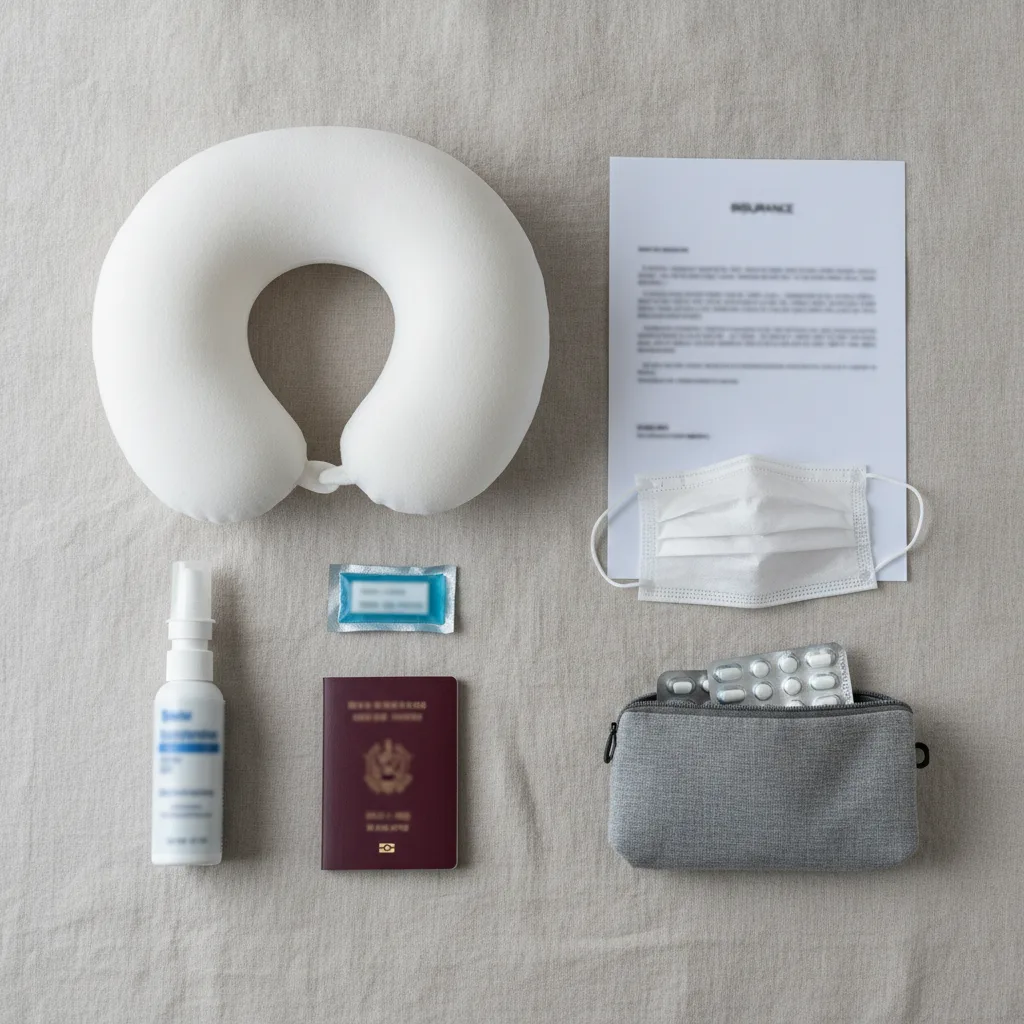
Build the carry-on around the swelling profile. A soft neck pillow lets you sleep upright without tilting the head forward. Saline spray (travel-sized, under 100 ml) handles the cabin dryness. A soft-sided cold compress, pre-activated at the airport lounge or hotel, reduces residual cheekbone swelling in the first hour of flight. KF94 masks are useful not for infection control but for hiding the lingering bridge taping and bruising while clearing immigration. A printed copy of your surgeon's medical clearance letter and prescription list goes in the outer pocket of the bag, never checked.
- 01Travel saline nasal spray (under 100 ml for cabin)
- 02Soft neck pillow and a small folded towel
- 03Reusable cold compress plus a resealable bag
- 04Three KF94 masks (one per leg of the trip plus spare)
- 05Printed surgeon letter, prescription list, and passport copy
- 06Remaining antibiotic and pain-relief blister packs in original packaging
- 07Water bottle to refill airside (target one litre per flight hour)
- 08No heavy checked luggage over 20 kg; split with a travel partner if solo
DO YOU NEED AN INSURANCE LETTER FROM YOUR CLINIC?
Most reputable Seoul rhinoplasty clinics issue a fitness-to-fly letter at the day-seven follow-up without being asked, written in English with the clinic stamp, the surgeon's name and license number, the procedure performed, the date, and the cleared travel dates. ID Hospital in Gangnam, Grand Plastic Surgery in Apgujeong, and specialist practices like Seoul Rhinoplasty Clinic in Seocho include this as part of the standard foreign-patient package. If your clinic does not offer one proactively, ask for it two days before the planned departure so the international coordinator has time to draft it and the surgeon can sign off.
Travel insurance is the other half. Policies that cover medical-tourism procedures are rare, but what you do want is a policy that covers complications arising in transit (nosebleed, cabin-pressure-related issues) and the cost of a diverted flight if something serious develops over the Pacific. World Nomads and Allianz Direct Travel have specific medical-tourism riders. The clinic letter is the document your insurer will ask for first if you need to make a claim mid-flight.
REVISION AND FOLLOW-UP: IN-COUNTRY OR RETURN VISIT?
Standard rhinoplasty follow-up in Seoul is at month one, month three, and month six, with the final-result assessment at twelve months. For foreign patients this is handled through photo review over Kakao or WhatsApp with the clinic's international coordinator, except for the three-month check where most Seoul surgeons will strongly suggest an in-person visit if the result shows any asymmetry or breathing issue. Flying back for a one-week visit at the three-month mark is cheaper and faster than attempting revision later at home, and the surgeon who did the primary case is the one who should assess any revision candidate.
For primary rhinoplasty, the revision rate in experienced Seoul practices runs around 5 to 10 percent, usually driven by tip asymmetry or minor dorsal irregularities. If revision is indicated, it is not done before the nine-month mark because the tissue needs to finish settling first. Our open vs closed rhinoplasty breakdown covers which approach is more revision-friendly, and the revision rhinoplasty guide walks through what a second case actually costs when it is a Seoul surgeon's own patient coming back versus an outside-case revision.
CAN I FLY ON DAY FIVE IF MY FLIGHT IS ALREADY BOOKED?
Technically yes, with clinical sign-off and a short flight. Practically no, and here is why. Day five is still inside the peak-swelling window, the splint is still on, and you will go through immigration with a visibly bandaged face which triggers extra checks in several Asian airports. More importantly, if a dry-bleed starts at cruise altitude on day five there is no way to properly pack it from an economy seat. If the flight is already booked and non-refundable, pay the airline the change fee to push to day ten. The 60 to 120 USD rebooking fee is cheap insurance compared to the alternative.
How-to · 10 min · Nov 17, 2026
← all posts
STITCH REMOVAL AFTER SEOUL PLASTIC SURGERY 2026: STAY OR FLY HOME
Who takes your sutures out, when, where, and what it costs if you stay in Seoul versus going home with stitches still in.
KAKAOTALK VS WHATSAPP BOOKING AT SEOUL CLINICS 2026: WHICH WORKS
Seoul clinics reply fast on KakaoTalk, slower on WhatsApp, and sometimes only on their own site form. Here is which channel actually gets you a booking in 2026.
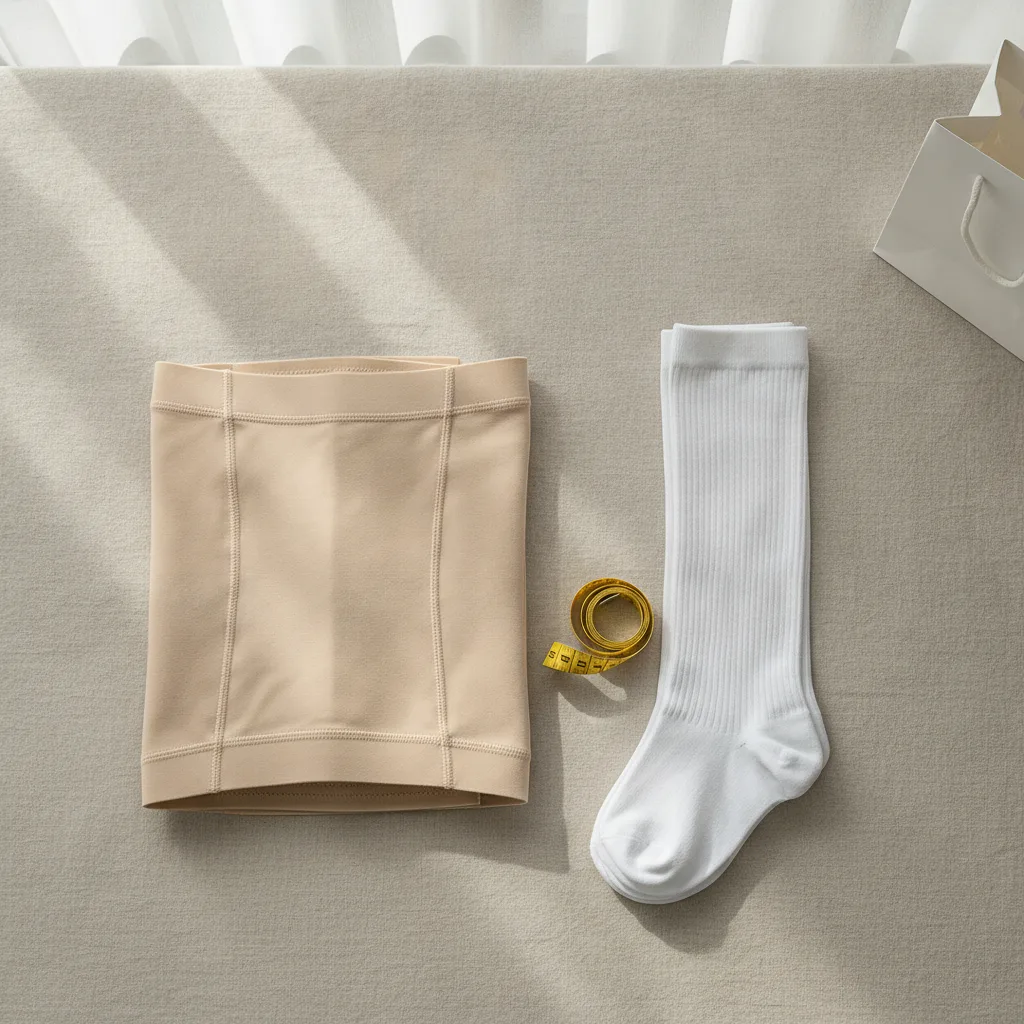
COMPRESSION GARMENTS FOR SEOUL PLASTIC SURGERY 2026: WHAT CLINICS GIVE YOU VS WHAT TO BUY
Exactly what Seoul clinics include with liposuction, tummy tuck, and BBL packages in 2026, what quality it is, and when to buy your own before you fly.
PRE-OP MEDICAL TESTS FOR SEOUL PLASTIC SURGERY 2026
What foreign patients need in the folder before they fly: blood panels, EKG, imaging, and the Seoul-vs-home-country tradeoff.

RHINOPLASTY SPLINT WEEK IN SEOUL 2026: DAY-BY-DAY RECOVERY FOR MEDICAL TOURISTS
The first ten days after a Seoul nose job, hour by hour: splint care, swelling, hotel vs recovery apartment, and when you can fly.
▶▶▶ stop reading. start matching.
FIND YOURS.
We'll pull five clinics matched to your case. WhatsApp reply within 24h.