PRE-OP MEDICAL TESTS FOR SEOUL PLASTIC SURGERY 2026
What foreign patients need in the folder before they fly: blood panels, EKG, imaging, and the Seoul-vs-home-country tradeoff.
By Editorial
Every Seoul plastic surgery clinic worth booking will ask for a pre-op medical workup before it puts you on the operating table. The question for foreign patients is simple: run the tests at home and bring the paperwork, or fly in two days early and let the Seoul clinic handle it. The answer depends on your procedure, your passport, and how much you trust a home-country lab to print results the Korean anesthesia team will actually accept.
WHY THE PRE-OP WORKUP MATTERS MORE FOR FOREIGNERS
Korean plastic surgery clinics are tightly regulated on anesthesia. For anything beyond local-only cases, the anesthesiologist needs recent lab work and a baseline EKG to clear you. Local Korean patients drop into a partner internal-medicine clinic the morning of surgery and get cleared in 90 minutes. Foreign patients cannot. Your blood type, hemoglobin, platelet count, liver and kidney panels, blood glucose, and clotting times have to be documented before you fly, or you lose a full day of your Seoul trip to the workup.
The second reason is risk-stratification. The clinic needs to know if you are a hypertensive 52-year-old on a beta-blocker or a healthy 28-year-old off all medication. That changes the anesthetic plan, the monitoring, and sometimes the procedure itself. A clinic that skips this step is a red flag, not a shortcut. Any serious Cheongdam or Apgujeong plastic surgery clinic will insist on it, and that insistence is a trust signal.
The third reason is insurance. If something goes wrong and you need to file a travel-insurance claim later, the insurer will ask whether your pre-op clearance happened. Missing lab work is the single most common reason post-op complication claims get denied. More on the paperwork chain in our insurance letters guide and the travel insurance breakdown.
THE STANDARD PRE-OP TEST PANEL BY PROCEDURE
The panel scales with the procedure's anesthesia depth and bleeding risk. A tip-plasty under local plus IV sedation needs less than a two-jaw osteotomy under general anesthesia with a two-night stay. Below is the typical Seoul clinic ask, cross-checked against the intake sheets from four clinics in our catalog.
- 01Rhinoplasty (primary, under IV sedation): CBC, BMP, PT/PTT/INR, hepatitis B and C serology, HIV, pregnancy test for women of childbearing age. EKG if over 40.
- 02Revision rhinoplasty: same as primary plus a chest X-ray if general anesthesia is used.
- 03Double eyelid or epicanthoplasty: CBC and BMP only. Local anesthetic, same-day.
- 04Facial contouring (V-line, zygoma, chin): CBC, BMP, PT/PTT/INR, hepatitis panel, HIV, EKG regardless of age, chest X-ray, 3D facial CT scan.
- 05Breast augmentation: full CBC, BMP, LFTs, PT/PTT/INR, hepatitis, HIV, EKG, chest X-ray, and a recent mammogram or breast ultrasound if over 40.
- 06Liposuction and lipo 360: CBC, BMP, LFTs, lipid panel, PT/PTT/INR, EKG, chest X-ray. Volume-dependent extras if more than 5 liters.
- 07Two-jaw (orthognathic): all of the above plus pulmonary function tests, 3D CT scan, and panoramic dental X-ray. The strictest panel of any Seoul surgery.
- 08Facelift (SMAS, deep plane): CBC, BMP, LFTs, PT/PTT/INR, EKG, chest X-ray, and a cardiac echo if over 55 or on antihypertensives.
- 09Hair transplant (FUE or DHI): CBC, BMP, hepatitis, HIV. No EKG unless over 50 or on cardiac medication.
Clinics vary by about 10 percent on the exact list. Saero Plastic Surgery in Gangnam, which specializes in deep-plane facelift and higher-age patients, routinely adds a cardiac echo to anyone over 50. HERSHE Plastic Surgery in Cheongdam, which runs a broader surgical and non-surgical menu, uses a slimmer panel for its minor cases. If you are comparing clinics, ask for the pre-op panel in writing during consultation. It tells you more about the anesthesia team than the marketing page does.
SHOULD YOU RUN THE TESTS AT HOME OR IN SEOUL?
Running tests at home costs less and saves a Seoul day, but carries two risks. First, the clinic may reject results older than 30 days for surgeries under general anesthesia. Fly dates slip, and your paperwork expires. Second, the units and reference ranges on your home lab report may not match what the Korean anesthesia team reads at a glance. A platelet count reported as 'K/uL' in the US reads fine, but hemoglobin in g/L versus g/dL has tripped up more than one intake nurse. Either side can be worked around, but it adds a translation step.
Running tests in Seoul costs around ₩280,000 to ₩450,000 for the standard surgical panel, or about $200 to $320 USD, depending on whether an EKG and chest X-ray are included. Panels with a 3D CT scan for two-jaw or contouring work run ₩550,000 to ₩850,000, or about $400 to $620 USD. This is bundled into the surgical fee at some clinics and billed separately at others. Ask during consultation. The hidden cost of the Seoul route is a lost day: you land, you do the workup on day one, surgery happens on day two or three.
The split answer most foreign patients land on: run the cheap, easy tests at home (CBC, BMP, hepatitis serology, pregnancy test) within 14 days of travel, and let the Seoul clinic do the EKG, chest X-ray, and any imaging on arrival. This front-loads the time-cheap paperwork and keeps the time-sensitive items fresh. Our pre-treatment checklist covers the packing side of the same question for non-surgical cases.
WHAT THE PAPERWORK NEEDS TO LOOK LIKE
Seoul clinics want three things on every home-country lab report: your full name as it appears on your passport, the collection date and time, and the lab's official stamp or digital signature. Printouts from a patient-portal PDF count if the lab's logo and address are on the page. Handwritten results do not. Results in languages other than English, Korean, Chinese, or Japanese need a translation, usually a simple English transcript the home lab can email you.
Bring two copies. One stays with the clinic, one stays with you. If you move hotels or recovery apartments during the stay, you want the second set in your room. For EKG, bring the strip itself, not just the interpretation. The Korean anesthesia team reads the trace, not the summary. For imaging, bring the DICOM files on a USB drive. Korean clinics have the viewers; your home clinic's 'open in portal' link may not work on their machines.
If you take daily medication, bring the original pharmacy bottles and a doctor's letter listing the generic name, dose, and duration. Blood thinners, SSRIs, oral contraceptives, and GLP-1 agonists all affect surgical planning. Most of these need to be paused ahead of time, and the pause window is procedure-specific. Rhinoplasty surgeons typically ask for a two-week pause on aspirin and ibuprofen. Facial contouring and two-jaw teams want a four-week pause on isotretinoin. GLP-1 agonists like Ozempic need a one-week pause for most surgeries because they slow gastric emptying and raise the aspiration risk under anesthesia.
HOW LONG RESULTS STAY VALID, AND WHEN TO RETAKE
Validity windows are tighter than most foreign patients expect. The industry-standard numbers at Seoul plastic surgery clinics for general-anesthesia cases are: CBC and BMP valid for 30 days, PT/PTT/INR for 14 days, pregnancy test for 7 days, EKG for 90 days, chest X-ray for 180 days, hepatitis and HIV serology for 12 months. If any item on your panel ages out between the lab date and surgery, the clinic repeats it on arrival at your expense.
For local-anesthetic cases like double eyelid or a small filler-adjacent procedure, the windows loosen. The clinic may accept a CBC up to 90 days old. For high-risk cases like two-jaw surgery or deep-plane facelift, windows tighten further. Expect 14 days on the full blood panel. If your travel window is tight, build the lab dates backwards from surgery, not forwards from your departure flight.
CAN I FLY HOME RIGHT AFTER THE TESTS CLEAR ME?
Pre-op clearance has nothing to do with fly-home timing. Clearance means you are fit for surgery. Fly-home timing depends on the procedure. Rhinoplasty patients typically fly home day 7 to day 10 after splint removal. Two-jaw and contouring patients stay 14 to 21 days. Facelift patients leave on day 10 to 14 after drain removal. The clearance paperwork proves you were fit to operate on, not fit to board a plane with fresh sutures. Our flying home after plastic surgery guide breaks the window down procedure by procedure.
DOES SEOUL RECOGNIZE TESTS DONE IN BANGKOK OR DUBAI?
Yes for most reputable Bangkok, Dubai, Singapore, and Tokyo labs. Clinics prefer JCI-accredited facilities or large private hospital networks over neighborhood clinic labs, because the reporting format is predictable. If your lab report comes from a hospital group like Bumrungrad, Samitivej, Mount Elizabeth, or a major Dubai chain, the Seoul clinic will read it without issue. Bring the English version. Thai and Arabic transcripts get re-run.
WHAT HAPPENS IF A TEST COMES BACK ABNORMAL?
Mildly abnormal results do not usually cancel surgery. A slightly elevated liver enzyme, a low-but-stable hemoglobin, or a borderline EKG gets reviewed by the clinic's anesthesia consultant. They decide: proceed, add monitoring, or delay. Hard cancellations usually involve active infection, uncontrolled hypertension, uncontrolled diabetes (HbA1c above around 8), active hepatitis replication, or anemia severe enough to need transfusion support. If a result flags, the clinic will ask for a repeat in Seoul and, if still off, a cardiology or internal-medicine consult at a partner hospital. This adds one to three days to the trip.
How-to · 10 min · Nov 11, 2026
← all posts
COMPRESSION GARMENTS FOR SEOUL PLASTIC SURGERY 2026: WHAT CLINICS GIVE YOU VS WHAT TO BUY
Exactly what Seoul clinics include with liposuction, tummy tuck, and BBL packages in 2026, what quality it is, and when to buy your own before you fly.
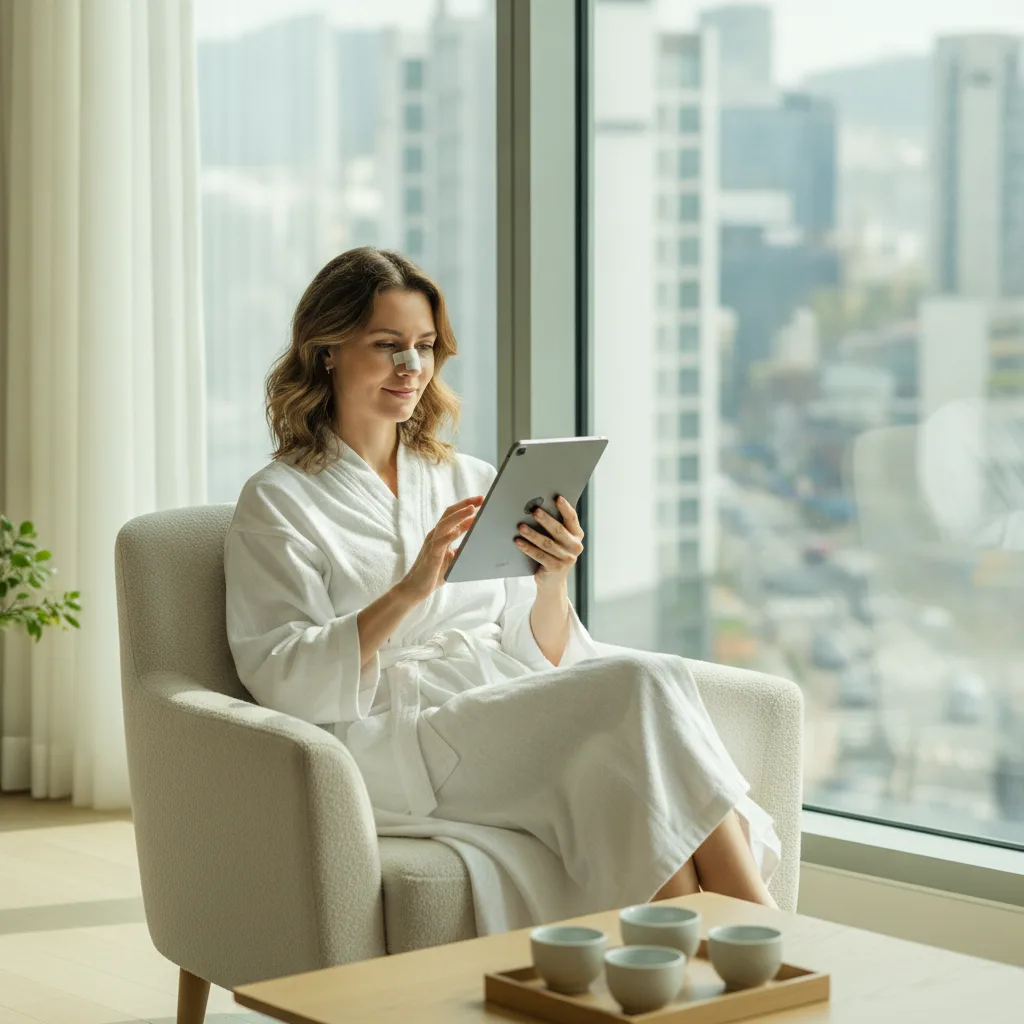
RHINOPLASTY SPLINT WEEK IN SEOUL 2026: DAY-BY-DAY RECOVERY FOR MEDICAL TOURISTS
The first ten days after a Seoul nose job, hour by hour: splint care, swelling, hotel vs recovery apartment, and when you can fly.
FLYING HOME AFTER SURGERY IN SEOUL 2026: SAFE TIMELINES BY PROCEDURE
Rhinoplasty, facelift, breast, lipo, two-jaw: how many nights to book before the return flight, and what cabin pressure actually does to swelling.
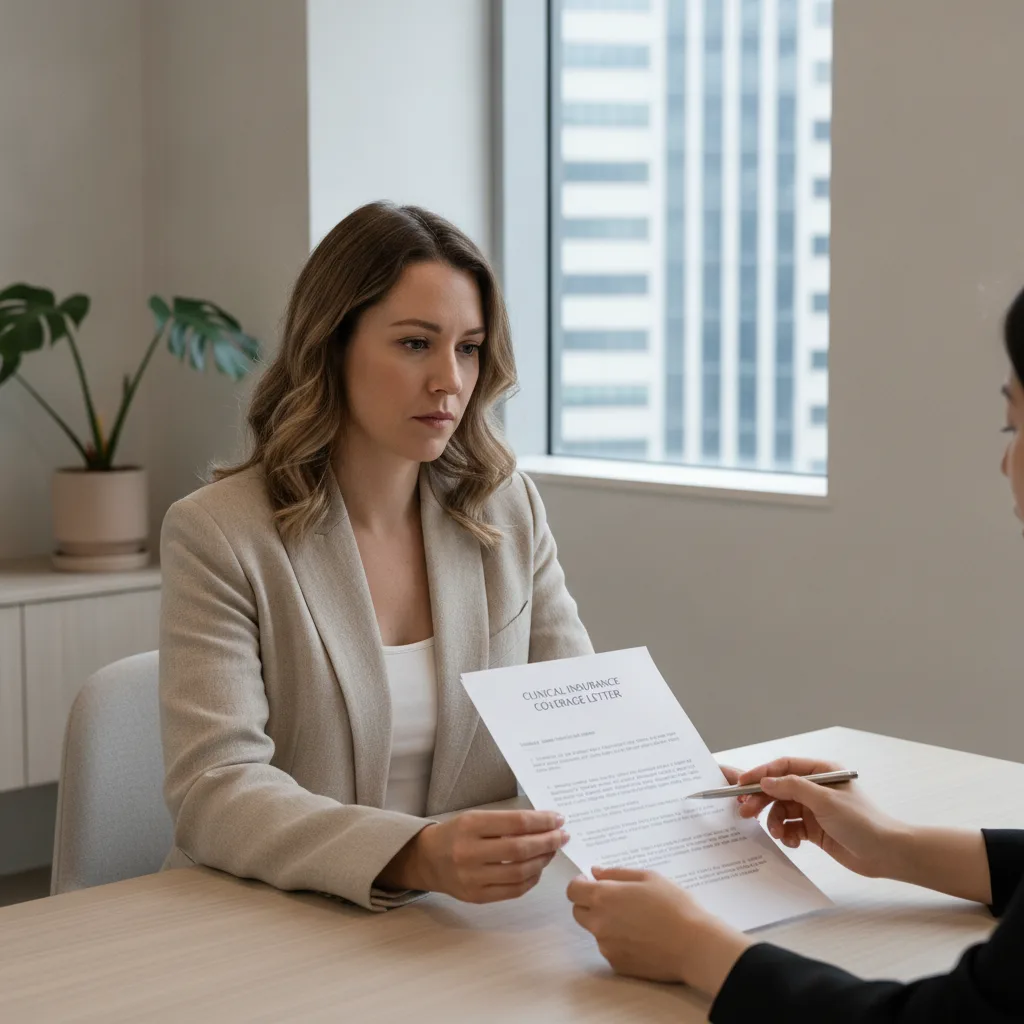
INSURANCE LETTERS FOR SEOUL PLASTIC SURGERY: 2026 FOREIGN PATIENT GUIDE
What the letter has to contain, which Seoul surgery hospitals issue it cleanly, and how to use it for home-country reimbursement in 2026.
FLYING HOME AFTER PLASTIC SURGERY IN SEOUL 2026: DAYS BY PROCEDURE
Minimum wait before boarding a long-haul flight after rhinoplasty, double eyelid, V-line, breast augmentation, two-jaw, lipo, facelift, and FUE.
▶▶▶ stop reading. start matching.
FIND YOURS.
We'll pull five clinics matched to your case. WhatsApp reply within 24h.