RHINOPLASTY SPLINT WEEK IN SEOUL 2026: DAY-BY-DAY RECOVERY FOR MEDICAL TOURISTS
The first ten days after a Seoul nose job, hour by hour: splint care, swelling, hotel vs recovery apartment, and when you can fly.
By Editorial

The surgery takes two to four hours. Splint week takes ten days, and that stretch is where most international patients underestimate the logistics. The clinic plans the operation. You plan the recovery, and if you booked a hotel instead of a recovery apartment you may already be behind.
WHY SPLINT WEEK DECIDES YOUR RESULT
A Seoul surgeon can place the tip cartilage perfectly and still lose the result to a patient who sleeps face-down on day three, blows their nose on day five, or boards a 14-hour flight on day seven. The external splint holds the osteotomies in position while bone edges knit, and the internal silicone splints keep the septum straight. If any of this gets disturbed, you either lose sharpness or buy yourself a revision 12 months later. Revision rhinoplasty costs 1.5 to 2 times primary, so splint week is the single highest return on attention in the whole trip.
Medical tourists have one extra variable locals do not: you have a flight home, a visa clock, and a hotel bill compounding every night. The right plan trims cost and improves the result. For the surgery itself, our rhinoplasty cost hub breaks down KRW bands by technique, and the best-value clinic picks show which Seoul teams run tight aftercare protocols for English-speaking patients.
DAY 0 TO DAY 2: THE BLUR
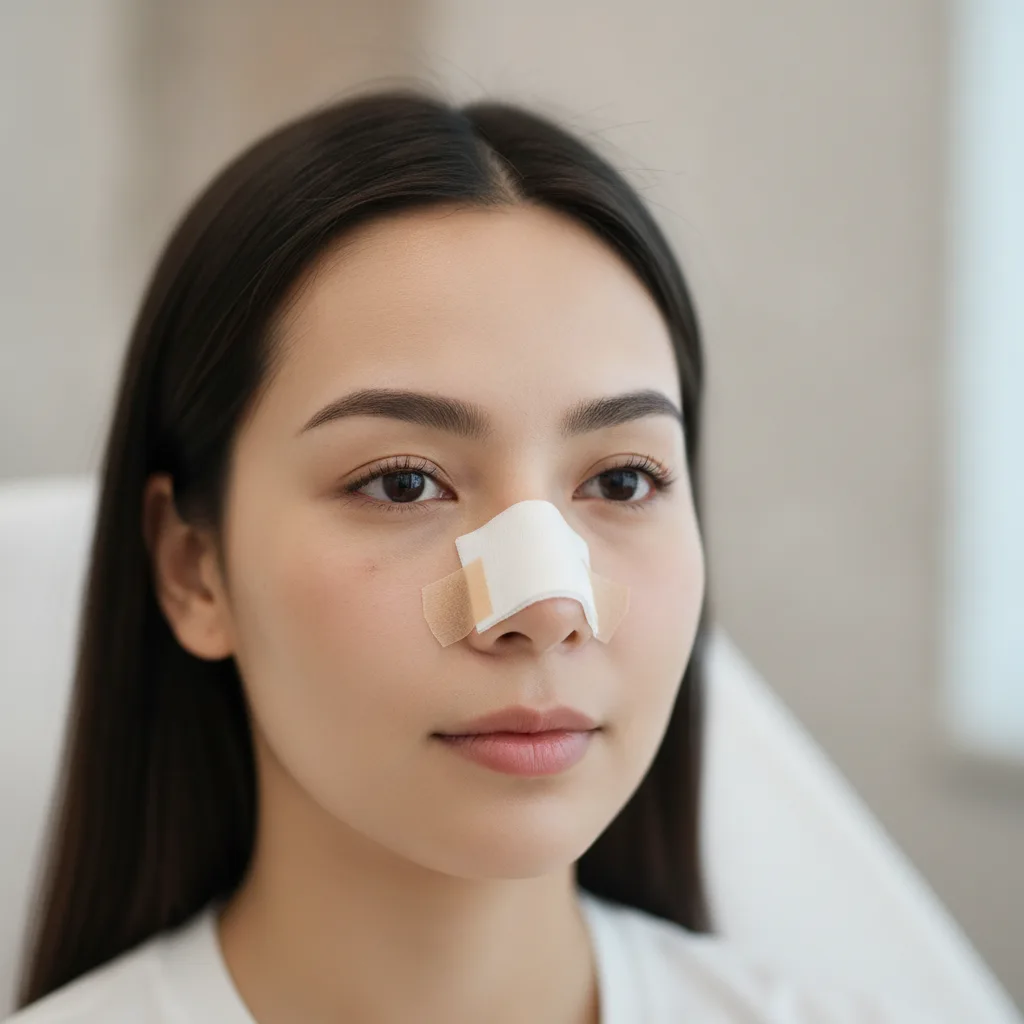
You leave the clinic with an external splint taped across the dorsum, two internal silicone splints inside the nostrils, and absorbable sutures at the columella if you had open rhinoplasty. Bleeding from the nostrils is normal for the first 24 hours. The gauze drip pad under your nose will need to be changed every two to three hours on day 0 and roughly every six hours by day 2. Keep an ice pack on the cheeks, never on the splint, in 20-minute cycles. Sleep on your back with your head elevated 30 to 45 degrees using two or three firm pillows, or a dedicated wedge. A recliner is better than a bed for the first two nights.
Food on day 0 is cold and soft. Think yoghurt, cold congee, fruit smoothies without a straw because suction pressure stresses the sutures. Salt makes swelling worse, so avoid ramen, kimchi, and most Korean convenience-store meals for the first 72 hours. Hydrate aggressively with plain water. Your prescription will usually include a 3-day antibiotic course, a mild painkiller, and sometimes a short course of steroids to reduce early swelling. Take them on the clock. If you booked a hotel, stock the room before surgery day. Walking out to a convenience store at 2 a.m. with a leaking splint is an experience worth avoiding.
WHERE TO STAY: HOTEL VS RECOVERY APARTMENT?
Seoul hotels are comfortable but built for tourists, not for post-op patients. You get daily housekeeping you will decline, a bed with only two pillows, and a bathroom mirror that will become your least favourite surface in the city. A recovery apartment solves most of this. Expect ₩120,000 to ₩280,000 per night in Gangnam and Apgujeong for a serviced studio with a wedge pillow, mini-fridge stocked on request, saline rinse supplies, and a bilingual coordinator who checks in daily. Compare that to a 4-star hotel at ₩180,000 to ₩320,000 per night and the apartment often wins on both price and function.
Location matters more than category. Pick accommodation within a 15-minute taxi of your clinic. Taxi is a non-negotiable; subway is too much jostling in week one. Gangnam, Apgujeong, Cheongdam, and Sinsa are all dense with clinics, pharmacies, and recovery-friendly cafes. Our recovery apartments guide compares the three main districts on price, amenities, and clinic proximity. If you are flying solo, prioritise an apartment with a 24-hour coordinator line. If you are flying with a partner, a hotel can work provided you pre-brief the concierge.
DAY 3 TO DAY 5: PEAK BRUISING, FADING FOG
Day 3 is usually the worst for how you look. Periorbital bruising peaks between day 2 and day 4, which means two dark circles under the eyes that can extend along the cheekbone. Swelling of the upper lip and tip reaches maximum around day 3 and slowly subsides. This is not a complication, it is biology. Arnica tablets and bromelain are commonly offered by Seoul clinics as adjuncts, and most clinic protocols include a lymphatic drainage facial massage around day 4 or 5, which genuinely accelerates visible swelling clearance. Cost at partner clinics runs ₩60,000 to ₩120,000 per session.
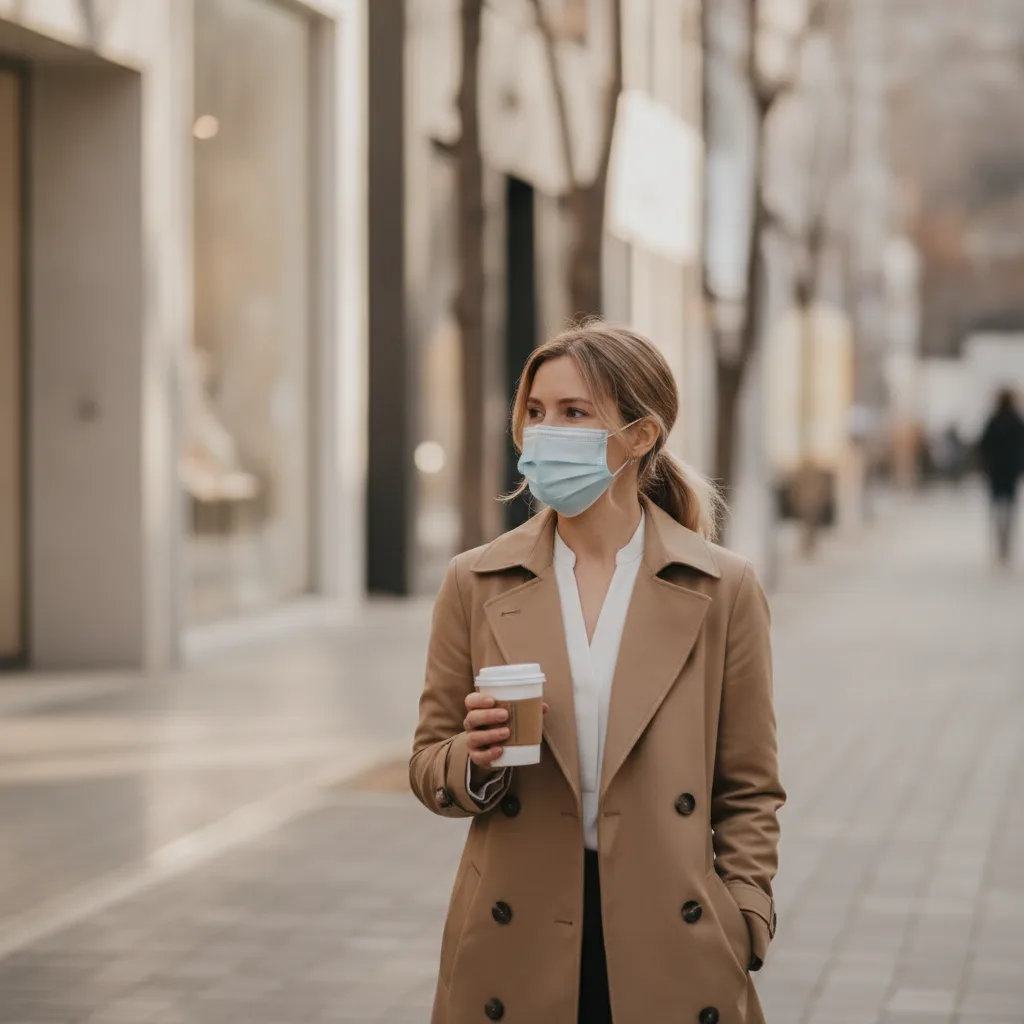
Mobility changes here. By day 3 you can walk around your neighbourhood for 20 to 30 minutes. Keep the face mask on in public, both for comfort and to avoid sneezes from people on the street setting off your own sneeze reflex. Sneezing with a splint feels like a gunshot; the rule is to sneeze through your mouth with jaw open. Do not bend at the waist, do not lift anything above 5 kg, and do not run. Showers are allowed from day 2 or 3, but water on the splint is not. Wash hair in the sink leaning backwards, or ask the apartment for a hair-wash chair rental, which some serviced apartments provide for ₩15,000 per visit.
- 01Daily routine: saline nostril rinse 3 to 4 times with sterile spray, change gauze drip pad as needed, cold compress on cheeks 20 minutes every 2 hours
- 02Food window: lukewarm soft foods from day 3, avoid anything that requires wide mouth opening like a burger, no alcohol or hot drinks that cause facial flushing
- 03Sleep: continue 30-degree head elevation through day 7
- 04Skip: gym, sauna, jjimjilbang, swimming, hot yoga, sex, any activity that raises blood pressure
DAY 6 TO DAY 8: SPLINT REMOVAL WINDOW
Most Seoul surgeons remove the external splint at day 7, with some booking the appointment on day 6 or day 8 depending on osteotomy extent. The appointment takes 15 to 25 minutes. The nurse softens the adhesive with alcohol, peels the splint off slowly, cleans the skin, and the surgeon inspects the dorsum. Internal splints usually come out the same day if septal work was limited, or at day 10 to 14 if the septum was reconstructed or rib cartilage was used. Removing internal splints is uncomfortable for 10 seconds and then an enormous relief because you can finally breathe through your nose. Many clinics take the first-week post-op photo at this visit, and some include a free complementary skin care session that is actually useful for the taped-skin irritation.
Your nose will look swollen and shiny, and the tip will feel numb and stiff. This is correct. Expect 70 percent of the final result to be visible at three weeks, 90 percent at three months, and the last 10 percent at 12 to 18 months as tip definition refines. Do not judge the result on day 7. Resist the urge to post selfies and ask the internet whether it looks right. The clinic will tape your nose at night for 2 to 4 weeks after splint removal to maintain dorsal line, and will send you home with 20 to 30 strips of surgical tape. Learn the technique in the clinic. For a deeper view of the full healing arc, see our week-by-week recovery timeline.
DAY 9 TO DAY 10: CAN YOU FLY HOME?
Cabin pressure at 35,000 feet sits around 2,400 metres equivalent. Mucosa that is still healing swells further at altitude, which is why clinics advise waiting until internal splints are out and the surgeon has cleared the airway. The common Seoul protocol is to clear international patients for flight at day 10, with some conservative surgeons holding to day 14, especially after osteotomy or rib work. Short-haul regional flights to Tokyo, Taipei, or Bangkok are often cleared at day 8 if the patient is comfortable. Long-haul 10-plus-hour flights back to Europe, North America, or Australia are better on day 12 to 14.
Request an aisle seat. Hydrate with water, not coffee or alcohol. Bring a saline spray in your carry-on, labeled, in a clear pouch. Bring your discharge summary and the Korean prescription labels in case you are stopped at customs. If you had rib cartilage harvested from your chest, the thoracic scar also pressurises at altitude, which usually just means mild tightness, not a complication. Mask up on the plane. Walk the aisle every two hours to prevent clots. Book a window-blocked, aisle-free upgrade if the budget allows, since reclining 10 degrees further is a genuine mercy. Our full flying-home guide covers timing by procedure if you combined rhinoplasty with anything else.
WHICH SEOUL CLINICS RUN TIGHT AFTERCARE?
International rhinoplasty patients should optimise for clinics with a dedicated in-house coordinator, a written day-by-day protocol in English, and a splint-removal appointment pre-booked at surgery sign-off. Braun Plastic Surgery in Seocho runs a high-volume English-coordinated program with structured post-op scheduling. Girin Plastic Surgery, also in Seocho, has over 2,800 Google reviews and runs a bilingual aftercare line. Saero Plastic Surgery in Gangnam offers native-level English support and a six-badge trust record. In Apgujeong, UE Plastic Surgery and Mizain Plastic Surgery both provide English coordinators and smaller caseloads, which can translate to longer consult time but also longer waits for appointments.
For revision cases where aftercare is more sensitive, see our revision rhinoplasty guide. Clinic choice matters more for revision than primary because scar tissue, prior graft material, and compromised skin envelope all raise the aftercare bar.
HOW LONG SHOULD I STAY IN SEOUL AFTER RHINOPLASTY?
Plan 12 to 14 nights for primary rhinoplasty with osteotomy, and 14 to 18 nights for revision or rib cartilage cases. Count surgery day as day 0. The splint comes off at day 7, the surgeon re-checks you at day 10 to 12, and a long-haul flight back to Europe, North America, or Australia is comfortable from day 12. Shorter-haul patients to Southeast Asia or East Asia can budget 10 to 12 nights total.
CAN I WEAR GLASSES WITH A NASAL SPLINT?
No pressure on the dorsum for 6 to 8 weeks after surgery. Glasses rest exactly where the osteotomies are healing. Use contact lenses if possible, or buy a glasses-support strap that offloads weight to the forehead. Some Seoul clinics sell these for ₩25,000 at the post-op visit. Prescription sunglasses on the flight home should also use a strap, not the bridge.
WHAT SWELLING SHOULD I EXPECT AT THREE MONTHS?
By three months, 85 to 90 percent of visible swelling has resolved. The tip is the last area to refine. Thicker skin, Mediterranean or Southeast Asian in some cases, holds swelling longer than thin skin. If you had a tip-plasty with cartilage grafts, expect the tip to feel firm and slightly over-projected until month six. Do not push, pinch, or massage the tip unless the surgeon instructs otherwise.
WILL I NEED A REVISION?
Published revision rates for primary rhinoplasty sit between 5 and 15 percent depending on surgeon, patient, and technique. A straight bridge with minor refinement runs toward the low end. Complex ethnic rhinoplasty with grafting runs higher. A reputable Seoul clinic includes a revision policy in the surgical contract, typically covering minor revisions within 12 to 24 months at no surgical fee, with the patient paying anaesthesia and facility costs. Read the contract before signing. Our insurance-letter guide covers documentation for revision travel if you fly back later.
IS A RECOVERY APARTMENT COVERED BY TRAVEL INSURANCE?
Elective cosmetic recovery accommodation is almost never covered by standard travel insurance. Specialist medical-tourism policies occasionally cover extended-stay accommodation if a complication arises, but the base recovery apartment is out of pocket. Budget it as part of trip cost alongside surgery and flights. Our travel insurance breakdown explains which policy triggers reimbursement and which leave you exposed.
How-to · 9 min · Nov 10, 2026
← all posts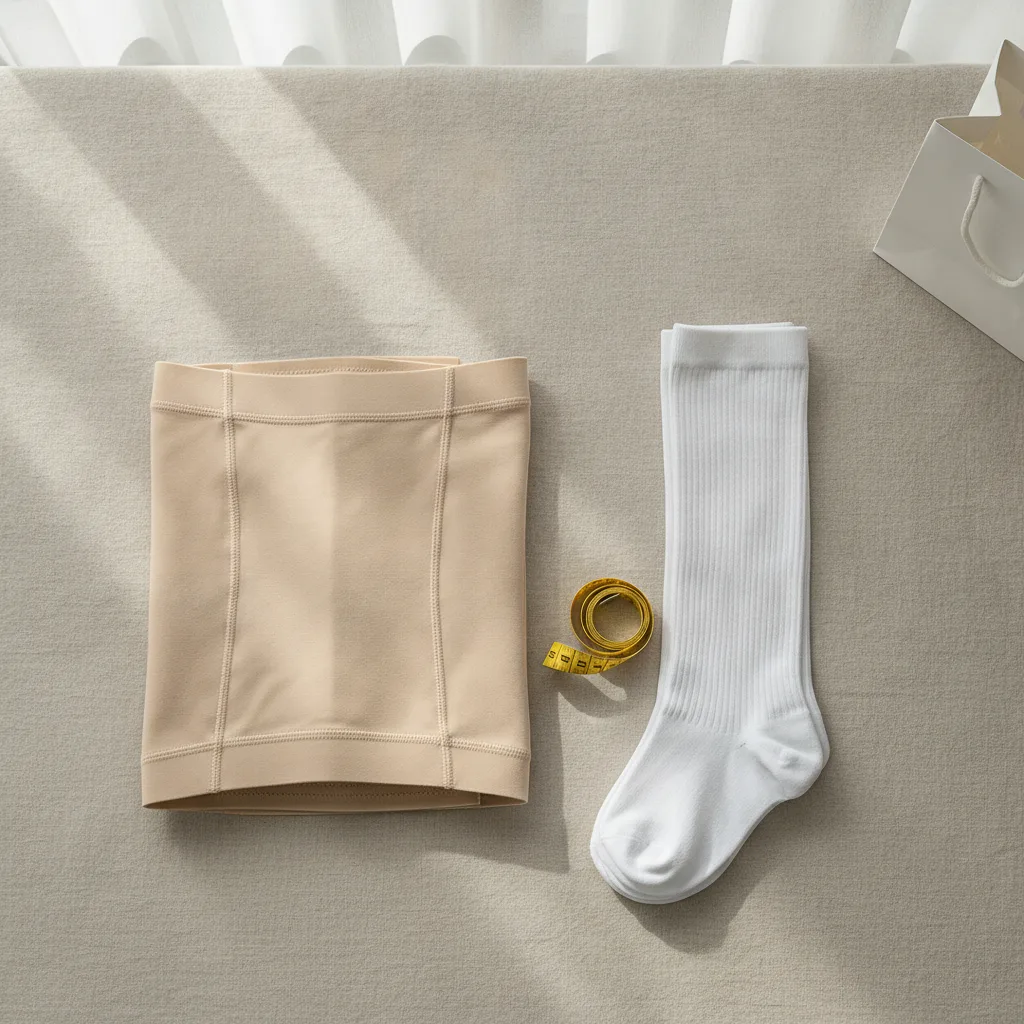
COMPRESSION GARMENTS FOR SEOUL PLASTIC SURGERY 2026: WHAT CLINICS GIVE YOU VS WHAT TO BUY
Exactly what Seoul clinics include with liposuction, tummy tuck, and BBL packages in 2026, what quality it is, and when to buy your own before you fly.
PRE-OP MEDICAL TESTS FOR SEOUL PLASTIC SURGERY 2026
What foreign patients need in the folder before they fly: blood panels, EKG, imaging, and the Seoul-vs-home-country tradeoff.
FLYING HOME AFTER SURGERY IN SEOUL 2026: SAFE TIMELINES BY PROCEDURE
Rhinoplasty, facelift, breast, lipo, two-jaw: how many nights to book before the return flight, and what cabin pressure actually does to swelling.
INSURANCE LETTERS FOR SEOUL PLASTIC SURGERY: 2026 FOREIGN PATIENT GUIDE
What the letter has to contain, which Seoul surgery hospitals issue it cleanly, and how to use it for home-country reimbursement in 2026.
FLYING HOME AFTER PLASTIC SURGERY IN SEOUL 2026: DAYS BY PROCEDURE
Minimum wait before boarding a long-haul flight after rhinoplasty, double eyelid, V-line, breast augmentation, two-jaw, lipo, facelift, and FUE.
▶▶▶ stop reading. start matching.
FIND YOURS.
We'll pull five clinics matched to your case. WhatsApp reply within 24h.