GENIOPLASTY IN SEOUL 2026: CHIN BONE SURGERY GUIDE
What Korean chin bone surgery actually reshapes, who it suits, and what real Seoul clinics charge for sliding genioplasty in 2026.
By Editorial
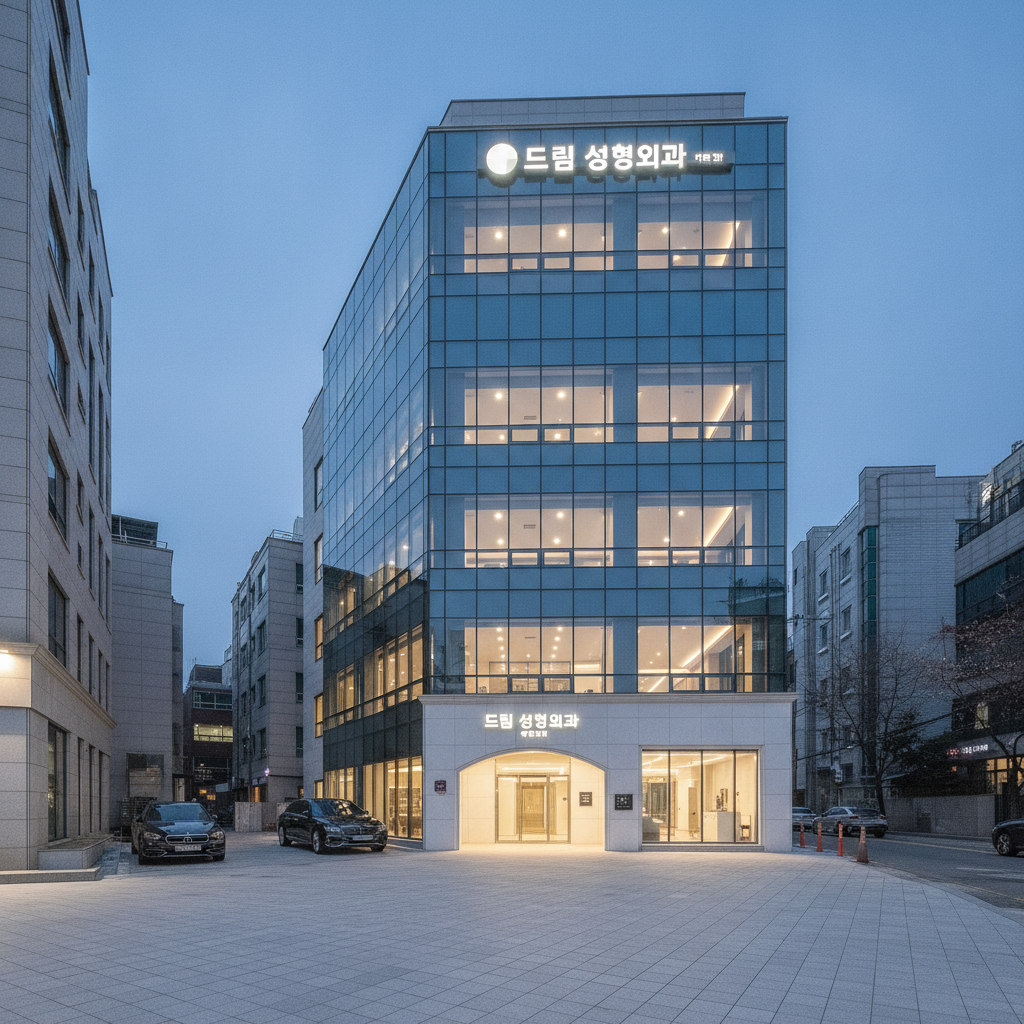
Genioplasty is the surgery Western and pan-Asian patients fly to Seoul for when a chin filler cannot solve the problem. Filler adds a few millimeters of forward projection and softens a weak profile, but it cannot pull a retruded chin forward, shorten a long chin, or narrow a square chin at the bone. That is genioplasty. Korean surgeons perform sliding and reduction genioplasty at high volume as part of the V-line contouring workflow, and the technique has diverged enough from Western practice that pricing, incisions, and screw-fixation protocols are worth understanding before you book. This guide covers who the procedure suits, how it is done, what real 2026 pricing looks like at Gangnam and Apgujeong clinics, and how to plan the trip.
WHAT GENIOPLASTY ACTUALLY DOES
Genioplasty is bone surgery on the lower jaw, specifically the chin segment below the mental foramen. The surgeon makes an incision inside the lower lip, exposes the chin bone, cuts a horizontal or T-shaped osteotomy, and moves the freed bone segment into a new position. Titanium plates and screws hold it there while the bone heals. The chin itself changes shape and position; the teeth and bite are untouched, which is what separates genioplasty from two-jaw surgery.
There are four common movements. Advancement pulls a weak chin forward by 4 to 8 millimeters and is the most requested variant among Western patients with a recessed lower face. Setback pushes a protruding chin back by a similar amount and is more common among East Asian patients treating a long, prominent profile. Reduction shortens a vertically long chin by removing a horizontal wedge of bone, sometimes 3 to 6 millimeters. Narrowing (a T-osteotomy or wedge resection) takes a slice out of the middle of a wide, square chin and pushes the two halves together, producing the tapered V-line silhouette that Korean patients often request alongside jaw and cheekbone contouring.
Most Seoul consultations use lateral cephalometric X-rays and 3D CT to plan the movement in millimeters before you commit. Ask to see the simulation. If the clinic cannot show you a rendered before-and-after based on your own scan, that is a real red flag at this price point.
WHO IS A GENIOPLASTY CANDIDATE?
The clean cases are anatomical. A retruded chin that leaves the lower lip sitting behind the upper lip in profile is a strong advancement case. A long chin that visibly extends the lower face and creates a heavy jaw resting on the neck is a strong reduction case. A wide, square chin in an otherwise oval face is a strong narrowing case. Patients often arrive after trying chin filler for a year or two and hitting the ceiling of what filler can push forward without looking bulky.
The borderline cases are the ones Seoul surgeons will sometimes decline. If the bite is significantly off (Class II or Class III malocclusion with a functional problem), a two-jaw or Le Fort procedure will fix the underlying skeletal issue and the chin will follow. Genioplasty alone in that setting camouflages the deformity rather than correcting it, and a reputable Apgujeong surgeon will tell you so on the first consult. Age matters less than skeletal maturity, though most clinics require patients to be at least 18 to 20.
Realistic expectations matter. A 5-millimeter advancement is a large change on a scan and a subtle change in the mirror to anyone who did not know you before. If you want a dramatic transformation, that lives in combination surgeries. Genioplasty pairs well with mandible angle reduction, rhinoplasty, and buccal fat removal, and Seoul is where those combinations are packaged and priced.

HOW THE SURGERY IS DONE IN SEOUL
You arrive at the clinic in the morning, change into a gown, and have a final marking session with the surgeon. IV sedation plus local anesthesia is standard for isolated genioplasty at most Gangnam clinics. Full general anesthesia is used when genioplasty is combined with mandible or maxillary work, and always at hospitals with an anesthesiologist on site. Ask which one applies to your case and who administers it. This is a bone surgery, not a filler visit, and the anesthesia setup should be at hospital standard.
The operation itself takes 60 to 90 minutes for an isolated case. The incision is inside the mouth along the lower gumline, which means no external scar. The surgeon exposes the chin bone, marks the osteotomy with the pre-operative simulation as a guide, cuts through the bone with a piezoelectric saw or reciprocating saw, moves the segment, and fixes it with a titanium plate and four to six screws. The mucosa is closed with dissolvable sutures and a compression tape or chin strap goes on before you wake up.
You stay one night at the clinic hospital or a partnered recovery hotel. Swelling peaks on day three, bruising can extend down the neck, and speaking and eating are limited to soft food for the first week. Numbness of the lower lip and chin is common and lasts weeks to months. Most patients return to office-appropriate appearance by three weeks, and the final bone shape settles at three months. The plate stays in permanently unless it causes symptoms.
- 01Isolated genioplasty: ₩4,500,000 to ₩7,500,000 (about $3,300 to $5,500 USD) at mid-tier Gangnam clinics
- 02Isolated genioplasty at Apgujeong premium clinics: ₩8,000,000 to ₩12,000,000 (about $5,900 to $8,800 USD)
- 03Genioplasty combined with mandible angle reduction (V-line package): ₩12,000,000 to ₩18,000,000 (about $8,800 to $13,200 USD)
- 04Genioplasty combined with two-jaw surgery: quoted as part of the two-jaw package, adds roughly ₩3,000,000 to ₩5,000,000
- 05Revision genioplasty: 30 to 60 percent surcharge over primary pricing, and fewer surgeons will accept it
HOW MUCH DOES CHIN SURGERY COST IN SEOUL?
Seoul pricing sits well below North American and Australian benchmarks and slightly below European private-clinic pricing. A mid-tier Gangnam clinic quoting ₩5,500,000 for isolated advancement genioplasty is not cutting corners; it is priced against local competition and high case volume. Apgujeong premium clinics charge closer to double for the same osteotomy, and the delta buys senior surgeon time, English-speaking coordinators, better recovery suites, and follow-up depth. It does not buy a fundamentally different bone cut.
VAT for foreign patients is typically handled through the medical tourism refund at Incheon airport, which returns roughly 7 to 9 percent of eligible spend. Ask the clinic to prepare the refund documents on discharge day. Read the hidden costs guide before you commit, because genioplasty packages sometimes exclude the CT scan, the pre-operative blood panel, the chin strap, and the removal of the plate if it is ever needed. Those add roughly ₩300,000 to ₩800,000 to the quoted price.
Financing is uncommon for foreign patients. Wire transfer or credit card in KRW at time of surgery is the norm, and some clinics require a 10 to 20 percent deposit at booking. Confirm the currency the deposit is charged in, because a USD-denominated deposit at booking can be re-quoted in KRW at surgery time and the exchange rate drift is on you.
HOW LONG IS THE RECOVERY?
Plan two weeks in Seoul as an absolute minimum for an isolated genioplasty. Three weeks is more comfortable. Day one is spent in the clinic with a cold compress and a chin strap. Days two through four are the worst of the swelling. Days five through seven you can walk around the neighborhood in a mask without drawing attention. Sutures dissolve, and the first post-op check happens between day five and day seven. A second check at day 14 clears you for the flight home if the swelling has settled and the bite feels stable.
Eating is the hardest part. Soft food only for the first two weeks: congee, tofu, yogurt, well-cooked noodles, protein shakes. Chewing pressure on the healing osteotomy is what most concerns your surgeon. Cheongdam and Apgujeong recovery hotels stock post-op meal packs; ask the clinic which one they refer to. Sleeping elevated on two pillows for the first week reduces morning swelling meaningfully.
Flying home is safe at 10 to 14 days for an isolated case and 21 days for a combined V-line package. Cabin pressure is not the risk. Prolonged sitting and dehydration are, and the chin strap should stay on for the flight. Read the flying home guide before booking your return ticket, and do not book a same-day connecting long-haul flight.
WHERE IN SEOUL DO THESE SURGERIES HAPPEN?
Genioplasty and other bone-work procedures cluster in Gangnam-gu, mostly along the corridor from Sinsa station down through Apgujeong Rodeo and into Cheongdam. Facial contouring specialty hospitals sit on the higher end of that corridor and market heavily to Chinese, Japanese, Thai, and increasingly Western patients. See the Apgujeong premium district guide for the specific streets. Sinnonhyeon has a cluster of higher-volume, lower-priced clinics that still do competent chin work if your budget is tighter, covered in the Sinnonhyeon district guide.
For a bone surgery, the tier matters more than for a filler visit. Choose a surgeon who does genioplasty weekly, not monthly. Ask how many isolated genioplasty cases they perform in a year and how many revisions they see. Ask to see the surgeon's own before-and-after photos, not stock library images. If the coordinator answers those questions instead of the surgeon, book a second consult somewhere else.
Treatment guides · 11 min · Sep 11, 2026
← all posts
REJURAN VARIANTS EXPLAINED: HEALER, I, S, HB, EYE IN SEOUL
Every Rejuran type does something different. Here is what each variant treats, what it costs in Seoul, and which one your first booking should be.
SKIN BOOSTERS IN SEOUL 2026: JUVELOOK, PROFHILO, SCULPTRA GUIDE
A first-timer's cost, brand and clinic guide to skin boosters and collagen biostimulators in Seoul for 2026.
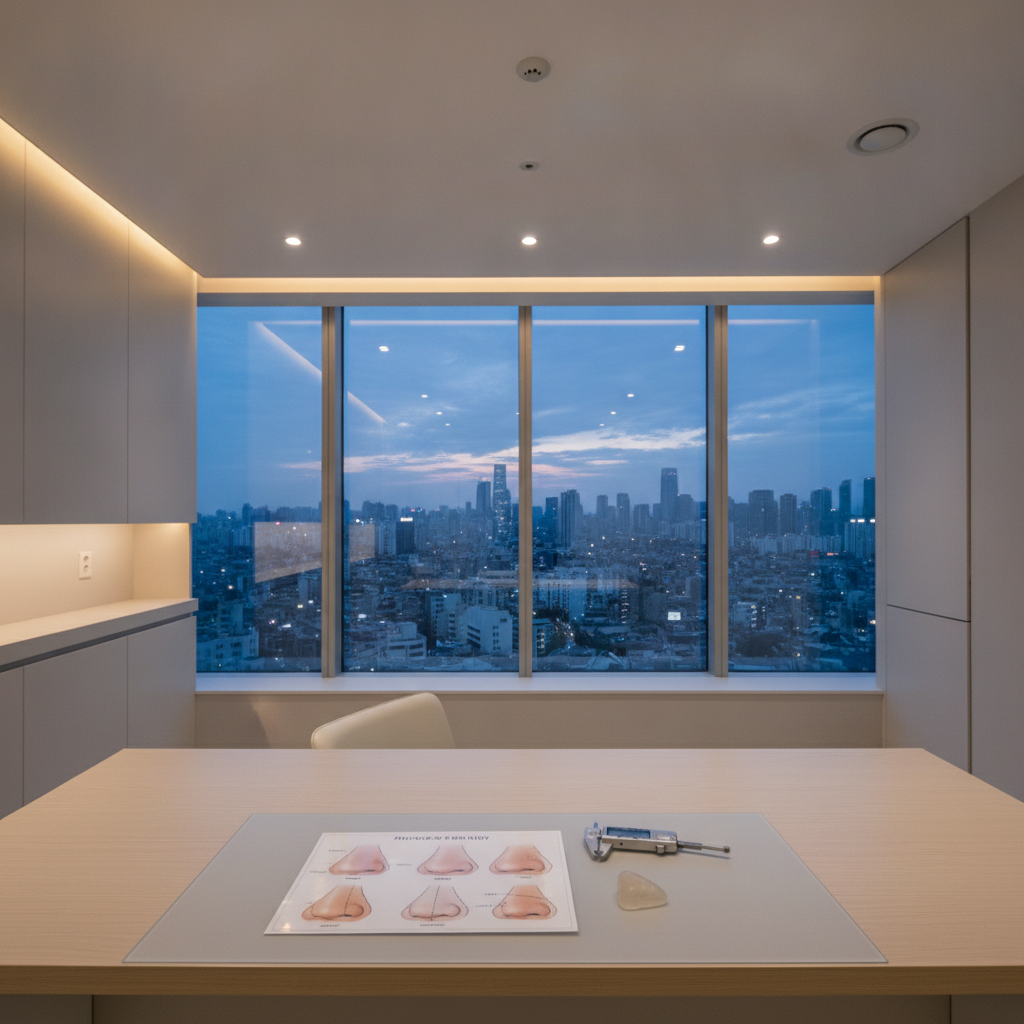
REVISION RHINOPLASTY IN SEOUL 2026: FIXING A FAILED NOSE JOB
A practical Seoul revision rhinoplasty guide covering cost, timing, cartilage sourcing, top districts, and which surgeons actually take secondary cases.
BREAST LIFT (MASTOPEXY) IN SEOUL 2026: COST, TECHNIQUES, RECOVERY
Everything a first-time medical tourist needs to know about mastopexy in Seoul: incision types, KRW pricing, recovery windows, and how it differs from augmentation.
LATERAL CANTHOPLASTY IN SEOUL: THE CAT EYE SURGERY GUIDE (2026)
How Korean surgeons lift the outer eye corner for a subtle cat-eye look, what it costs, and who it fits.
▶▶▶ stop reading. start matching.
FIND YOURS.
We'll pull five clinics matched to your case. WhatsApp reply within 24h.