NASOLABIAL FOLDS IN SEOUL 2026: FILLER, THREADS OR BOOSTERS
A practical 2026 guide to fixing nasolabial folds in Seoul, comparing filler, mid-face threads, and collagen-building skin boosters by depth, cost, and downtime.
By Editorial

Nasolabial folds are the lines running from the corners of your nose down to the corners of your mouth, and by your mid-thirties they start asking serious questions about volume, skin elasticity, and how often you smile. Seoul clinics treat the smile-line area with three very different toolkits, and most first-timers walk in asking for filler when they actually need a mid-face lift or a collagen rebuild. This guide breaks down fillers, thread lifts, and skin boosters by depth, cost, and what the right answer looks like for your face.
WHY YOUR NASOLABIAL FOLDS GOT DEEPER THIS YEAR
The fold is not really a wrinkle. It is the visible edge where the cheek fat pad ends and the upper lip skin begins, and the line deepens as the mid-face descends, the cheek pad shrinks, and skin elasticity drops. Korean dermatologists working out of Gangnam and Apgujeong almost always assess the cheek before they assess the fold itself, because filling the line directly without addressing the cause leaves you with the dreaded heavy upper lip look that you see on poorly treated patients walking out of cheaper Sinnonhyeon clinics. A 32-year-old with a flat cheek and a 48-year-old with a sagging cheek both have nasolabial folds, but the right treatment for each is almost the opposite.
Sun exposure, sleeping position, repetitive smiling, weight loss, and bone resorption all stack up. Seoul clinics will usually photograph you in standard lighting, mark the fold on both sides, and palpate the cheek pad to see how much volume has descended. Expect the consult to take 20 to 40 minutes if the clinic is serious. A 5-minute price quote with no facial mapping is a sign you are in an upsell mill, not a clinic that will give you a clean result.
There is no single best treatment for the fold. There is a best treatment for your version of the fold, and the three main paths in Seoul right now are mid-face filler, PCL or PDO threads with mid-face vectors, and a collagen build using skin boosters or Rejuran over three to six months. Most foreigners end up on a combination, but the order matters.
FILLER IN SEOUL: FAST, PREDICTABLE, THE DEFAULT ANSWER
Mid-face filler is the most common 2026 fix in Seoul because it is fast, the result is visible the same day, and the cost is reasonable. Clinics rarely inject the fold itself anymore. Instead they place a firmer hyaluronic acid like Juvederm Voluma or Volift in the cheek apex and the lateral mid-face, which lifts the soft tissue and softens the fold from above. Expect around 1 cc per side for a noticeable change, sometimes 1.5 cc on a flatter face. Prices in Gangnam run roughly 450,000 to 900,000 KRW per syringe, about 320 to 640 USD, depending on the brand and the clinic tier. Apgujeong premium clinics will quote 1,000,000 to 1,400,000 KRW per syringe for branded Allergan or Galderma products.
Downtime is short. You may see small bruises for three to seven days, mild swelling for 24 to 72 hours, and the final settled look at the two-week mark. Results last 12 to 18 months for the Voluma family, sometimes longer in a stable face. If your fold is moderate and your cheek pad is mostly intact, this is the cleanest path. If your cheek is severely descended or your skin is loose, filler alone will overinflate the mid-face without truly lifting the fold, and you will end up looking puffy rather than rested. That is the most common complaint I hear from foreigners who shopped only on price.
Korean clinics tend to undercorrect on the first visit and bring you back for a top-up at four weeks. This is a feature, not a bug. It is the standard Gangnam protocol because it lets the doctor see how the filler integrates before adding more, and it keeps you from leaving Seoul with an obvious result. Ask up front whether the top-up is included or charged separately. Many clinics include one top-up within a 30-day window, but the higher-volume tourist clinics in Myeongdong will quote a low headline price and charge for every revisit. Read the hidden costs guide before you book.
THREADS IN SEOUL: WHEN THE FOLD NEEDS A LIFT, NOT A FILL
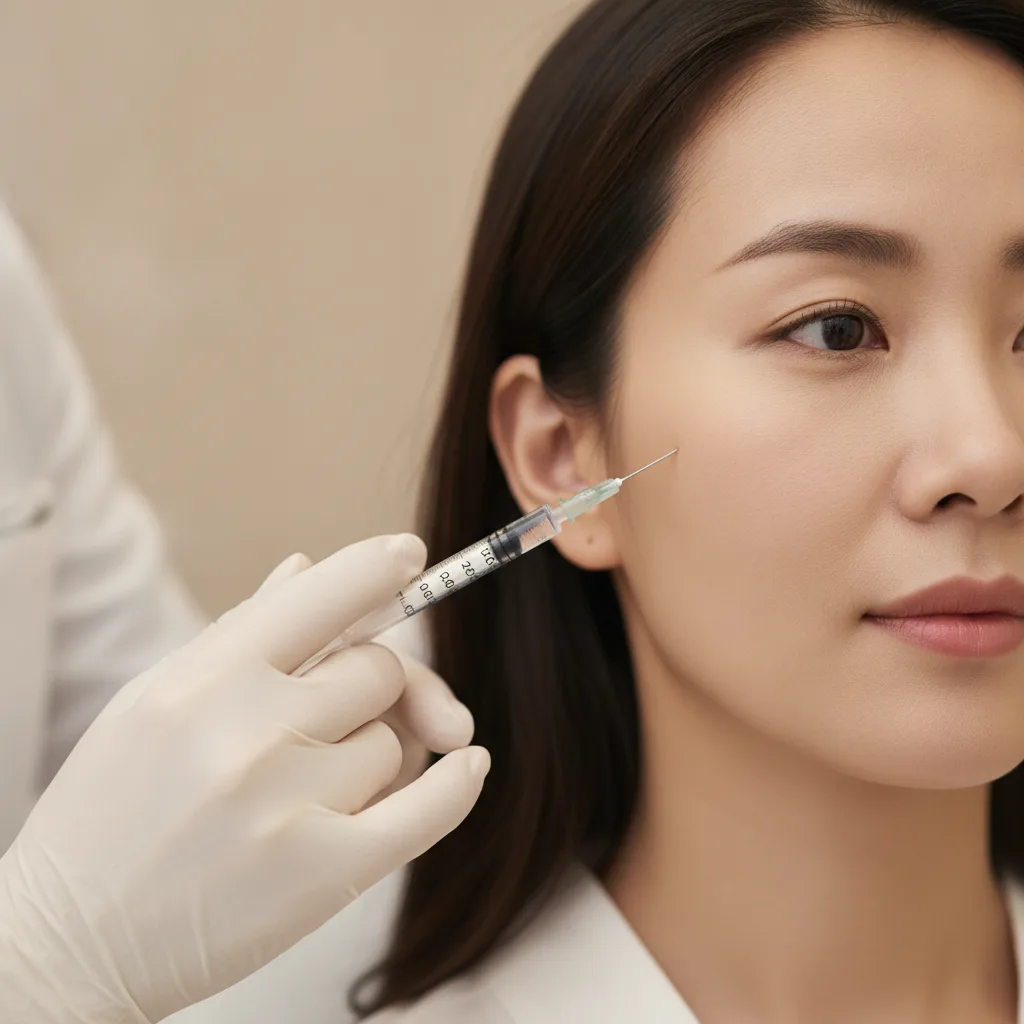
If your cheek has descended and your skin has lost elasticity, no amount of filler will lift the fold cleanly. This is where PCL and PDO threads come in. Korean clinics use 4 to 8 mid-face vector threads inserted from the temple area, anchoring the descended cheek pad and pulling it up and back, which physically shortens the fold. PCL threads (Mint, Wonderlift, Jamber) last 12 to 18 months and stimulate collagen as they dissolve. PDO threads are cheaper and shorter-acting, around 6 to 9 months. Expect 600,000 to 1,200,000 KRW per side for a mid-face thread protocol, roughly 430 to 860 USD, with full bilateral sessions priced at 1,200,000 to 2,200,000 KRW.
Downtime is real. You will feel tight pulling for 7 to 14 days, see swelling and possible bruising for up to two weeks, and avoid wide mouth movements for the first 10 days. No yawning aggressively, no chewing tough food, no dental work for a month. If you are flying out of Korea within four days of the procedure, you will look puffy on the plane. For most medical tourists, threads work best on a 10 to 14 day trip with the procedure on day two or three, not on the way home. The full comparison with Ultherapy is worth reading if you are torn between lifting devices, see thread lift vs Ultherapy.
Threads are not a one-and-done. The cheek will descend again as collagen turnover slows, and most Korean clinics will suggest a maintenance session every 12 to 18 months. If the budget is tight and your priority is the fold specifically, doing one well-placed thread session and skipping filler entirely is sometimes the better call. The thread lifts the cause; the filler covers the symptom.
SKIN BOOSTERS AND REJURAN: THE SLOW REBUILD OPTION
The third path in Seoul is to skip both filler and threads and rebuild collagen and skin quality directly. Skin boosters like Juvelook, Profhilo, and Sculptra are not designed to fill a fold, but over three to five sessions they thicken the dermis around the mid-face, which softens the visible depth of the line and improves how light catches the area. Rejuran Healer adds polynucleotide-driven repair to the same area and tends to be the favourite of dermatologists working out of Cheongdam. Expect a single session at 350,000 to 600,000 KRW and a full course at 1,800,000 to 3,000,000 KRW spread over four months.
This is the slowest path and the most subtle. There is no before-and-after photo at the two-week mark, and friends back home will not notice anything in the first month. By the third session the fold reads shallower in natural light, the skin texture improves, and the cheek looks fuller without volume being added. If you are in your late twenties or early thirties and the fold is starting but not yet structural, this is the cleanest preventative strategy. The deeper Rejuran vs skin boosters comparison covers which one matches your skin type.
- 01Mild fold, intact cheek, late twenties to mid-thirties: skin boosters or Rejuran for 4 to 6 months
- 02Moderate fold, flat cheek, mid-thirties to forties: 1 to 1.5 cc Voluma in the cheek apex
- 03Deeper fold, descended cheek, forties plus: PCL mid-face threads, then revisit filler at 8 weeks
- 04Heavy fold, loose skin, fifties: threads plus filler combo, plus a tightening device like Ultherapy
WHAT DOES THE FIRST APPOINTMENT ACTUALLY LOOK LIKE?
A serious Seoul clinic will not quote you a price before seeing your face in person. Expect a 20 to 40 minute consult that includes standardised photography, fold depth measurement, cheek palpation, and a written treatment proposal. Many Apgujeong and Cheongdam clinics will give you two or three options at different price points, which is normal and not a soft sell. Read the proposal, ask which volume of filler or how many threads they are quoting, and confirm whether the top-up visit is included. The right question to ask is what they would do if you were their sister, not what gives them the highest margin.
Translator support varies. Most clinics in Gangnam and Apgujeong now provide English coordinators, and a smaller number offer Mandarin, Thai, or Japanese support depending on the patient base. If you want to dig into how this works in practice, the translator services explainer covers the difference between an in-clinic coordinator and a third-party medical tourism agent. Avoid clinics that route consults exclusively through a third-party broker with no medical training, because the broker has every incentive to upsell.
HOW LONG DO THE RESULTS LAST AND WHEN DO YOU NEED TO COME BACK?
Filler in the mid-face lasts 12 to 18 months, sometimes longer for the Voluma family in a stable face. PCL threads structurally hold for 12 to 18 months, with collagen benefit lingering a few months beyond that. Rejuran and skin booster effects compound over the first 6 months and then taper, with most patients booking a top-up session at the 8 to 10 month mark. For most foreigners I see in Seoul, the sustainable rhythm is one full treatment day every 12 months, plus an injectable touch-up between visits if their schedule allows a second trip.
If you are budgeting for the long term, expect a real maintenance number of roughly 1,500,000 to 3,000,000 KRW per year, around 1,100 to 2,150 USD, depending on which path you pick and how aggressive your starting point is. That number is honest and well below what the same treatment costs in Los Angeles, London, or Sydney, which is the actual reason Korea remains the value play for nasolabial fold work in 2026.
Concerns · 8 min · Jun 16, 2026
← all postsFAQ.
How much do dermal fillers cost in Seoul?+
How long do fillers last?+
Are Korean fillers safe?+
What is the downtime after fillers?+
Can fillers be dissolved if I don't like the result?+
Pricing ranges reflect typical premium SeoulClinics partners and are indicative — actual quotes come from the consult. None of this replaces a licensed Korean clinician's evaluation.
BREAST AUGMENTATION RISKS IN SEOUL 2026: A SAFETY GUIDE
Capsular contracture, rupture, hematoma, and the red flags to catch before booking a Seoul clinic.
TWO-JAW SURGERY RISKS IN SEOUL 2026: WHAT TO KNOW BEFORE BOOKING
A candid look at nerve injury, occlusion problems, airway swelling, and revision odds for international patients considering orthognathic surgery in Korea.
BUNNY LINES BOTOX IN SEOUL 2026: NOSE WRINKLE FIX GUIDE
Small dose, big difference. What bunny lines Botox costs in Seoul, which brand to pick, and how to avoid a frozen nose.
LIPOSUCTION RISKS IN SEOUL 2026: RED FLAGS TO AVOID
The real complications from Seoul lipo, the clinic red flags that predict them, and how medical tourists reduce their odds.
HAND REJUVENATION IN SEOUL 2026: AGE SPOTS, VOLUME & VEINS
Non-surgical hand rejuvenation in Seoul: pico toning for age spots, Radiesse and Profhilo for volume loss, sclerotherapy for veins, and honest 2026 pricing.
▶▶▶ stop reading. start matching.
FIND YOURS.
We'll pull five clinics matched to your case. WhatsApp reply within 24h.