RECOVERY STAY APARTMENTS NEAR SEOUL CLINICS 2026: WHERE TO HEAL
Serviced apartments by district, nightly bands in KRW and USD, and what to book for face versus body procedures.
By Editorial
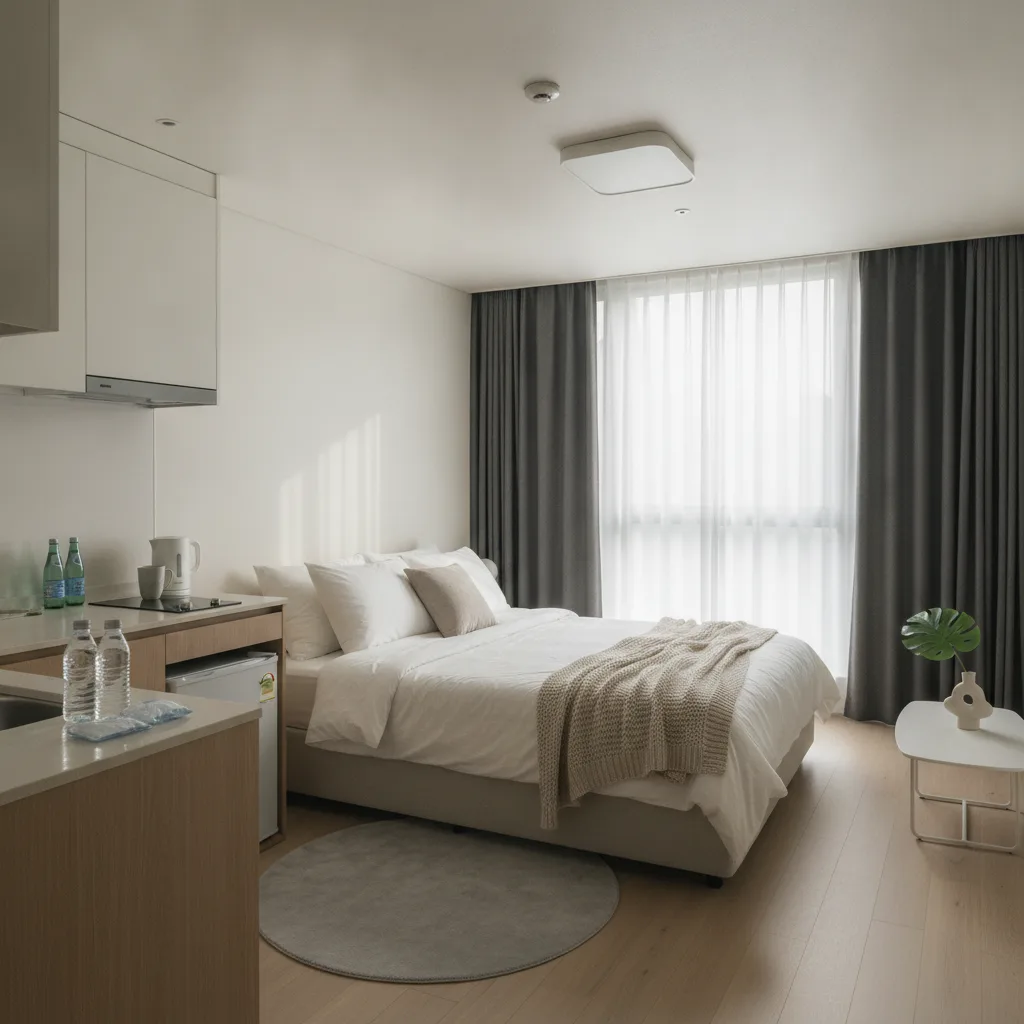
Hotels work for injectables and a short reset day. For anything with a drain, a brace, or a two-week swelling arc, a serviced apartment near your clinic is the move. The right block saves you a daily taxi, a daily restaurant trip, and the mental tax of hauling ice packs through a hotel lobby.
MATCH THE STAY TO THE PROCEDURE
Non-surgical treatments like Botox, filler, Shurink Universe, and Rejuran need a clean bathroom and a quiet first night. A hotel is fine for one or two nights, and the standard three-star stock in Gangnam runs around ₩110,000 to ₩180,000 per night, roughly $80 to $130. If you are stacking across a week, see our treatment stacking guide before you book, because the rhythm of appointments decides how walkable your base needs to be.
Surgical procedures change the equation. Rhinoplasty, double eyelid, buccal fat, breast augmentation, liposuction, and especially two-jaw surgery push you into a 10 to 21 day recovery window where you need a kitchenette, blackout curtains, a sofa to elevate, and a laundry setup. A serviced apartment with weekly rates is almost always cheaper per night than a hotel at that length, and far less exhausting.
The practical test: if your surgeon tells you to come back for a stitch-out, a drain pull, or a cast removal, your stay should be within a 10-minute taxi of the clinic. For a face procedure in Apgujeong, that means staying in Apgujeong, Cheongdam, or Sinsa. For a body procedure in Gangnam, Sinnonhyeon is the walkable base. See our two-jaw recovery timeline for a week-by-week picture of what the apartment actually gets used for.
NIGHTLY BANDS BY DISTRICT
Prices below reflect studio to one-bedroom serviced apartments or longer-stay residence hotels, mid-October 2026, booked 2 to 6 weeks in advance. Expect a 10 to 20 percent premium at peak K-pop concert weekends and Chuseok. VAT is already baked into the headline rate on domestic booking platforms, though some direct bookings quote plus-10-percent VAT separately, which is the same pattern we unpack in hidden costs at Seoul clinics.
- 01Apgujeong / Cheongdam: ₩180,000-₩350,000 per night ($130-$260). Walking distance to premium clinics, quiet residential blocks, strong serviced-residence stock. Best for face surgery recovery.
- 02Sinsa (Garosu-gil): ₩140,000-₩240,000 per night ($100-$180). Mid-tier, excellent cafes, 10-minute taxi to Apgujeong clinics. Good value for mid-length stays.
- 03Gangnam / Sinnonhyeon: ₩120,000-₩220,000 per night ($90-$165). Dense clinic cluster, subway at the door, cheaper than Apgujeong. Best for body procedures and multi-clinic weeks.
- 04Seocho: ₩100,000-₩180,000 per night ($75-$135). Residential calm, 10 minutes to Gangnam, pharmacies and groceries on the block.
- 05Myeongdong: ₩110,000-₩200,000 per night ($80-$150). Tourist-heavy, noisy at night, only pick this if your clinic is in Myeongdong proper.
- 06Yongsan (Itaewon / Hannam): ₩150,000-₩280,000 per night ($110-$210). English-friendly, further from the main clinic belt. Worth it only if you want foreign-food options and are stable enough to taxi.
WHAT A RECOVERY APARTMENT NEEDS TO HAVE
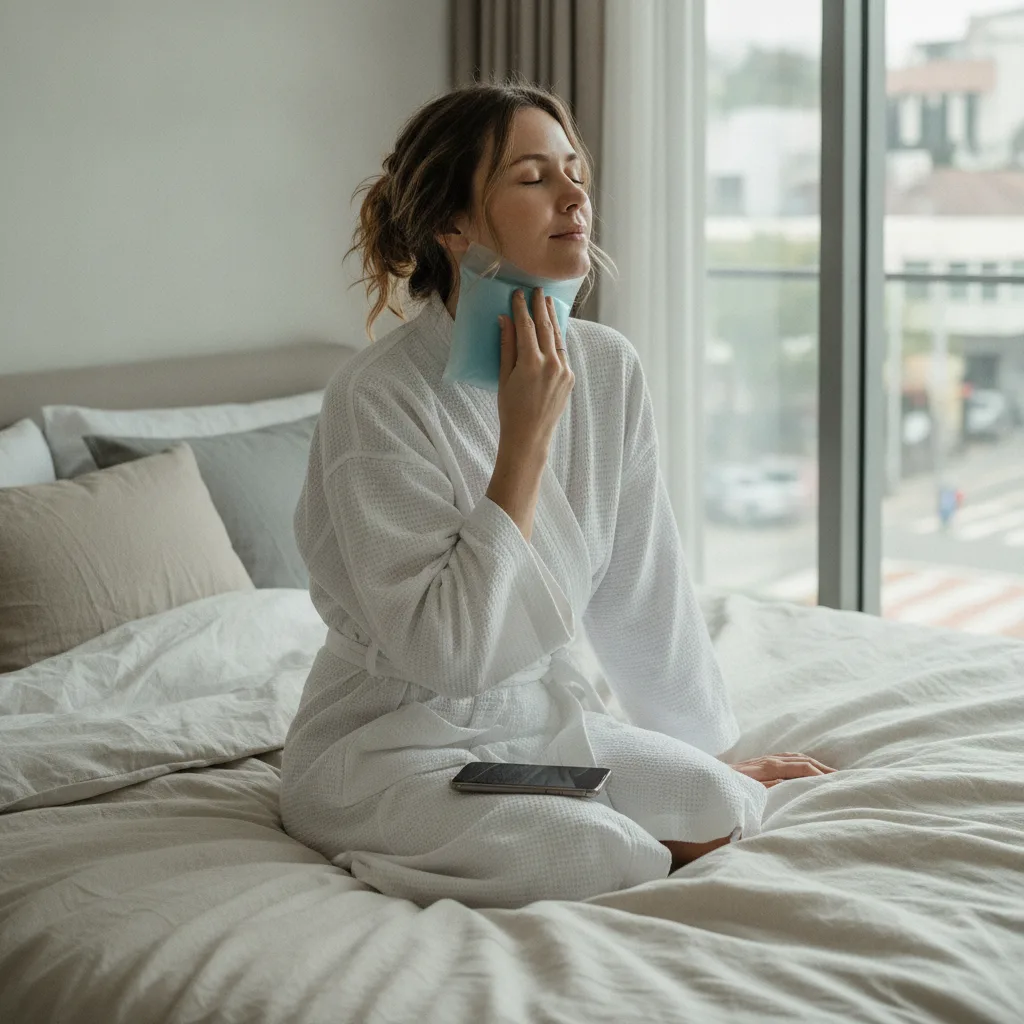
The hotel bias is to pick on views and lobby. Recovery picks on amenities. Blackout curtains are non-negotiable for any procedure that leaves you light-sensitive or that forces you to sleep elevated at odd hours. A real kitchenette, meaning a two-burner induction plate, microwave, and a fridge wide enough for frozen peas and bone broth, saves you around ₩20,000 to ₩40,000 per meal that you would otherwise pay for delivery or restaurants where you cannot speak.
A washer in the unit matters more than you expect. After rhinoplasty or breast augmentation you will bleed through pillowcases and compression garments for the first week. Laundry rooms down the hall are an obstacle course when you are sore. For a two-jaw stay or any surgery with drains, pay the premium for an in-unit washer. For a face lift or deep plane, add a bathtub to the list, because elevated reclining in a tub beats a shower for the first ten days.
Check the elevator. Walk-up units are common in older Sinsa and Apgujeong buildings, and three flights with a drain bag is grim. Confirm there is a 24-hour front desk if your surgery falls on a weekend, because package deliveries of ice packs, saline, and gauze may arrive outside of the host's working hours. The pre-treatment checklist covers what to pre-order into the apartment before you fly.
BOOKING PLATFORMS AND TYPICAL TRAPS
For stays under 30 days, the realistic platforms are Agoda, Booking.com, and Airbnb for the independent serviced residences, plus the Korean platforms Yanolja and Goodchoice for mid-tier residence hotels. Airbnb has the broadest stock in Apgujeong and Sinsa, but a non-trivial share of listings are technically unlicensed for short-term rental under Korean law. Pick a Superhost with a registered-business badge in the listing details or a Korea Tourism Organization sticker in the photos.
Residence hotels like Fraser Place Central Seoul, Somerset Palace, Lotte City Hotel Myeongdong, and L7 Gangnam quote per-night pricing that drops 15 to 25 percent at the weekly rate and another 10 percent at the monthly rate. For a 10 to 14 day recovery, ask the direct-booking email for an unlisted medical-stay rate, since several residences run quiet programs for medical tourists that are not advertised on Agoda.
The three recurring traps: a 7-night minimum that quietly jumps your total, a cleaning fee stacked on top of a short stay that makes a 3-night block more expensive than a 7-night one, and a deposit held on your card that overlaps with your clinic deposit and crowds your available credit. Confirm all three in writing before you pay. We cover the same pattern on the clinic side in paying Seoul aesthetic clinics.
A REALISTIC 10-DAY RECOVERY BUDGET
A face-procedure patient staying 10 nights in a one-bedroom serviced apartment in Apgujeong at ₩230,000 per night pays about ₩2,300,000, roughly $1,700. Add ₩350,000 for groceries, delivery, pharmacy items, and taxis to the clinic for follow-ups. That is ₩2,650,000, around $1,980, for the stay portion of the trip. A hotel at a comparable walkability of ₩260,000 per night with daily restaurant meals usually lands between ₩3,400,000 and ₩4,000,000 for the same window. The apartment pays back somewhere around night 6.
For a 14-day two-jaw recovery, aim for a Cheongdam one-bedroom at a weekly rate near ₩1,500,000, so about ₩3,000,000 for the full stay, roughly $2,250. Add a buffer for a nutritionist delivery service, usually ₩300,000 to ₩500,000 across two weeks, because solid food is off the table for the first 10 to 14 days. The two-jaw cost guide gives the full picture of how accommodation fits into the total.
PAIRING THE STAY WITH YOUR CLINIC DISTRICT
Rhinoplasty and double eyelid patients at the big Apgujeong and Cheongdam clinics do best in Apgujeong or Cheongdam serviced residences. The subway is tolerable at day 7, taxis are ₩4,000 to ₩6,000 to clinic, and the pharmacies on Dosan-daero stock the saline sprays and silicone sheets you will need. See the Apgujeong district guide for the exact block layout.
Body procedures like liposuction, tummy tuck, and breast augmentation are often done out of Gangnam and Sinnonhyeon clinics. Sinnonhyeon has the densest cluster of mid-priced serviced residences within three subway stops, and the ground-floor pharmacies cover compression garments and pain management. The Sinnonhyeon district guide walks the specific blocks.
Two-jaw and genioplasty patients need the quietest stay. Cheongdam residential blocks win here, because the ambient noise is lower and you can walk back from imaging follow-ups on your own by day 5. Hair transplant patients at the big Gangnam players can go either way, but a mid-tier Sinsa or Seocho stay keeps the budget tidy without punishing the first-week scalp sensitivity.
How-to · 7 min · Oct 2, 2026
← all posts
CREDIT CARD FEES AT SEOUL AESTHETIC CLINICS 2026: SURCHARGES & FX
What foreign patients actually pay in card surcharges, FX markups, and daily caps at Seoul aesthetic clinics in 2026.
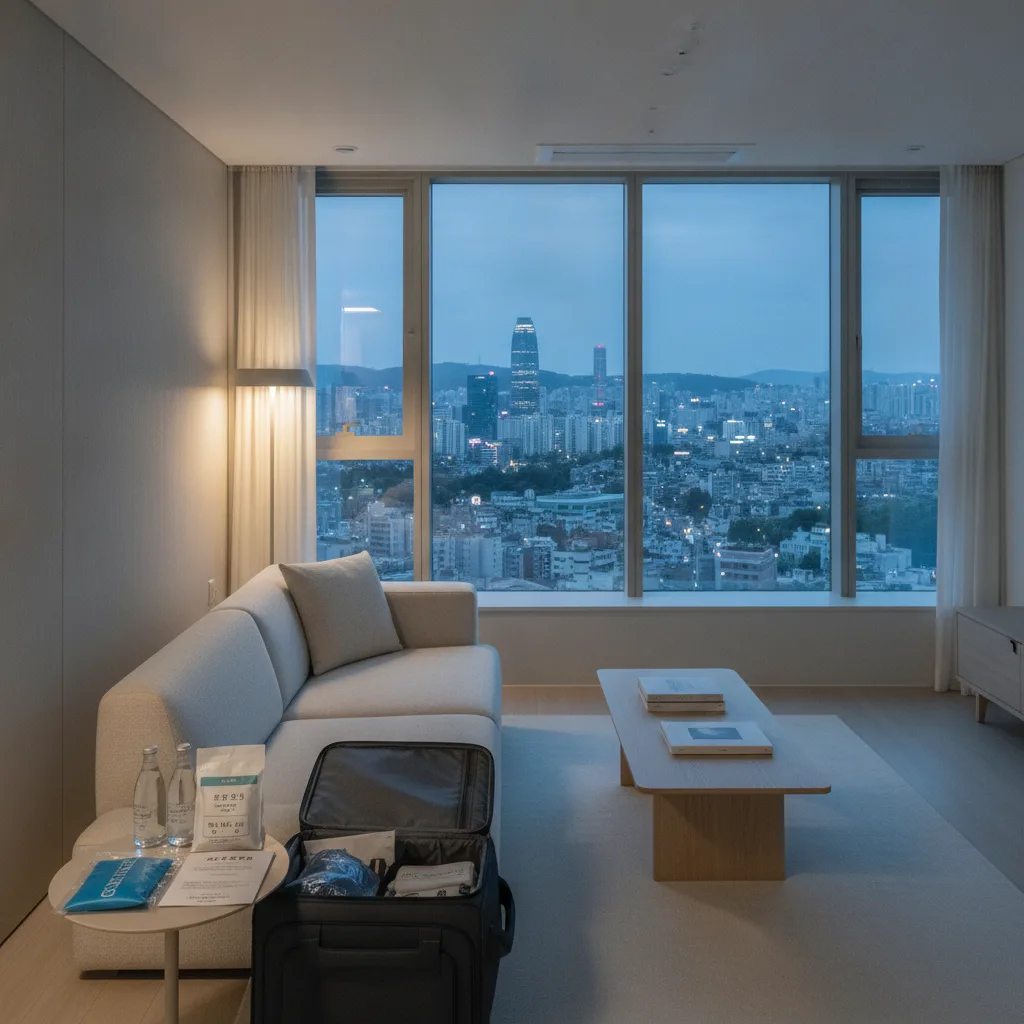
RECOVERY STAYS SEOUL PLASTIC SURGERY 2026: HOTELS AND PRICES
Where foreign patients actually stay after rhinoplasty, two-jaw, breast and body surgery in Seoul, with KRW night rates by district and what to book.
TRAVEL INSURANCE FOR SEOUL PLASTIC SURGERY 2026: WHAT ACTUALLY COVERS YOU
Standard travel policies exclude elective cosmetic surgery. Here is what covers complications abroad, what pays for a stuck flight home, and which Seoul clinics include their own policy.
TAX REFUND IN SEOUL FOR AESTHETIC TREATMENTS 2026: VAT RULES EXPLAINED
What foreign patients actually pay in 10% VAT at Seoul aesthetic clinics, which treatments qualify for the Medical Tourism Tax Refund, and how to claim your won back at Incheon.
MEDICAL VISA FOR SEOUL PLASTIC SURGERY 2026: RULES BY COUNTRY
Visa-free entry, K-ETA, and C-3-3 medical tourist visas explained for foreign patients flying to Seoul for plastic surgery in 2026.
▶▶▶ stop reading. start matching.
FIND YOURS.
We'll pull five clinics matched to your case. WhatsApp reply within 24h.